
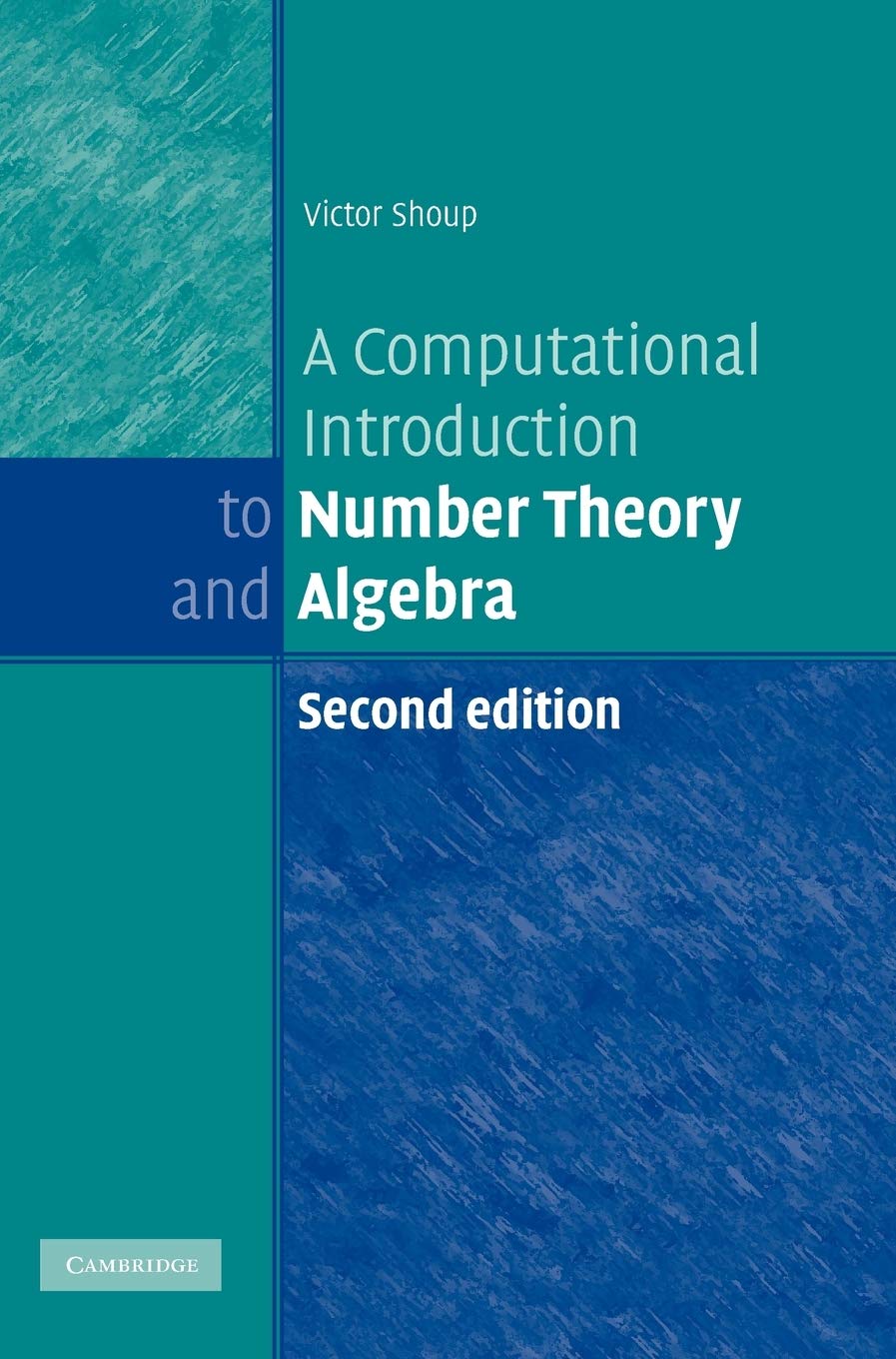
A Computational Introduction to Number Theory and Algebra by Victor Shoup – A Comprehensive Textbook on Algorithms, Cryp
Inclusive of all applicable taxes. FREE shipping on all orders.
Available Offers
- 🚚Free Delivery — Free shipping on all orders
- 💵Cash on Delivery — Pay when your order arrives
- ↩️15-Day Easy Returns — Hassle-free return policy
- 🔒Cash on Delivery — Pay safely when your order arrives
Check Delivery
Product Description
Introduction
In the rapidly evolving landscape of computing and communications, the foundational principles of number theory and algebra have emerged as indispensable tools. Victor Shoup's A Computational Introduction to Number Theory and Algebra bridges the gap between abstract mathematical concepts and their real-world computational applications. Published by Cambridge University Press, this hardcover edition is an essential resource for students, researchers, and professionals in India who seek a rigorous yet accessible journey into the mathematics that power modern cryptography, coding theory, and algorithm design.
Book Overview
This book is not a conventional dry treatise on number theory. Instead, it adopts a computational perspective, emphasizing algorithms and practical implementations. The text is meticulously structured to alternate between theoretical exposition and application-driven examples, ensuring that readers not only grasp the underlying mathematics but also understand how to apply them in solving real problems. From the basics of modular arithmetic to advanced topics in algebraic structures, every concept is presented with clarity and purpose. The second edition has been thoroughly revised with over 150 new exercises and a reorganized flow for better comprehension.
Key Highlights
- Algorithmic Focus: Every theorem is accompanied by efficient algorithms, making the book ideal for computer science and engineering students.
- Over 150 New Exercises: Ranging from routine to challenging, these exercises deepen understanding and encourage independent problem-solving.
- Real-World Applications: Cryptography, error-correcting codes, and digital signatures are woven into the narrative, showing mathematics in action.
- Reorganized Content: The second edition features a refined structure that enhances logical flow and readability.
- Rigorous Yet Accessible: The presentation is designed for a broad audience, including advanced undergraduates and beginning graduate students.
Inside the Book
The book is divided into three major parts. The first part covers the fundamentals of number theory, including congruences, quadratic residues, and primality testing. The second part delves into abstract algebra, exploring groups, rings, and fields. The third part integrates these concepts with discrete probability theory and computational complexity. Each chapter concludes with a rich set of exercises that test comprehension and encourage exploration. Key algorithms, such as the Euclidean algorithm, the Miller-Rabin test, and the RSA cryptosystem, are presented with pseudocode and detailed explanations.
Key Topics
- Basic Number Theory: Divisibility, modular arithmetic, Chinese remainder theorem, and primitive roots.
- Computational Number Theory: Algorithms for integer factorization, discrete logarithms, and primality testing.
- Abstract Algebra: Groups, rings, fields, polynomials, and vector spaces.
- Applications: Public-key cryptography (RSA, ElGamal), error-correcting codes, and digital signatures.
- Discrete Probability: Probability theory for algorithm analysis and randomized algorithms.
- Advanced Topics: Elliptic curves, finite fields, and lattice-based cryptography.
Reader Benefits
Readers will gain a deep, intuitive understanding of how number theory and algebra underpin modern computing. The algorithmic approach ensures that theoretical knowledge translates directly into practical skills. Students will be well-prepared for advanced courses in cryptography, network security, and coding theory. Professionals in software development and IT will find the book a valuable reference for implementing secure systems. Additionally, the extensive exercise sets provide ample practice to master complex concepts.
Learning Outcomes
- Master the fundamental theorems of number theory and their computational implications.
- Design and analyze algorithms for primality testing, integer factorization, and discrete logarithms.
- Understand the algebraic structures—groups, rings, fields—and their role in cryptography.
- Apply probability theory to analyze randomized algorithms and cryptographic protocols.
- Implement and deploy public-key cryptosystems and error-correcting codes.
- Develop the mathematical maturity to tackle advanced research in computational mathematics.
Who Should Read
This book is ideal for undergraduate and postgraduate students in computer science, mathematics, and electrical engineering. It is equally valuable for self-learners and professionals in cybersecurity, data science, and software engineering who want to build a solid mathematical foundation. Instructors will find it a comprehensive textbook for courses in number theory, abstract algebra, or cryptography. The material is best suited for readers with a basic background in discrete mathematics and programming.
About the Author
Victor Shoup is a renowned computer scientist and mathematician, currently a professor at New York University. He has made significant contributions to computational number theory, cryptography, and algorithm design. His research includes work on the RSA algorithm, elliptic curve cryptography, and the development of the Number Theory Library (NTL), a widely used open-source software. Shoup's clear, precise writing style reflects his deep expertise and commitment to education.
About the Publisher
Cambridge University Press is one of the oldest and most prestigious academic publishers in the world. With a legacy dating back to 1534, Cambridge University Press is known for producing authoritative, high-quality textbooks and reference works across all disciplines. This hardcover edition reflects the publisher's commitment to durable, long-lasting books that serve as lifelong resources for students and scholars.
Conclusion
A Computational Introduction to Number Theory and Algebra by Victor Shoup is more than a textbook—it is a gateway to understanding the mathematical engines that drive the digital world. Whether you are a student aiming to excel in cryptography or a professional seeking to deepen your computational skills, this book offers a rigorous, engaging, and practical path forward. Its blend of theory, algorithms, and applications makes it a timeless addition to any library.
Quick Summary
A Computational Introduction to Number Theory and Algebra by Victor Shoup is a definitive textbook that seamlessly blends theoretical mathematics with practical computing applications. Targeted at advanced undergraduate and graduate students, the book covers essential topics in number theory, abstract algebra, and discrete probability, all while maintaining a strong algorithmic focus. Readers will explore foundational concepts such as modular arithmetic, finite fields, and group theory, and then see how these are applied to modern cryptography (including RSA) and error-correcting codes. The book's unique structure alternates between theory and application, ensuring that abstract concepts are always grounded in real-world use. With over 150 new exercises, learners can test their understanding and deepen their knowledge. Published by Cambridge University Press, this hardcover edition is built to last. For Indian students pursuing mathematics, computer science, or cybersecurity, this book is an invaluable resource. By choosing Bookshops.in, you get a genuine copy delivered across India, with the assurance of quality and timely service.
Book Highlights
Book Specifications
| ISBN-13 | 9780521516440 |
| ISBN-10 | 0521516447 |
| Publisher | Cambridge University Press |
| Language | English |
| Dimensions | 17.78 x 3.18 x 24.77 cm |
| Weight | 1 kg 200 g |
| Country | USA |
| Category | Mathematics › Algebra & Trigonometry |
| Genre | Non-fiction |
| Original Language | English |
Frequently Asked Questions
What is the main focus of this book?
Who is the author of this book?
Is this book suitable for beginners?
Does the book include exercises?
What applications are covered?
Is this book used in Indian universities?
What is the ISBN?
Is the book available in hardcover?
Does the book cover discrete probability?
Can this book help with cryptography research?
What is the price in INR?
Is the book language English?
Where can I buy this book in India?
Readers Also Search For
Customers Also Bought
Mathematics
Stereotype Spaces and Algebras: 73 (De Gruyter Expositions in Mathematics, 73)
Mathematics
Semigroups in Algebra, Geometry and Analysis: 20 (De Gruyter Expositions in Mathematics, 20)
Mathematics
Geometry from the Pacific Rim: Proceedings of the Pacific Rim Geometry Conference held at National University of Singapore, Republic of Singapore, ... 1994 (De Gruyter Proceedings in Mathematics)
Mathematics
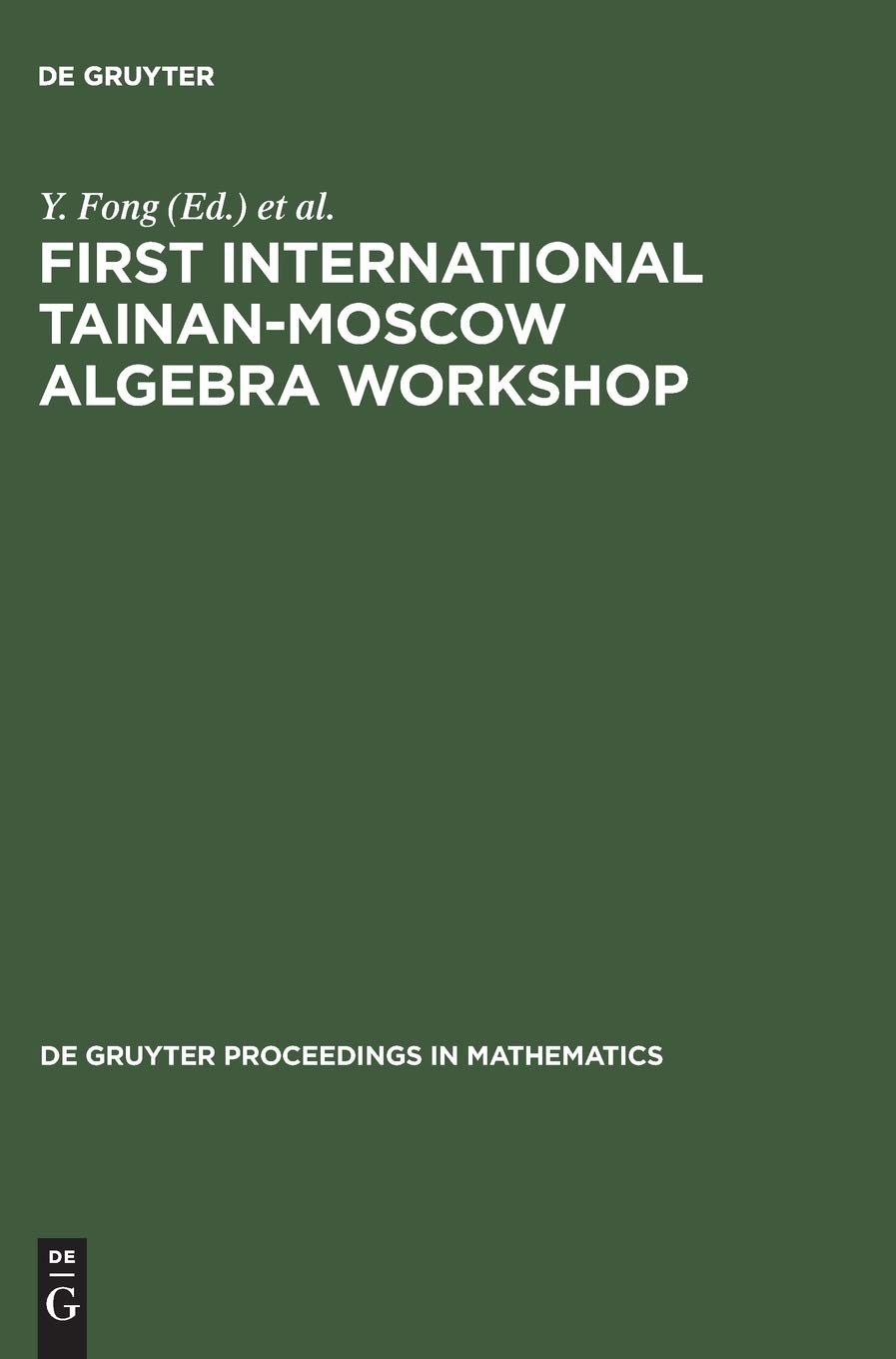
First International Tainan-Moscow Algebra Workshop: Proceedings of the International Conference held at National Cheng Kung University Tainan, Taiwan, ... 1994 (De Gruyter Proceedings in Mathematics)
Mathematics
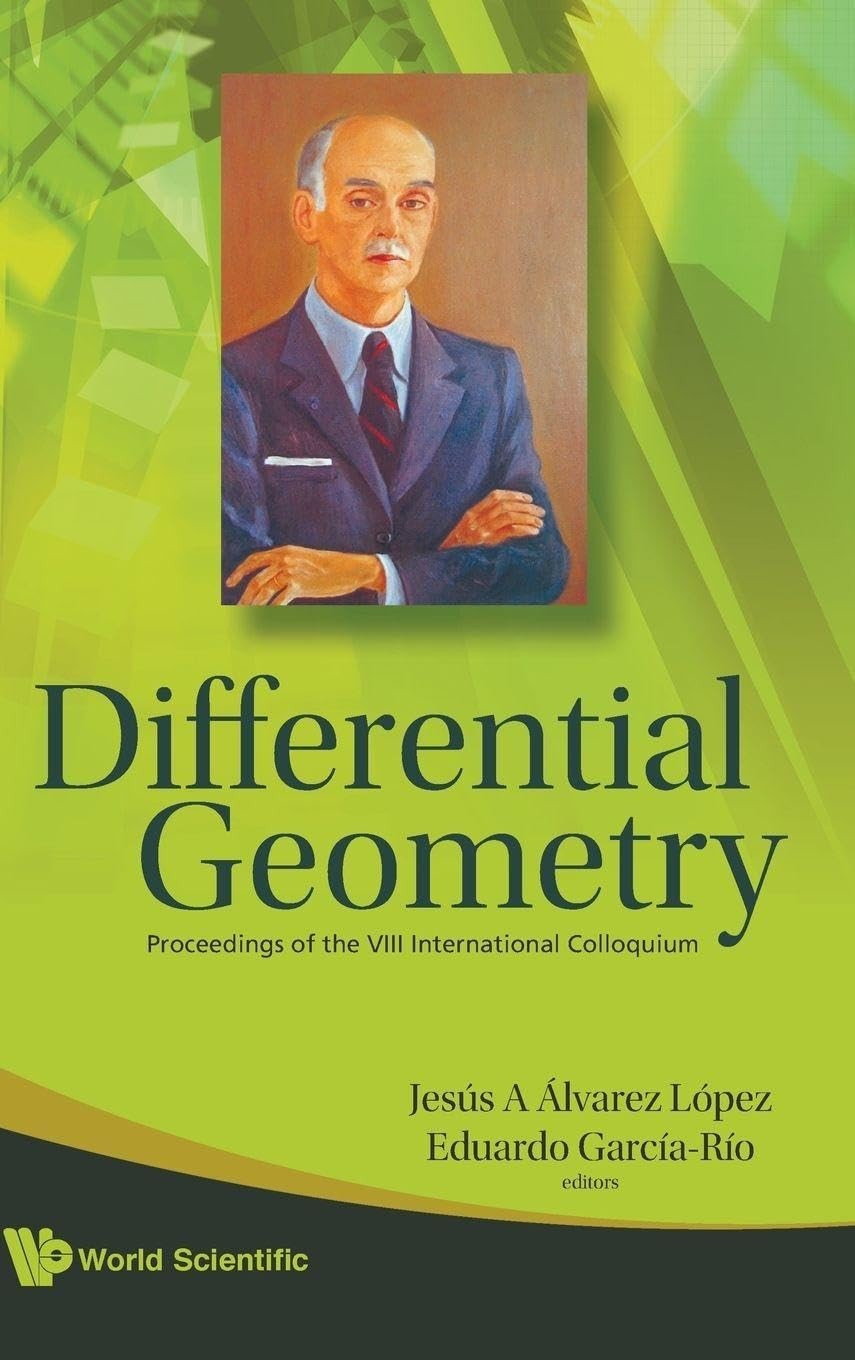
Differential Geometry - Proceedings of the VIII International Colloquium (English, Jesus A. Alvarez Lopez | Eduardo Garcia-Rio)
Mathematics
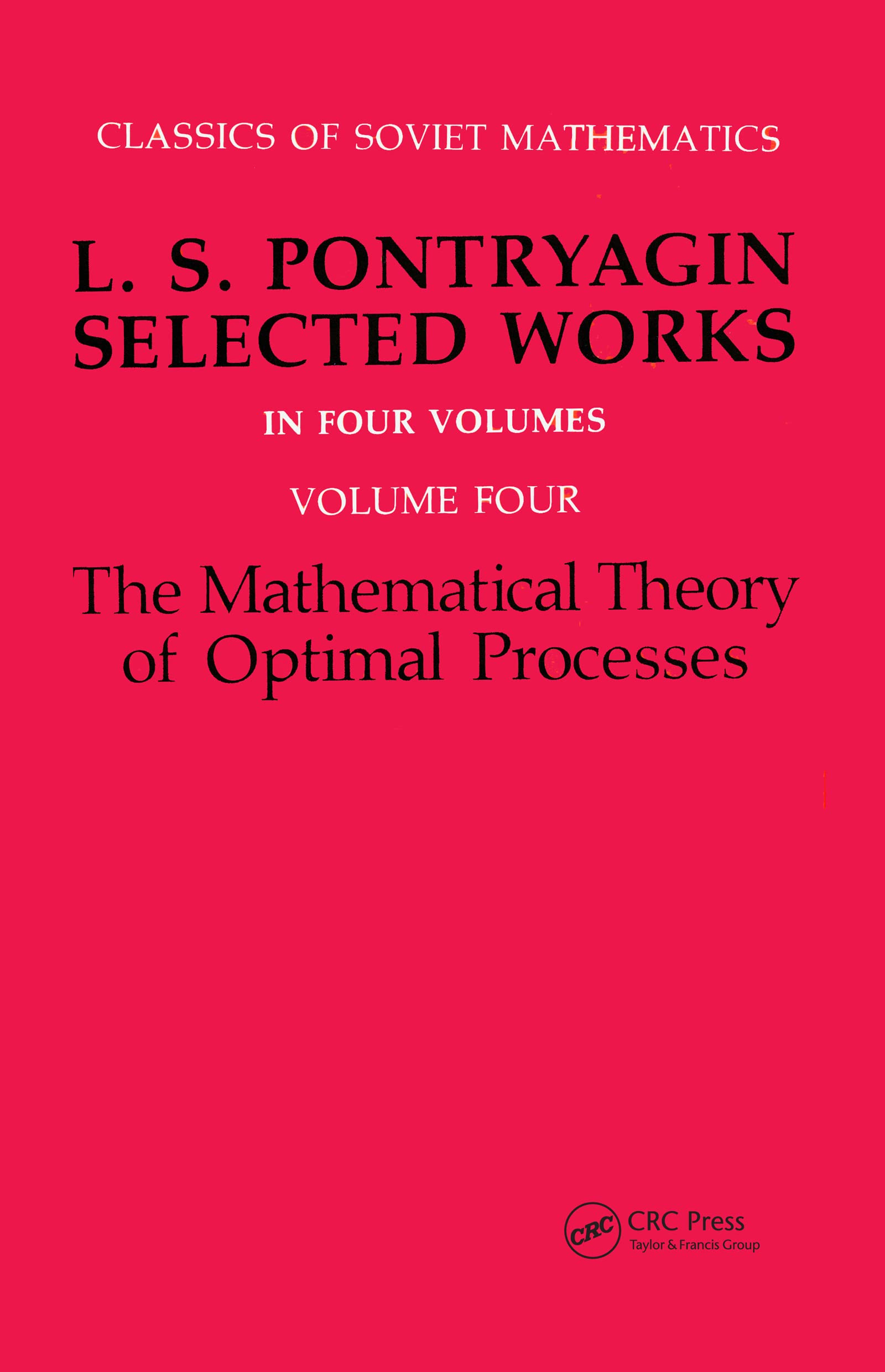
Mathematical Theory of Optimal Processes (Classics of Soviet Mathematics)
Related Products
View AllMathematics
Mathematical Theory of Optimal Processes (Classics of Soviet Mathematics)
Mathematics
Stereotype Spaces and Algebras: 73 (De Gruyter Expositions in Mathematics, 73)
Mathematics
Semigroups in Algebra, Geometry and Analysis: 20 (De Gruyter Expositions in Mathematics, 20)
Mathematics
Geometry from the Pacific Rim: Proceedings of the Pacific Rim Geometry Conference held at National University of Singapore, Republic of Singapore, ... 1994 (De Gruyter Proceedings in Mathematics)
Mathematics
First International Tainan-Moscow Algebra Workshop: Proceedings of the International Conference held at National Cheng Kung University Tainan, Taiwan, ... 1994 (De Gruyter Proceedings in Mathematics)
Mathematics