
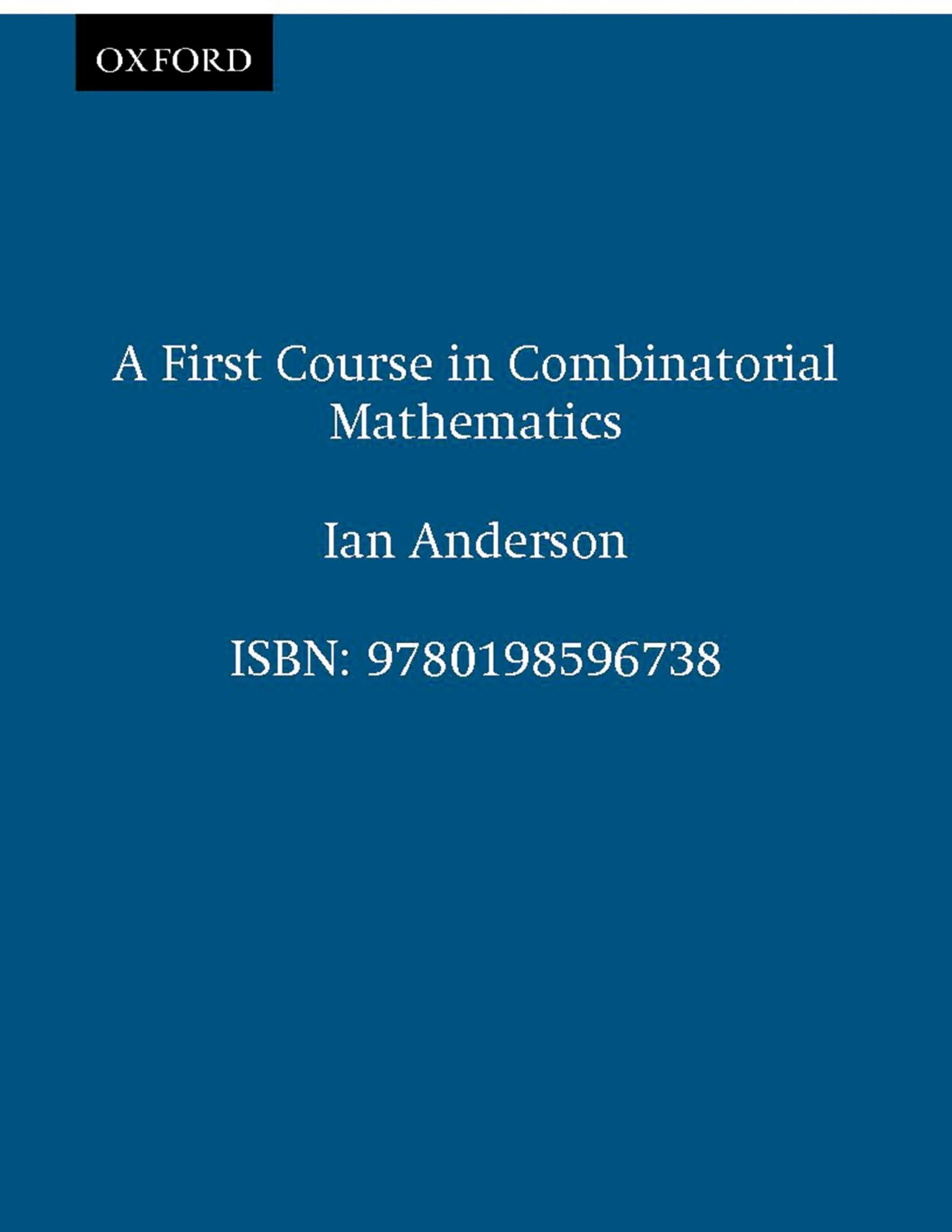
A First Course in Combinatorial Mathematics by Ian Anderson – An Accessible Introduction to Combinatorics for Undergradu
Inclusive of all applicable taxes. FREE shipping on all orders.
Available Offers
- 🚚Free Delivery — Free shipping on all orders
- 💵Cash on Delivery — Pay when your order arrives
- ↩️15-Day Easy Returns — Hassle-free return policy
- 🔒Cash on Delivery — Pay safely when your order arrives
Check Delivery
Product Description
Introduction
Combinatorial mathematics is the quiet engine behind many of today's most exciting scientific and technological advances, from network design to data encryption. Yet for students and professionals alike, finding a clear, accessible entry point into this rich field can be a challenge. Ian Anderson's A First Course in Combinatorial Mathematics, now in its second edition and published by OUP Oxford, offers exactly that—a carefully crafted, rigorous yet readable introduction that has become a trusted companion for learners across Indian universities and beyond. This hardbound volume is designed to demystify combinatorial thinking without sacrificing depth, making it an essential addition to any serious mathematics library.
Book Overview
This second edition builds on the strengths of the original to present a thoroughly updated survey of combinatorial principles and their applications. Anderson begins with the fundamentals—recurrence relations, generating functions, and the inclusion-exclusion principle—and gradually moves into more advanced territory such as block designs, Steiner triple systems, and the celebrated marriage theorem. The text is notable for its clear exposition, generous use of worked examples, and carefully graded problem sets that encourage self-study. A unified treatment of three important constructions relevant to coding theory rounds out the volume, bridging pure combinatorics with real-world utility. Whether you are preparing for competitive examinations, teaching a course, or exploring the subject independently, this book provides a solid foundation.
Key Highlights
- Second edition with expanded coverage of block designs, Steiner triple systems, and the marriage theorem
- Unified account of three key constructions significant in coding theory
- Clear, example-driven approach that makes abstract concepts tangible
- Over 200 practice problems with varying difficulty, ideal for Indian undergraduate and postgraduate courses
- Rigorous yet accessible—suitable for both classroom use and self-paced learning
Inside the Book
The book is structured to guide readers from foundational ideas to sophisticated applications. Early chapters introduce recurrence relations, generating functions, and incidence matrices, building the toolkit needed for later topics. Anderson then delves into the inclusion-exclusion principle, followed by an exploration of Latin squares, finite geometries, and Steiner systems. A highlight is the chapter on the marriage theorem and its variants, presented with intuitive proofs and illustrative examples. The final sections connect these ideas to coding theory, showing how combinatorial designs underpin error-correcting codes. Each chapter ends with a summary and a rich set of exercises, many with hints to foster independent problem-solving.
Key Topics
- Recurrence relations and their solutions
- Generating functions and combinatorial identities
- Inclusion-exclusion principle (non-exclusion principle)
- Incidence matrices and their applications
- Block designs and Steiner triple systems
- The marriage theorem and Hall's condition
- Latin squares and orthogonal arrays
- Constructions relevant to coding theory
Reader Benefits
Readers will gain a strong conceptual grasp of combinatorial reasoning, enabling them to tackle problems in discrete mathematics, computer science, and operations research. The book's structured approach helps develop analytical thinking and pattern recognition—skills highly valued in competitive exams like the GATE, JRF, and ISI entrance tests. For educators, the clear organization and ample exercises make it an excellent textbook for semester-long courses. Professionals in fields such as cryptography, network design, and data science will find the practical applications of block designs and coding theory directly relevant to their work.
Learning Outcomes
By the end of this course, readers will be able to: formulate and solve recurrence relations for counting problems; use generating functions to derive combinatorial identities; apply the inclusion-exclusion principle to complex enumeration tasks; construct and analyze block designs and Steiner triple systems; prove and apply the marriage theorem in matching problems; and understand the combinatorial foundations of error-correcting codes. These outcomes equip learners with a versatile skill set that bridges pure mathematics and applied disciplines.
Who Should Read
This book is ideal for undergraduate and postgraduate students of mathematics, computer science, and statistics in Indian universities. It is also highly suitable for self-taught learners preparing for competitive examinations, as well as for teachers seeking a reliable, example-rich textbook for their courses. Professionals transitioning into data science or cryptography will find the combinatorial techniques invaluable. No prior exposure to combinatorics is assumed, though a basic familiarity with set theory and algebra will be helpful.
About the Author
Ian Anderson is a respected mathematician and educator with decades of experience in teaching combinatorial mathematics. His research interests include design theory, finite geometries, and coding theory, and he has authored several influential textbooks. Anderson's writing is known for its clarity, precision, and pedagogical sensitivity—qualities that shine through in every chapter of this book. His ability to present complex ideas in a straightforward manner has made his works favourites among students and instructors alike.
About the Publisher
OUP Oxford (Oxford University Press) is one of the world's oldest and most prestigious academic publishers, with a rich history of producing authoritative texts in the sciences, humanities, and social sciences. Their mathematics catalogue includes many landmark titles that have shaped the curriculum in Indian universities. This edition of A First Course in Combinatorial Mathematics upholds OUP's tradition of rigorous scholarship, clear exposition, and high-quality production—ensuring that students receive a book built to last through years of study.
Conclusion
Whether you are a student beginning your journey in discrete mathematics or a professional seeking to strengthen your combinatorial toolkit, Ian Anderson's A First Course in Combinatorial Mathematics offers an ideal blend of theory, practice, and clarity. With its updated content, thoughtful exercises, and authoritative yet approachable style, this second edition is a worthy investment for anyone serious about mastering the art of counting, arrangement, and design. Add this hardcover volume to your collection and build a foundation that will serve you for years to come.
Quick Summary
A First Course in Combinatorial Mathematics by Ian Anderson is a well-regarded introductory textbook that presents the fundamental concepts of combinatorics in a clear and accessible manner. Written for undergraduate students and self-learners, the book covers essential combinatorial tools such as recurrence relations, generating functions, incidence matrices, and the non-exclusion principle. It also delves into block designs, Steiner triple systems, and the marriage theorem, with a unified account of three important constructions relevant to coding theory. Readers will build a solid foundation in combinatorial reasoning and learn how to apply these techniques to real-world problems in mathematics, computer science, and engineering. The second edition expands on earlier content, making it even more valuable for students and educators. By purchasing from Bookshops.in, Indian readers receive a genuine hardcover edition from OUP Oxford, ensuring durability and reliable content for years of study and reference.
Book Highlights
Book Specifications
| ISBN-13 | 9780198596738 |
| ISBN-10 | 0198596731 |
| Publisher | Clarendon Pr |
| Language | English |
| Dimensions | 0.97 x 21.59 x 13.82 cm |
| Weight | 227 g |
| Country | India |
| Category | Science & Mathematics › Mathematics |
| Genre | Non-fiction |
| Original Language | English |
Frequently Asked Questions
What is the main focus of this book?
Is this book suitable for beginners?
Does the book cover Steiner triple systems?
What is the marriage theorem?
Are there applications to coding theory?
What mathematical background is needed?
Can this book be used for self-study?
What is the price of the book?
Does the book include exercises?
Is this book used in Indian universities?
What is the language of the book?
How is this book different from other combinatorics texts?
Readers Also Search For
Customers Also Bought
Mathematics
Stereotype Spaces and Algebras: 73 (De Gruyter Expositions in Mathematics, 73)
Mathematics
Semigroups in Algebra, Geometry and Analysis: 20 (De Gruyter Expositions in Mathematics, 20)
Mathematics
Geometry from the Pacific Rim: Proceedings of the Pacific Rim Geometry Conference held at National University of Singapore, Republic of Singapore, ... 1994 (De Gruyter Proceedings in Mathematics)
Mathematics
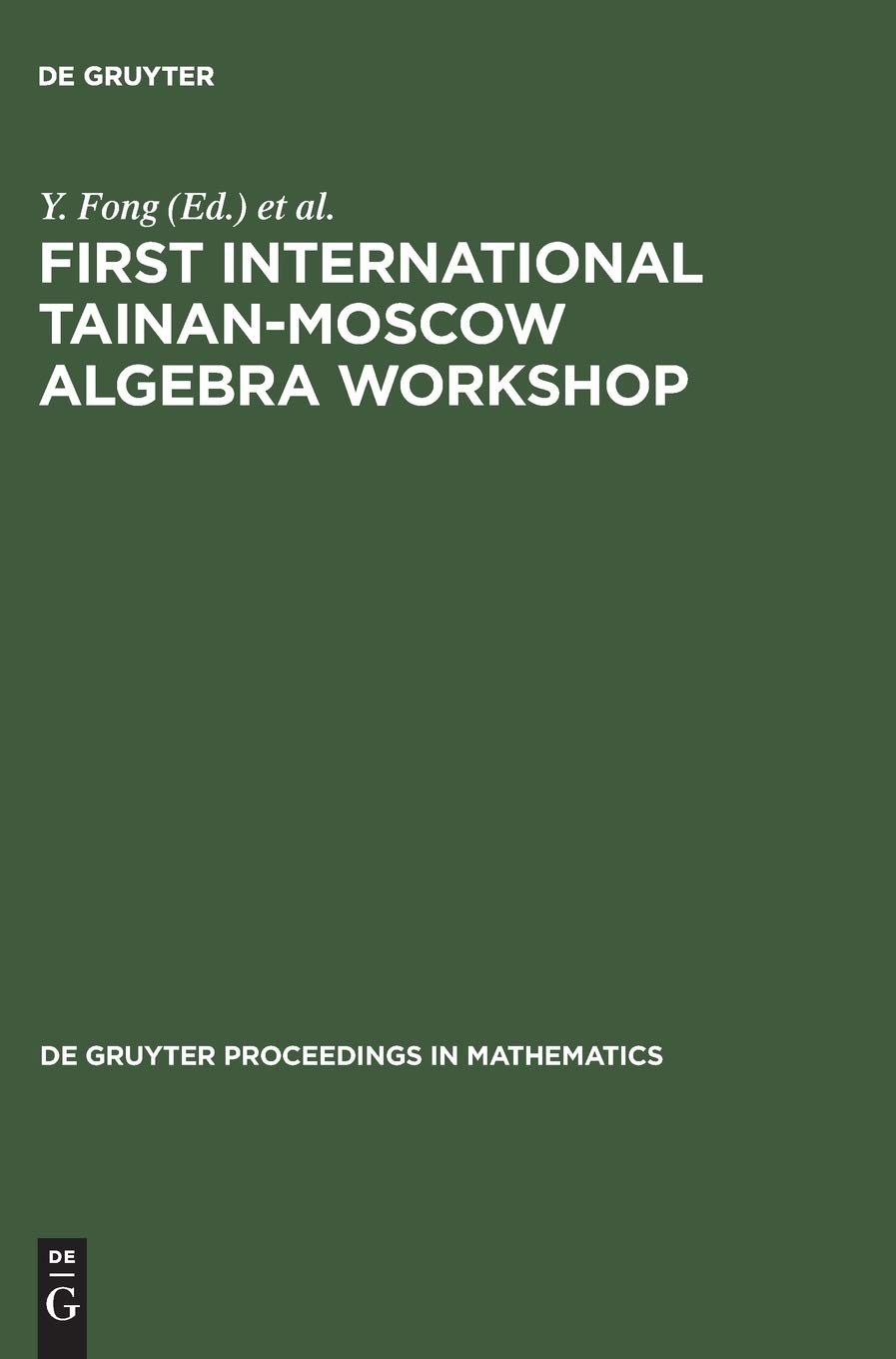
First International Tainan-Moscow Algebra Workshop: Proceedings of the International Conference held at National Cheng Kung University Tainan, Taiwan, ... 1994 (De Gruyter Proceedings in Mathematics)
Mathematics
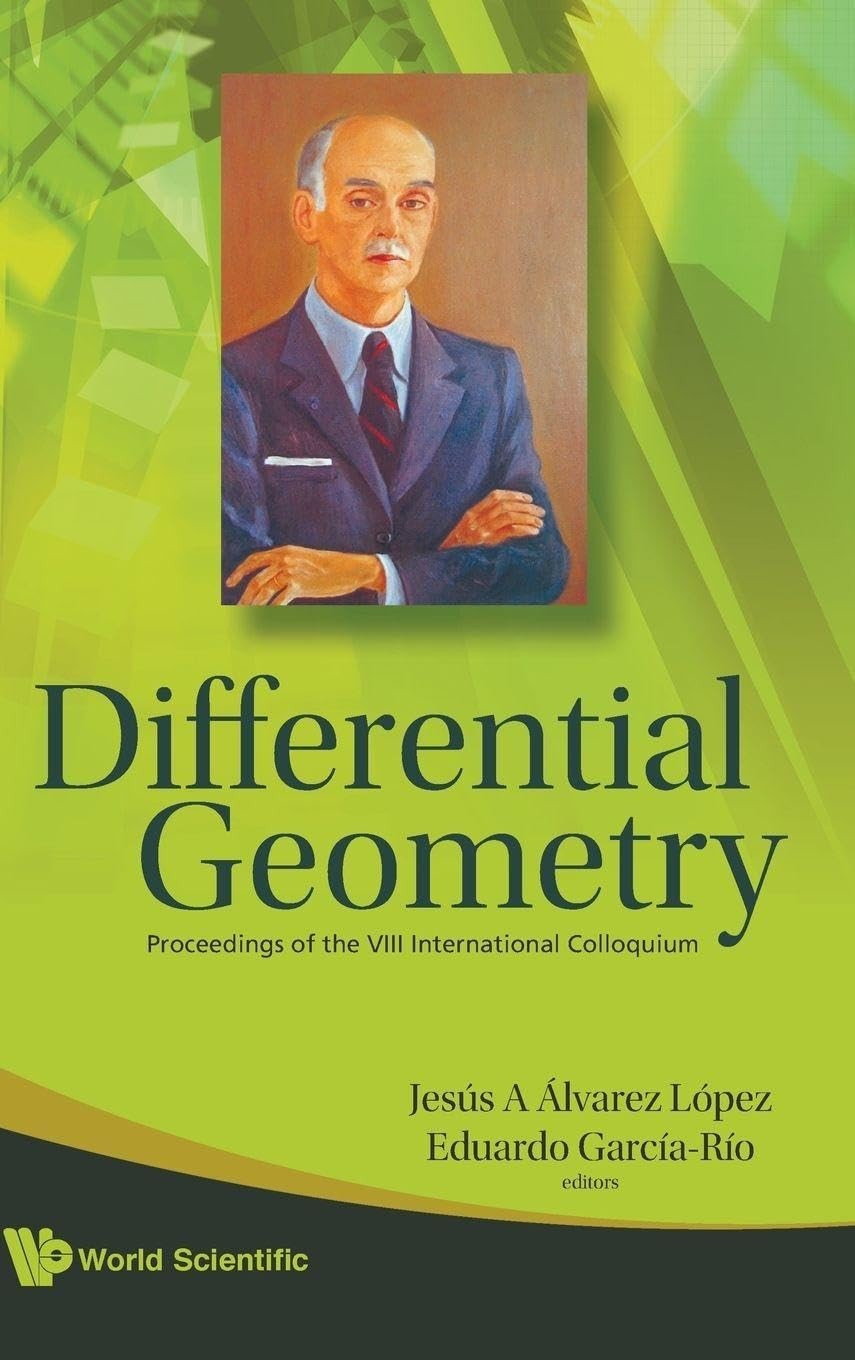
Differential Geometry - Proceedings of the VIII International Colloquium (English, Jesus A. Alvarez Lopez | Eduardo Garcia-Rio)
Mathematics
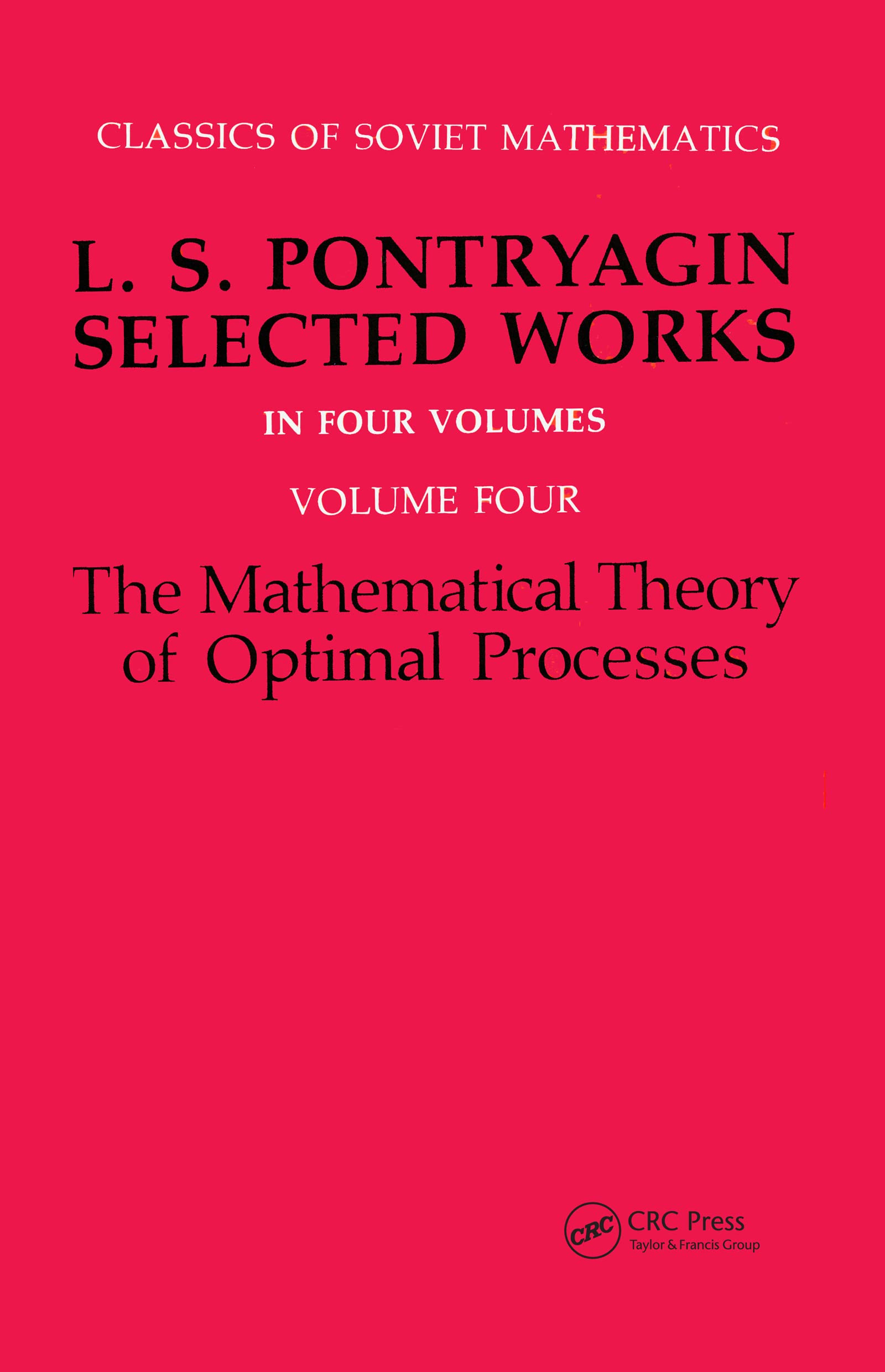
Mathematical Theory of Optimal Processes (Classics of Soviet Mathematics)
Related Products
View AllMathematics
Mathematical Theory of Optimal Processes (Classics of Soviet Mathematics)
Mathematics
Stereotype Spaces and Algebras: 73 (De Gruyter Expositions in Mathematics, 73)
Mathematics
Semigroups in Algebra, Geometry and Analysis: 20 (De Gruyter Expositions in Mathematics, 20)
Mathematics
Geometry from the Pacific Rim: Proceedings of the Pacific Rim Geometry Conference held at National University of Singapore, Republic of Singapore, ... 1994 (De Gruyter Proceedings in Mathematics)
Mathematics
First International Tainan-Moscow Algebra Workshop: Proceedings of the International Conference held at National Cheng Kung University Tainan, Taiwan, ... 1994 (De Gruyter Proceedings in Mathematics)
Mathematics