
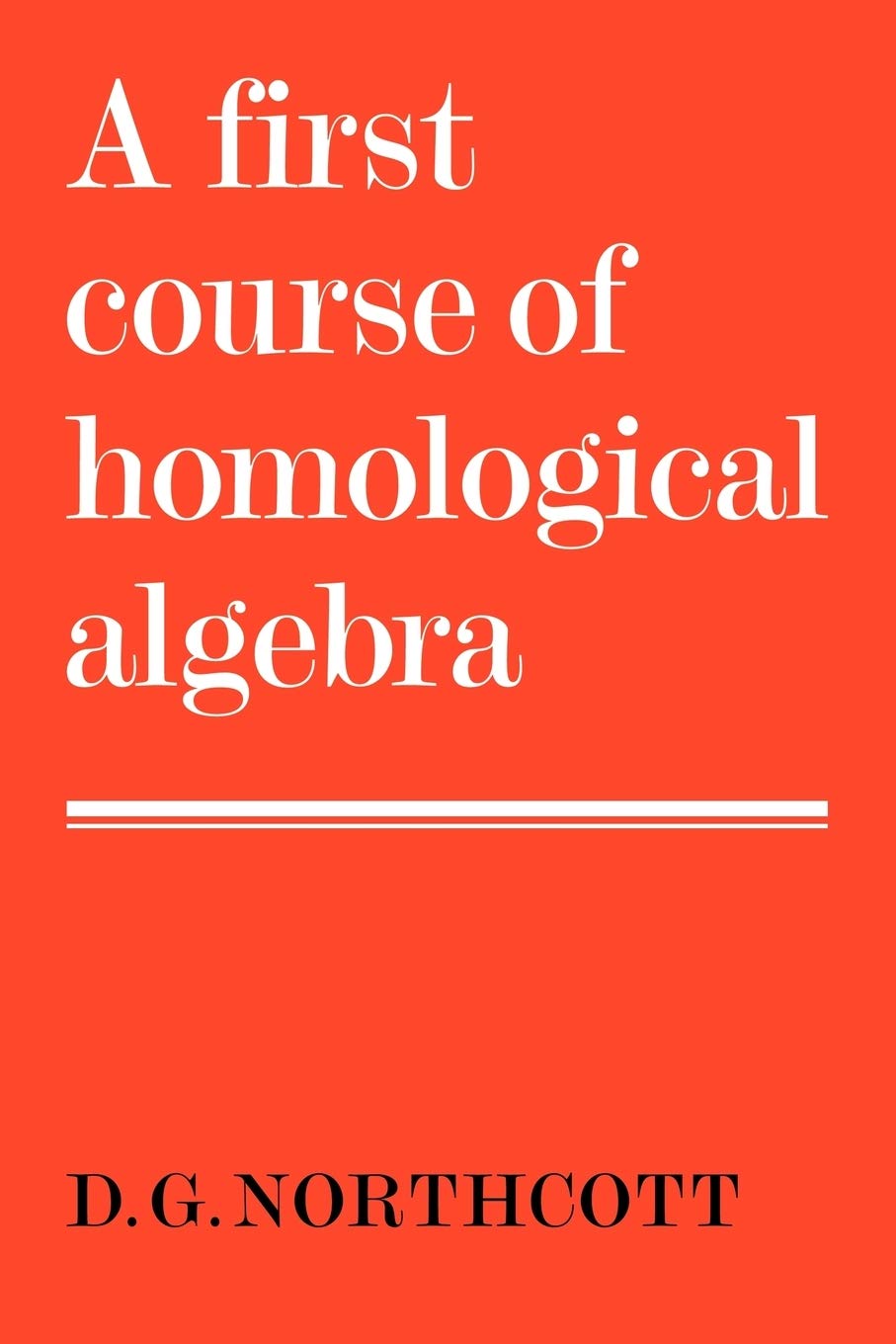
A First Course of Homological Algebra by Douglas G. Northcott – A Graduate-Level Introduction to Homological Methods
Inclusive of all applicable taxes. FREE shipping on all orders.
Available Offers
- 🚚Free Delivery — Free shipping on all orders
- 💵Cash on Delivery — Pay when your order arrives
- ↩️15-Day Easy Returns — Hassle-free return policy
- 🔒Cash on Delivery — Pay safely when your order arrives
Check Delivery
Product Description
Introduction
Homological algebra often appears as a daunting subject, shrouded in abstract machinery and advanced categorical language. However, understanding its core principles is essential for any serious student of pure mathematics. Douglas G. Northcott's 'A First Course of Homological Algebra' offers a refreshingly direct and accessible entry point into this field. Designed originally for a lecture series at the University of Sheffield, this text strips away unnecessary complexity and focuses on building a solid, intuitive foundation. For Indian students pursuing postgraduate studies in mathematics, this book serves as an ideal bridge between introductory algebra and more specialized research topics.
Book Overview
Published by Cambridge University Press, this hardcover volume is based on lectures delivered during 1971–72. Northcott’s approach is deliberately practical: he introduces important topics in homological algebra and develops the necessary tools on an ad hoc basis, rather than overwhelming the reader with a grand theoretical framework. The book is structured to guide the learner step-by-step, with many proofs and demonstrations left as exercises to encourage active engagement. The final chapter includes previously unpublished material, adding unique value for both students and their tutors. A full set of solutions to all exercises is provided, making self-study highly effective.
Key Highlights
- Ad Hoc Tool Development: Instead of presenting a monolithic theory, the book builds tools as they are needed, making the learning process natural and intuitive.
- Original Content: The final chapter contains material that was previously unpublished at the time of writing, offering insights not easily found elsewhere.
- Exercise-Driven Learning: Numerous exercises, with complete solutions included, allow readers to test their understanding and reinforce concepts.
- Concise and Focused: The text avoids unnecessary digressions, staying tightly focused on core homological concepts.
- Trusted Publisher: Cambridge University Press ensures high academic standards and meticulous editing.
Inside the Book
The book begins with foundational concepts such as modules, exact sequences, and chain complexes. It then progresses to homology groups, projective and injective modules, and derived functors like Ext and Tor. Northcott carefully explains the relationship between these functors and classical algebraic invariants. The text also covers topics such as dimensions of rings and modules, including global dimension and its significance. Each chapter builds logically on the previous one, and the exercises are carefully chosen to illuminate subtle points. The final chapter presents advanced topics that round off the course and point toward further study.
Key Topics
- Modules over a ring and their homomorphisms
- Exact sequences and the snake lemma
- Chain complexes and homology groups
- Projective and injective modules
- Derived functors: Ext and Tor
- Homological dimensions of rings and modules
- Applications to commutative algebra
Reader Benefits
This book empowers readers to grasp homological algebra without getting lost in categorical abstractions. By working through the exercises, students develop problem-solving skills that are directly transferable to research in algebra, topology, and algebraic geometry. The inclusion of solutions means that even those studying alone can verify their progress and correct misunderstandings. The ad hoc approach reduces the initial learning curve, making the subject accessible to those who may have only a basic background in abstract algebra. Furthermore, the final chapter's original content provides a taste of cutting-edge material that can inspire further exploration.
Learning Outcomes
After studying this book, readers will be able to construct and analyze exact sequences, compute homology groups of simple chain complexes, and understand the role of projective and injective modules. They will be equipped to define and compute derived functors such as Ext and Tor, and apply them to classify module extensions and torsion phenomena. The reader will also gain an appreciation of homological dimensions and their use in characterizing rings. Ultimately, the learner will be prepared to read more advanced texts and research papers that rely on homological methods.
Who Should Read
This book is ideally suited for graduate students in mathematics who are taking their first course in homological algebra. It is also valuable for final-year undergraduate students who have completed a solid course in abstract algebra (groups, rings, modules). Researchers in related fields who need a practical introduction to homological techniques will find it equally useful. Indian students preparing for competitive exams like the CSIR-UGC NET or GATE in mathematics will benefit from the clear exposition and ample practice problems. The book assumes familiarity with basic ring theory and module theory, but no prior knowledge of homological algebra is required.
About the Author
Douglas Geoffrey Northcott (1916–2005) was a distinguished British mathematician known for his contributions to commutative algebra and algebraic geometry. He held the Chair of Pure Mathematics at the University of Sheffield for many years, where he inspired generations of students. Northcott was a master of clear exposition, and his textbooks remain highly regarded for their pedagogical value. His work on ideal theory and homological methods has had a lasting impact on modern algebra.
About the Publisher
Cambridge University Press is one of the world’s oldest and most prestigious academic publishers. With a history spanning over four centuries, CUP is renowned for its rigorous editorial standards and commitment to scholarly excellence. This publication upholds that tradition, offering a meticulously edited and durable hardcover edition suitable for years of study and reference.
Conclusion
'A First Course of Homological Algebra' by Douglas G. Northcott is a timeless introduction that prioritizes understanding over formalism. Its careful progression, practical exercises, and inclusion of original material make it a standout choice for both classroom use and independent study. For any Indian mathematics student ready to explore the elegant world of homological algebra, this book is an excellent starting point. Add this essential volume to your library and take a confident first step into a rich and rewarding subject.
Quick Summary
A First Course of Homological Algebra by Douglas G. Northcott is a classic graduate-level textbook that introduces homological algebra in a clear, accessible manner. Based on lectures delivered at the University of Sheffield, the book avoids heavy categorical machinery and instead builds tools as needed. It covers essential topics such as exact sequences, projective and injective modules, Tor and Ext functors, chain complexes, and cohomology. The final chapter includes previously unpublished material, adding depth for advanced readers. With over 100 exercises and complete solutions, it is ideal for self-study or classroom use. This book is perfect for graduate students in mathematics, especially those specialising in algebra, topology, or number theory. Indian students will find it a valuable resource for building a strong foundation in homological methods. Buy your copy from Bookshops.in, India's trusted online bookstore for academic texts, and enjoy fast delivery across the country.
Book Highlights
Book Specifications
| ISBN-13 | 9780521299763 |
| ISBN-10 | 0521299764 |
| Publisher | Cambridge University Press |
| Language | English |
| Dimensions | 15.24 x 1.42 x 22.86 cm |
| Weight | 330 g |
| Country | India |
| Category | Mathematics › Algebra & Trigonometry |
| Genre | Non-fiction |
| Original Language | English |
Frequently Asked Questions
What is homological algebra?
Who is the author of this book?
Is this book suitable for beginners?
Does the book include exercises?
What topics are covered?
Is this book still relevant today?
What is the ISBN?
Is this a hardcover or paperback?
Can I use this book for self-study?
Does the book cover spectral sequences?
What prerequisites are needed?
Is this book used in Indian universities?
Where can I buy this book in India?
Readers Also Search For
Customers Also Bought
Mathematics
Stereotype Spaces and Algebras: 73 (De Gruyter Expositions in Mathematics, 73)
Mathematics
Semigroups in Algebra, Geometry and Analysis: 20 (De Gruyter Expositions in Mathematics, 20)
Mathematics
Geometry from the Pacific Rim: Proceedings of the Pacific Rim Geometry Conference held at National University of Singapore, Republic of Singapore, ... 1994 (De Gruyter Proceedings in Mathematics)
Mathematics
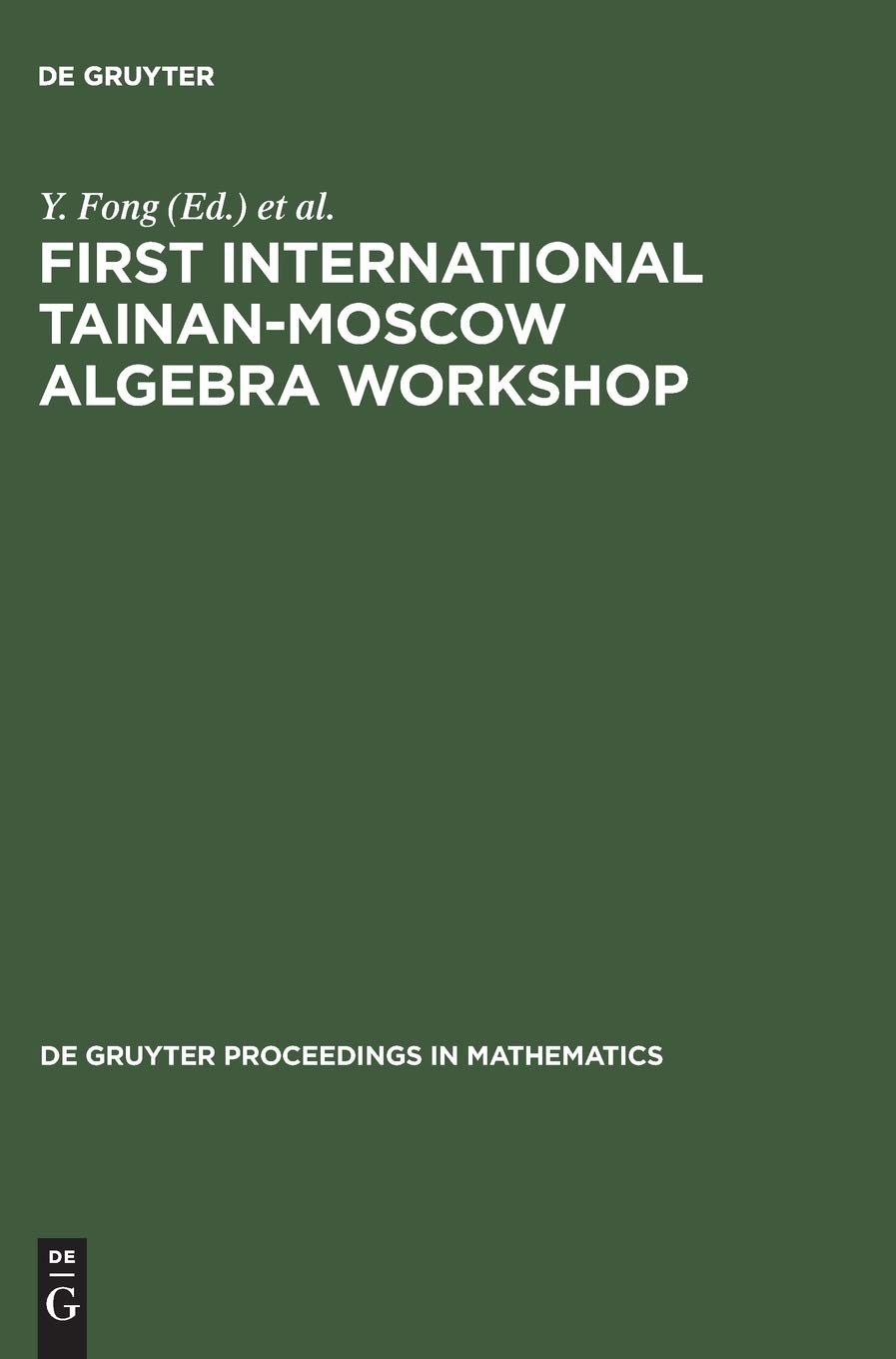
First International Tainan-Moscow Algebra Workshop: Proceedings of the International Conference held at National Cheng Kung University Tainan, Taiwan, ... 1994 (De Gruyter Proceedings in Mathematics)
Mathematics
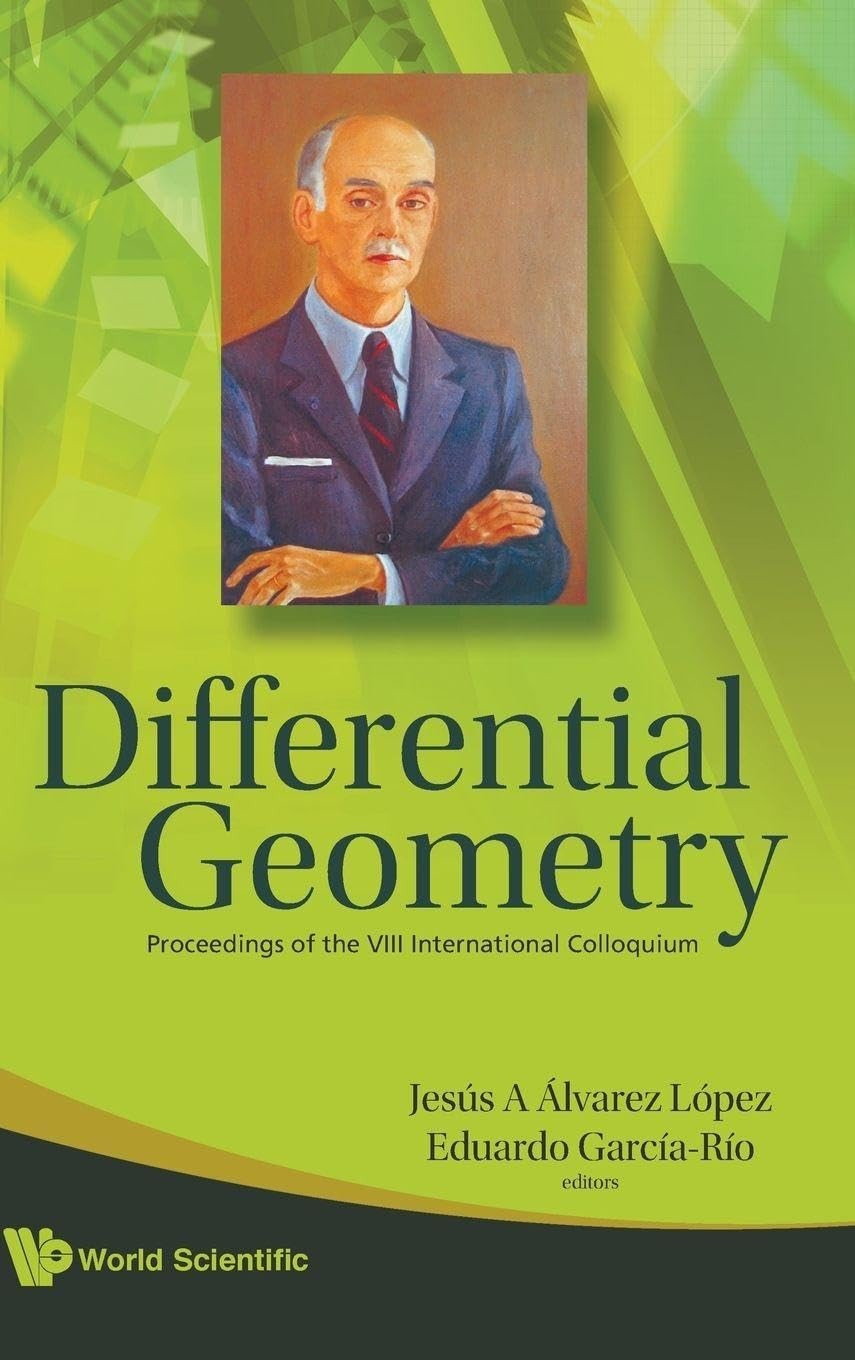
Differential Geometry - Proceedings of the VIII International Colloquium (English, Jesus A. Alvarez Lopez | Eduardo Garcia-Rio)
Mathematics
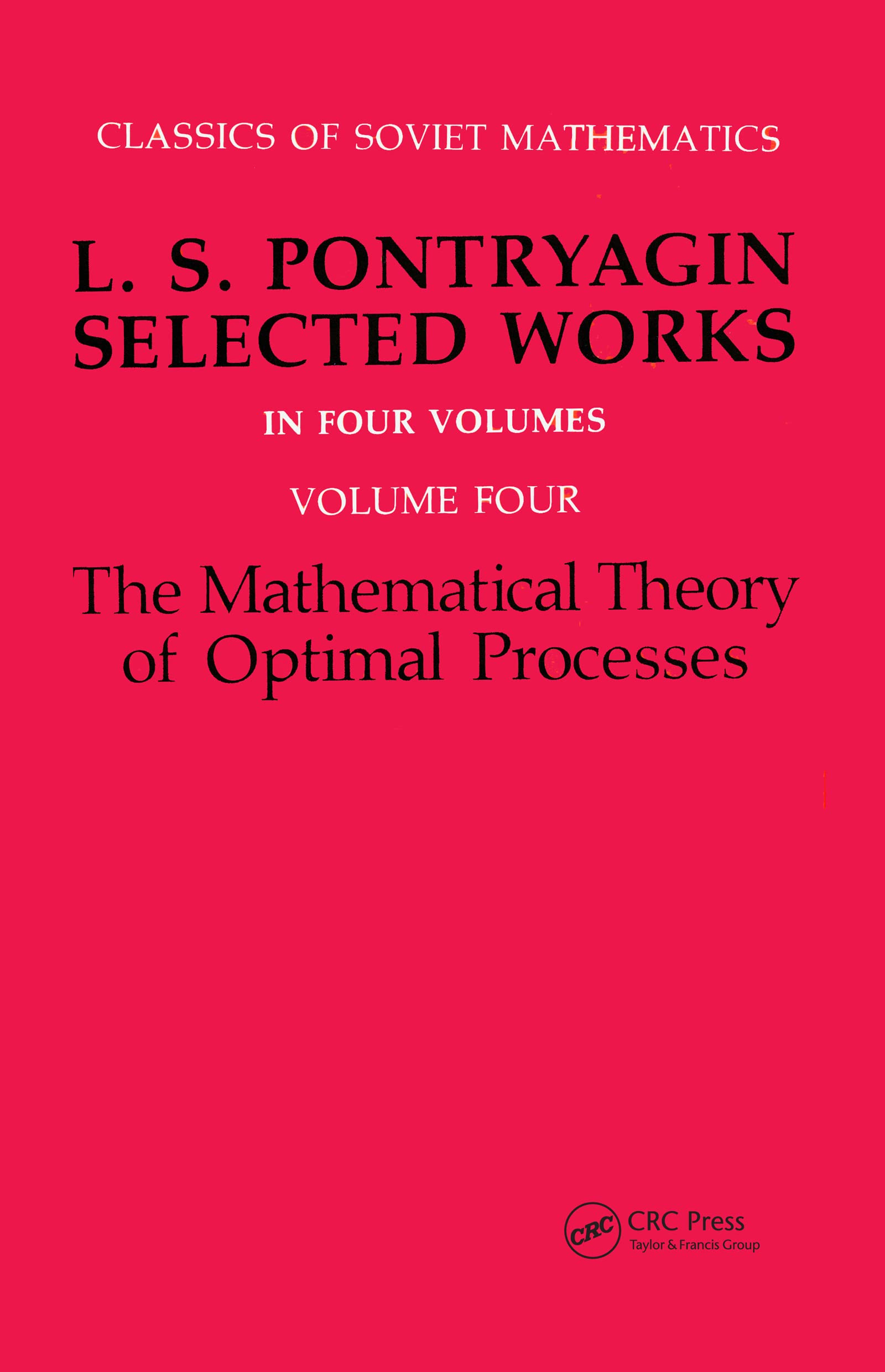
Mathematical Theory of Optimal Processes (Classics of Soviet Mathematics)
Related Products
View AllMathematics
Stereotype Spaces and Algebras: 73 (De Gruyter Expositions in Mathematics, 73)
Mathematics
Semigroups in Algebra, Geometry and Analysis: 20 (De Gruyter Expositions in Mathematics, 20)
Mathematics
Geometry from the Pacific Rim: Proceedings of the Pacific Rim Geometry Conference held at National University of Singapore, Republic of Singapore, ... 1994 (De Gruyter Proceedings in Mathematics)
Mathematics
First International Tainan-Moscow Algebra Workshop: Proceedings of the International Conference held at National Cheng Kung University Tainan, Taiwan, ... 1994 (De Gruyter Proceedings in Mathematics)
Mathematics
Differential Geometry - Proceedings of the VIII International Colloquium (English, Jesus A. Alvarez Lopez | Eduardo Garcia-Rio)
Mathematics