
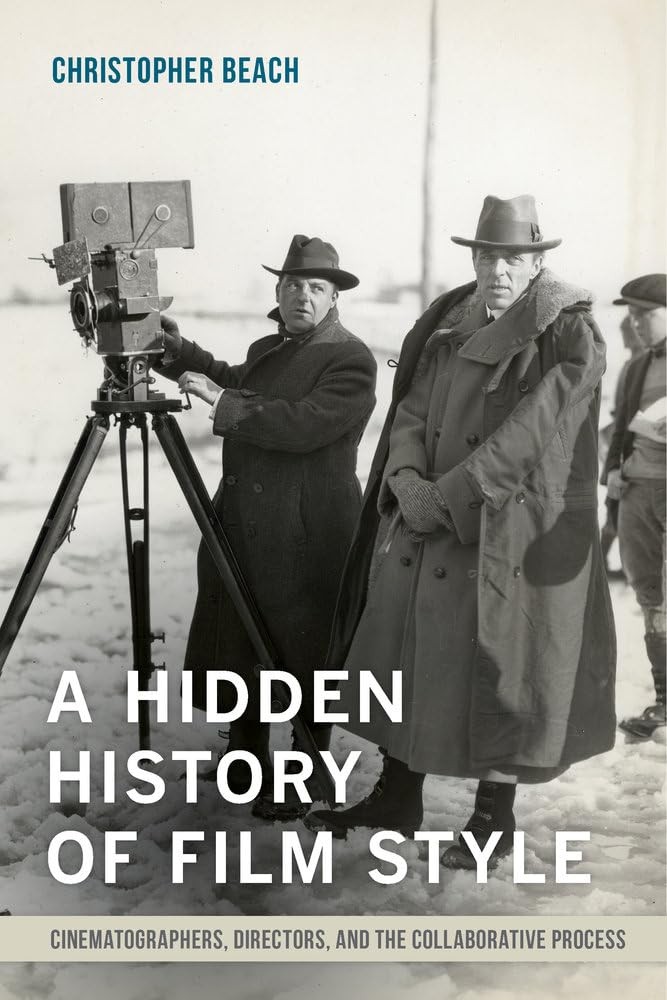
A Hidden History of Film Style: Cinematographers, Directors, and the Collaborative Process by Christopher Beach – A Deep
Inclusive of all applicable taxes. FREE shipping on all orders.
Available Offers
- 🚚Free Delivery — Free shipping on all orders
- 💵Cash on Delivery — Pay when your order arrives
- ↩️15-Day Easy Returns — Hassle-free return policy
- 🔒Cash on Delivery — Pay safely when your order arrives
Check Delivery
Product Description
Introduction
Cinema is never the vision of a single mind—it is a conversation, a negotiation, a dance between the director and the cinematographer. In A Hidden History of Film Style: Cinematographers, Directors, and the Collaborative Process, Christopher Beach pulls back the curtain on this essential partnership, revealing how the look and feel of iconic films emerged from shared creative decisions. For Indian cinephiles, film students, and aspiring filmmakers, this book offers a rare glimpse into the human dynamics that shape the images we cherish on screen.
Book Overview
Published by University of California Press, this hardcover volume challenges the traditional auteur theory by placing the cinematographer-director relationship at the heart of film history. Beach draws on oral histories, trade journals, and archival materials to trace how collaborations—from D. W. Griffith and Billy Bitzer to William Wyler and Gregg Toland—pushed the boundaries of deep focus, colour, and digital cinematography. The book spans American cinema from the silent era to the late twentieth century, offering a fresh perspective on how style is co-authored.
Key Highlights
- First-of-its-kind analysis focused exclusively on director-cinematographer partnerships in American cinema.
- Rich primary research using oral histories and early industry trade journals.
- Case studies of landmark collaborations, including Griffith-Bitzer, Wyler-Toland, and others.
- Exploration of technological shifts: deep focus, colour film, and digital cinematography.
- Challenges the auteur model by showing how style emerges from dialogue, not solo genius.
Inside the Book
The book is structured around key cinematic innovations and the people behind them. Beach examines how the silent era’s experimentation gave way to the deep-focus realism of the 1940s, the vibrant colour palettes of the 1950s, and the digital revolution of the late 1900s. Each chapter unpacks a specific collaboration, showing how technical choices were also artistic negotiations. Readers will find detailed discussions of lighting, camera movement, lens selection, and colour grading—all grounded in the personal relationships that made them possible.
Key Topics
- The silent era and the birth of the director-cinematographer bond.
- Deep focus and the Wyler-Toland partnership.
- Colour cinematography and its collaborative challenges.
- Digital filmmaking and the evolution of the role of the cinematographer.
- The limits of auteur theory in understanding film style.
- Oral history as a tool for uncovering hidden creative processes.
Reader Benefits
- For film students: Gain a deeper understanding of how cinematic style is actually created.
- For aspiring cinematographers: Learn from the working methods of legendary duos.
- For directors: Discover how to build more productive collaborations with your cinematographer.
- For film enthusiasts: Enjoy a behind-the-scenes look at beloved classics.
- For scholars: Access a rigorous, well-researched alternative to conventional film history.
Learning Outcomes
By reading this book, you will be able to identify the signature contributions of cinematographers in classic films, analyse how technology influences artistic collaboration, and critically evaluate the auteur theory. You will also develop a vocabulary for discussing cinematography as a shared creative act, not merely a technical one. The book equips you with tools to watch films with new eyes—seeing the invisible hand of the cinematographer in every frame.
Who Should Read
This book is ideal for undergraduate and postgraduate film students, teachers of cinema studies, professional filmmakers, and serious film buffs. It is also valuable for anyone interested in creative collaboration, whether in film, theatre, or other visual arts. Indian readers will find parallels with the collaborative traditions of Indian cinema, making it a thought-provoking addition to any film lover’s shelf.
About the Author
Christopher Beach is a scholar of American cinema and culture, with a focus on the intersections of technology, aesthetics, and collaboration. His research draws on extensive archival work and oral histories, bringing forgotten voices to the forefront of film history. Beach’s writing is known for its clarity and depth, making complex ideas accessible to both academics and general readers.
About the Publisher
University of California Press is a leading academic publisher known for its rigorous scholarship in the humanities and social sciences. With a strong film studies catalogue, UC Press has published seminal works on cinema history, theory, and practice. This hardcover edition reflects the press’s commitment to quality—both in content and production—making it a durable addition to any library.
Conclusion
A Hidden History of Film Style is more than a history of technique; it is a celebration of partnership. Christopher Beach reminds us that every great shot is the result of two minds working in sync. For anyone who loves cinema—whether as a student, a practitioner, or a fan—this book offers a new way to see the screen. Order your copy from Bookshops.in today and discover the hidden stories behind the images that move us.
Quick Summary
A Hidden History of Film Style by Christopher Beach is a groundbreaking study that shifts the focus from the director as sole auteur to the collaborative partnership between cinematographers and directors in American cinema. Drawing on oral histories, early trade journals, and other primary materials, Beach examines how key innovations—deep focus, color, and digital cinematography—were born from joint creative efforts. The book spans from the silent era to contemporary filmmaking, offering fresh perspectives on iconic films and the often-overlooked contributions of cinematographers. Ideal for film students, scholars, and enthusiasts, this work challenges conventional narratives and enriches our understanding of film style. Readers will learn about the real dynamics behind the camera, the evolution of visual storytelling, and the importance of collaboration in shaping cinematic art. By purchasing from Bookshops.in, Indian readers gain access to a premium physical copy of this essential film history resource, delivered with trusted service.
Book Highlights
Book Specifications
| ISBN-13 | 9780520284357 |
| ISBN-10 | 0520284356 |
| Publisher | Univ of California Pr |
| Language | English |
| Dimensions | 15.24 x 1.57 x 22.86 cm |
| Weight | 340 g |
| Country | USA |
| Category | Performing Arts › Film & Television |
| Genre | History |
| Original Language | English |
Frequently Asked Questions
What is A Hidden History of Film Style about?
Who is the author of this book?
What time period does the book cover?
Is this book suitable for beginners in film studies?
Does the book include case studies of specific films?
How does this book differ from other film history books?
What is the auteur theory, and how does the book challenge it?
What technological innovations are discussed?
Can this book help me improve my filmmaking skills?
Is the book based on original research?
What language is the book written in?
Where can I buy this book in India?
Readers Also Search For
Related Products
View All
History
The Information Revolution: Transforming the World Through Technology (World History)
History
Human Nature and the French Revolution: From the Enlightenment to the Napoleonic Code: 3 (Polygons: Cultural Diversities and Intersections, 3)
History
The Unmaking of Home in Contemporary Art (Cultural Spaces)

History
Handbook to Life in Medieval and Early Modern Japan | by William E. Deal | Oxford University Press | by William E. Deal | Oxford University Press | by William E. Deal | Oxford University Press | by William E. Deal | Oxford University Press | by William E. Deal | Oxford University Press | by William E. Deal | Oxford University Press | by William E. Deal | Oxford University Press | by William E. Deal | Oxford University Press | by William E. Deal | Oxford University Press | by William E. Deal | Ox

History
The Narrators of Barbarian History (A.D. 550-800) | by Walter Goffart | University of Notre Dame Press | by Walter Goffart | University of Notre Dame Press | by Walter Goffart | University of Notre Dame Press | by Walter Goffart | University of Notre Dame Press | by Walter Goffart | University of Notre Dame Press | by Walter Goffart | University of Notre Dame Press | by Walter Goffart | University of Notre Dame Press | by Walter Goffart | University of Notre Dame Press | by Walter Goffart | Univ

History