
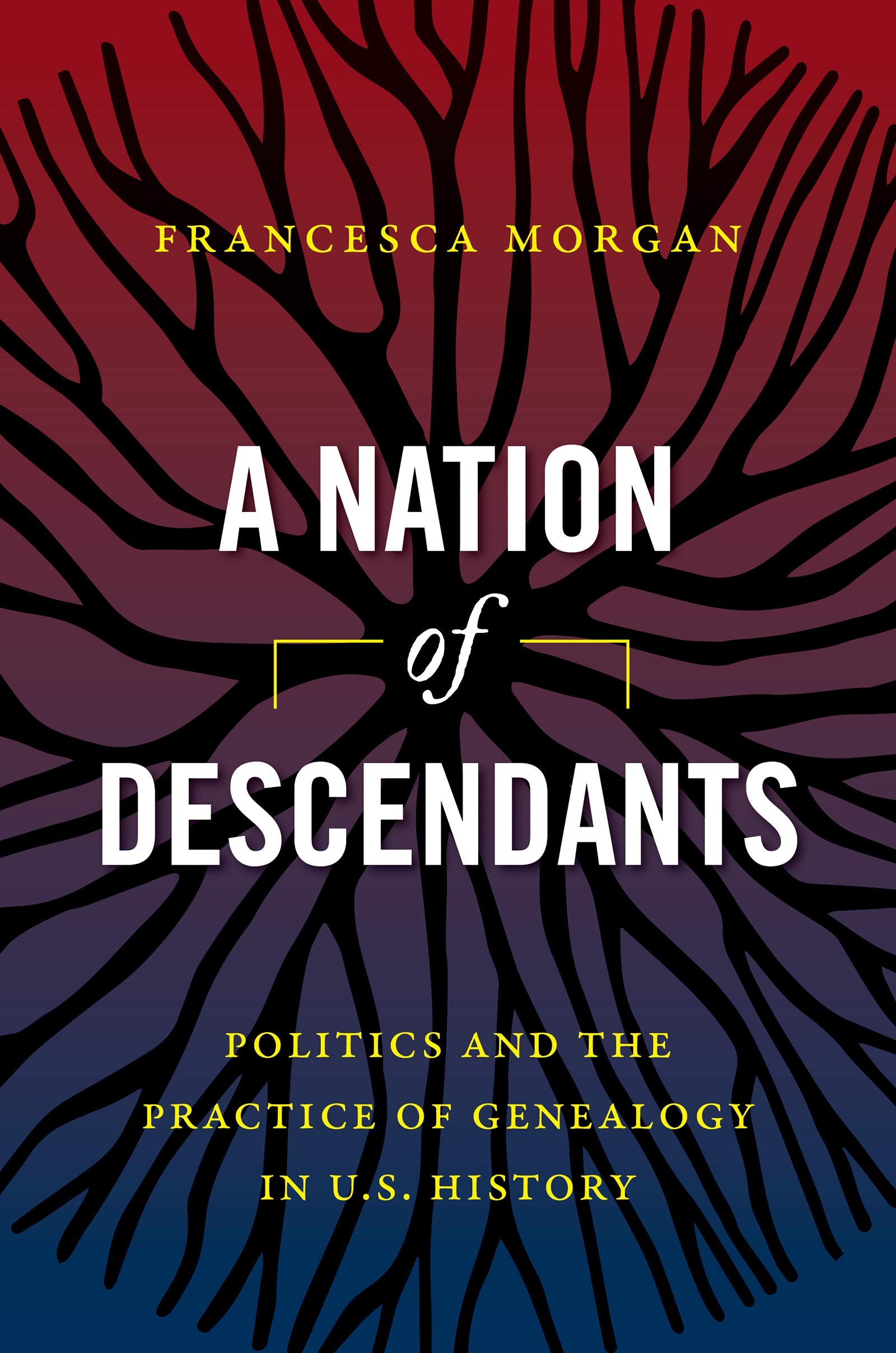
A Nation of Descendants: Politics and the Practice of Genealogy in U.S. History by Francesca Morgan – A Deep Dive into A
Inclusive of all applicable taxes. FREE shipping on all orders.
Available Offers
- 🚚Free Delivery — Free shipping on all orders
- 💵Cash on Delivery — Pay when your order arrives
- ↩️15-Day Easy Returns — Hassle-free return policy
- 🔒Cash on Delivery — Pay safely when your order arrives
Check Delivery
Product Description
Introduction
In a world where DNA test kits and online family trees have become household tools, the quest to understand our roots has never been more popular. But what does it truly mean to trace one's lineage in a nation built on migration, displacement, and multiculturalism? Francesca Morgan's A Nation of Descendants: Politics and the Practice of Genealogy in U.S. History offers a groundbreaking exploration of how genealogy has shaped—and been shaped by—American identity, power, and belonging. This compelling work is essential reading for students of history, sociology, and anyone curious about the politics hidden in family trees.
Book Overview
A Nation of Descendants takes readers on a sweeping journey through three centuries of American genealogy. Morgan examines how different communities—from Anglo-American whites and Mormons to African Americans, Jewish Americans, and Native Americans—have used genealogy to claim rights, preserve heritage, or challenge exclusion. The book also delves into the rise of commercial genealogy, from local businesses to companies like Ancestry.com, and the ethical implications of DNA testing. Rather than a simple history of family trees, this is a story of how blood, kinship, and ancestry have been politicized in the United States, influencing everything from land ownership to citizenship.
Key Highlights
- Multicultural perspective: Explores genealogy across five distinct communities, revealing how each group's approach to ancestry reflects its unique historical struggles.
- Historical depth: Covers three centuries of practice, from colonial-era family Bibles to modern genetic testing.
- Political lens: Connects genealogy to debates over inheritance, immigration, and national identity.
- Critical analysis: Examines the controversies surrounding DNA ancestry tests and their impact on personal and collective memory.
- Scholarly yet accessible: Written for both academic and general readers, with vivid examples and clear prose.
Inside the Book
Morgan structures her narrative around key moments in American history. Readers will discover how Mormon genealogists built vast archives to link families across generations, how African Americans reconstructed family lines severed by slavery, and how Native Americans used tribal rolls to assert sovereignty. The book also unpacks the 'birther' conspiracy theories and the commercialization of genealogy, showing how DNA kits have created new forms of identity politics. Each chapter weaves personal stories with broader historical currents, making the past feel immediate and relevant.
Key Topics
- The evolution of genealogical practices from handwritten Bibles to digital databases
- Genealogy as a tool for claiming land, citizenship, and reparations
- Mormon theology and the spiritual imperative of family history
- African American genealogical recovery after slavery
- Native American blood quantum laws and tribal membership
- Jewish genealogical research and the Holocaust
- The rise of commercial DNA testing and its ethical dilemmas
- Genealogy and the politics of race, ethnicity, and nationhood
Reader Benefits
This book offers Indian readers a unique comparative perspective on how another diverse society grapples with ancestry. It deepens understanding of how genealogy intersects with power, memory, and justice. Students of history will gain a nuanced view of American social dynamics, while anyone fascinated by family history will appreciate the critical lens Morgan brings to a popular pursuit. The book also encourages reflection on how Indian readers might view their own genealogical traditions—from gotras to caste histories—in a new light.
Learning Outcomes
After reading A Nation of Descendants, you will be able to: analyse the political uses of genealogy in different historical contexts; understand how marginalized communities have used family history to resist oppression; critically evaluate DNA ancestry testing and its claims; connect genealogical practices to larger debates about identity and belonging; and apply historical thinking to contemporary questions about heritage and citizenship.
Who Should Read
- History students seeking a fresh perspective on American social and political history
- Sociology and anthropology scholars interested in kinship, race, and identity
- Genealogy enthusiasts who want to understand the deeper implications of their hobby
- Indian readers curious about how other cultures navigate ancestry and belonging
- Educators looking for a compelling text on the politics of memory
- Anyone who has taken a DNA test and wondered about its meaning
About the Author
Francesca Morgan is a Professor of History at Northeastern Illinois University, where she specialises in American cultural and political history. Her research focuses on how ordinary people engage with the past, from genealogy to public memory. She is also the author of Women and Patriotism in Jim Crow America. Morgan brings both scholarly rigour and a storyteller's touch to her work, making complex ideas accessible without sacrificing depth.
About the Publisher
The University of North Carolina Press is one of the oldest and most respected academic publishers in the United States. Known for its distinguished list in American history, the press is committed to publishing works that challenge and enlighten. This hardcover edition is crafted to the highest standards of quality, making it a durable addition to any library.
Conclusion
A Nation of Descendants is more than a history of genealogy—it is a mirror held up to America's ongoing struggle over who belongs and why. Francesca Morgan masterfully shows that the search for ancestors is never just personal; it is deeply political. For Indian readers, this book offers a powerful lens to examine how heritage can both unite and divide. Whether you are a student, a scholar, or simply someone who has ever wondered about your family tree, this book will change how you see the past—and the present. Order your copy today from Bookshops.in and embark on a journey through the politics of blood and memory.
Quick Summary
A Nation of Descendants: Politics and the Practice of Genealogy in U.S. History by Francesca Morgan is a groundbreaking study that examines how Americans have used genealogy to shape their identities, communities, and political claims over three centuries. From colonial family bibles to modern DNA testing, the book reveals the deep entwinement of ancestry with issues of race, citizenship, land ownership, and national belonging. Morgan focuses on the practices of Anglo-American whites, Mormons, African Americans, and Native Americans, showing how each group's genealogical efforts reflected their social standing and aspirations. The book also tackles controversial topics like the birther conspiracy and the commercialization of genetic ancestry. Written for both academic and general readers, this work provides a critical lens on why family history matters far beyond personal curiosity. Indian students of American studies, history enthusiasts, and anyone interested in the politics of identity will find this book enlightening. By ordering from Bookshops.in, you get a high-quality hardcover edition delivered to your doorstep in India, supporting a local bookstore that values scholarly works.
Book Highlights
Book Specifications
| ISBN-13 | 9781469664781 |
| ISBN-10 | 146966478X |
| Publisher | The University of North Carolina Press |
| Language | English |
| Dimensions | 20.5 x 1.7 x 23.3 cm |
| Weight | 476 g |
| Category | Americas › United States |
| Genre | History |
| Reading Age | Adult |
| Original Language | English |
Frequently Asked Questions
What is A Nation of Descendants about?
Who is the author of this book?
What time period does the book cover?
Which groups are highlighted in the book?
Does the book discuss DNA testing?
Is this book suitable for Indian readers?
What is the book's main argument?
How is this book different from other genealogy histories?
Does the book cover the birther conspiracy?
What is the author's background?
Are there illustrations or images?
Is this book part of a series?
How can I purchase this book in India?
Does the book have an index?
Readers Also Search For
Related Products
View All
History
The Information Revolution: Transforming the World Through Technology (World History)
History
Human Nature and the French Revolution: From the Enlightenment to the Napoleonic Code: 3 (Polygons: Cultural Diversities and Intersections, 3)
History
The Unmaking of Home in Contemporary Art (Cultural Spaces)

History
Handbook to Life in Medieval and Early Modern Japan | by William E. Deal | Oxford University Press | by William E. Deal | Oxford University Press | by William E. Deal | Oxford University Press | by William E. Deal | Oxford University Press | by William E. Deal | Oxford University Press | by William E. Deal | Oxford University Press | by William E. Deal | Oxford University Press | by William E. Deal | Oxford University Press | by William E. Deal | Oxford University Press | by William E. Deal | Ox

History
The Narrators of Barbarian History (A.D. 550-800) | by Walter Goffart | University of Notre Dame Press | by Walter Goffart | University of Notre Dame Press | by Walter Goffart | University of Notre Dame Press | by Walter Goffart | University of Notre Dame Press | by Walter Goffart | University of Notre Dame Press | by Walter Goffart | University of Notre Dame Press | by Walter Goffart | University of Notre Dame Press | by Walter Goffart | University of Notre Dame Press | by Walter Goffart | Univ
History