
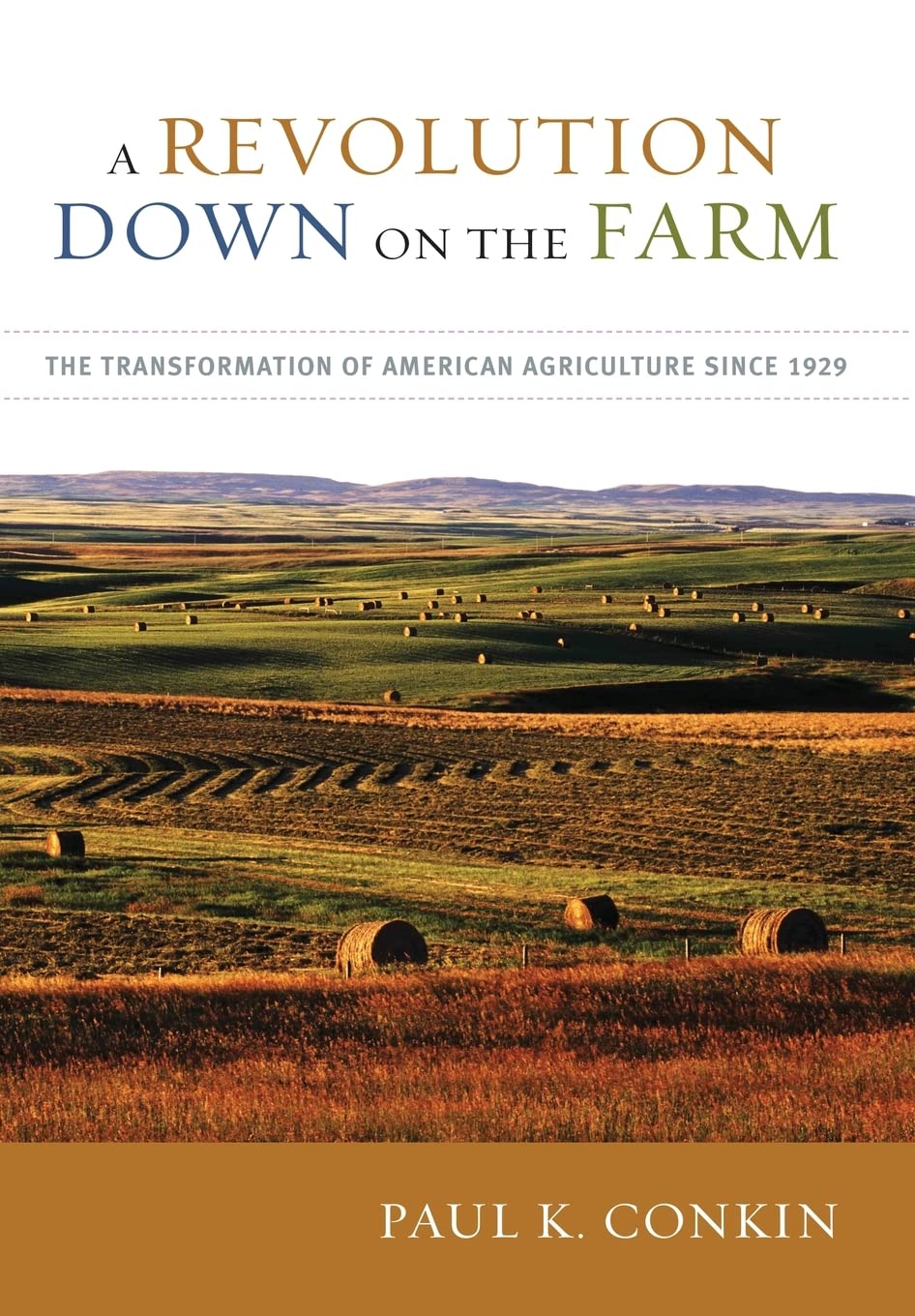
A Revolution Down on the Farm: The Transformation of American Agriculture Since 1929
Inclusive of all applicable taxes. FREE shipping on all orders.
Available Offers
- 🚚Free Delivery — Free shipping on all orders
- 💵Cash on Delivery — Pay when your order arrives
- ↩️15-Day Easy Returns — Hassle-free return policy
- 🔒Cash on Delivery — Pay safely when your order arrives
Check Delivery
Product Description
Introduction
In a world where the plates of millions are filled by the silent revolution of the tractor and the seed, A Revolution Down on the Farm: The Transformation of American Agriculture Since 1929 by Paul K. Conkin offers a compelling deep dive into the most profound industrial shift in human history. For Indian readers, students of agricultural science, and policy enthusiasts, this book is not just an American story—it is a mirror reflecting the global journey from subsistence farming to industrial might. Published by the esteemed University Press of Kentucky, this hardcover volume is a vital resource for understanding how a handful of generations turned the soil into a powerhouse of productivity.
Book Overview
Spanning from the dawn of the Great Depression to the modern era of biotechnology, Conkin’s work chronicles the dramatic evolution of American farming. In 1900, nearly 30 million farmers worked the land; today, fewer than 4.5 million feed a nation four times larger. The book unravels how mechanisation, chemical fertilisers, hybrid seeds, and government policies transformed agriculture into a tenfold more productive industry. Conkin does not merely list inventions; he weaves a narrative of human triumph, economic upheaval, and the bittersweet loss of the family farm. This is a story of how the United States became the world’s breadbasket—and what that cost in social and environmental terms.
Key Highlights
- Comprehensive timeline: Covers the critical period from 1929 to the early 21st century, capturing every major breakthrough.
- Human-centred narrative: Focuses on the lives of farmers, tenants, and rural communities, not just machines and yields.
- Policy analysis: Examines the New Deal, farm subsidies, and trade agreements that shaped modern agriculture.
- Global context: Links American agricultural transformation to worldwide food security—a lesson for developing nations like India.
- Environmental impact: Discusses soil erosion, water use, and the ecological footprint of industrial farming.
Inside the Book
Conkin opens with the Dust Bowl and the Great Depression, painting a vivid picture of a desperate time. He then guides readers through the rise of tractors, the Green Revolution’s hybrid corn, the poultry industry’s vertical integration, and the biotechnology debates of the 1990s. Each chapter is rich with statistical data, personal anecdotes, and critical analysis. The book also explores the decline of small farms and the rise of agribusiness, offering a balanced view that neither glorifies nor condemns progress. For Indian readers, parallels with India’s own Green Revolution and the challenges of smallholder farming will be striking.
Key Topics
- Mechanisation of farming: From horse-drawn plows to GPS-guided tractors
- The role of federal policy: Agricultural Adjustment Act, crop insurance, and subsidies
- Scientific breakthroughs: Hybrid seeds, synthetic fertilisers, and pesticides
- Livestock transformation: Factory farming and the poultry revolution
- Environmental consequences: Soil conservation, water depletion, and climate change
- The human cost: Rural depopulation, loss of tenant farming, and community decline
- Biotechnology: Genetically modified organisms (GMOs) and the future of food
Reader Benefits
This book equips you with a deep understanding of the forces that put food on your table. You will gain insights into why food prices fluctuate, how policy decisions in Washington affect farmers in Punjab, and what technological trends will shape the next decade. For students of economics, history, and environmental science, it provides a solid foundation for academic work. For policy makers and agribusiness professionals, it offers lessons from America’s successes and failures. And for the curious reader, it is an engaging story of human ingenuity and resilience.
Learning Outcomes
- Understand the key technological and policy drivers of agricultural productivity since 1929
- Analyse the social and environmental trade-offs of industrial agriculture
- Compare the American agricultural trajectory with India’s own Green Revolution and current challenges
- Evaluate the role of government intervention in farming economies
- Identify the roots of contemporary debates on GMOs, organic farming, and sustainable agriculture
- Appreciate the complexity of feeding a growing global population
Who Should Read
This book is ideal for undergraduate and postgraduate students in agriculture, history, economics, and environmental studies. It is also a must-read for policy analysts, agricultural extension officers, NGO workers in rural development, and anyone with a passion for understanding how our food system works. Indian readers, especially those from farming families or with an interest in comparative development, will find the narrative both enlightening and thought-provoking. The book is written in an accessible style, requiring no prior expertise in agricultural science.
About the Author
Paul K. Conkin is a distinguished American historian and professor emeritus at Vanderbilt University. He has authored numerous works on American political and intellectual history, with a special focus on rural life and agricultural policy. His meticulous research and clear, engaging prose have earned him a reputation as a leading voice in the field. Conkin’s personal connection to farming—he grew up on a small Tennessee farm—infuses the book with authenticity and empathy.
About the Publisher
University Press of Kentucky is a respected academic publisher known for its rigorous scholarship and high-quality publications in history, literature, and the sciences. With a commitment to making complex subjects accessible, the press has published works that shape academic discourse and inform public policy. This hardcover edition reflects their dedication to durable, beautifully produced books that will last for generations.
Conclusion
A Revolution Down on the Farm is more than a history lesson—it is a roadmap for understanding the past, present, and future of food production. In an era of climate anxiety and food insecurity, Conkin’s masterful account reminds us that the greatest revolution of the 20th century happened not in factories or laboratories, but in the fields. Whether you are a student, a farmer, or simply a thoughtful eater, this book will change the way you see every meal. Order your copy today from Bookshops.in and join the conversation about where our food comes from—and where it is going.
Quick Summary
A Revolution Down on the Farm: The Transformation of American Agriculture Since 1929 by Paul K. Conkin is a comprehensive historical account of the most dramatic changes in farming history. The book traces how American agriculture evolved from millions of small family farms to a highly mechanized, industrial system capable of feeding a global population. Conkin explores the roles of technology—tractors, hybrid seeds, irrigation—and government policies from the New Deal to modern subsidies. He also addresses the social and environmental costs, such as rural depopulation and ecological strain. This book is ideal for students of history, agricultural science, economics, and policy, as well as general readers curious about where their food comes from. By understanding the American experience, Indian readers can draw parallels to their own agricultural transformation. Buying from Bookshops.in ensures you receive a quality hardcover edition, supporting an Indian online bookstore dedicated to knowledge.
Book Highlights
Book Specifications
| ISBN-13 | 9780813125190 |
| ISBN-10 | 0813125197 |
| Publisher | Univ Pr of Kentucky |
| Language | English |
| Dimensions | 15.24 x 1.75 x 22.86 cm |
| Weight | 508 g |
| Category | Americas › United States |
| Genre | Nonfiction |
| Original Language | English |
Frequently Asked Questions
What is A Revolution Down on the Farm about?
Who is the author of this book?
Is this book suitable for Indian readers?
What time period does the book cover?
Does the book discuss environmental issues?
What is the main argument of the book?
Is this book academic or popular?
Does the book cover organic or sustainable farming?
What is the ISBN?
Can I use this book for a university course?
Does the book include data and statistics?
Why should I buy this book from Bookshops.in?
Readers Also Search For
Related Products
View All
History
The Information Revolution: Transforming the World Through Technology (World History)

History
Human Nature and the French Revolution: From the Enlightenment to the Napoleonic Code: 3 (Polygons: Cultural Diversities and Intersections, 3)

History
The Unmaking of Home in Contemporary Art (Cultural Spaces)

History
Handbook to Life in Medieval and Early Modern Japan | by William E. Deal | Oxford University Press | by William E. Deal | Oxford University Press | by William E. Deal | Oxford University Press | by William E. Deal | Oxford University Press | by William E. Deal | Oxford University Press | by William E. Deal | Oxford University Press | by William E. Deal | Oxford University Press | by William E. Deal | Oxford University Press | by William E. Deal | Oxford University Press | by William E. Deal | Ox

History
The Narrators of Barbarian History (A.D. 550-800) | by Walter Goffart | University of Notre Dame Press | by Walter Goffart | University of Notre Dame Press | by Walter Goffart | University of Notre Dame Press | by Walter Goffart | University of Notre Dame Press | by Walter Goffart | University of Notre Dame Press | by Walter Goffart | University of Notre Dame Press | by Walter Goffart | University of Notre Dame Press | by Walter Goffart | University of Notre Dame Press | by Walter Goffart | Univ

History