
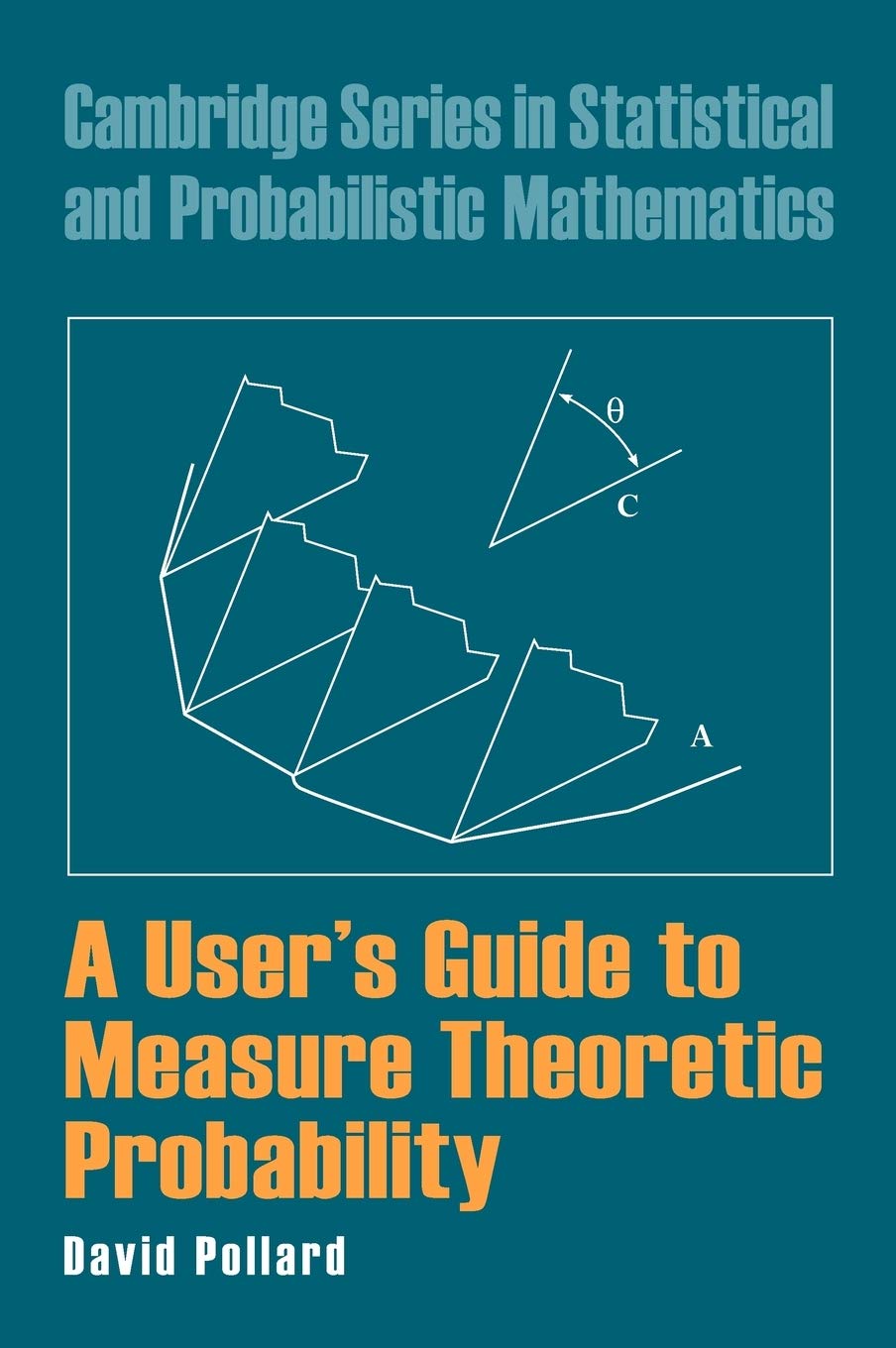
A User's Guide to Measure Theoretic Probability by David Pollard – A Comprehensive Textbook for Graduate Students in Sta
Inclusive of all applicable taxes. FREE shipping on all orders.
Available Offers
- 🚚Free Delivery — Free shipping on all orders
- 💵Cash on Delivery — Pay when your order arrives
- ↩️15-Day Easy Returns — Hassle-free return policy
- 🔒Cash on Delivery — Pay safely when your order arrives
Check Delivery
Product Description
Introduction
For students and professionals navigating the demanding world of advanced probability and statistics, a solid grasp of measure-theoretic probability is no longer optional—it is essential. David Pollard's A User's Guide to Measure Theoretic Probability, published by Cambridge University Press, is a masterfully crafted text that bridges the gap between intuitive, calculus-based probability and the rigorous mathematical framework required for modern research and application. This hardbound edition is an indispensable resource for Indian readers pursuing deeper knowledge in econometrics, finance, biostatistics, and data science.
Book Overview
First published in 2002, this book grew out of Pollard's long-running one-semester course designed for a mixed audience of graduate and advanced undergraduate students—many without prior exposure to formal measure theory. The text does not assume a background in measure theory; instead, it gently but thoroughly introduces the necessary concepts as they become relevant. The core of the book covers independence, conditioning, martingales, convergence in distribution, and Fourier transforms, while also venturing into advanced topics such as coupling, the KMT strong approximation, option pricing via equivalent martingale measures, and the isoperimetric inequality for Gaussian processes. Each chapter is built around clear, probabilistic reasoning, making abstract ideas tangible through well-chosen examples and exercises.
Key Highlights
- Accessible yet rigorous—designed for students without a prior measure theory course
- Broad coverage from foundational concepts to advanced modern applications
- Real-world relevance includes option pricing, Gaussian processes, and coupling methods
- Clear exposition with intuitive explanations before formal definitions
- Self-contained with ample exercises for practice and deeper understanding
Inside the Book
This hardcover volume is structured to guide the reader from basic probabilistic intuition to sophisticated measure-theoretic arguments. The early chapters build the necessary measure theory foundations—sigma-algebras, measurable functions, integration, and convergence theorems—always with probability in mind. Later chapters explore conditional expectations, martingale theory, weak convergence, and characteristic functions. The final sections introduce advanced tools like the Skorokhod representation, the Brownian bridge, and the isoperimetric inequality, providing a taste of cutting-edge probability theory. Every theorem is motivated by a probabilistic question, and proofs are presented with clarity and purpose.
Key Topics
- Measure spaces and sigma-algebras for probability
- Integration and expectation in the measure-theoretic setting
- Independence, conditioning, and conditional expectations
- Martingales in discrete and continuous time
- Convergence in distribution and the central limit theorem
- Fourier transforms and characteristic functions
- Coupling and the KMT strong approximation
- Option pricing and equivalent martingale measures
- Gaussian processes and isoperimetric inequalities
Reader Benefits
This book empowers readers to read and understand modern research papers in probability, statistics, and finance. By building rigorous foundations, it enables deeper insight into stochastic processes, statistical inference, and probabilistic modeling. The practical examples from economics, biology, and engineering make abstract concepts relatable. Indian students preparing for competitive exams or advanced coursework will find the clear exposition a significant advantage over more terse treatments. Professionals in data science and quantitative finance will gain the theoretical depth needed to develop new models and algorithms.
Learning Outcomes
Upon completing this book, readers will be able to construct and manipulate probability spaces using measure theory, prove convergence results for sequences of random variables, apply martingale theory to problems in finance and statistics, understand weak convergence and the central limit theorem in full generality, and use Fourier transforms to analyze distributions. They will also be equipped to tackle advanced topics like coupling and Gaussian processes, and to read original research with confidence.
Who Should Read
- Graduate students in statistics, biostatistics, econometrics, and finance
- Advanced undergraduates with strong calculus backgrounds seeking rigorous probability
- Researchers and professionals in data science, quantitative finance, and actuarial science
- Self-learners who want to master the mathematical foundations of probability
About the Author
David Pollard is a distinguished statistician and probabilist, known for his clear and insightful writing. He has taught at Yale University and the University of Cambridge, and his research spans empirical processes, Gaussian processes, and statistical inference. Pollard's pedagogical style emphasizes intuition without sacrificing rigor, making his books favorites among students worldwide. His ability to demystify complex topics has earned him a reputation as one of the finest expositors in probability theory.
About the Publisher
Cambridge University Press is a world-leading academic publisher with a rich history dating back to 1534. Known for its rigorous editorial standards and wide-ranging catalog, Cambridge publishes seminal works in mathematics, science, and the humanities. This hardcover edition reflects the publisher's commitment to producing durable, high-quality academic books that serve as lasting resources for scholars and students alike.
Conclusion
A User's Guide to Measure Theoretic Probability is more than a textbook—it is a companion for anyone serious about understanding probability at a deep level. David Pollard's lucid explanations, combined with the book's comprehensive coverage, make it an essential addition to the library of every Indian student and researcher in the mathematical sciences. Whether you are preparing for a career in academia, finance, or data science, this book will equip you with the rigorous probabilistic tools you need to excel. Order your copy today from Bookshops.in and take a decisive step toward mastering measure-theoretic probability.
Quick Summary
A User's Guide to Measure Theoretic Probability by David Pollard is a seminal textbook that makes rigorous probability theory accessible to students who have not taken a dedicated measure theory course. Published by Cambridge University Press in 2001, the book builds on Kolmogorov's measure-theoretic foundations and covers essential topics: independence, conditioning, martingales, convergence in distribution, and Fourier transforms. Pollard's clear, example-driven style helps readers develop deep intuition while maintaining mathematical precision. The book is ideal for graduate students in statistics, biostatistics, econometrics, finance, and related fields, as well as advanced undergraduates seeking a solid foundation for research. Unlike many advanced texts, it does not assume prior measure theory, making it a perfect bridge between undergraduate probability and modern theoretical work. Readers will gain the ability to handle abstract probabilistic arguments, understand conditional expectations, master martingale convergence, and apply Fourier methods. By purchasing from Bookshops.in, Indian students and researchers get an authentic hardcover edition at a competitive price, backed by reliable delivery and customer support.
Book Highlights
Book Specifications
| ISBN-13 | 9780521802420 |
| ISBN-10 | 0521802423 |
| Publisher | Cambridge University Press |
| Language | English |
| Dimensions | 17.78 x 2.54 x 25.4 cm |
| Weight | 850 g |
| Country | India |
| Category | Mathematics › Statistics |
| Genre | Non-fiction |
| Original Language | English |
Frequently Asked Questions
What is the main focus of this book?
Do I need a background in measure theory?
Who is the author David Pollard?
Is this book suitable for Indian university courses?
What topics are covered in detail?
Is this book a hardcover or paperback?
Can I use this book for self-study?
Does the book include exercises?
Is this book relevant for finance students?
How does this book differ from other probability texts?
Does the book cover stochastic processes?
What is the ISBN?
Where can I buy this book in India?
Readers Also Search For
Customers Also Bought
Mathematics
Stereotype Spaces and Algebras: 73 (De Gruyter Expositions in Mathematics, 73)
Mathematics
Semigroups in Algebra, Geometry and Analysis: 20 (De Gruyter Expositions in Mathematics, 20)
Mathematics
Geometry from the Pacific Rim: Proceedings of the Pacific Rim Geometry Conference held at National University of Singapore, Republic of Singapore, ... 1994 (De Gruyter Proceedings in Mathematics)
Mathematics
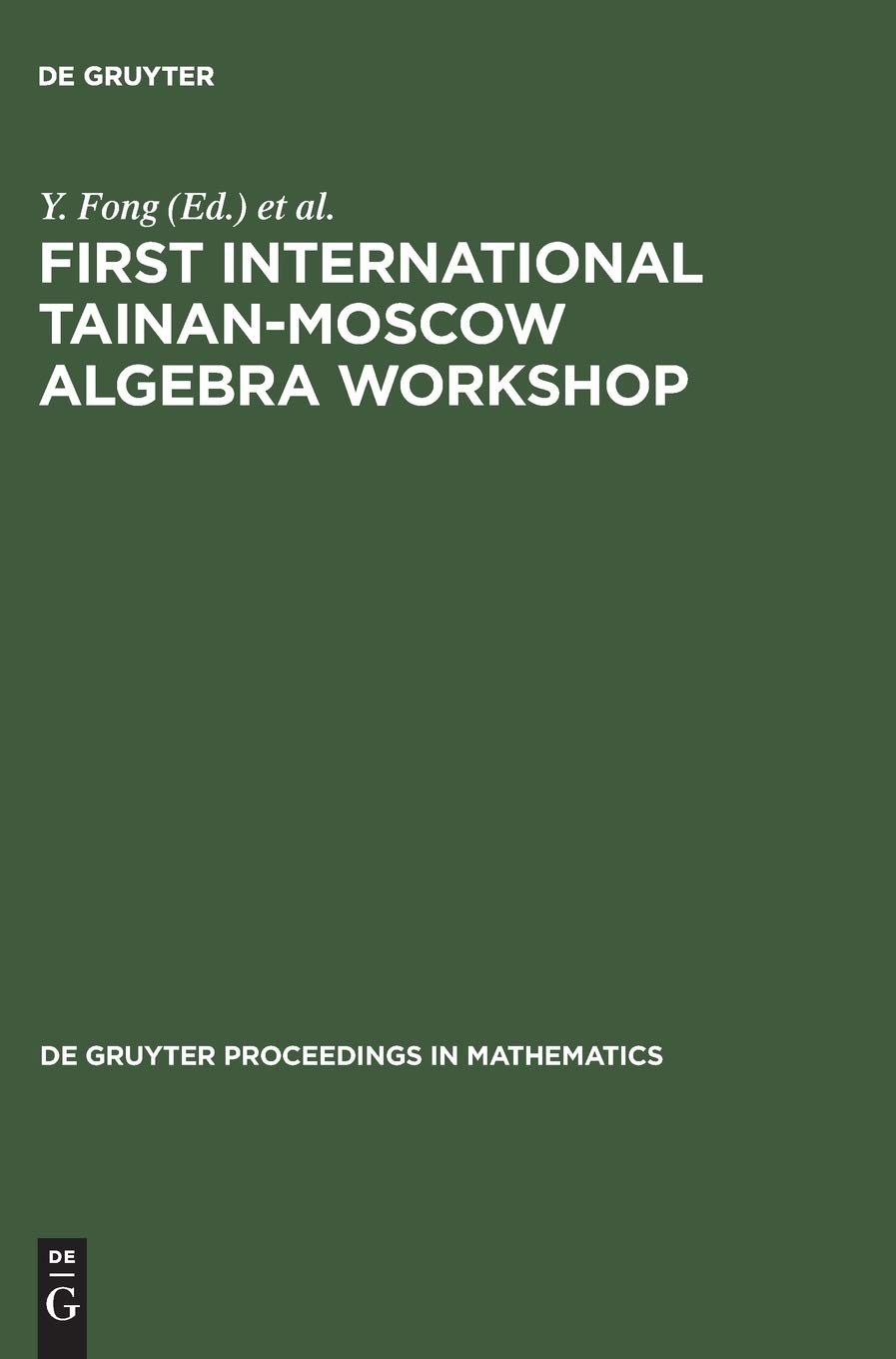
First International Tainan-Moscow Algebra Workshop: Proceedings of the International Conference held at National Cheng Kung University Tainan, Taiwan, ... 1994 (De Gruyter Proceedings in Mathematics)
Mathematics
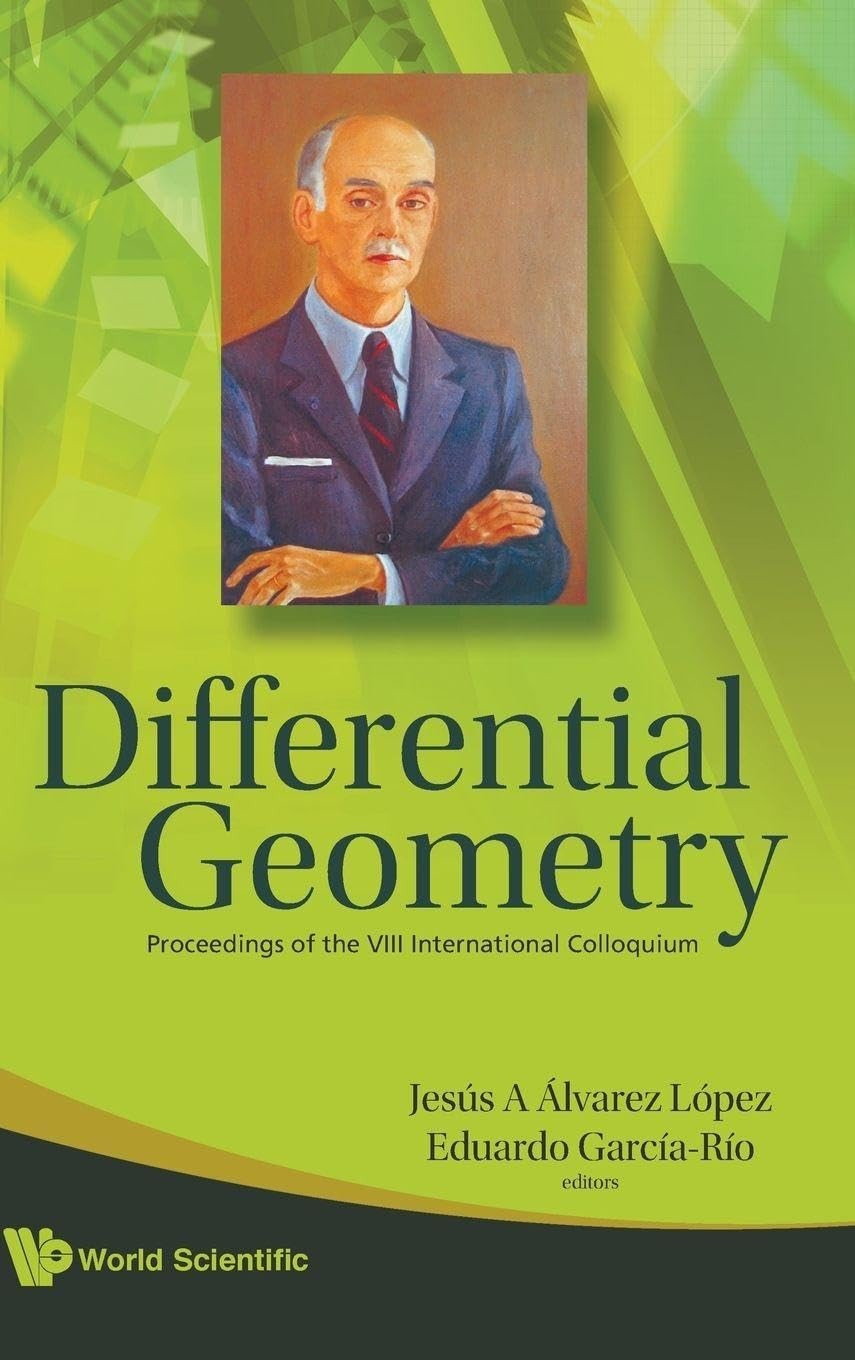
Differential Geometry - Proceedings of the VIII International Colloquium (English, Jesus A. Alvarez Lopez | Eduardo Garcia-Rio)
Mathematics
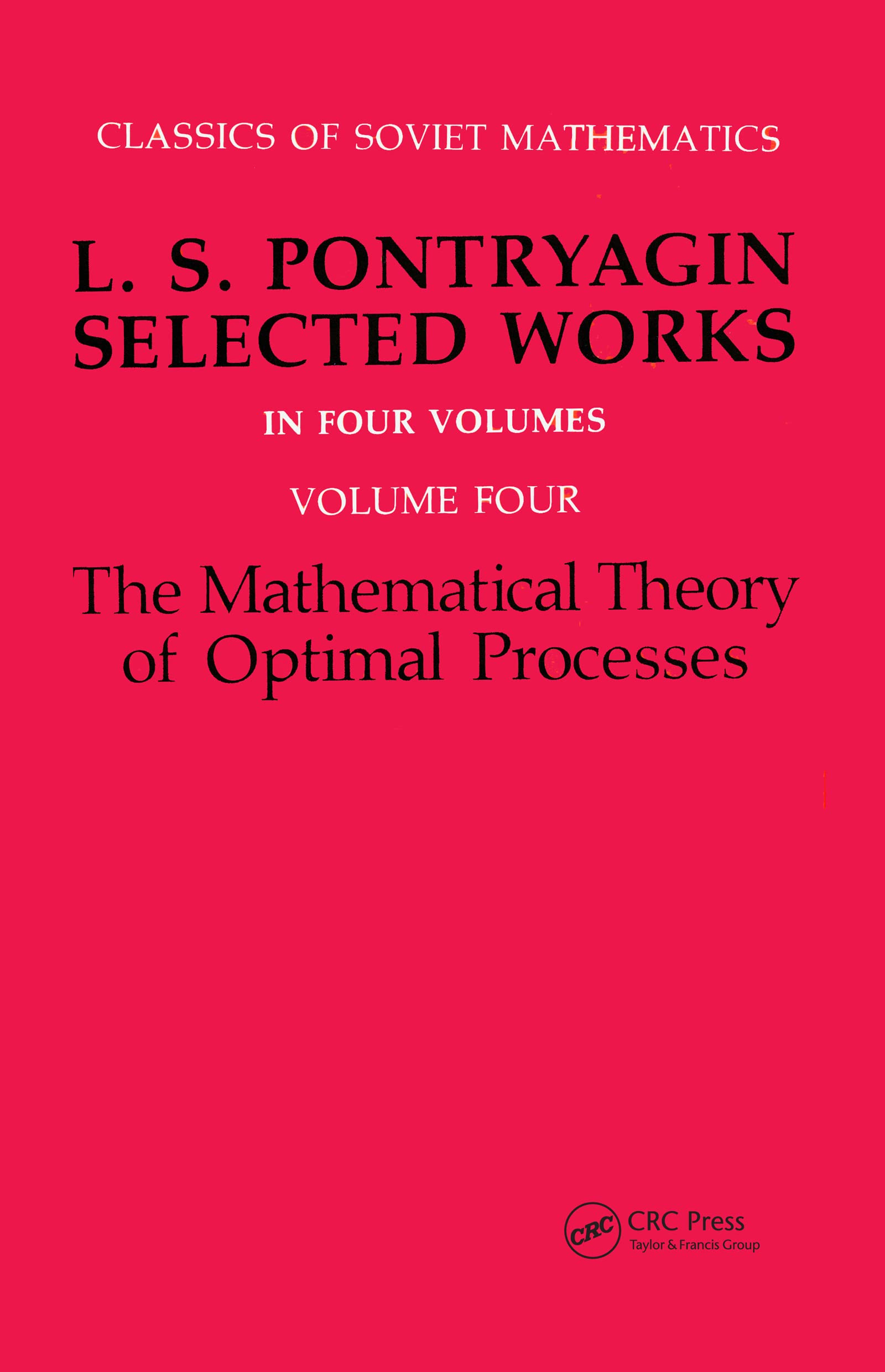
Mathematical Theory of Optimal Processes (Classics of Soviet Mathematics)
Related Products
View All
Statistics
Asymptotics in Statistics and Probability: Papers in Honor of George Gregory Roussas
Statistics
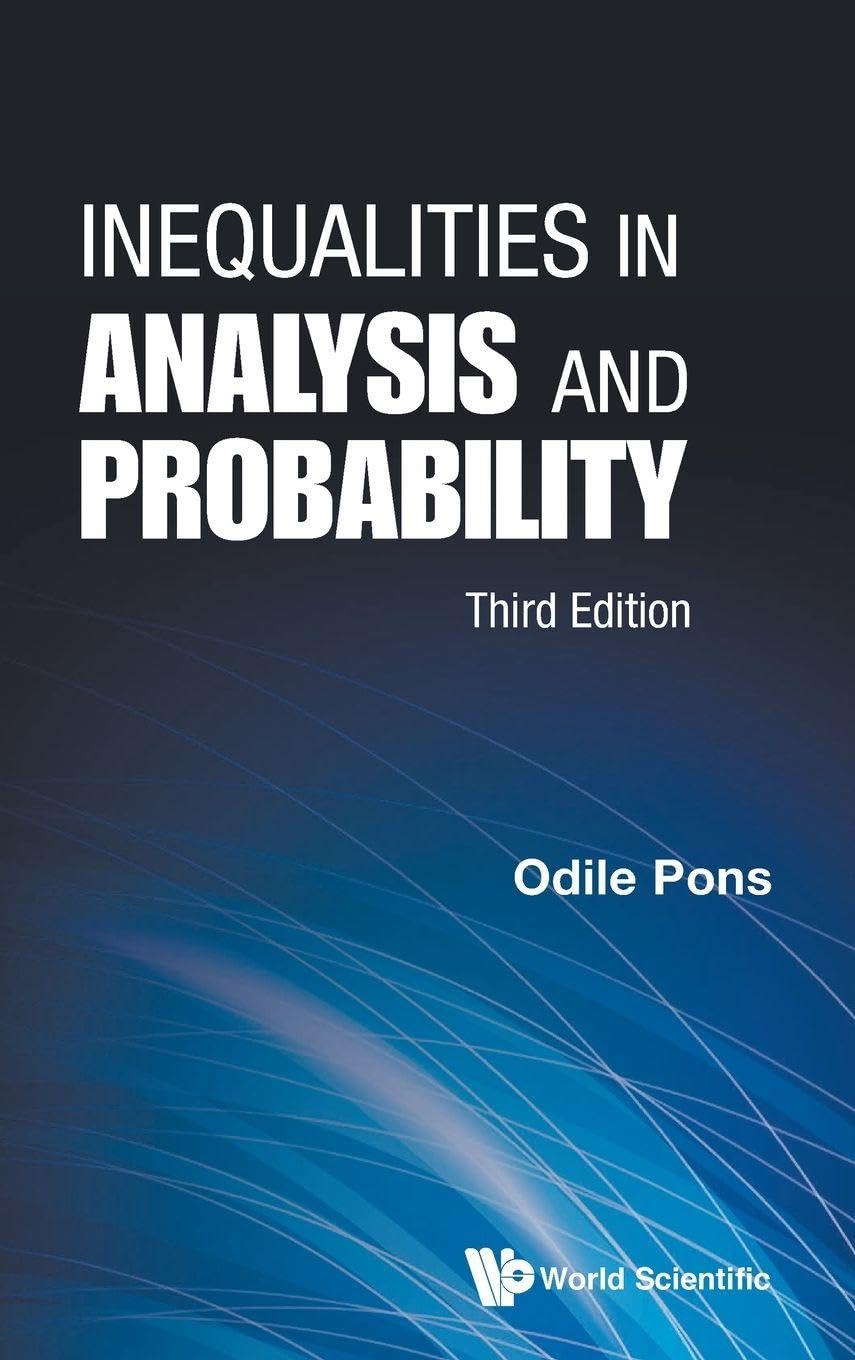
Inequalities in Analysis and Probability: 3rd Edition
Statistics
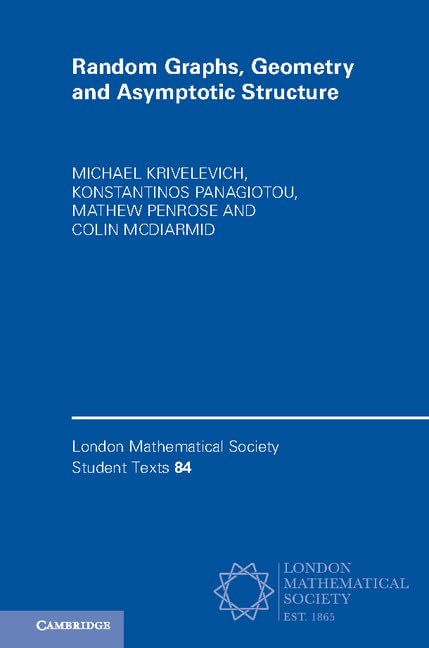
Random Graphs, Geometry and Asymptotic Structure
Statistics
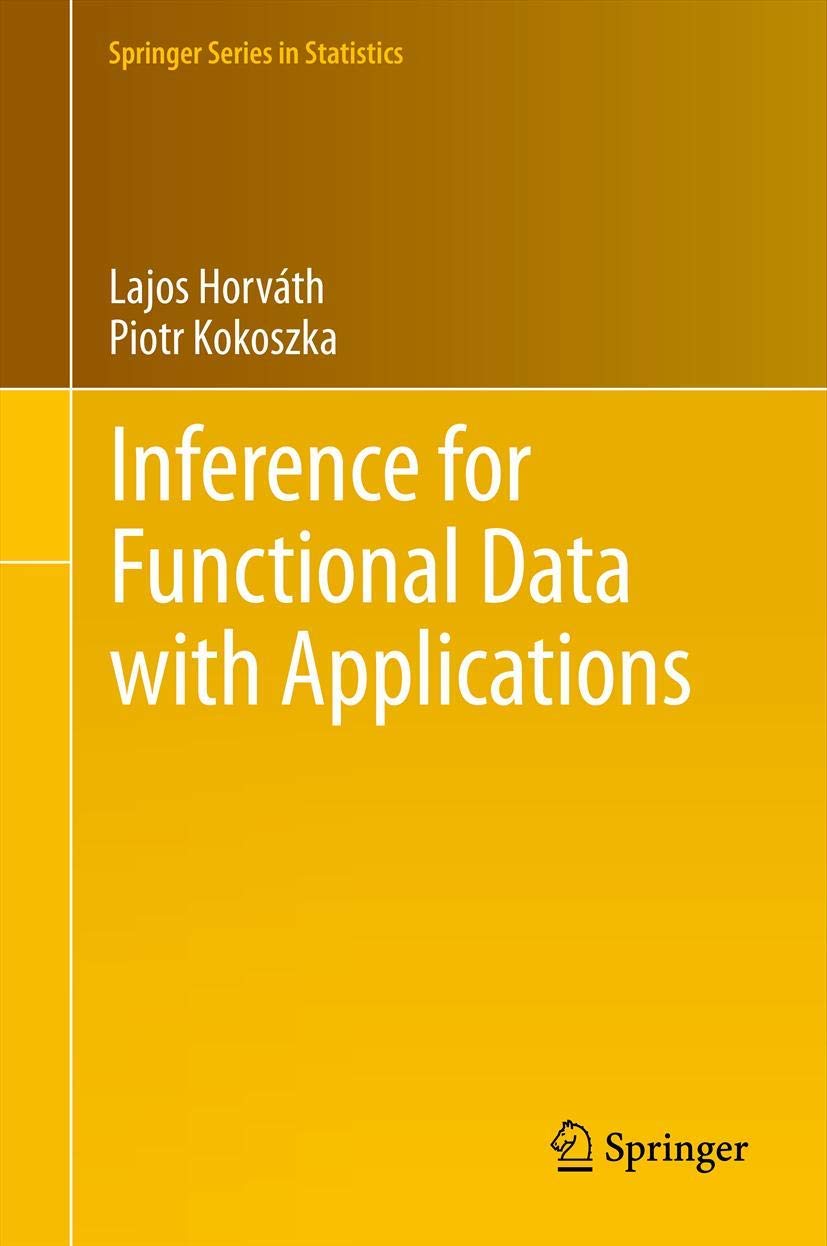
Inference for Functional Data With Applications: 200 (Springer Series in Statistics, 692)
Statistics
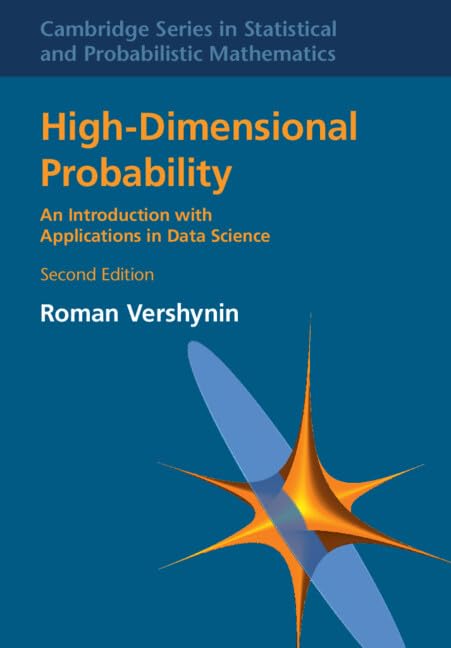
High-Dimensional Probability: An Introduction with Applications in Data Science (Cambridge Series in Statistical and Probabilistic Mathematics)
Statistics