
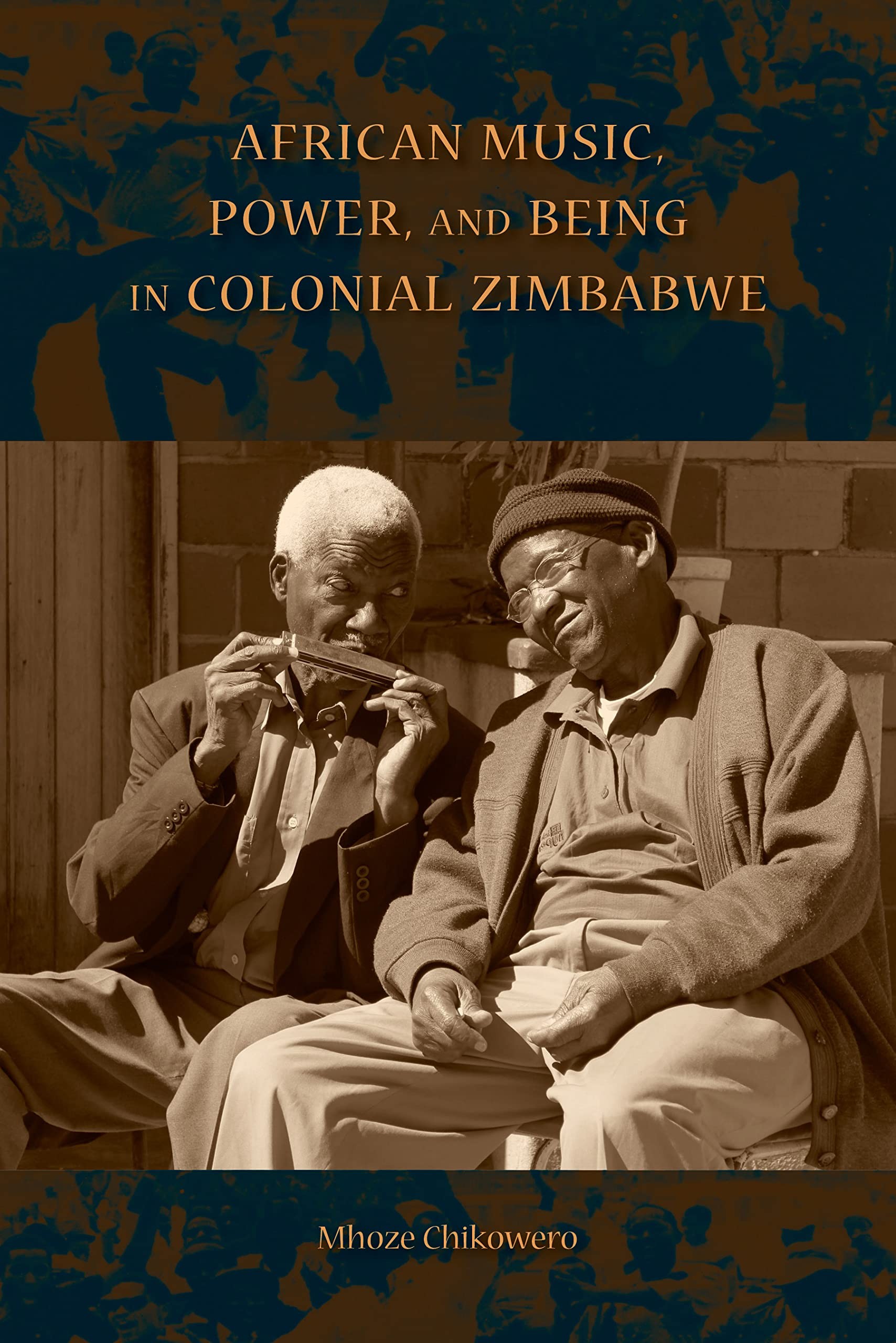
African Music, Power, and Being in Colonial Zimbabwe by Mhoze Chikowero – A Deep Dive into Music, Colonialism, and Afric
Inclusive of all applicable taxes. FREE shipping on all orders.
Available Offers
- 🚚Free Delivery — Free shipping on all orders
- 💵Cash on Delivery — Pay when your order arrives
- ↩️15-Day Easy Returns — Hassle-free return policy
- 🔒Cash on Delivery — Pay safely when your order arrives
Check Delivery
Product Description
Introduction
African Music, Power, and Being in Colonial Zimbabwe by Mhoze Chikowero is a groundbreaking exploration of how music became a vital tool of resistance, identity, and cultural survival under colonial rule. Published by Indiana University Press, this hardcover volume offers a fresh perspective on Zimbabwe’s history, centering African voices and indigenous knowledge systems. For students, scholars, and music enthusiasts in India and beyond, this book reveals the profound connections between sound, power, and liberation in a colonized society.
Book Overview
This meticulously researched work traces the role of music in Zimbabwe from the 1890s missionary era through the liberation struggle of the 1970s. Chikowero reads colonial archives against the grain, using African sources to uncover how communities deployed song, dance, and performance to assert their humanity and fight British domination. The book highlights how colonial institutions—missions, mines, and urban dance halls—sought to control African expression, while Africans creatively repurposed these spaces for resistance. The narrative builds toward the Chimurenga music of guerrilla artists like Thomas Mapfumo, Dorothy Masuku, and Zexie Manatsa, showing how music became a weapon for freedom.
Key Highlights
- Original Archival Work: Uses African oral traditions, songs, and testimonies to challenge colonial narratives.
- Cultural Resistance: Demonstrates how music preserved indigenous knowledge and fostered collective defiance.
- Historical Scope: Covers nearly a century, from missionary crusades to the 1970s liberation war.
- Artists Spotlight: Examines the contributions of iconic musicians like Thomas Mapfumo and Dorothy Masuku.
- Decolonial Framework: Offers a model for studying music as a site of power and self-liberation.
Inside the Book
The book is divided into thematic chapters that explore mission bands, mining compound dances, urban jazz, and guerrilla music. Chikowero analyzes how colonial authorities banned traditional ceremonies and forced Africans into Western musical forms, only to see these forms turned into vehicles of protest. He also delves into the role of women musicians and the spiritual dimensions of performance. Rich with song lyrics, interview excerpts, and historical photographs, the text brings the struggle to life.
Key Topics
- Missionary campaigns against African performative cultures
- Induction of African students into mission brass bands
- Segregated dance halls in cities and mining compounds
- The rise of Chimurenga music in the 1970s
- Indigenous knowledge systems and cultural sovereignty
- Gender dynamics in musical resistance
Reader Benefits
This book offers Indian readers a deep understanding of how colonized peoples used art to reclaim agency. It provides comparative insights for those studying postcolonial theory, African history, or ethnomusicology. The accessible writing makes complex ideas clear, while the rich case studies inspire reflection on the power of culture in struggles for justice. Readers will gain tools to analyze music as a political force in their own contexts.
Learning Outcomes
- Understand the historical relationship between music and colonial power in Africa.
- Analyze how indigenous knowledge systems resisted erasure.
- Evaluate the role of musicians in liberation movements.
- Develop critical perspectives on archival sources and oral traditions.
- Apply decolonial methodologies to the study of culture and politics.
Who Should Read
This book is ideal for postgraduate students and researchers in African studies, musicology, history, and postcolonial literature. It also appeals to general readers interested in world music, social movements, and the cultural dimensions of anti-colonial struggles. Indian readers studying comparative colonialism or the role of music in freedom movements will find valuable parallels.
About the Author
Mhoze Chikowero is a distinguished scholar of African history and music at the University of California, Santa Barbara. His research focuses on indigenous knowledge, colonial archives, and cultural resistance in southern Africa. He brings deep expertise in oral traditions and archival studies, making this work a landmark contribution to the field.
About the Publisher
Indiana University Press is a leading academic publisher based in the United States, renowned for its titles in African studies, music, and cultural history. With a commitment to scholarly excellence, it publishes works that amplify marginalized voices and advance critical conversations.
Conclusion
African Music, Power, and Being in Colonial Zimbabwe is more than a history—it is a testament to the resilience of the human spirit through song. Mhoze Chikowero’s masterful study will change how you understand music, colonialism, and liberation. Order your hardcover copy from Bookshops.in today and add this essential work to your collection.
Quick Summary
'African Music, Power, and Being in Colonial Zimbabwe' by Mhoze Chikowero is a seminal academic work that reexamines the role of music in the colonial and liberation history of Zimbabwe. Starting from the 1890s, when missionaries sought to suppress African performative cultures, the book traces the evolution of music through segregated urban dance halls and mining compounds to the emergence of Chimurenga music in the 1970s. Chikowero uses African sources to challenge and reinterpret colonial archives, showing how indigenous knowledge systems and musical traditions became powerful weapons of resistance. Readers will gain a nuanced understanding of how music was not just entertainment but a site of political struggle and identity formation. This book is ideal for students and scholars of African history, musicology, postcolonial studies, and anyone interested in the intersection of culture and politics. By ordering from Bookshops.in, you support a trusted Indian bookstore that brings global scholarship to your doorstep.
Book Highlights
Book Specifications
| ISBN-13 | 9780253017680 |
| ISBN-10 | 0253017688 |
| Publisher | Indiana Univ Pr |
| Language | English |
| Dimensions | 15.75 x 3.05 x 23.37 cm |
| Weight | 635 g |
| Country | India |
| Category | Region & Countries › Africa |
| Genre | Non-fiction |
| Original Language | English |
Frequently Asked Questions
What is the main focus of 'African Music, Power, and Being in Colonial Zimbabwe'?
Who is the author of this book?
What time period does the book cover?
Is this book suitable for general readers or only academics?
What is Chimurenga music?
Does the book discuss specific musicians?
How does the author use colonial archives?
What role did missionaries play in African music?
What are indigenous knowledge systems?
What is the ISBN for this book?
What language is the book written in?
Why should I buy this book from Bookshops.in?
Can I use this book for research?
Readers Also Search For
Related Products
View All
History
The Information Revolution: Transforming the World Through Technology (World History)
History
Human Nature and the French Revolution: From the Enlightenment to the Napoleonic Code: 3 (Polygons: Cultural Diversities and Intersections, 3)
History
The Unmaking of Home in Contemporary Art (Cultural Spaces)

History
Handbook to Life in Medieval and Early Modern Japan | by William E. Deal | Oxford University Press | by William E. Deal | Oxford University Press | by William E. Deal | Oxford University Press | by William E. Deal | Oxford University Press | by William E. Deal | Oxford University Press | by William E. Deal | Oxford University Press | by William E. Deal | Oxford University Press | by William E. Deal | Oxford University Press | by William E. Deal | Oxford University Press | by William E. Deal | Ox

History
The Narrators of Barbarian History (A.D. 550-800) | by Walter Goffart | University of Notre Dame Press | by Walter Goffart | University of Notre Dame Press | by Walter Goffart | University of Notre Dame Press | by Walter Goffart | University of Notre Dame Press | by Walter Goffart | University of Notre Dame Press | by Walter Goffart | University of Notre Dame Press | by Walter Goffart | University of Notre Dame Press | by Walter Goffart | University of Notre Dame Press | by Walter Goffart | Univ
History