
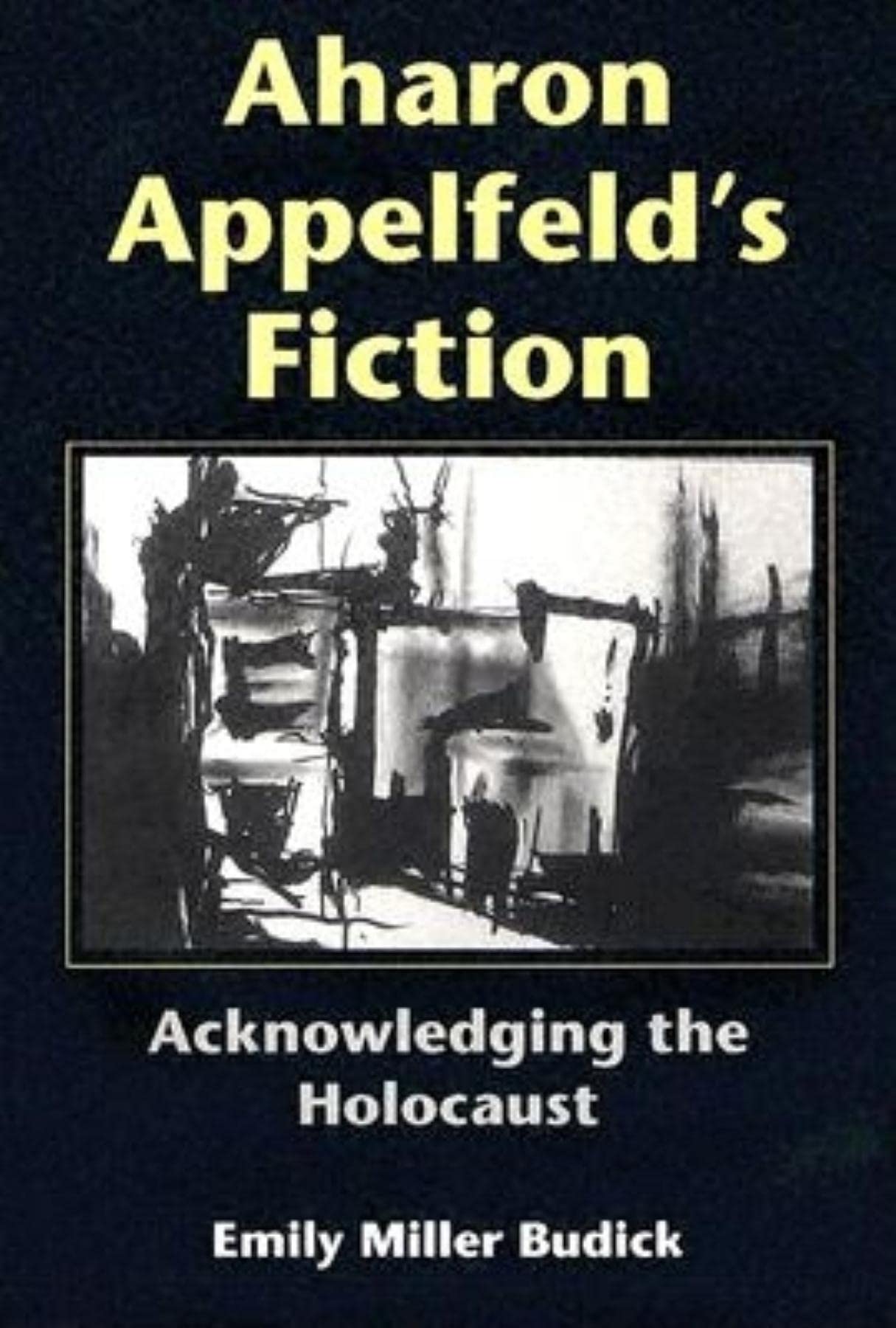
Aharon Appelfeld's Fiction: Acknowledging The Holocaust by Emily Miller Budick – A Philosophical Study of Holocaust Lite
Inclusive of all applicable taxes. FREE shipping on all orders.
Available Offers
- 🚚Free Delivery — Free shipping on all orders
- 💵Cash on Delivery — Pay when your order arrives
- ↩️15-Day Easy Returns — Hassle-free return policy
- 🔒Cash on Delivery — Pay safely when your order arrives
Check Delivery
Product Description
Introduction
In the vast landscape of Holocaust literature, few voices resonate with the quiet, haunting power of Aharon Appelfeld. Emily Miller Budick’s masterful study, Aharon Appelfeld's Fiction: Acknowledging The Holocaust, offers Indian readers and scholars a profound entry into understanding how fiction can bear witness to the unspeakable. Published by Indiana University Press, this hardcover edition is an essential addition for anyone seeking to explore the intersection of memory, trauma, and literary art.
Book Overview
Drawing on the philosopher Stanley Cavell’s concept of “acknowledgment”—a respectful, attentive way of engaging with the world—Budick unpacks the layered narratives of Appelfeld’s most celebrated works. Through sensitive readings of novels such as Badenheim 1939, The Iron Tracks, The Age of Wonders, and Tzili, alongside the autobiographical The Story of My Life, she reveals how Appelfeld’s fiction captures the textures of European Jewish life before, during, and after the Second World War. The book argues that by acknowledging the limits of our understanding of the Holocaust, Appelfeld’s writing achieves both stunning aesthetic power and a deep affirmation of humanity and faith.
Key Highlights
- Philosophical Depth: Integrates Cavell’s ideas to offer a fresh lens on Holocaust representation, moving beyond mere testimony to explore ethical and spiritual dimensions.
- Close Textual Analysis: Examines five major works by Appelfeld, providing detailed insights into his narrative techniques, characterisation, and symbolic landscapes.
- Original Argument: Challenges conventional readings by showing how Appelfeld’s fiction embraces incompleteness and ambiguity as pathways to truth.
- Accessible Scholarship: Written in clear, elegant prose that makes complex philosophical concepts approachable for students and general readers alike.
Story Themes
Budick traces recurring themes across Appelfeld’s oeuvre: the fragility of memory, the erosion of identity under persecution, the search for meaning in catastrophe, and the quiet persistence of everyday life even in the shadow of death. She highlights how Appelfeld avoids graphic horror, instead focusing on the moments before and after violence—the silences, the displacements, the small acts of kindness that define human resilience. The theme of “acknowledgment” emerges as a way of honouring the dead without claiming to fully know their suffering, a stance that resonates deeply with Indian philosophical traditions of humility and reverence.
Reader Benefits
- Deepen Your Understanding: Gain a nuanced perspective on how literature can ethically engage with historical trauma, relevant for students of English, comparative literature, and history.
- Enhance Critical Thinking: Learn to apply philosophical frameworks like Cavell’s to literary analysis, sharpening your interpretive skills.
- Connect with Jewish Literary Heritage: Explore the world of one of Israel’s most important writers, whose work speaks to universal questions of exile, belonging, and survival.
- Perfect for Academic Study: An indispensable resource for university courses on Holocaust literature, Jewish studies, or twentieth-century fiction.
Who Should Read
This book is ideal for Indian students and researchers in literature, philosophy, and history; book club members interested in serious literary criticism; educators seeking thoughtful material on trauma and representation; and general readers who appreciate profound, reflective writing about the human condition. Anyone who has been moved by Appelfeld’s novels will find Budick’s analysis both illuminating and moving.
About the Author
Emily Miller Budick is a distinguished scholar of American and Jewish literature, known for her rigorous interdisciplinary approach. She has written extensively on the ethics of reading and the representation of historical catastrophe. Her work bridges philosophy, literary theory, and cultural history, making her an authoritative guide to Appelfeld’s challenging yet rewarding fiction.
About the Publisher
Indiana University Press is a renowned academic publisher with a strong list in Jewish studies, philosophy, and literary criticism. Known for producing works of lasting scholarly value, the press ensures that this hardcover edition is meticulously edited and beautifully produced—a fitting format for a book that demands thoughtful engagement.
Conclusion
Aharon Appelfeld's Fiction: Acknowledging The Holocaust is more than a work of literary criticism; it is an act of ethical reading. Emily Miller Budick invites us to approach Appelfeld’s fiction with the same quiet respect and openness that his novels themselves demand. For Indian readers, this book opens a window into a world of pain and grace, reminding us that the most profound truths are often those we cannot fully grasp but must nevertheless acknowledge. Add this essential volume to your library and discover the transformative power of literature to bear witness with humility and love.
Quick Summary
Aharon Appelfeld's Fiction: Acknowledging The Holocaust by Emily Miller Budick is a profound philosophical exploration of how fiction can meaningfully represent the Holocaust. Drawing on Stanley Cavell's concept of 'acknowledgment,' Budick offers sensitive readings of Appelfeld's major works, including Badenheim 1939, The Iron Tracks, The Age of Wonders, Tzili, and The Story of My Life. The book reveals Appelfeld's artistry in rendering European Jewish life before, during, and after the Second World War, while confronting the ethical limits of representation. This work is ideal for students of Holocaust literature, Israeli fiction, and literary philosophy, as well as general readers seeking a deeper understanding of trauma and memory. Budick's analysis is both rigorous and accessible, making it a valuable resource for Indian readers interested in world literature. By purchasing from Bookshops.in, you receive a premium hardcover edition from Indiana University Press, ensuring a lasting addition to your academic or personal library.
Book Highlights
Book Specifications
| ISBN-13 | 9780253344922 |
| ISBN-10 | 0253344921 |
| Publisher | Indiana Univ Pr |
| Language | English |
| Dimensions | 16.1 x 2.13 x 24.23 cm |
| Weight | 508 g |
| Category | Genocide & Ethnic Cleansing History › Holocaust |
| Genre | Literary Criticism |
| Reading Age | Adult |
| Original Language | English |
Frequently Asked Questions
What is the main argument of Aharon Appelfeld's Fiction: Acknowledging The Holocaust?
Who is Emily Miller Budick?
Which novels by Aharon Appelfeld are analyzed in this book?
What is Stanley Cavell's concept of acknowledgment?
Is this book suitable for undergraduate students?
Does the book cover Appelfeld's entire career?
What makes this book different from other Holocaust literary criticism?
Is this book only for academics?
What language is the book written in?
Does the book discuss the autobiographical element in Appelfeld's work?
How does the book address the problem of representing the Holocaust?
Can this book help me understand Israeli literature better?
What is the price of this book on Bookshops.in?
Is this a hardcover edition?
Readers Also Search For
Related Products
View All
History
The Information Revolution: Transforming the World Through Technology (World History)

History
Human Nature and the French Revolution: From the Enlightenment to the Napoleonic Code: 3 (Polygons: Cultural Diversities and Intersections, 3)
History
The Unmaking of Home in Contemporary Art (Cultural Spaces)

History
Handbook to Life in Medieval and Early Modern Japan | by William E. Deal | Oxford University Press | by William E. Deal | Oxford University Press | by William E. Deal | Oxford University Press | by William E. Deal | Oxford University Press | by William E. Deal | Oxford University Press | by William E. Deal | Oxford University Press | by William E. Deal | Oxford University Press | by William E. Deal | Oxford University Press | by William E. Deal | Oxford University Press | by William E. Deal | Ox

History
The Narrators of Barbarian History (A.D. 550-800) | by Walter Goffart | University of Notre Dame Press | by Walter Goffart | University of Notre Dame Press | by Walter Goffart | University of Notre Dame Press | by Walter Goffart | University of Notre Dame Press | by Walter Goffart | University of Notre Dame Press | by Walter Goffart | University of Notre Dame Press | by Walter Goffart | University of Notre Dame Press | by Walter Goffart | University of Notre Dame Press | by Walter Goffart | Univ

History