
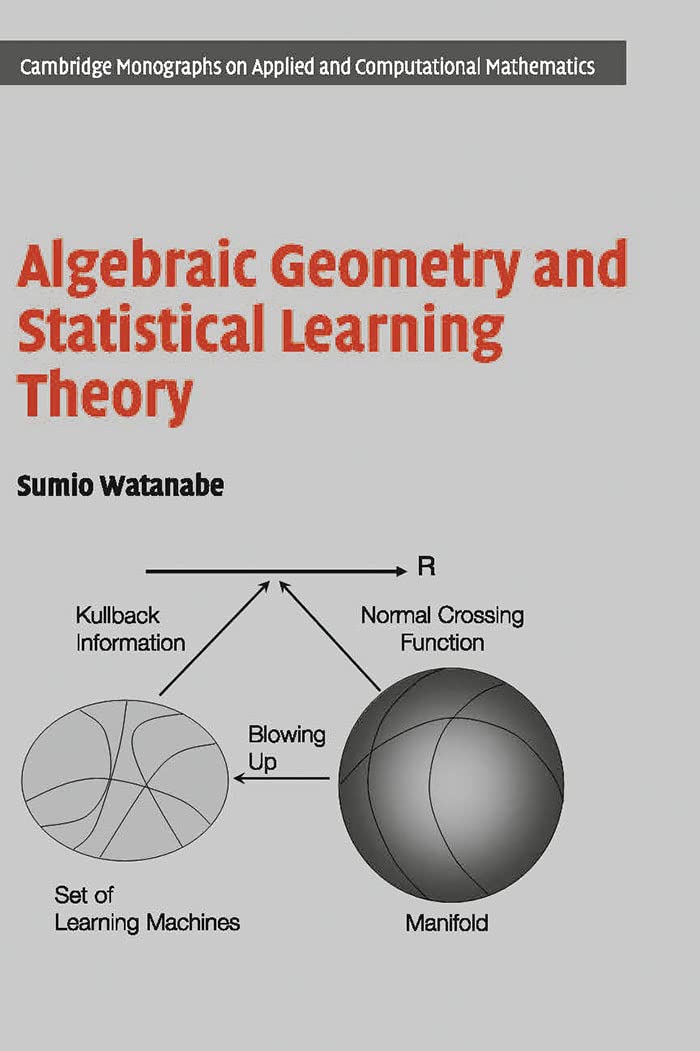
Algebraic Geometry and Statistical Learning Theory by Sumio Watanabe – A Mathematical Foundation for Singular Models
Inclusive of all applicable taxes. FREE shipping on all orders.
Available Offers
- 🚚Free Delivery — Free shipping on all orders
- 💵Cash on Delivery — Pay when your order arrives
- ↩️15-Day Easy Returns — Hassle-free return policy
- 🔒Cash on Delivery — Pay safely when your order arrives
Check Delivery
Product Description
Introduction
Algebraic Geometry and Statistical Learning Theory by Sumio Watanabe is a landmark work that bridges two seemingly distant fields—algebraic geometry and modern statistical learning. For Indian students and researchers working in machine learning, artificial intelligence, or advanced statistics, this book offers a rigorous mathematical foundation to understand why many popular learning models behave the way they do. Published by Cambridge University Press, this hardcover edition is an essential addition to any serious academic library.
Book Overview
This book addresses a critical gap in statistical learning theory: the behaviour of models with singular parameter spaces. Traditional statistical theory assumes smooth, regular models, but many widely used learning machines—such as neural networks, mixture models, hidden Markov models, Bayesian networks, and stochastic context-free grammars—have singularities. Watanabe shows how algebraic geometry and singularity theory provide the necessary tools to analyse these non-smooth models. The book establishes four fundamental formulas that change how we understand learning, generalization, and model selection.
Key Highlights
- Pioneering approach: First comprehensive treatment linking algebraic geometry to statistical learning theory.
- Four core formulas: Establishes foundational results for log likelihood, marginal likelihood, generalization error, and maximum likelihood estimation.
- Practical relevance: Directly applicable to neural networks, Bayesian networks, HMMs, and mixture models used in real-world applications.
- Rigorous mathematics: Provides resolution of singularities, zeta function theory, and empirical process theory in a learning context.
- Authoritative publisher: Cambridge University Press ensures high academic standards and reliable content.
Inside the Book
The book systematically develops the mathematical machinery needed to handle singular models. It begins with a review of standard statistical learning theory and then introduces concepts from algebraic geometry, including resolution of singularities. Each of the four main formulas is derived step by step, with clear explanations of the underlying mathematics. The text includes detailed proofs, worked examples, and discussions of the implications for both Bayes and Gibbs estimation methods. The final chapters connect these theoretical results to practical concerns like generalization error estimation and model selection criteria.
Key Topics
- Singular parameter spaces in statistical models
- Resolution of singularities for log likelihood functions
- Zeta function theory and marginal likelihood asymptotics
- Bayes and Gibbs estimation generalization errors
- Empirical process theory for maximum likelihood and MAP estimation
- Algebraic geometry foundations: ideals, varieties, and blowing up
- Applications to neural networks, mixture models, and HMMs
Reader Benefits
Readers will gain a deep understanding of why singular models behave differently from regular ones. The book provides practical tools to estimate generalization errors from training errors, which is invaluable for model selection and hyperparameter tuning. By mastering these methods, you will be able to design better learning algorithms, avoid overfitting, and make more reliable predictions. The algebraic geometry perspective also opens new avenues for theoretical research in machine learning.
Learning Outcomes
- Understand the mathematical structure of singular statistical models
- Derive asymptotic forms of log likelihood using resolution of singularities
- Compute marginal likelihood (evidence) using zeta function theory
- Estimate Bayes and Gibbs generalization errors from training data
- Analyse maximum likelihood and MAP estimators with empirical process theory
- Apply these results to real-world learning machines
Who Should Read
This book is ideal for graduate students and researchers in statistics, machine learning, artificial intelligence, and applied mathematics. It is also valuable for data scientists and engineers who want to go beyond black-box models and understand the theoretical underpinnings of their tools. Indian students pursuing advanced degrees in IITs, IISc, NITs, or central universities will find this an authoritative reference for courses on statistical learning theory, algebraic statistics, or advanced machine learning.
About the Author
Sumio Watanabe is a professor at the Tokyo Institute of Technology, where he has pioneered the application of algebraic geometry to statistical learning. His research has fundamentally shaped how we understand singular models, and he continues to be a leading voice in theoretical machine learning. This book distils decades of his groundbreaking work into a coherent and accessible format.
About the Publisher
Cambridge University Press is one of the world's oldest and most respected academic publishers. Known for rigorous peer review and high editorial standards, Cambridge publications are trusted by scholars and institutions globally. This hardcover edition reflects the publisher's commitment to producing durable, high-quality academic books.
Conclusion
Algebraic Geometry and Statistical Learning Theory is not just a book—it is a gateway to a deeper understanding of modern machine learning. For anyone serious about advancing their knowledge in this field, it is an indispensable resource. Order your hardcover copy from Bookshops.in today and add a classic to your collection.
Quick Summary
Algebraic Geometry and Statistical Learning Theory by Sumio Watanabe is a foundational text that bridges algebraic geometry with statistical learning, addressing the challenges posed by singular parameter spaces in modern machine learning models. The book is intended for advanced researchers and graduate students in statistics, mathematics, and artificial intelligence. Readers will learn how to apply resolution of singularities to standardize log likelihood functions, derive asymptotic behavior of marginal likelihood using zeta function theory, and estimate learning coefficients for model selection. The work covers mixture models, neural networks, hidden Markov models, Bayesian networks, and stochastic context-free grammars, providing rigorous mathematical tools for analyzing non-smooth models. By purchasing from Bookshops.in, Indian customers receive a genuine Cambridge University Press hardcover edition, ensuring a durable reference for academic and research use. The book's unique approach makes it essential for anyone seeking deep theoretical understanding of statistical learning beyond conventional textbooks.
Book Highlights
Book Specifications
| ISBN-13 | 9780521864671 |
| ISBN-10 | 0521864674 |
| Publisher | Cambridge University Press |
| Language | English |
| Dimensions | 15.88 x 2.54 x 22.86 cm |
| Weight | 560 g |
| Category | Mathematics › Geometry |
| Genre | Non-fiction |
| Original Language | English |
Frequently Asked Questions
What is the main topic of this book?
Who is the author of Algebraic Geometry and Statistical Learning Theory?
Is this book suitable for beginners in machine learning?
What are singular statistical models?
Does the book cover practical applications?
What mathematical prerequisites are needed?
What are the four main formulas discussed?
Is this book available in hardcover?
How does this book differ from standard machine learning texts?
Can this book help with Bayesian model selection?
Does the book include exercises?
Is the book relevant for deep learning researchers?
What is the price of this book on Bookshops.in?
Readers Also Search For
Customers Also Bought
Mathematics
Stereotype Spaces and Algebras: 73 (De Gruyter Expositions in Mathematics, 73)
Mathematics
Semigroups in Algebra, Geometry and Analysis: 20 (De Gruyter Expositions in Mathematics, 20)
Mathematics
Geometry from the Pacific Rim: Proceedings of the Pacific Rim Geometry Conference held at National University of Singapore, Republic of Singapore, ... 1994 (De Gruyter Proceedings in Mathematics)
Mathematics
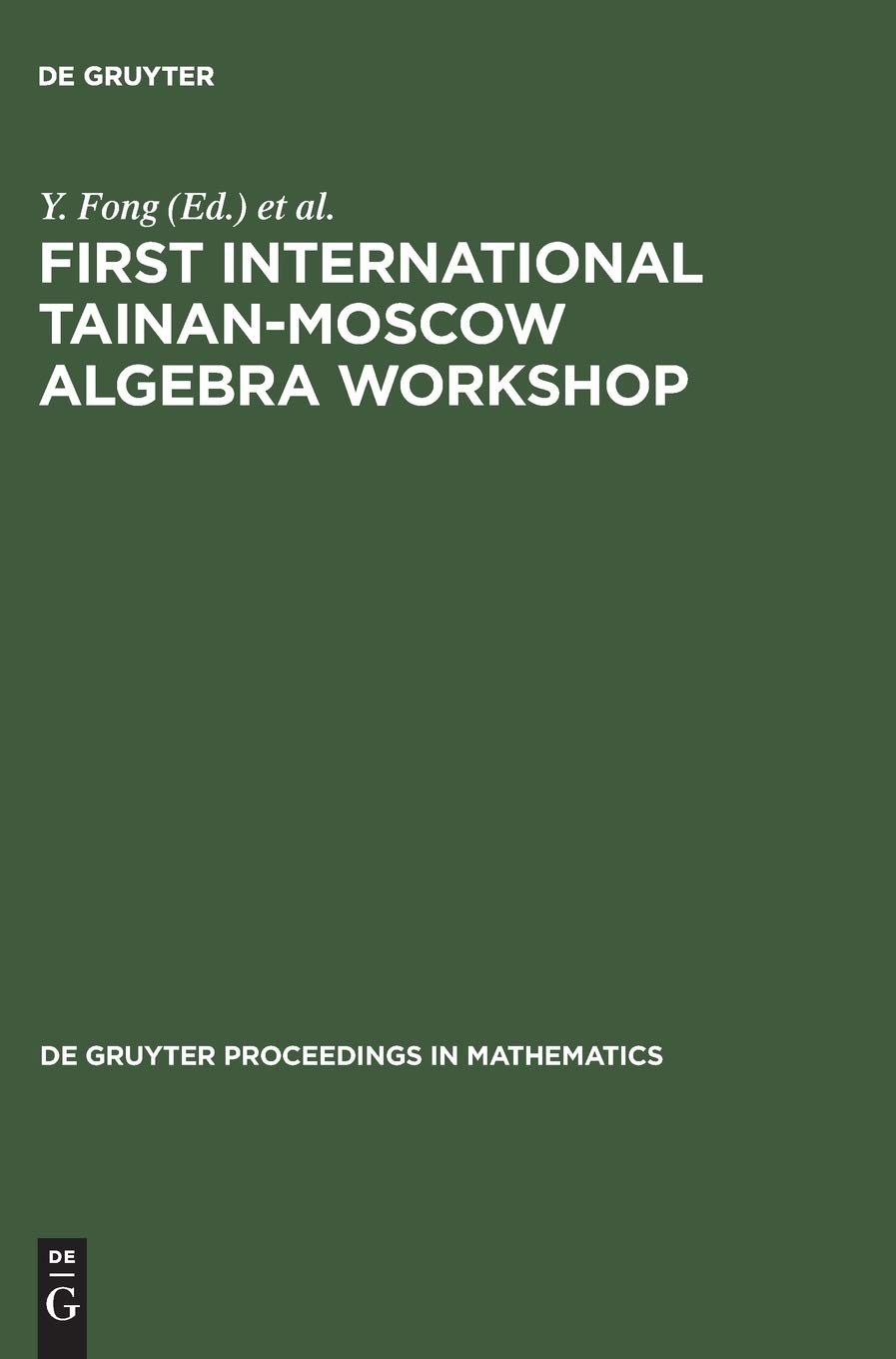
First International Tainan-Moscow Algebra Workshop: Proceedings of the International Conference held at National Cheng Kung University Tainan, Taiwan, ... 1994 (De Gruyter Proceedings in Mathematics)
Mathematics
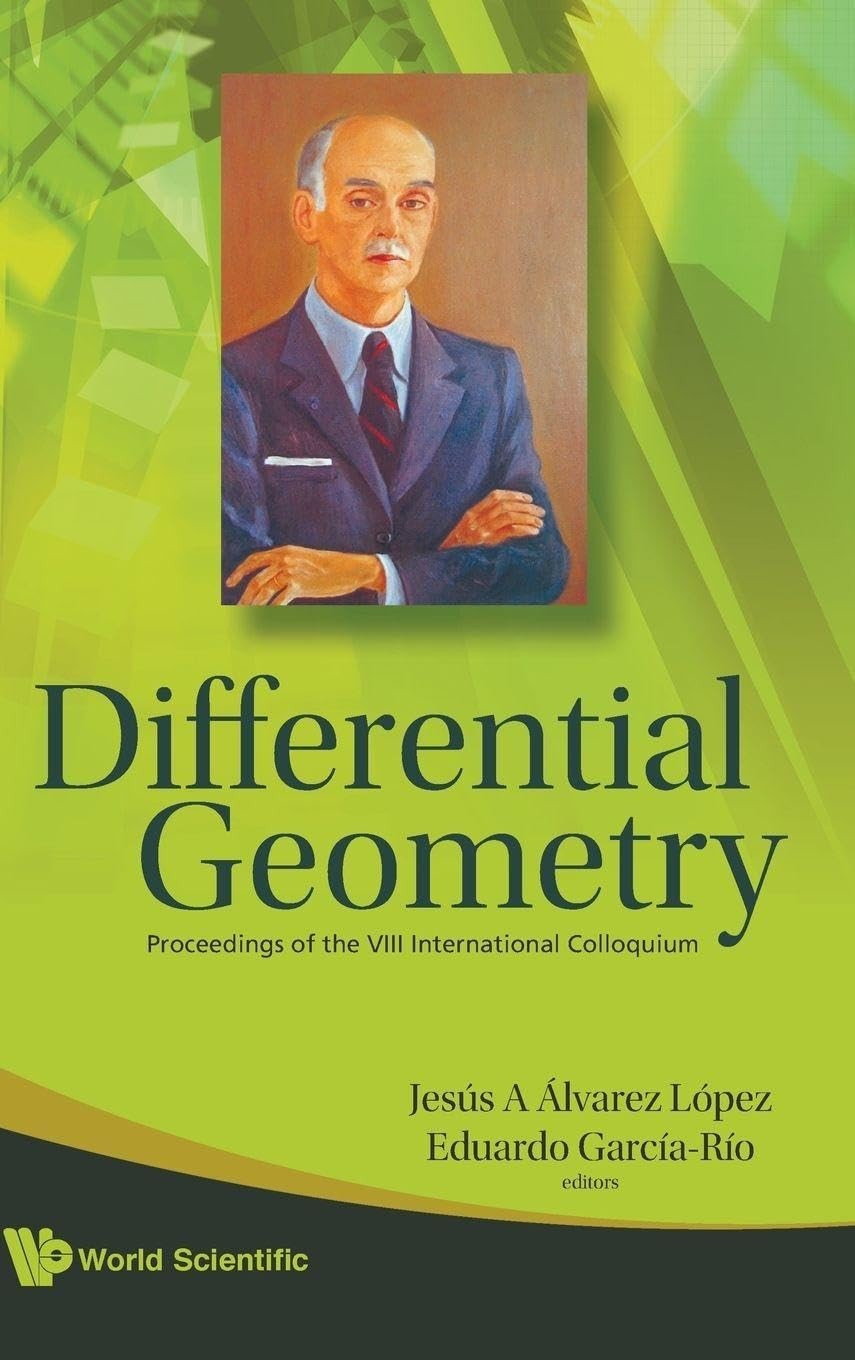
Differential Geometry - Proceedings of the VIII International Colloquium (English, Jesus A. Alvarez Lopez | Eduardo Garcia-Rio)
Mathematics
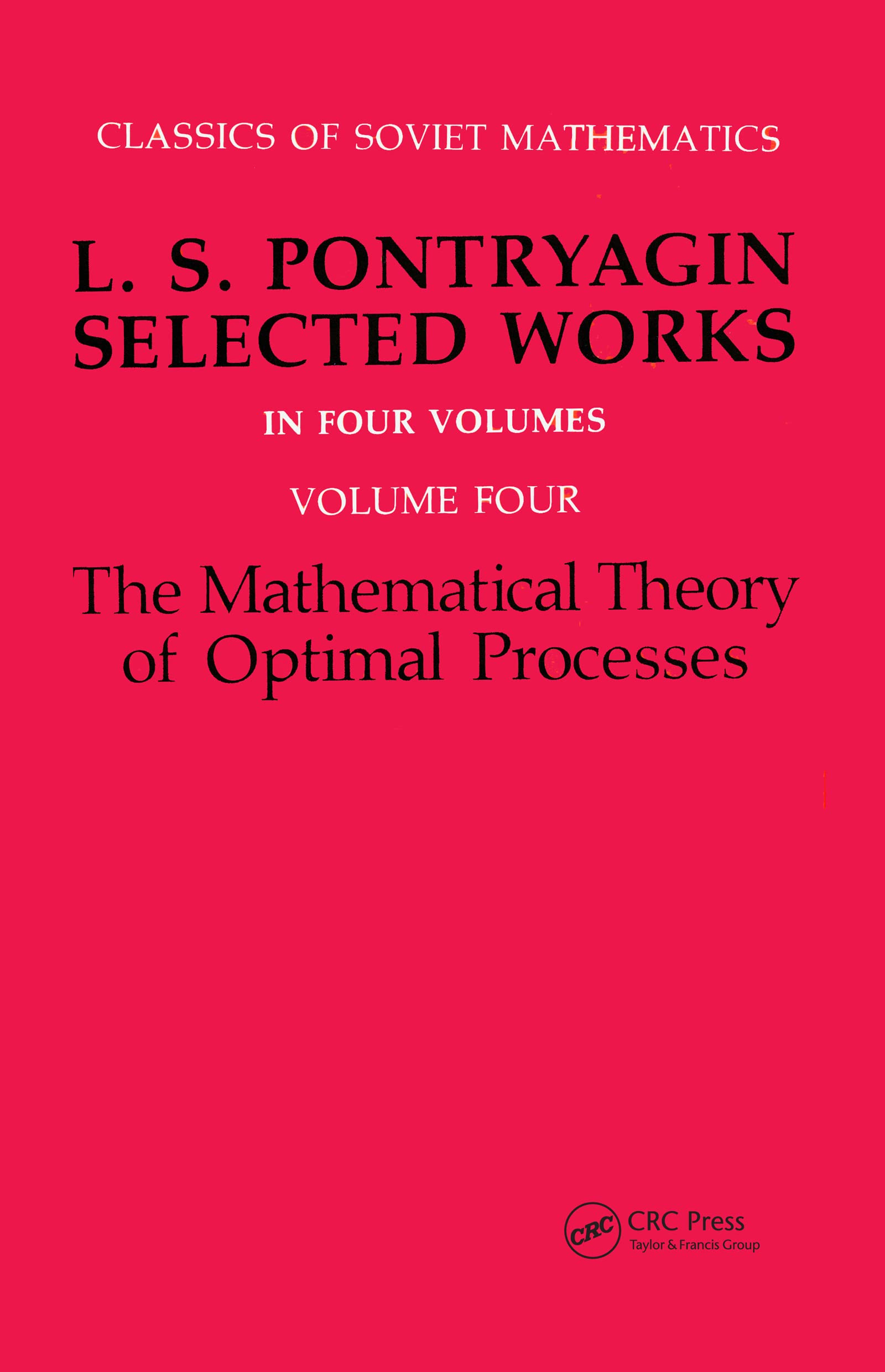
Mathematical Theory of Optimal Processes (Classics of Soviet Mathematics)
Related Products
View AllMathematics
Mathematical Theory of Optimal Processes (Classics of Soviet Mathematics)
Mathematics
Stereotype Spaces and Algebras: 73 (De Gruyter Expositions in Mathematics, 73)
Mathematics
Semigroups in Algebra, Geometry and Analysis: 20 (De Gruyter Expositions in Mathematics, 20)
Mathematics
Geometry from the Pacific Rim: Proceedings of the Pacific Rim Geometry Conference held at National University of Singapore, Republic of Singapore, ... 1994 (De Gruyter Proceedings in Mathematics)
Mathematics
First International Tainan-Moscow Algebra Workshop: Proceedings of the International Conference held at National Cheng Kung University Tainan, Taiwan, ... 1994 (De Gruyter Proceedings in Mathematics)
Mathematics