
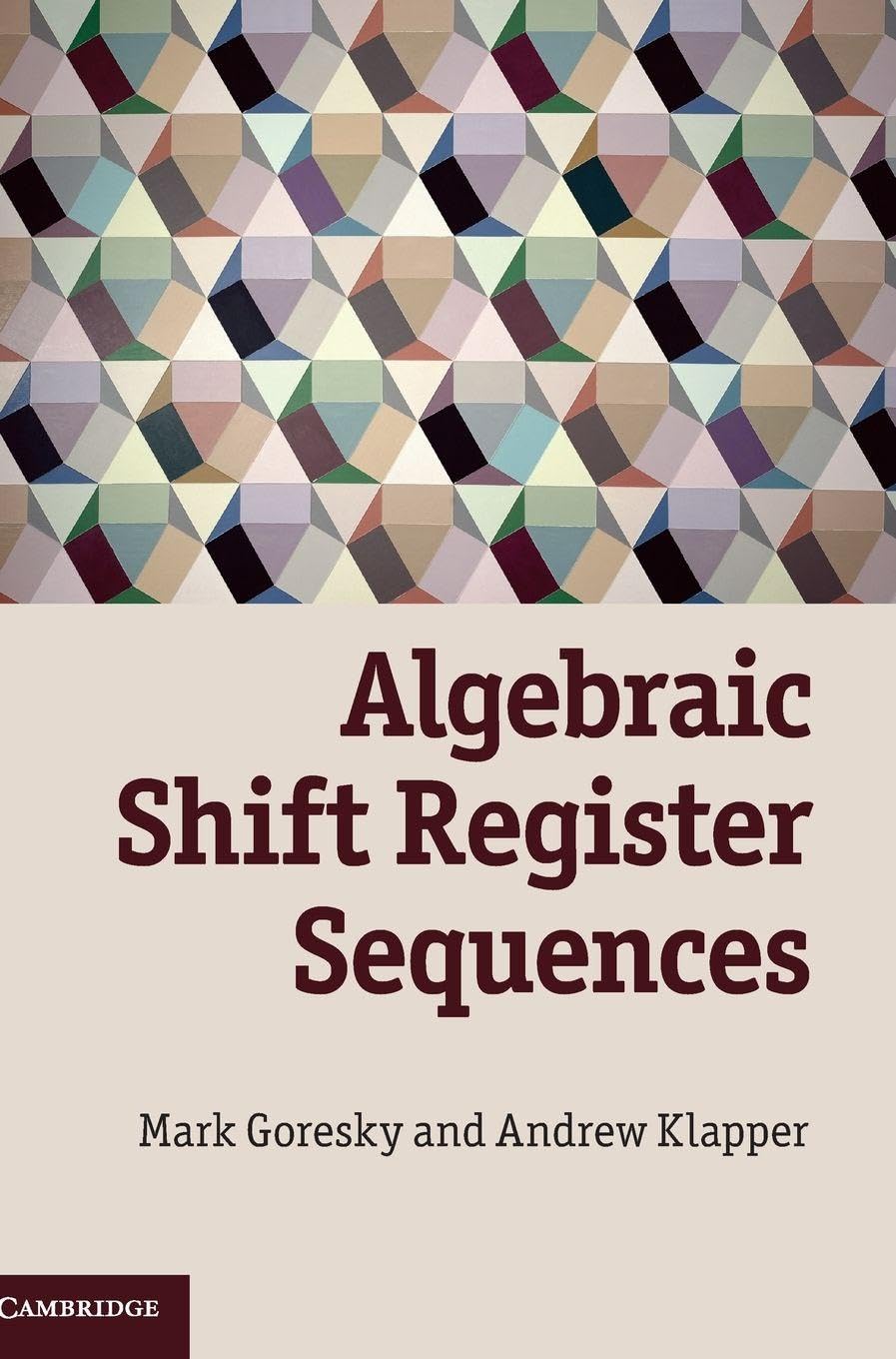
Algebraic Shift Register Sequences: Pseudo-Random Sequence Design and Analysis by Mark Goresky – A Cambridge University
Inclusive of all applicable taxes. FREE shipping on all orders.
Available Offers
- 🚚Free Delivery — Free shipping on all orders
- 💵Cash on Delivery — Pay when your order arrives
- ↩️15-Day Easy Returns — Hassle-free return policy
- 🔒Cash on Delivery — Pay safely when your order arrives
Check Delivery
Product Description
Introduction
In the age of digital communication, the invisible threads that connect our calls, messages, and online transactions rely on sequences of numbers that appear random but are generated by deterministic rules. These pseudo-random sequences are the backbone of modern technology, from secure internet banking to satellite imagery. Mark Goresky’s Algebraic Shift Register Sequences offers a deep, rigorous exploration of the mathematics behind these sequences, making it an indispensable resource for students, engineers, and researchers alike. Published by Cambridge University Press, this hardcover volume bridges the gap between abstract algebra and practical engineering, providing a comprehensive guide to designing, analyzing, and implementing shift register-based pseudo-random generators.
Book Overview
This book is a definitive reference on pseudo-random sequences, with a special focus on feedback shift registers and their algebraic variants, such as feedback-with-carry shift registers. Goresky begins with foundational concepts and gradually builds up to advanced topics, ensuring that readers from diverse backgrounds—whether mathematics or electrical engineering—can follow along. The text is structured to serve both as a classroom textbook for advanced undergraduate or graduate courses and as a research monograph for professionals. An extensive appendix on group theory and algebraic preliminaries makes the book self-contained, allowing readers to refresh their knowledge as needed.
Key Highlights
- Comprehensive coverage of linear and nonlinear shift register sequences, including feedback-with-carry architectures.
- Rigorous mathematical treatment that connects algebraic structures to real-world applications in cryptography and communications.
- Self-contained appendix on group theory, rings, fields, and polynomial algebra for easy reference.
- Balanced approach suited for both mathematicians and engineers, with clear explanations and worked examples.
- Research-level insights into the design and analysis of sequences with specific statistical properties.
Inside the Book
The book is divided into three parts. The first part introduces basic concepts of shift registers, linear recurrence sequences, and their properties. The second part delves into algebraic shift registers, including feedback-with-carry and related architectures, exploring their periodicity, correlation, and randomness. The third part addresses advanced topics such as applications in stream ciphers, sequence complexity, and connections to algebraic geometry. Each chapter contains exercises and examples that reinforce the material, making it ideal for self-study or classroom use. The appendix provides a concise yet thorough review of algebraic structures, ensuring that even readers with minimal background can grasp the core content.
Key Topics
- Linear feedback shift registers (LFSRs) and their algebraic properties
- Feedback-with-carry shift registers (FCSRs) and their analysis
- Pseudo-random sequence generation for communications and cryptography
- Statistical properties like period, linear complexity, and correlation
- Algebraic number theory and its role in sequence design
- Applications in secure internet transactions, GPS, and satellite systems
Reader Benefits
- Gain a solid foundation in the algebra behind pseudo-random sequences, from group theory to finite fields.
- Learn to design shift register architectures that meet specific statistical and security requirements.
- Bridge theory and practice with examples drawn from real-world communication systems.
- Prepare for advanced research in cryptography, coding theory, or digital signal processing.
- Access a single-volume reference that covers both classical and modern shift register techniques.
Learning Outcomes
- Understand the mathematical foundations of linear and nonlinear shift registers.
- Analyze the period, randomness, and security properties of pseudo-random sequences.
- Implement feedback-with-carry shift registers and evaluate their performance.
- Apply algebraic methods to solve problems in sequence design and analysis.
- Develop the ability to read and contribute to research literature in the field.
Who Should Read
This book is ideal for advanced undergraduate and graduate students in mathematics, computer science, or electrical engineering who are interested in cryptography, communication theory, or discrete mathematics. It is also a valuable resource for practicing engineers, researchers, and professionals working in digital communications, secure systems, or signal processing. The self-contained appendix makes it accessible to anyone with a basic understanding of algebra, while the advanced chapters cater to specialists seeking cutting-edge knowledge.
About the Author
Mark Goresky is a distinguished mathematician known for his contributions to algebraic geometry, topology, and number theory. He has held positions at leading institutions and has co-authored influential works on the intersection of algebra and applied mathematics. His expertise in algebraic structures and their applications to sequence design shines through in this meticulously crafted book.
About the Publisher
Cambridge University Press is one of the world’s oldest and most respected academic publishers. With a legacy spanning over four centuries, Cambridge is renowned for producing authoritative textbooks and reference works in science, mathematics, and engineering. This hardcover edition reflects the publisher’s commitment to quality and scholarly excellence.
Conclusion
Algebraic Shift Register Sequences is more than a textbook—it is a gateway to understanding the mathematical machinery that powers modern digital communication. Whether you are a student stepping into the world of pseudo-random sequences or a researcher seeking a comprehensive reference, this book offers depth, clarity, and practical insight. Add this essential volume to your library and master the algebraic tools that drive today’s secure and reliable communication systems.
Quick Summary
Algebraic Shift Register Sequences by Mark Goresky is a comprehensive reference on the design, mathematical analysis, and implementation of pseudo-random sequences generated by shift registers. These sequences are essential for modern digital communication systems, including cellular telephones, GPS, secure internet, and satellite imagery. The book begins with fundamental algebraic concepts such as group theory and finite fields, making it accessible to advanced undergraduate mathematics students and graduate electrical engineering students. Later chapters delve into advanced topics like feedback-with-carry shift registers, correlation properties, and practical implementation. Readers will gain a deep understanding of how to design sequences with specific statistical properties and how to analyze them algebraically. This book serves both as a textbook for courses and as a research reference for professionals. By purchasing from Bookshops.in, Indian students and researchers get a trusted hardcover edition with fast delivery and excellent customer service, supporting their academic and professional growth in cryptography, coding theory, and digital communications.
Book Highlights
Book Specifications
| ISBN-13 | 9781107014992 |
| ISBN-10 | 1107014999 |
| Publisher | Cambridge University Press |
| Language | English |
| Dimensions | 17.53 x 3.3 x 24.89 cm |
| Weight | 1 kg 110 g |
| Country | United Kingdom |
| Category | Mathematics › Algebra & Trigonometry |
| Genre | Nonfiction |
| Reading Age | Adult |
| Original Language | English |
Frequently Asked Questions
What is the main topic of Algebraic Shift Register Sequences?
Who is the author of this book?
Is this book suitable for beginners?
What are the applications of the content?
Does the book include exercises?
What is the binding type of this book?
What is the ISBN of this book?
Can this book be used as a textbook?
What background knowledge is required?
Is this book relevant for cryptography?
Does the book cover nonlinear sequences?
What makes this book different from other sequence books?
Where can I buy this book in India?
Readers Also Search For
Customers Also Bought
Mathematics
Stereotype Spaces and Algebras: 73 (De Gruyter Expositions in Mathematics, 73)
Chemistry
Concise Encyclopedia of Biochemistry

Chemistry
Proceedings of the Third USSR - FRG Symposium, Makhachkala (USSR), October 2–6, 1980: 001
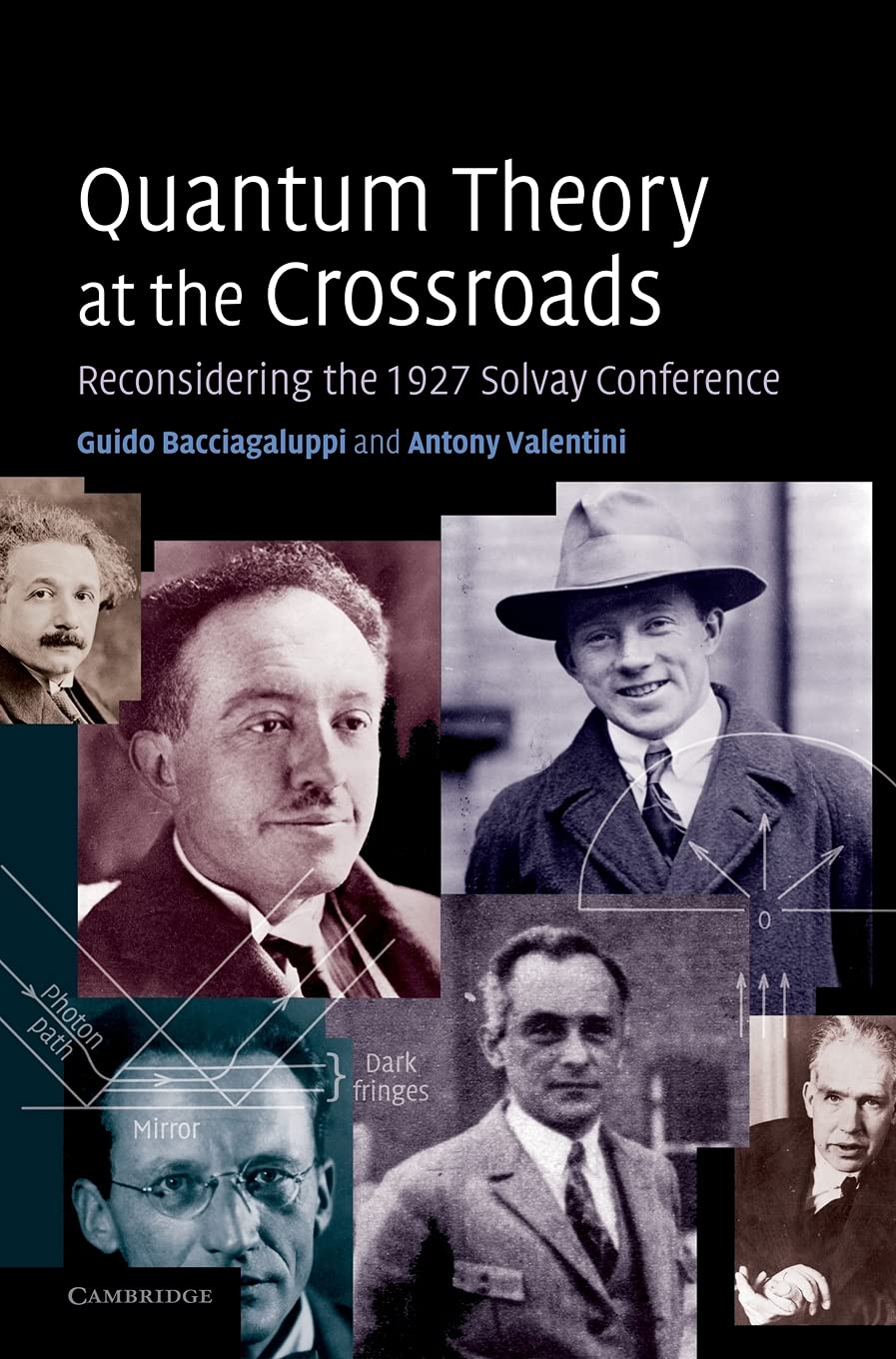
Physics
Quantum Theory at the Crossroads by Guido Bacciagaluppi – Quantum Mechanics History
Physics
The Quantum and Cosmic Codes of the Universe
Mathematics
Mathematical Theory of Optimal Processes (Classics of Soviet Mathematics)
Related Products
View AllMathematics
Mathematical Theory of Optimal Processes (Classics of Soviet Mathematics)
Mathematics
Stereotype Spaces and Algebras: 73 (De Gruyter Expositions in Mathematics, 73)
Mathematics
Semigroups in Algebra, Geometry and Analysis: 20 (De Gruyter Expositions in Mathematics, 20)
Mathematics
Geometry from the Pacific Rim: Proceedings of the Pacific Rim Geometry Conference held at National University of Singapore, Republic of Singapore, ... 1994 (De Gruyter Proceedings in Mathematics)
Mathematics
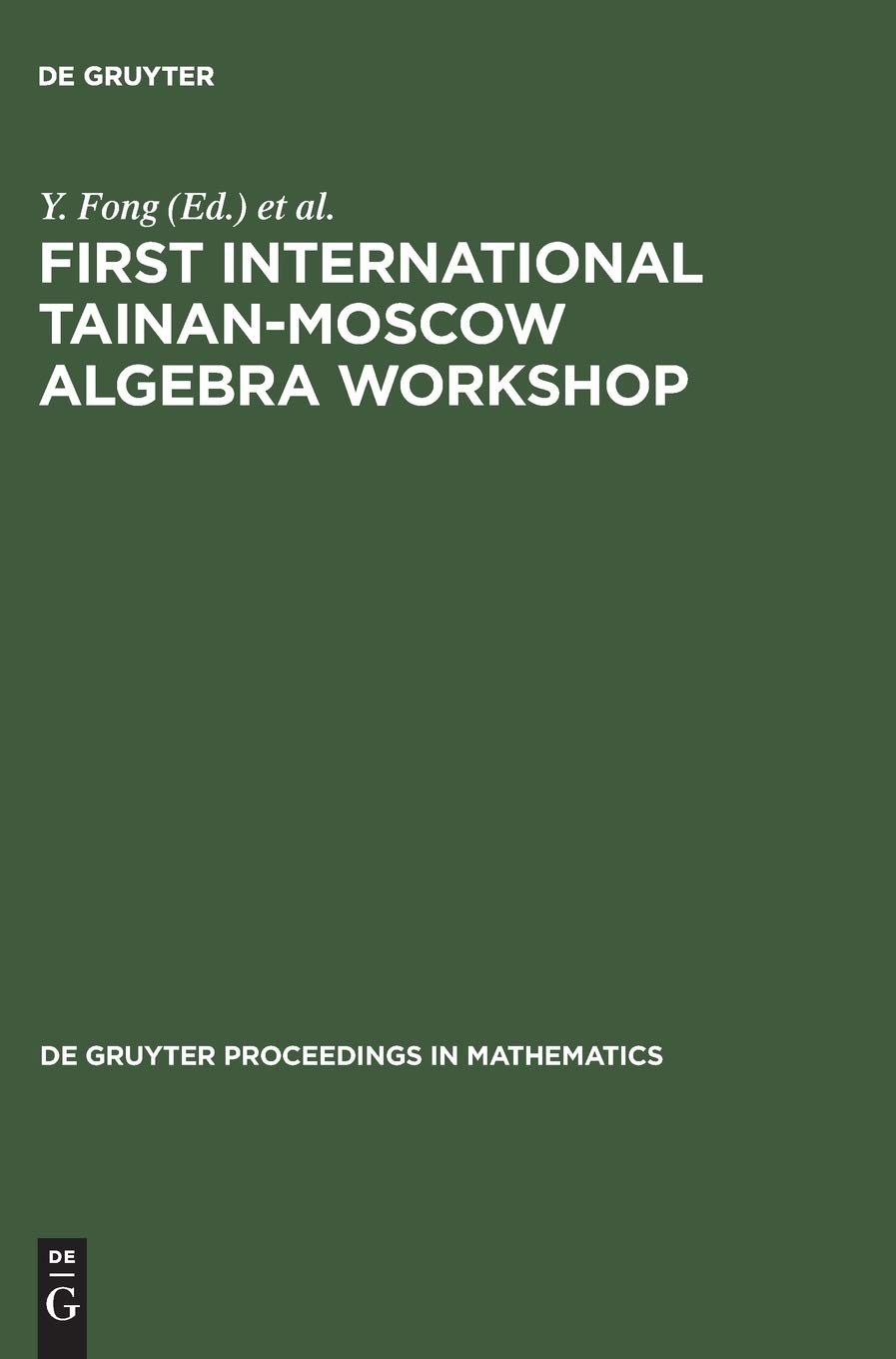
First International Tainan-Moscow Algebra Workshop: Proceedings of the International Conference held at National Cheng Kung University Tainan, Taiwan, ... 1994 (De Gruyter Proceedings in Mathematics)

Mathematics