
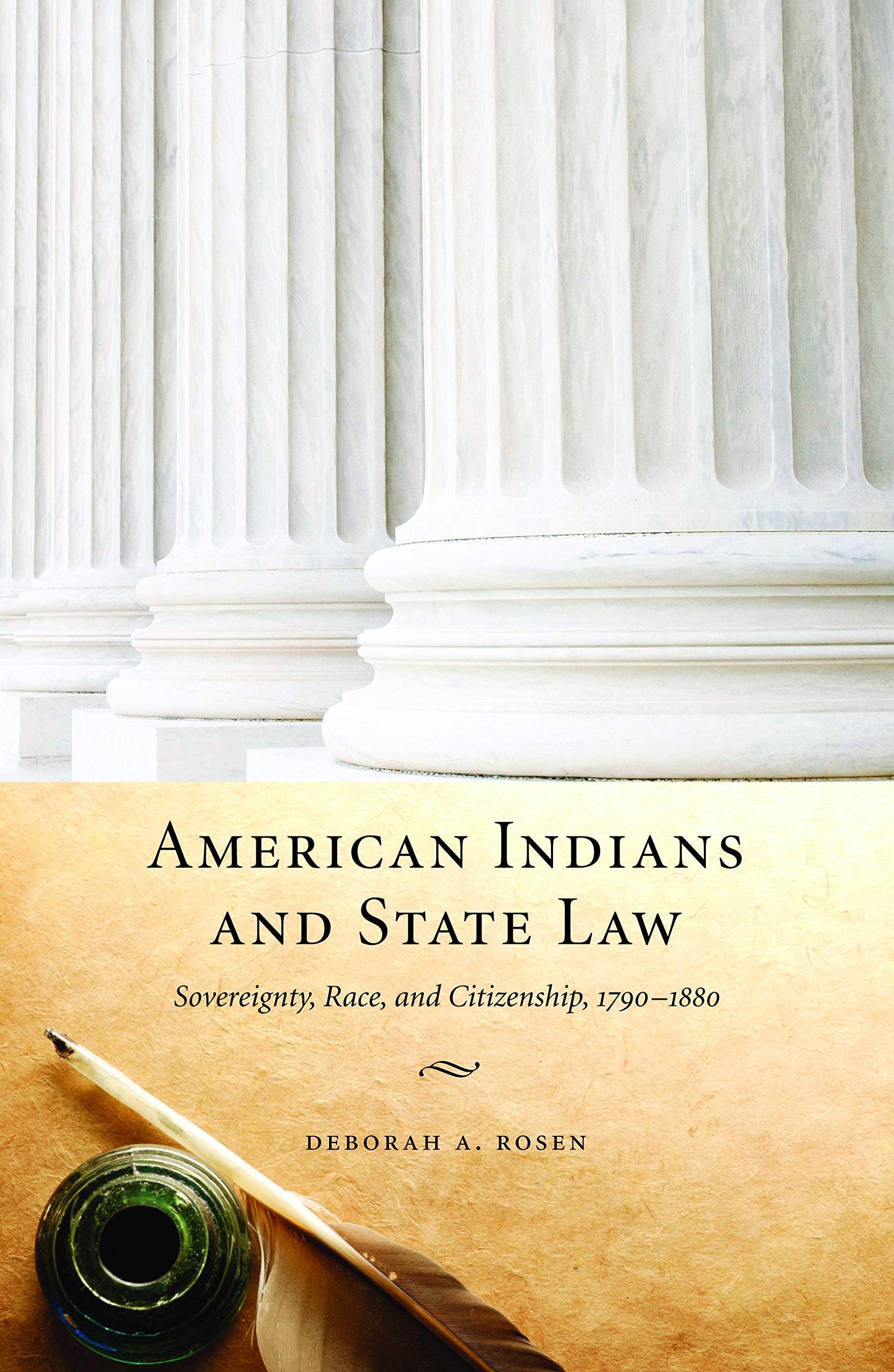
American Indians and State Law: Sovereignty, Race, and Citizenship, 1790-1880 by Deborah A. Rosen – A Detailed Examinati
Inclusive of all applicable taxes. FREE shipping on all orders.
Available Offers
- 🚚Free Delivery — Free shipping on all orders
- 💵Cash on Delivery — Pay when your order arrives
- ↩️15-Day Easy Returns — Hassle-free return policy
- 🔒Cash on Delivery — Pay safely when your order arrives
Check Delivery
Product Description
Introduction
American Indians and State Law: Sovereignty, Race, and Citizenship, 1790-1880 by Deborah A. Rosen offers a groundbreaking exploration of how state and territorial governments shaped the legal lives of Native Americans in the early United States. This hardcover volume, published by the University of Nebraska Press, challenges the conventional view that federal authorities alone managed Indian affairs. Instead, Rosen uncovers a complex web of local laws, court rulings, and policies that extended state power over indigenous communities, often in tension with tribal sovereignty. Ideal for law students, historians, and anyone interested in the intersections of race, citizenship, and governance, this book provides a nuanced understanding of America's legal past.
Book Overview
Spanning nearly a century from 1790 to 1880, this meticulously researched study reveals how states like New York, Georgia, New Mexico, Michigan, Minnesota, Louisiana, and Massachusetts asserted jurisdiction over Native Americans through criminal courts, property laws, and citizenship regulations. Rosen demonstrates that state-level actions were not merely supplementary to federal policy but often contradictory and precedent-setting. By examining case studies across diverse regions, the book shows how indigenous peoples resisted these encroachments, asserting their own legal traditions and sovereignty. The narrative weaves together legal analysis with social history, making it accessible to both specialists and general readers.
Key Highlights
- Decentralized Governance: Challenges the myth of exclusive federal control, highlighting the active role of state legislatures and courts.
- Racial Dimensions: Explores how race-based laws defined Native American status and access to citizenship.
- Regional Case Studies: In-depth looks at seven states and territories, from the East Coast to the Southwest.
- Indigenous Agency: Documents how tribes fought for sovereignty within state legal systems.
- Original Research: Draws on court records, statutes, and legislative debates rarely examined together.
Inside the Book
The book is organized into thematic chapters that balance broad national patterns with local stories. Early chapters set the legal framework of federal-tribal relations, then pivot to state-level criminal jurisdiction, property disputes, and citizenship battles. Rosen uses vivid examples—such as Cherokee lawsuits in Georgia or Pueblo land claims in New Mexico—to illustrate how law operated on the ground. The final sections reflect on the long-term consequences of state involvement for Native American rights and identity. Appendices include key legal documents and a timeline of major state-federal conflicts.
Key Topics
- State sovereignty vs. tribal sovereignty in the 19th century
- Race, citizenship, and legal personhood for Native Americans
- Extraterritorial application of state laws to Indian territories
- Federal Indian policy and its interaction with local governance
- Indigenous legal strategies and resistance movements
- Comparative analysis of eastern, southern, and western states
Reader Benefits
Readers will gain a deeper appreciation of how law shapes historical power dynamics. The book clarifies often-misunderstood aspects of Native American history, such as why some tribes were granted citizenship earlier than others. It also provides valuable context for contemporary debates about tribal jurisdiction, land rights, and racial justice. For students, the case studies offer concrete examples of legal theory in action, while researchers will find a rich bibliography and primary source references.
Learning Outcomes
- Understand the legal mechanisms through which states extended authority over Native Americans.
- Analyze the role of race in defining citizenship and legal status.
- Evaluate the tensions between federal supremacy and state power in Indian affairs.
- Identify strategies used by indigenous communities to assert sovereignty.
- Connect historical legal patterns to current issues in tribal-federal relations.
Who Should Read
This book is essential for law students specializing in constitutional or indigenous law, historians of the American West and Native America, political scientists studying federalism, and activists engaged in tribal rights advocacy. It is also highly recommended for Indian readers interested in comparative colonial legal histories and the global dimensions of indigenous sovereignty. The clear prose makes it suitable for advanced undergraduates and curious general readers alike.
About the Author
Deborah A. Rosen is a professor of history at Lafayette College in Pennsylvania, where she teaches American legal history, Native American history, and the history of race and citizenship. She has published widely on the intersection of law, race, and sovereignty in the early United States. Her meticulous archival work and balanced perspective have earned her recognition among legal historians.
About the Publisher
University of Nebraska Press is a distinguished academic publisher known for its strong catalog in Native American studies, legal history, and the American West. With a commitment to scholarly excellence, it brings rigorous research to a broad audience. This hardcover edition reflects the press's high production standards, with durable binding and clear typography suitable for library and personal collections.
Conclusion
American Indians and State Law is an indispensable addition to the library of anyone seeking a more complete picture of American legal history. By shifting focus from Washington D.C. to state capitals and local courtrooms, Deborah A. Rosen reveals a forgotten chapter of Native American experience—one of struggle, adaptation, and resilience. For Indian readers and scholars worldwide, this book offers vital insights into how law can both oppress and empower indigenous communities. Order your copy today from Bookshops.in and delve into this compelling legal saga.
Quick Summary
American Indians and State Law by Deborah A. Rosen is a groundbreaking historical study that reexamines the legal relationship between Native Americans and US state governments from 1790 to 1880. Contrary to the popular narrative that Indian policy was solely a federal matter, Rosen demonstrates that state and territorial legislatures, courts, and executives actively shaped the lives of Native peoples through laws on land, trade, marriage, and citizenship. The book combines a nationwide analysis with rich case studies from New York, Georgia, New Mexico, Michigan, Minnesota, Louisiana, and Massachusetts, revealing how local legal regimes defined sovereignty, race, and belonging. Readers will learn how state laws often contradicted or supplemented federal treaties, and how these laws laid the groundwork for later citizenship exclusions. This book is ideal for law students, historians, and anyone interested in the intersections of race, federalism, and indigenous rights. By purchasing from Bookshops.in, you support a trusted Indian bookstore that delivers quality academic titles across the country.
Book Highlights
Book Specifications
| ISBN-13 | 9780803227989 |
| ISBN-10 | 0803227981 |
| Publisher | Univ of Nebraska Pr |
| Language | English |
| Dimensions | 15.24 x 2.06 x 22.86 cm |
| Weight | 544 g |
| Country | India |
| Category | Americas › United States |
| Genre | Non-fiction |
| Original Language | English |
Frequently Asked Questions
What is the main argument of American Indians and State Law?
Who is the author Deborah A. Rosen?
Which states are covered in the case studies?
What time period does the book cover?
Is this book suitable for undergraduate students?
Does the book discuss federal Indian law?
How does the book address race and citizenship?
What primary sources does the author use?
Why is this book relevant today?
Can Indian readers relate to this book?
What is the binding of this edition?
Where can I buy this book in India?
What is the price of the book?
Readers Also Search For
Related Products
View All
History
The Information Revolution: Transforming the World Through Technology (World History)

History
Human Nature and the French Revolution: From the Enlightenment to the Napoleonic Code: 3 (Polygons: Cultural Diversities and Intersections, 3)

History
The Unmaking of Home in Contemporary Art (Cultural Spaces)

History
Handbook to Life in Medieval and Early Modern Japan | by William E. Deal | Oxford University Press | by William E. Deal | Oxford University Press | by William E. Deal | Oxford University Press | by William E. Deal | Oxford University Press | by William E. Deal | Oxford University Press | by William E. Deal | Oxford University Press | by William E. Deal | Oxford University Press | by William E. Deal | Oxford University Press | by William E. Deal | Oxford University Press | by William E. Deal | Ox

History
The Narrators of Barbarian History (A.D. 550-800) | by Walter Goffart | University of Notre Dame Press | by Walter Goffart | University of Notre Dame Press | by Walter Goffart | University of Notre Dame Press | by Walter Goffart | University of Notre Dame Press | by Walter Goffart | University of Notre Dame Press | by Walter Goffart | University of Notre Dame Press | by Walter Goffart | University of Notre Dame Press | by Walter Goffart | University of Notre Dame Press | by Walter Goffart | Univ

History