
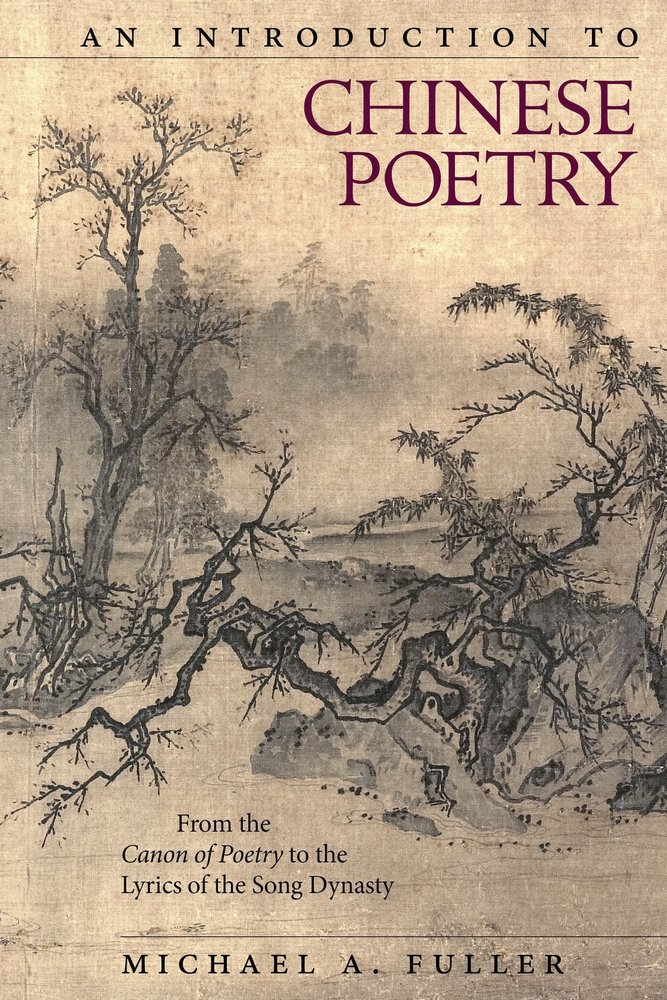
An Introduction to Chinese Poetry: From the Canon of Poetry to the Lyrics of the Song Dynasty by Michael A. Fuller – A C
Inclusive of all applicable taxes. FREE shipping on all orders.
Available Offers
- 🚚Free Delivery — Free shipping on all orders
- 💵Cash on Delivery — Pay when your order arrives
- ↩️15-Day Easy Returns — Hassle-free return policy
- 🔒Cash on Delivery — Pay safely when your order arrives
Check Delivery
Product Description
Introduction
Classical Chinese poetry is a vast and luminous tradition that has shaped the literary consciousness of East Asia for over two millennia. For Indian readers who cherish the lyrical depth of Kalidasa, the devotional intensity of the Bhakti poets, or the philosophical resonance of Tagore, this tradition offers a parallel world of aesthetic refinement and emotional subtlety. Michael A. Fuller’s An Introduction to Chinese Poetry – From the Canon of Poetry to the Lyrics of the Song Dynasty is not merely an anthology of translated verses; it is a meticulously crafted gateway that allows the English-speaking reader—even one with no prior knowledge of Chinese—to experience the original texture, sound, and structure of these timeless poems. Published by the prestigious Harvard University Press, this hardcover volume is an essential addition to any serious student’s library, whether you are a literature scholar, a creative writer, or a curious reader seeking to understand the roots of Chinese cultural expression.
Book Overview
This innovative textbook reimagines how classical Chinese poetry can be taught and appreciated. Instead of presenting polished translations that distance the reader from the original language, Fuller’s approach is immersive and analytical. The book begins with two foundational chapters that demystify the features of classical Chinese most relevant to poetry—its monosyllabic nature, tonal patterns, and syntactic flexibility—followed by a clear survey of the formal and rhetorical conventions that governed poetic composition. The core of the book then unfolds chronologically, moving from the earliest known anthology, the Canon of Poetry (Shijing), through the Han, Six Dynasties, Tang, and finally the lyrical masterpieces of the Song Dynasty (960–1279). Each chapter situates the poetry within its historical and cultural context, provides a concise biography of the featured poets, and presents each poem in four layers: the original Chinese characters, a word-by-word gloss, Fuller’s own unadorned literal translation, and a more polished version by modern translators. A question-based study guide at the end of each chapter encourages active engagement and deeper analysis.
Key Highlights
- Four-Layer Translation Method: Every poem is presented with the original Chinese text, a word-for-word gloss, a literal translation, and a polished literary version—allowing readers to see how meaning is built from the ground up.
- Historical and Cultural Framing: Each historical period is introduced with an overview of its political and social dynamics, helping readers understand why certain themes and forms emerged.
- Comprehensive Poet Biographies: Major figures such as Qu Yuan, Tao Qian, Li Bai, Du Fu, Su Shi, and Li Qingzhao are given detailed biographical sketches that illuminate their poetic voices.
- Study Guides for Active Learning: End-of-chapter questions highlight critical issues in reading and interpretation, making this ideal for self-study or classroom use.
- No Prior Chinese Required: The book is designed for absolute beginners, with clear explanations of linguistic and poetic conventions.
Story Themes
The poems in this collection traverse a rich landscape of human experience. The Canon of Poetry introduces themes of love, courtship, war, and agricultural life, often with a directness that resonates across cultures. The Chu Ci (Songs of Chu) bring myth, shamanism, and political exile into the poetic realm. The nature poetry of the Tang Dynasty, especially the works of Wang Wei and Li Bai, explores solitude, transience, and the sublime beauty of mountains and rivers. Du Fu’s verse is a poignant chronicle of war, suffering, and social conscience, while the Song Dynasty ci lyrics—often set to music—delve into personal emotion, nostalgia, and the delicate interplay between longing and loss. Across all these periods, a unifying theme is the poet’s relationship with time: the fleetingness of youth, the permanence of nature, and the search for meaning in a mutable world.
Reader Benefits
- Deepen Your Understanding of World Literature: Gain a nuanced appreciation of a tradition that has influenced Japanese, Korean, and Vietnamese poetry, and discover parallels with Indian poetic forms like the shloka and muktaka.
- Master the Art of Close Reading: The word-by-word gloss trains you to notice the weight of each character, fostering a skill that enriches reading in any language.
- Enhance Your Own Creative Writing: Exposure to Chinese poetic techniques—juxtaposition, parallelism, allusion, and tonal rhythm—can inspire new dimensions in your own work.
- Cultural Literacy: Understand references that appear in Chinese art, film, and philosophy, from the imagery of plum blossoms to the concept of fengliu (romantic refinement).
- Academic and Exam Preparation: The structured approach and study questions make this an excellent resource for university courses, competitive exams, or personal enrichment.
Who Should Read
This book is ideal for Indian students of literature, history, or Asian studies who want to go beyond superficial anthologies. It is equally valuable for poets and writers seeking to expand their formal repertoire, for teachers designing courses on world poetry, and for general readers who love the meditative beauty of nature verse or the emotional intensity of lyric poetry. If you have ever been moved by a haiku or a ghazal, you will find a kindred spirit in the Chinese poetic tradition. No knowledge of Chinese is required, but those who know Hindi, Sanskrit, or other Indian languages may find fascinating structural similarities in the use of meter, rhyme, and evocative imagery.
About the Author
Michael A. Fuller is a distinguished scholar of Chinese literature and a professor at the University of California, Irvine. His research focuses on the intellectual history and poetics of the Tang and Song dynasties. He has written extensively on the cultural contexts of Chinese poetry, including works on the poet Su Shi and the aesthetics of the Song period. Fuller’s pedagogical approach—combining rigorous philology with accessible explanations—has made him a respected voice in the field of Chinese literary studies. His deep familiarity with both classical texts and modern teaching methods ensures that this book is as useful in the classroom as it is for independent learners.
About the Publisher
Harvard University Press, established in 1913, is one of the world’s most prestigious academic publishers. Known for its rigorous editorial standards and commitment to scholarly excellence, the press has published seminal works in the humanities, social sciences, and natural sciences. Its Asian studies and literature catalogues are particularly renowned, featuring authoritative translations, critical editions, and innovative textbooks. This hardcover edition reflects the press’s dedication to producing durable, beautifully designed books that will last a lifetime—a fitting vessel for the timeless poetry it contains.
Conclusion
An Introduction to Chinese Poetry is more than a textbook; it is an invitation to a conversation across centuries and cultures. Michael A. Fuller has created a work that respects the integrity of the original poems while opening them to readers who might otherwise feel excluded by the barrier of language. For Indian readers, this book offers a unique opportunity to explore a classical tradition that, like our own, values the marriage of form and feeling, the discipline of craft, and the unending search for truth in beauty. Whether you are a student preparing for examinations, a writer seeking new inspiration, or a lover of poetry in any language, this volume will reward you with insight, pleasure, and a lasting sense of wonder.
Quick Summary
An Introduction to Chinese Poetry by Michael A. Fuller is a groundbreaking textbook that takes readers on a journey through classical Chinese poetry from the Canon of Poetry to the lyrics of the Song Dynasty. Unlike traditional anthologies that merely present translations, this book immerses readers—even those with no prior knowledge of Chinese—in the original language of the poems. The first two chapters explain the essential features of classical Chinese for poetry and survey the formal and rhetorical conventions. Subsequent chapters are organized chronologically, each beginning with a historical overview and poet biographies. Major poets such as Li Bai, Du Fu, and Su Shi are featured with their poems in the original Chinese. Designed for university courses and self-study, this book is ideal for Indian students of world literature, Asian studies, or anyone passionate about poetry. By choosing Bookshops.in, you get a premium hardcover edition with fast delivery across India, ensuring a lasting addition to your library.
Book Highlights
Book Specifications
| ISBN-13 | 9780674977013 |
| ISBN-10 | 0674977017 |
| Publisher | Harvard University Press |
| Language | English |
| Dimensions | 21.59 x 3.3 x 27.94 cm |
| Weight | 1 kg 320 g |
| Category | Language, Linguistics & Writing › Language Learning & Teaching |
| Genre | Literature & Fiction |
| Original Language | Chinese |
Frequently Asked Questions
Is this book suitable for beginners with no Chinese knowledge?
What time period does the book cover?
Who is the author Michael A. Fuller?
Is this a translation or original text?
Can I use this book for a university course?
Does the book include poet biographies?
What makes this book different from other anthologies?
Is this book available in paperback?
Are there exercises or questions for students?
What major poets are included?
Does the book cover the historical context of each period?
Is this book good for self-study?
What is the price in Indian rupees?
Is this book part of a series?
Readers Also Search For
Customers Also Bought

Journalism
Rock Critic Law (English, Michael Azerrad)
Journalism
What Is Sustainable Journalism?: Integrating the Environmental, Social, and Economic Challenges of Journalism

Journalism
The Power of Sports: Media and Spectacle in American Culture: 23 (Postmillennial Pop)

Journalism
Research Guide to People's Daily Editorials, 1949-1975

Vocabulary
Prince Edward Island Sayings (Heritage)
Vocabulary
Grammar Survival for Primary Teachers: A Practical Toolkit by Jo Shackleton
Related Products
View All
Language, Linguistics & Writing
The Language of Turn and Sequence | by Cecilia E. Ford | Barbara A. Fox | Sandra A. Thompson | Oxford University Press | by Cecilia E. Ford | Barbara A. Fox | Sandra A. Thompson | Oxford University Press | by Cecilia E. Ford | Barbara A. Fox | Sandra A. Thompson | Oxford University Press | by Cecilia E. Ford | Barbara A. Fox | Sandra A. Thompson | Oxford University Press | by Cecilia E. Ford | Barbara A. Fox | Sandra A. Thompson | Oxford University Press | by Cecilia E. Ford | Barbara A. Fox | S

Language, Linguistics & Writing
Handbook of Color Psychology by Andrew J. Elliot
Language, Linguistics & Writing
The Language of Postcolonial Literatures (English, Ismail S. Talib)
Language, Linguistics & Writing
The Other Side of Language | by Gemma Corradi Fiumara | Routledge | by Gemma Corradi Fiumara | Routledge | by Gemma Corradi Fiumara | Routledge | by Gemma Corradi Fiumara | Routledge | by Gemma Corradi Fiumara | Routledge | by Gemma Corradi Fiumara | Routledge | by Gemma Corradi Fiumara | Routledge | by Gemma Corradi Fiumara | Routledge | by Gemma Corradi Fiumara | Routledge | by Gemma Corradi Fiumara | Routledge | by Gemma Corradi Fiumara | Routledge | by Gemma Corradi Fiumara | Routledge | by
Language, Linguistics & Writing
An Introduction to Cognitive Linguistics | by Friedrich Ungerer | Hans-Jorg Schmid | Routledge | by Friedrich Ungerer | Hans-Jorg Schmid | Routledge | by Friedrich Ungerer | Hans-Jorg Schmid | Routledge | by Friedrich Ungerer | Hans-Jorg Schmid | Routledge | by Friedrich Ungerer | Hans-Jorg Schmid | Routledge | by Friedrich Ungerer | Hans-Jorg Schmid | Routledge | by Friedrich Ungerer | Hans-Jorg Schmid | Routledge | by Friedrich Ungerer | Hans-Jorg Schmid | Routledge | by Friedrich Ungerer | Ha
Language, Linguistics & Writing