
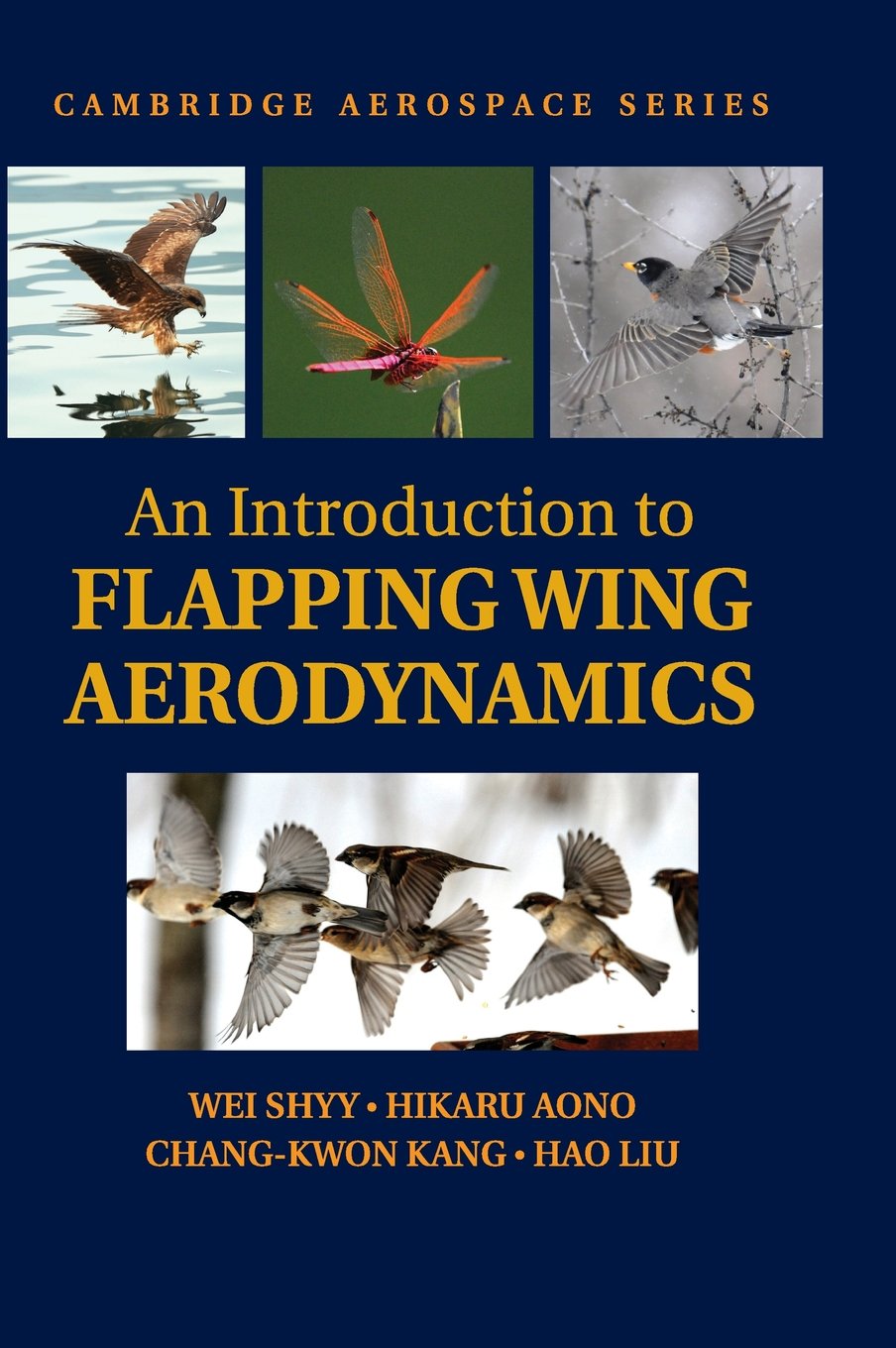
An Introduction to Flapping Wing Aerodynamics by Wei Shyy: A Deep Dive into Bio-Inspired Flight and Micro Air Vehicle De
Inclusive of all applicable taxes. FREE shipping on all orders.
Available Offers
- 🚚Free Delivery — Free shipping on all orders
- 💵Cash on Delivery — Pay when your order arrives
- ↩️15-Day Easy Returns — Hassle-free return policy
- 🔒Cash on Delivery — Pay safely when your order arrives
Check Delivery
Product Description
Introduction
Birds, bats, and insects have captivated human imagination for centuries with their extraordinary flight capabilities. Their ability to hover, glide, and manoeuvre through cluttered environments with remarkable agility has inspired engineers and scientists to unlock the secrets of flapping wing aerodynamics. An Introduction to Flapping Wing Aerodynamics by Wei Shyy, published by Cambridge University Press, is a comprehensive reference that bridges the gap between biology and engineering. This hardcover volume is designed for graduate students, researchers, and professionals in aerospace engineering, biomechanics, and robotics who wish to understand the complex physics behind natural flight and apply this knowledge to the design of micro air vehicles (MAVs).
Book Overview
This book builds upon the foundational work presented in Aerodynamics of Low Reynolds Number Flyers (Shyy et al., 2008) and extends it significantly to address the latest developments in flapping wing aerodynamics. The text focuses on the interplay between flexible wing structures, unsteady aerodynamics, and flight dynamics—a triad that defines the exceptional performance of natural flyers. Wei Shyy, a leading authority in the field, presents a rigorous yet accessible treatment of topics ranging from vortex dynamics to structural flexibility. Whether you are studying the hovering mechanisms of hummingbirds or designing a flapping-wing MAV, this book offers a solid theoretical and practical foundation.
Key Highlights
- Comprehensive coverage of flapping wing aerodynamics, including unsteady lift generation, wake capture, and leading-edge vortices.
- Integration of structural dynamics with aerodynamics, emphasizing the role of flexible wings in enhancing performance.
- State-of-the-art research on low Reynolds number flight, relevant to small natural flyers and MAVs.
- Detailed case studies of insects, birds, and bats, with quantitative data and flow visualization.
- Practical insights for designing bio-inspired aerial robots and understanding flight stability.
Inside the Book
The book is organized into well-structured chapters that guide the reader from fundamental concepts to advanced topics. Early chapters introduce the governing equations of fluid dynamics and the unique challenges of low Reynolds number flows. Subsequent chapters delve into vortex-dominated flows, the effects of wing kinematics, and the coupling between wing deformation and aerodynamic forces. The text is enriched with high-quality illustrations, experimental data, and computational simulations. Each chapter concludes with a summary and references for further reading, making it an excellent resource for self-study or as a textbook for specialized courses.
Key Topics
- Unsteady aerodynamics and vortex dynamics in flapping flight
- Low Reynolds number flow regimes and their implications
- Flexible wing structures and aeroelastic interactions
- Flight dynamics and stability of flapping-wing vehicles
- Experimental techniques for measuring aerodynamic forces and flow fields
- Computational methods for simulating flapping wing flows
- Biomimetic design principles for micro air vehicles
Reader Benefits
Readers will gain a deep understanding of how natural flyers achieve extraordinary manoeuvrability and efficiency. The book equips researchers and engineers with the tools to analyze and predict aerodynamic performance, design better MAVs, and contribute to the growing field of bio-inspired engineering. Graduate students will find the clear explanations and problem-solving approaches invaluable for their research. Professionals in aerospace and robotics will appreciate the practical guidelines for implementing flapping wing concepts in real-world applications.
Learning Outcomes
- Understand the fundamental physics of flapping wing aerodynamics, including lift and thrust generation mechanisms.
- Analyse the effects of wing kinematics, flexibility, and morphology on aerodynamic performance.
- Evaluate experimental and computational methods used in flapping wing research.
- Apply biomimetic principles to design and optimize micro air vehicles.
- Critically assess current research trends and identify future directions in the field.
Who Should Read
This book is ideal for graduate students and researchers in aerospace engineering, mechanical engineering, biomechanics, and robotics. It is also highly relevant for professionals working on unmanned aerial vehicles (UAVs), especially MAVs, and for biologists studying animal flight. Undergraduate students with a strong background in fluid mechanics and dynamics will also find it accessible and rewarding. Indian institutions offering advanced courses in aerodynamics or bio-inspired design will benefit from adopting this text.
About the Author
Wei Shyy is a distinguished professor and a leading figure in aerospace engineering. He has made seminal contributions to the understanding of low Reynolds number aerodynamics, flapping wing flight, and computational fluid dynamics. With decades of research experience at institutions such as the University of Michigan and the Hong Kong University of Science and Technology, Shyy has authored numerous influential books and papers. His work bridges theoretical analysis, numerical simulation, and experimental validation, making him a trusted authority in the field.
About the Publisher
Cambridge University Press is one of the world's oldest and most respected academic publishers. With a history spanning over four centuries, Cambridge University Press is renowned for its rigorous editorial standards and commitment to disseminating knowledge across disciplines. Their engineering and science catalogues feature texts that are both authoritative and accessible, making them a preferred choice for students and researchers globally. Indian readers can rely on the quality and accuracy of Cambridge publications.
Conclusion
An Introduction to Flapping Wing Aerodynamics is an indispensable resource for anyone serious about understanding the science behind natural flight and its engineering applications. Wei Shyy's masterful synthesis of theory, experiment, and computation provides a complete picture of this fascinating field. Whether you are a student embarking on research or a professional seeking to innovate in MAV design, this book will serve as a trusted guide. Order your hardcover copy from Bookshops.in today and explore the cutting edge of flapping wing aerodynamics.
Quick Summary
An Introduction to Flapping Wing Aerodynamics by Wei Shyy is a definitive academic resource that explores the complex aerodynamics of natural flyers—insects, birds, and bats—and translates these principles into the design of micro air vehicles (MAVs). The book delves into unsteady flow phenomena, flexible wing structures, leading edge vortices, and aeroelastic interactions that enable agile flight. It is written for graduate students, researchers, and engineers who seek a deep understanding of bio-inspired flight mechanics. Readers will learn how to model and analyze flapping wing systems using both computational and experimental methods. This hardcover edition from Cambridge University Press is ideal for Indian academics pursuing advanced studies in aerospace engineering, fluid dynamics, or biomechanics. By purchasing from Bookshops.in, you get a genuine copy with reliable delivery and excellent customer service, making it a trusted choice for scholarly needs.
Book Highlights
Book Specifications
| ISBN-13 | 9781107037267 |
| ISBN-10 | 1107037263 |
| Publisher | Cambridge University Press |
| Language | English |
| Dimensions | 19.05 x 2.54 x 26.67 cm |
| Weight | 840 g |
| Country | USA |
| Category | Chemical Engineering › Energy & Fuel Engineering |
| Genre | Non-fiction |
| Original Language | English |
Frequently Asked Questions
What is this book about?
Who is the author?
Is this book suitable for beginners?
Does the book include experimental data?
How does this book help in MAV design?
Is it available in hardcover?
What is the ISBN?
Can I use this for a PhD thesis?
Does it cover bird and bat flight?
What are the key topics?
Is the language technical?
Why buy from Bookshops.in?
Readers Also Search For
Customers Also Bought

Cambridge University Press
Children of the Queen's Revels (English, Lucy Munro)

Springer
Ermittlung Der Billigsten Betriebskraft Für Fabriken | by Karl Urbahn | Ernst Reutlinger | Springer | by Karl Urbahn | Ernst Reutlinger | Springer | by Karl Urbahn | Ernst Reutlinger | Springer | by Karl Urbahn | Ernst Reutlinger | Springer | by Karl Urbahn | Ernst Reutlinger | Springer | by Karl Urbahn | Ernst Reutlinger | Springer | by Karl Urbahn | Ernst Reutlinger | Springer | by Karl Urbahn | Ernst Reutlinger | Springer | by Karl Urbahn | Ernst Reutlinger | Springer | by Karl Urbahn | Ernst

de Gruyter
Vol. 5 (English, Paul Newman | Robert D. Botne)

Routledge
Performance Practice (English, Roland Jackson)

Scholastic Press
Threatened (English, Schrefer, Eliot)

Routledge
Power on Display (English, Leonard Tennenhouse)
Related Products
View AllCambridge University Press
Children of the Queen's Revels (English, Lucy Munro)

Cambridge University Press
Site Automation | by Thomas Bock | Thomas Linner | Cambridge University Press | by Thomas Bock | Thomas Linner | Cambridge University Press | by Thomas Bock | Thomas Linner | Cambridge University Press | by Thomas Bock | Thomas Linner | Cambridge University Press | by Thomas Bock | Thomas Linner | Cambridge University Press | by Thomas Bock | Thomas Linner | Cambridge University Press | by Thomas Bock | Thomas Linner | Cambridge University Press | by Thomas Bock | Thomas Linner | Cambridge Unive

Cambridge University Press
Complex Analysis | by Ian Stewart | David Tall | Cambridge University Press | by Ian Stewart | David Tall | Cambridge University Press | by Ian Stewart | David Tall | Cambridge University Press | by Ian Stewart | David Tall | Cambridge University Press | by Ian Stewart | David Tall | Cambridge University Press | by Ian Stewart | David Tall | Cambridge University Press | by Ian Stewart | David Tall | Cambridge University Press | by Ian Stewart | David Tall | Cambridge University Press | by Ian St

Cambridge University Press
Taming Intuition | by Kevin Arceneaux | Ryan J. Vander Wielen | Cambridge University Press | by Kevin Arceneaux | Ryan J. Vander Wielen | Cambridge University Press | by Kevin Arceneaux | Ryan J. Vander Wielen | Cambridge University Press | by Kevin Arceneaux | Ryan J. Vander Wielen | Cambridge University Press | by Kevin Arceneaux | Ryan J. Vander Wielen | Cambridge University Press | by Kevin Arceneaux | Ryan J. Vander Wielen | Cambridge University Press | by Kevin Arceneaux | Ryan J. Vander W

Cambridge University Press
The Therapeutic Interview in Mental Health | by Giovanni Stanghellini | Milena Mancini | Cambridge University Press | by Giovanni Stanghellini | Milena Mancini | Cambridge University Press | by Giovanni Stanghellini | Milena Mancini | Cambridge University Press | by Giovanni Stanghellini | Milena Mancini | Cambridge University Press | by Giovanni Stanghellini | Milena Mancini | Cambridge University Press | by Giovanni Stanghellini | Milena Mancini | Cambridge University Press | by Giovanni Stang

Cambridge University Press