
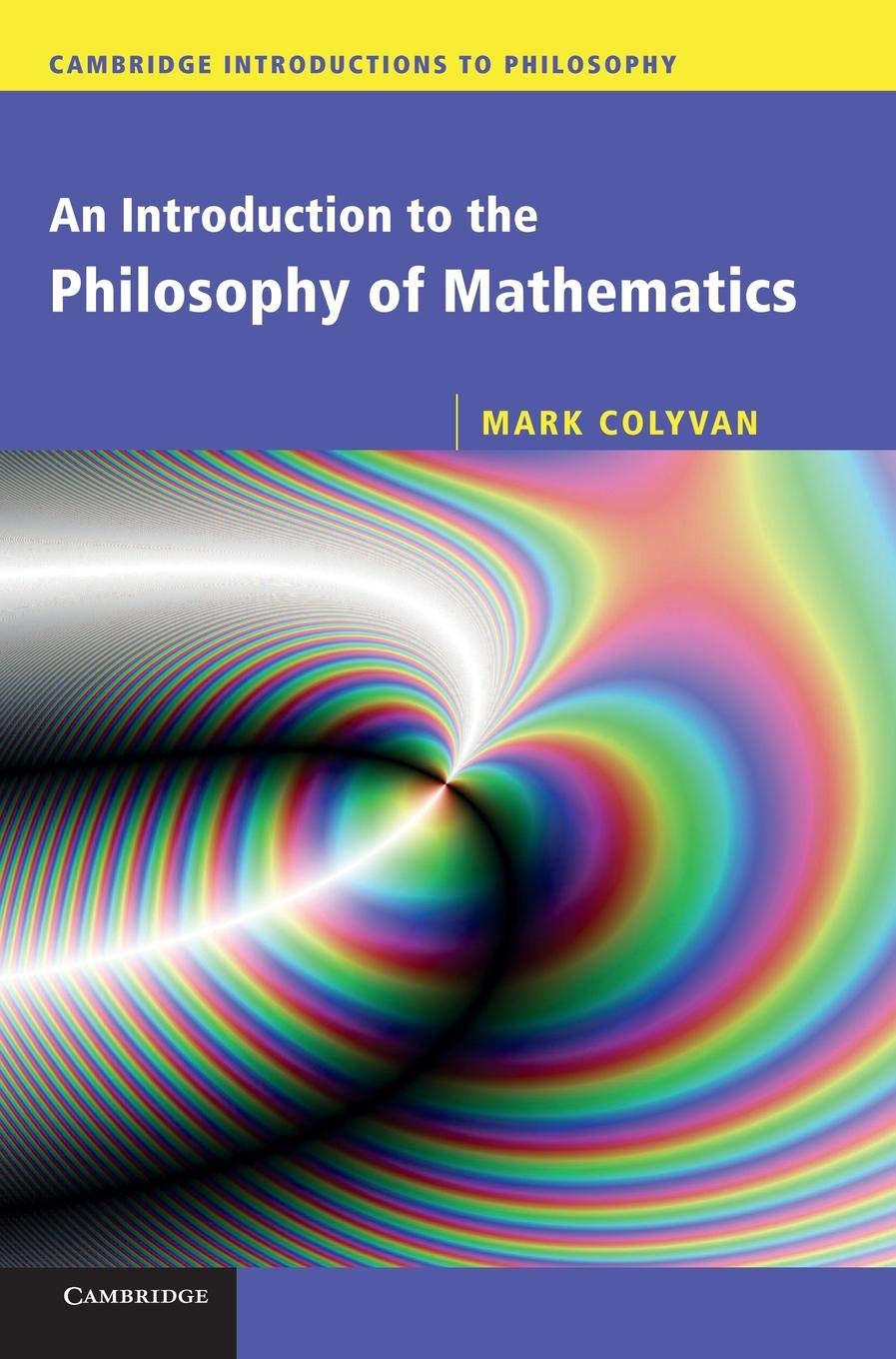
An Introduction to the Philosophy of Mathematics by David Corfield – A Contemporary Exploration of Mathematical Realism,
Inclusive of all applicable taxes. FREE shipping on all orders.
Available Offers
- 🚚Free Delivery — Free shipping on all orders
- 💵Cash on Delivery — Pay when your order arrives
- ↩️15-Day Easy Returns — Hassle-free return policy
- 🔒Cash on Delivery — Pay safely when your order arrives
Check Delivery
Product Description
Introduction
What is the nature of mathematical truth? Are numbers discovered or invented? For students and curious readers in India, An Introduction to the Philosophy of Mathematics by David Corfield offers a clear and engaging gateway into these profound questions. Published by Cambridge University Press, this hardcover volume is designed for those who wish to explore the deepest conceptual foundations of mathematics without needing an advanced degree in the subject.
Book Overview
This book is a comprehensive yet accessible guide to the central debates in the philosophy of mathematics. Corfield takes readers on a journey through topics ranging from the realism versus anti-realism debate to the nature of mathematical explanation, the limits of formal systems, and even the role of inconsistent mathematics. The text is richly illustrated with examples, making abstract ideas tangible. Each chapter includes discussion questions and recommended further reading, making it ideal for classroom use or self-study. The author assumes very little mathematical background, ensuring that anyone with a curiosity about mathematics and philosophy can follow along.
Key Highlights
- Contemporary Focus: Engages with current philosophical debates rather than just historical overviews.
- Minimal Prerequisites: All mathematical concepts are introduced and explained clearly, with no advanced knowledge required.
- Interactive Learning: Each chapter contains discussion questions and curated reading lists for deeper exploration.
- Wide-Ranging Topics: Covers mathematical notation, applications of mathematics, and even the philosophy of mathematical practice.
Inside the Book
The book is structured into thematic chapters that build on each other. Early chapters introduce the fundamental problem of mathematical realism, asking whether mathematical objects exist independently of human minds. Later chapters explore mathematical explanation, the limits of what can be proved, and the significance of how mathematicians write and communicate. The final sections delve into the philosophy of applied mathematics and the intriguing idea of inconsistent or paraconsistent mathematics. Throughout, Corfield uses vivid examples from number theory, geometry, and set theory to ground abstract discussions.
Key Topics
- Realism vs. Anti-Realism: The central debate about the existence of mathematical objects.
- Mathematical Explanation: How and why mathematics explains phenomena in science and within mathematics itself.
- Limits of Mathematics: Gödel's incompleteness theorems and their philosophical implications.
- Mathematical Notation: How the language of mathematics shapes our thinking.
- Inconsistent Mathematics: Can contradictions be useful in mathematical theories?
- Applications of Mathematics: The puzzling effectiveness of mathematics in describing the physical world.
Reader Benefits
This book demystifies a subject often seen as intimidating. Indian students pursuing undergraduate courses in philosophy, mathematics, or logic will find it an invaluable companion. It sharpens critical thinking by encouraging readers to question assumptions about truth, proof, and reality. The discussion questions make it perfect for group study or classroom debate, while the recommended readings allow for further specialization. By the end, readers gain not just knowledge but a deeper appreciation for the beauty and mystery of mathematics.
Learning Outcomes
- Understand the main arguments for and against mathematical realism.
- Analyze the role of explanation in mathematics and science.
- Evaluate the philosophical significance of Gödel's theorems.
- Reflect on how notation and language influence mathematical discovery.
- Engage critically with contemporary debates in the philosophy of mathematics.
Who Should Read
This book is ideal for undergraduate students in philosophy, mathematics, and computer science. It is also perfect for self-learners, curious readers, and anyone preparing for competitive exams like the UGC NET in philosophy. Teachers looking for a well-structured textbook for an introductory course will find it highly suitable. No advanced mathematical training is needed—just an open and questioning mind.
About the Author
David Corfield is a philosopher of mathematics known for his work on the philosophy of mathematical practice. He has taught at the University of Kent and is the author of numerous articles on the subject. His approach combines historical sensitivity with contemporary analytical rigor, making complex ideas accessible to a wide audience.
About the Publisher
Cambridge University Press is one of the world's oldest and most respected academic publishers. With a legacy spanning over four centuries, it is renowned for producing high-quality scholarly books that set the standard in their fields. This hardcover edition reflects the Press's commitment to durability and academic excellence.
Conclusion
An Introduction to the Philosophy of Mathematics is more than a textbook—it is an invitation to think deeply about the nature of truth, reality, and human knowledge. Whether you are a student, a teacher, or simply a lover of ideas, this book will challenge and inspire you. Order your copy from Bookshops.in today and begin your journey into the philosophical heart of mathematics.
Quick Summary
An Introduction to the Philosophy of Mathematics by David Corfield is a compelling and accessible exploration of the most pressing contemporary debates in the philosophy of mathematics. Unlike traditional texts that focus on historical figures, this book dives straight into current issues such as mathematical realism versus anti-realism, the nature of mathematical explanation, the limits of mathematics, the significance of notation, inconsistent mathematics, and the philosophy of applied mathematics. The author assumes very little mathematical background, making it ideal for philosophy students, mathematics undergraduates, and curious general readers. Each chapter is enriched with discussion questions and curated further reading lists from both classic and modern sources. Readers will come away with a deeper understanding of what mathematics is, how it relates to reality, and why philosophical questions about it matter. This physical hardcover edition from Cambridge University Press is perfect for Indian students and academics. By purchasing from Bookshops.in, you support a trusted Indian bookstore that delivers quality academic books across the country.
Book Highlights
Book Specifications
| ISBN-13 | 9780521826020 |
| ISBN-10 | 0521826020 |
| Publisher | Cambridge University Press |
| Language | English |
| Dimensions | 17.78 x 1.27 x 25.4 cm |
| Weight | 550 g |
| Country | India |
| Category | Philosophy › Logic |
| Genre | Non-fiction |
| Original Language | English |
Frequently Asked Questions
What is this book about?
Who is the author?
Do I need a strong math background?
Is this book suitable for Indian students?
What topics are covered?
Does the book include exercises?
What format is available?
Can I use this for self-study?
What makes this book different?
Does it cover applied mathematics?
Is there a glossary?
Who publishes it?
Where can I buy it in India?
Readers Also Search For
Related Products
View All
Science & Mathematics
Elements of Pelagos Biology: With Focus on the Mediterranean Sea
Science & Mathematics
Mathematical Theory of Optimal Processes (Classics of Soviet Mathematics)
Science & Mathematics
Cambridge IGCSE and O Level Additional Mathematics by Val Hanrahan – Textbook for 0606/4037
Science & Mathematics
Theorie der algebraischen Gleichungen: 9 (Gschens Lehrbcherei/ Gruppe I: Reine Und Angewandte Mathematik)
Science & Mathematics
Algebra (De Gruyter Lehrbuch)
Science & Mathematics