
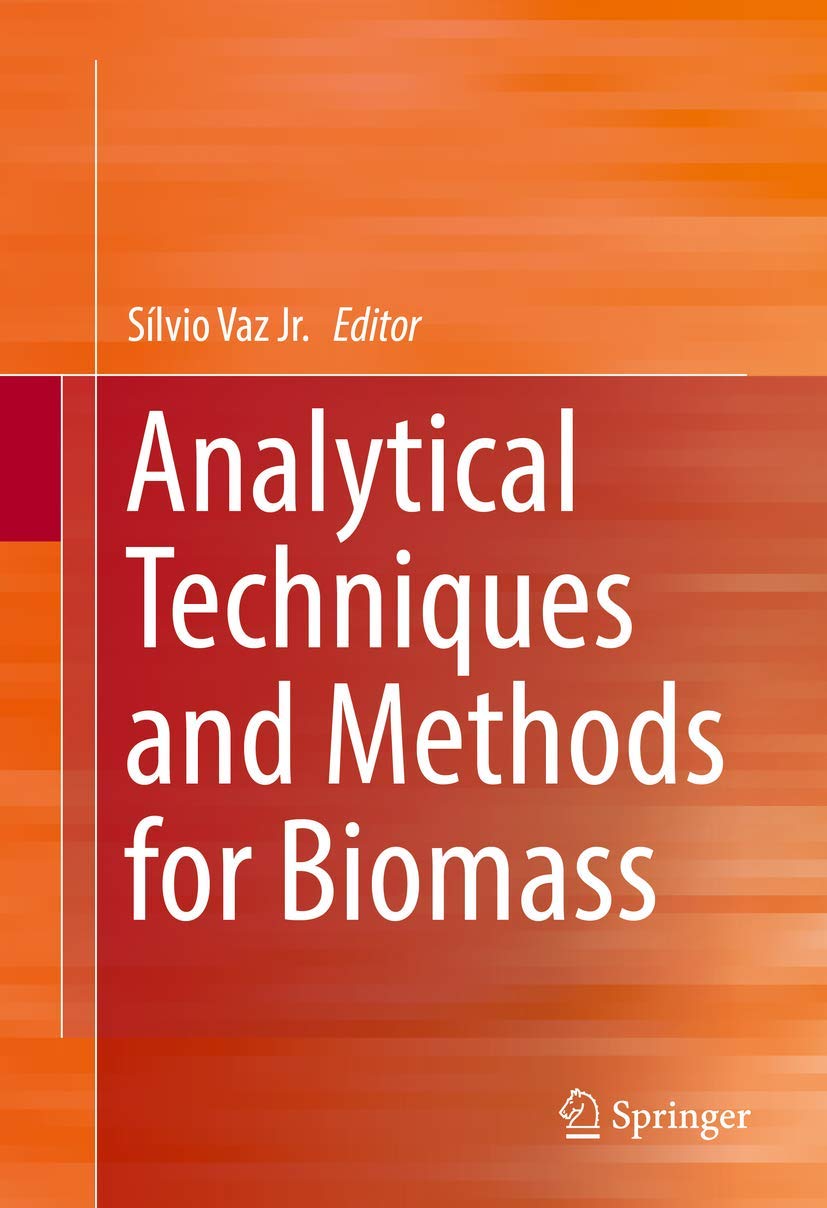
Analytical Techniques and Methods for Biomass
Inclusive of all applicable taxes. FREE shipping on all orders.
Available Offers
- 🚚Free Delivery — Free shipping on all orders
- 💵Cash on Delivery — Pay when your order arrives
- ↩️15-Day Easy Returns — Hassle-free return policy
- 🔒Cash on Delivery — Pay safely when your order arrives
Check Delivery
Product Description
"Analytical Techniques and Methods for Biomass" by Sílvio Vaz Jr. (eds.), published by Springer. This book deals with the application of techniques and methods of chemical analysis for the study of biomass and its conversion processes, aiming to fill the current gap in the book literature on the subject. The use of various techniques and analytical methods is presented and discussed in a straightforward manner, providing the reader with the possibility of choosing the most appropriate methodologies for analysis of the major classes of plant biomass and its products. In the present volume, a select group of international specialists describes different approaches to understand the biomass structure, their physical and chemical properties, the parameters of conversion processes, the products and by-products formation and quantification, quality parameters, etc. Modern chemistry plays a strong economic role in industrial activities based on biomass, with an increasing trend of the importance of its application from the deployment of biorefineries and the principles of green chemistry, which make use of the potential of biomass with decreasing impact negative environmental. In this context, analytical chemistry can contribute significantly to the supply chains of biomass, be it plant or animal origin; however, with the first offering the greatest challenges and the greatest opportunity for technical, scientific and economic progress, given its diversified chemical constitution. Thus, the chemical analysis can be used to examine the composition for characterizing physicochemical properties and to monitor their conversion processes, in order to obtain better products and uses of biomass. The quality of the biomass used determines the product quality. Therefore, reliable information is required about the chemical composition of the biomass to establish the best use (e.g., most suitable conversion process and its conditions), which will influence harvest and preparation steps. Conversion processes should be monitored for their yield, integrity, safety, and environmental impact. Effluent or residues should be monitored and analyzed for environmental control. Co-products need to be monitored to avoid interference with the product yield and product purity; however, co-products are also a good opportunity to add value to the biomass chain. Finally, products need to be monitored and analyzed to determine their yields and purity and to ensure their quality. In this context, analytical chemistry can contribute significantly to the biomass supply chains, be it of plant or animal origin. Book details: XI, 280 pages, published 2016. Order now on BookShops.in with fast, reliable delivery across India.
Book Specifications
| ISBN-13 | 9783319414133 |
| ISBN-10 | 3319414135 |
| Publisher | Springer Verlag |
| Language | english |
| Print Length | 280 pages |
| Category | Business & Economics |
Frequently Asked Questions
What is the price of Analytical Techniques and Methods for Biomass?
Does BookShops.in offer free delivery for Analytical Techniques and Methods for Biomass?
Is Cash on Delivery available for Analytical Techniques and Methods for Biomass?
What is the return policy for Analytical Techniques and Methods for Biomass?
Is Analytical Techniques and Methods for Biomass authentic?
Related Products
View All
Business & Economics
TULSIAN'S COMPANY AND COMPENSATION LAWS
Business & Economics
Socialism in a Cold Climate (Counterpoint S.)

Business & Economics
Deal with Your Debt: The Right Way to Manage Your Bills and Pay Off What You Owe
Business & Economics
Economics - A Complete Introduction: Teach Yourself
Business & Economics
The Alchemy of Empire: Abject Materials and the Technologies of Colonialism
Business & Economics