
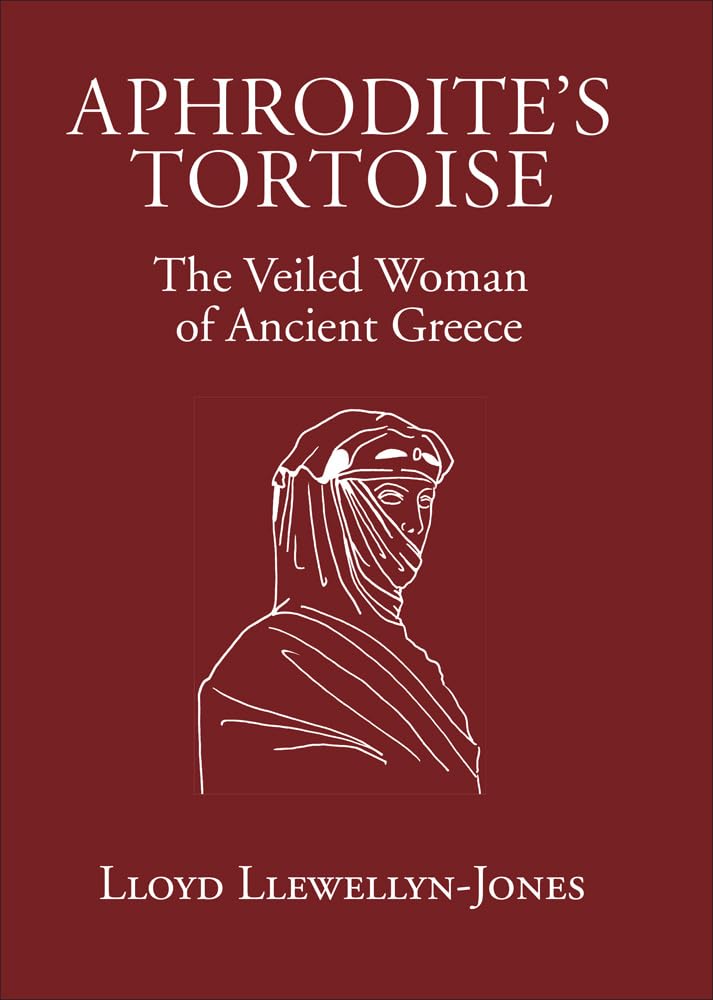
Aphrodite's Tortoise: The Veiled Woman of Ancient Greece by Lloyd Llewellyn-Jones – A Scholarly Exploration of Greek Vei
Inclusive of all applicable taxes. FREE shipping on all orders.
Available Offers
- 🚚Free Delivery — Free shipping on all orders
- 💵Cash on Delivery — Pay when your order arrives
- ↩️15-Day Easy Returns — Hassle-free return policy
- 🔒Cash on Delivery — Pay safely when your order arrives
Check Delivery
Product Description
Introduction
In the popular imagination, ancient Greece is often celebrated as the cradle of democracy, philosophy, and civic openness. Yet, beneath this sunlit vision of togas and symposiums lay a deeply veiled reality for half its population. Aphrodite's Tortoise: The Veiled Woman of Ancient Greece by Lloyd Llewellyn-Jones is a groundbreaking study that challenges conventional narratives by revealing that Greek women, from the Archaic to the Hellenistic period, routinely wore the veil. This meticulously researched hardcover, published by the Classical Press of Wales, offers a fresh, revisionist perspective on gender, modesty, and visibility in the ancient world. For Indian readers familiar with the practice of veiling in their own cultural history, this book provides a fascinating cross-cultural mirror, illuminating how societies across time have used cloth to define honour, space, and identity.
Book Overview
This major work proceeds from a wealth of literary and iconographic evidence—including sculpture, vase paintings, and funerary reliefs—to demonstrate the pervasive presence of the veil in Greek life. Llewellyn-Jones argues that the veil was not an occasional accessory but a routine garment, often covering the head and face, and sometimes folded back onto the shoulders in a discreet fashion that allowed privileged views to the art consumer. The book analyses the elaborate Greek vocabulary for veiling, including terms like tegidion (literally 'a little roof'), revealing that the veil was understood as a conscious extension of the house, a portable boundary that carried domestic privacy into public space. By situating Greek veiling within a broader Eastern tradition of seclusion, the author reshapes our understanding of classical Athens and its gender dynamics.
Key Highlights
- Revisionist Thesis: Challenges the long-held assumption that Greek women were not veiled, positioning Greece within a continuum of Mediterranean and Near Eastern seclusion practices.
- Rich Visual Evidence: Draws extensively on ancient art—vase paintings, sculptures, and reliefs—to document the veil's presence, often overlooked by traditional scholarship.
- Linguistic Analysis: Explores the nuanced Greek vocabulary for veiling, from kalyptra to tegidion, showing how language shaped and reflected social norms.
- Interdisciplinary Approach: Combines art history, gender studies, and social history to offer a holistic view of women's lived experience.
- Cultural Context: Compares Greek veiling with practices in Persia, Egypt, and other ancient cultures, highlighting shared ideologies of modesty and honour.
Inside the Book
The book is structured around thematic chapters that move from the physical garment to its social meanings. Early chapters examine the veil in Greek art, teaching readers how to 'read' the subtle drapings and folds that signal veiling. Later sections delve into literary sources—from Homer to Euripides—where veiling is described in scenes of marriage, mourning, and public encounters. The author also discusses the veil as a marker of status, age, and ritual, showing how different types of veils distinguished citizen women from slaves, brides from matrons. A particularly illuminating chapter explores the veil's role in protecting female honour, linking it to the concept of aidos (shame or modesty) that governed women's lives. The hardcover edition includes high-quality plates and line drawings that bring the visual evidence to life for the reader.
Key Topics
- Veiling in Archaic, Classical, and Hellenistic Greece
- Iconography of the veil in vase painting and sculpture
- Greek vocabulary of veiling: kalyptra, kredemnon, tegidion
- Veiling as an extension of domestic space
- Gender, honour, and the ideology of seclusion
- Comparison with Persian, Egyptian, and Near Eastern veiling
- The veil in Greek tragedy and comedy
- Marriage rituals and the bridal veil
- Veiling and social class in ancient Athens
- Modern scholarship's blind spots regarding women's dress
Reader Benefits
- Deepen Your Knowledge: Gain a nuanced understanding of ancient Greek society beyond the usual focus on male citizens and warfare.
- Challenge Assumptions: Encounter a provocative thesis that overturns decades of classical scholarship, encouraging critical thinking about historical evidence.
- Visual Literacy: Learn to interpret ancient art with new eyes, noticing details that reveal hidden aspects of daily life.
- Cross-Cultural Insight: For Indian readers, parallels with South Asian veiling traditions (like ghunghat or purdah) offer rich comparative perspectives.
- Academic Rigour: Access a well-documented, scholarly work that is still accessible to advanced students and enthusiasts.
- Enrich Your Library: A beautifully produced hardcover from the Classical Press of Wales, perfect for collectors of classical studies.
Learning Outcomes
- Identify and describe the various types of veils used by Greek women and their social significance.
- Analyse how visual and literary sources can be combined to reconstruct aspects of ancient life that are often invisible.
- Evaluate the argument that Greek veiling was part of a broader Eastern tradition of female seclusion.
- Understand the relationship between dress, space, and gender ideology in classical antiquity.
- Critically assess traditional scholarship's biases and blind spots regarding women's history.
- Apply the concept of 'material culture' to the study of ancient textiles and garments.
Who Should Read
This book is ideal for undergraduate and postgraduate students of classics, ancient history, art history, and gender studies. It will also appeal to scholars and researchers in Mediterranean archaeology, women's history, and the history of dress. General readers with an interest in ancient Greece, especially those curious about the lives of women in antiquity, will find it eye-opening. Indian readers who study comparative cultural practices—such as veiling in South Asian traditions—will discover valuable parallels and contrasts. Finally, museum professionals and art enthusiasts who wish to deepen their understanding of Greek iconography will benefit from the detailed visual analyses.
About the Author
Lloyd Llewellyn-Jones is a leading historian of the ancient world, known for his expertise in Greek and Persian cultural history. He holds a chair in ancient history at Cardiff University, where he directs the Ancient Iran and the Ancient World research group. His work often explores themes of gender, dress, and visual culture, and he has published extensively on the Achaemenid Persian court, Hellenistic history, and Greek social customs. Llewellyn-Jones's scholarship is distinguished by its interdisciplinary approach, combining art historical analysis with literary and archaeological evidence. Aphrodite's Tortoise is considered his landmark contribution to the study of women in antiquity.
About the Publisher
The Classical Press of Wales is an academic publisher dedicated to the study of the ancient Mediterranean world. Based in Swansea, UK, it specialises in producing high-quality scholarly monographs and edited volumes on Greek and Roman history, archaeology, and literature. The press is known for its rigorous editorial standards and its commitment to bringing innovative, often revisionist, research to a global audience. Its publications are valued by universities and research libraries worldwide for their depth, accuracy, and original contributions to classical scholarship.
Conclusion
Aphrodite's Tortoise: The Veiled Woman of Ancient Greece is an essential addition to the library of anyone interested in the ancient world. By lifting the veil—both literally and metaphorically—on Greek women's lives, Lloyd Llewellyn-Jones has written a work that is as enlightening as it is provocative. For Indian readers, the book offers a unique opportunity to see a familiar practice through an ancient Greek lens, prompting fresh reflections on how clothing shapes identity and social boundaries. Whether you are a student, scholar, or curious reader, this book will change the way you see ancient Greece. Order your hardcover copy from Bookshops.in today and uncover the hidden history of the veiled woman.
Quick Summary
Aphrodite's Tortoise: The Veiled Woman of Ancient Greece by Lloyd Llewellyn-Jones is a landmark scholarly work that overturns long-held assumptions about women in classical Greece. Through meticulous analysis of literary texts, sculpture, and vase paintings, the author demonstrates that Greek women routinely wore the veil—a practice that modern scholarship had largely overlooked. The book examines the social, cultural, and symbolic meanings of veiling, linking it to concepts of modesty, female virtue, and seclusion. It argues that Greek veiling was not an occasional custom but a pervasive norm that shaped women's lives and identities. This study is essential for students and scholars of ancient history, classics, gender studies, and art history. Indian readers will find parallels with local veiling traditions, making the book particularly thought-provoking. By purchasing from Bookshops.in, you get a genuine hardcover edition with fast delivery across India. Whether you are a university student or a curious reader, this book offers a deep, original perspective on the hidden lives of ancient Greek women.
Book Highlights
Book Specifications
| ISBN-13 | 9780954384531 |
| ISBN-10 | 0954384539 |
| Publisher | Classical Pr of Wales |
| Language | English |
| Dimensions | 17.78 x 3.18 x 24.77 cm |
| Weight | 885 g |
| Category | Ancient › Greece |
| Genre | History, Gender Studies |
| Original Language | English |
Frequently Asked Questions
What is Aphrodite's Tortoise about?
Who is the author of this book?
Is this book suitable for Indian readers?
What evidence does the book use?
Does the book cover all periods of ancient Greece?
Is this book academic or popular?
How does this book change our view of ancient Greece?
Are there illustrations in the book?
What is the significance of the title 'Aphrodite's Tortoise'?
Can this book be used for a university course?
Does the book discuss veiling in other cultures?
Where can I buy this book in India?
Readers Also Search For
Related Products
View All
History
The Information Revolution: Transforming the World Through Technology (World History)

History
Human Nature and the French Revolution: From the Enlightenment to the Napoleonic Code: 3 (Polygons: Cultural Diversities and Intersections, 3)

History
The Unmaking of Home in Contemporary Art (Cultural Spaces)

History
Handbook to Life in Medieval and Early Modern Japan | by William E. Deal | Oxford University Press | by William E. Deal | Oxford University Press | by William E. Deal | Oxford University Press | by William E. Deal | Oxford University Press | by William E. Deal | Oxford University Press | by William E. Deal | Oxford University Press | by William E. Deal | Oxford University Press | by William E. Deal | Oxford University Press | by William E. Deal | Oxford University Press | by William E. Deal | Ox

History
The Narrators of Barbarian History (A.D. 550-800) | by Walter Goffart | University of Notre Dame Press | by Walter Goffart | University of Notre Dame Press | by Walter Goffart | University of Notre Dame Press | by Walter Goffart | University of Notre Dame Press | by Walter Goffart | University of Notre Dame Press | by Walter Goffart | University of Notre Dame Press | by Walter Goffart | University of Notre Dame Press | by Walter Goffart | University of Notre Dame Press | by Walter Goffart | Univ

History