
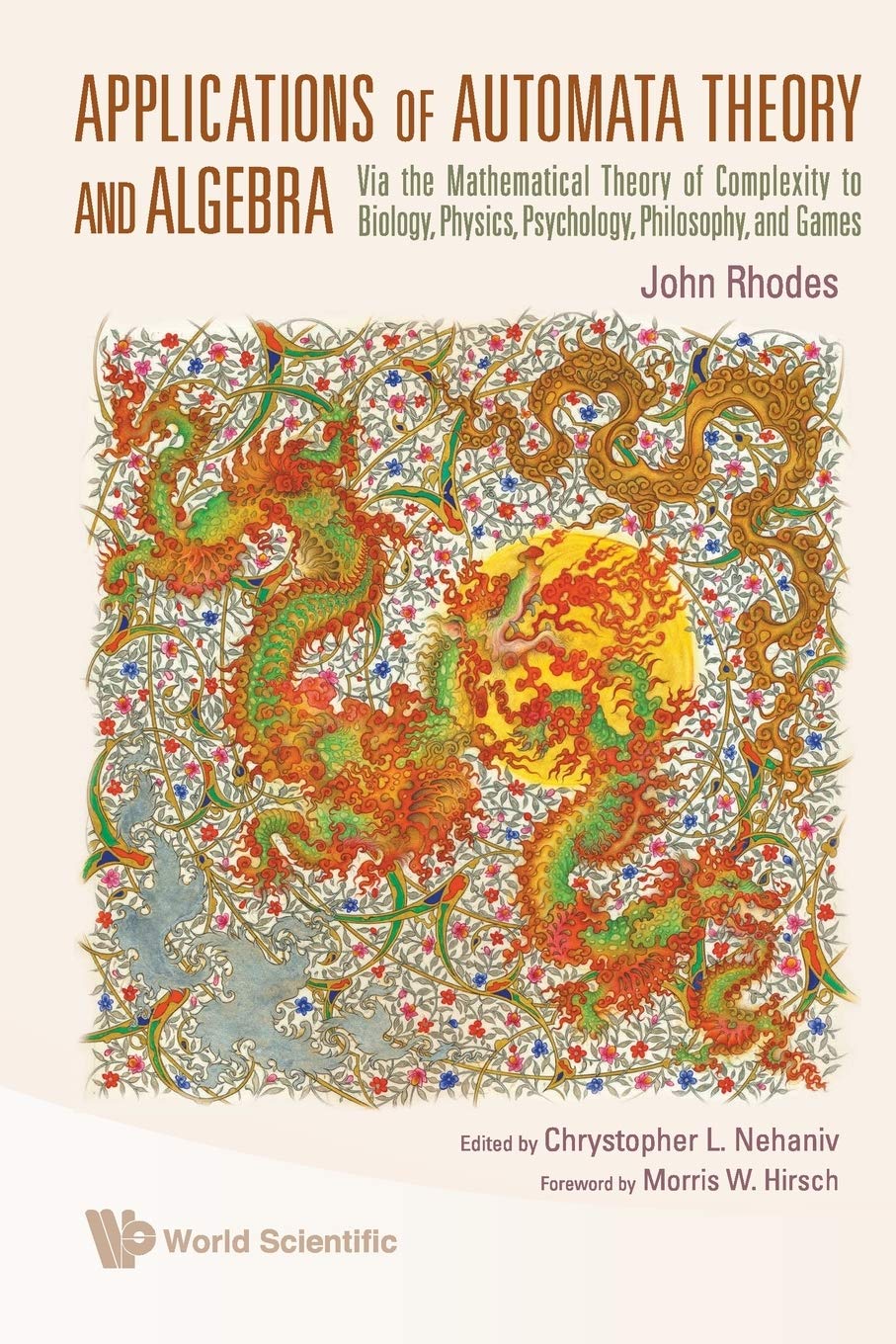
Applications of Automata Theory and Algebra: Via the Mathematical Theory of Complexity to Biology, Physics, Psychology,
Inclusive of all applicable taxes. FREE shipping on all orders.
Available Offers
- 🚚Free Delivery — Free shipping on all orders
- 💵Cash on Delivery — Pay when your order arrives
- ↩️15-Day Easy Returns — Hassle-free return policy
- 🔒Cash on Delivery — Pay safely when your order arrives
Check Delivery
Product Description
Introduction
Since its inception as an underground manuscript in 1969, Applications of Automata Theory and Algebra by John Rhodes has quietly influenced generations of mathematicians, computer scientists, and systems thinkers. Often called The Wild Book, this pioneering work lays the foundation for what is now known as algebraic engineering. Now available in print for the first time, this hardcover edition from World Scientific Publishing Company brings Rhodes' visionary ideas to a new generation of Indian students, researchers, and enthusiasts eager to explore the mathematical structures underlying complex systems.
Book Overview
This book is not a conventional textbook—it is a bold, interdisciplinary journey that uses finite state machines and algebraic complexity as a unifying language. Rhodes demonstrates how automata theory and semigroup algebra can illuminate fields as diverse as biology, physics, psychology, philosophy, and game theory. The text bridges pure mathematics with real-world phenomena, offering a unique lens to understand finite systems across disciplines. Originally circulated as a typed manuscript, this first published edition has been carefully edited and updated while preserving the original's provocative spirit.
Key Highlights
- Foundational work in algebraic engineering—a field that uses algebraic methods to analyze and design complex systems.
- First-ever print edition of a manuscript that became an underground classic among mathematicians and systems biologists.
- Interdisciplinary scope connecting finite group theory, semigroup theory, automata theory, and sequential machines with biology, physics, psychology, philosophy, and game theory.
- Original algebraic approach to complexity that remains relevant for modern research in artificial intelligence, complex systems, and systems biology.
- Edited and updated for contemporary readers while retaining the author's distinctive voice and insights.
Inside the Book
The book unfolds as a series of interconnected essays and mathematical explorations. Rhodes begins with the algebraic theory of finite automata and sequential machines, then builds a framework for measuring complexity. He applies this framework to finite phase space physics, modeling metabolic and evolutionary processes. Later chapters venture into epistemology, mathematical psychoanalysis, and game theory, showing how algebraic structures underpin decision-making and cognitive models. The text is dense with original ideas, proofs, and thought experiments that challenge conventional boundaries.
Key Topics
- Finite state machines and their algebraic characterization
- Semigroup theory and finite group theory in automata
- Complexity measures for finite systems
- Algebraic models of biological evolution and metabolism
- Finite phase space physics and dynamical systems
- Mathematical foundations of epistemology and psychoanalysis
- Game theory and strategic interaction through algebra
- Philosophical implications of algebraic complexity
Reader Benefits
- Deepen mathematical intuition by seeing algebra applied to non-traditional domains.
- Gain a unified perspective on complexity that transcends disciplinary silos.
- Access rare foundational material that has shaped modern systems theory and artificial intelligence research.
- Stimulate creative thinking through Rhodes' unconventional and provocative ideas.
- Build a strong conceptual base for advanced research in algebraic engineering, theoretical computer science, or mathematical biology.
Learning Outcomes
By studying this book, readers will be able to: understand the algebraic structure of finite automata and sequential machines; apply semigroup and group theory to analyze complexity in finite systems; connect mathematical models to real-world phenomena in biology, physics, and psychology; critically evaluate the philosophical underpinnings of mathematical modeling; and develop a cross-disciplinary vocabulary for discussing complex systems. The book cultivates a mindset that sees algebraic patterns in seemingly unrelated fields.
Who Should Read
This book is ideal for advanced undergraduate and postgraduate students in mathematics, computer science, physics, and systems biology. It will also appeal to researchers in artificial intelligence, complex systems, and philosophy of science who seek a deeper algebraic foundation. Professionals working in game theory, cognitive science, or evolutionary modeling will find fresh perspectives. Anyone fascinated by the hidden mathematical structures of the world—and willing to engage with challenging, original ideas—will be rewarded.
About the Author
John Rhodes is a distinguished mathematician and professor emeritus at the University of California, Berkeley. He is best known for his foundational contributions to the algebraic theory of semigroups and automata, particularly the Rhodes Complexity Theorem, a landmark result in semigroup theory. His work has influenced diverse fields from computer science to systems biology. The Wild Book represents his most ambitious interdisciplinary synthesis, reflecting a lifetime of thinking at the intersection of algebra, computation, and natural phenomena.
About the Publisher
World Scientific Publishing Company is a leading international academic publisher headquartered in Singapore, with a strong presence in India. Renowned for its high-quality monographs, textbooks, and reference works in science, mathematics, and engineering, World Scientific brings rigorous scholarship to readers worldwide. This edition of Rhodes' classic upholds their tradition of publishing transformative scientific ideas.
Conclusion
Applications of Automata Theory and Algebra is more than a book—it is an invitation to think differently about mathematics and its reach. John Rhodes' bold vision, long available only to a select few, is now accessible to Indian readers who crave intellectual adventure. Whether you are a mathematician seeking new frontiers, a biologist modeling evolution, or a philosopher pondering the nature of complexity, this hardcover edition belongs on your shelf. Order your copy from Bookshops.in today and step into the wild world of algebraic engineering.
Quick Summary
Applications of Automata Theory and Algebra by John Rhodes is a landmark work that launched the field of algebraic engineering. Originally written in 1969 as an underground manuscript known as 'The Wild Book', it uses finite state machine models and algebraic complexity to create a unifying framework across diverse disciplines. The book explores how finite group theory, semigroup theory, and automata theory can be applied to biology, physics, psychology, philosophy, and game theory, offering a completely original algebraic approach to understanding finite systems. Readers will learn how sequential machines model metabolic and evolutionary processes, how phase space physics connects to algebra, and how mathematical psychoanalysis and epistemology emerge from these foundations. This interdisciplinary text is ideal for graduate students, researchers, and academics in mathematics, theoretical computer science, and related fields. By purchasing from Bookshops.in, Indian readers gain access to a premium hardcover edition of a classic that continues to influence modern research. With a 5.0 rating from reviewers, this book is a valuable addition to any serious scholar's library, offering deep insights that bridge the gap between abstract mathematics and real-world systems.
Book Highlights
Book Specifications
| ISBN-13 | 9789812836977 |
| ISBN-10 | 9812836977 |
| Publisher | World Scientific Pub Co Inc |
| Language | English |
| Dimensions | 16.56 x 1.5 x 23.19 cm |
| Weight | 445 g |
| Category | Mathematics › Algebra & Trigonometry |
| Genre | Non-fiction |
| Original Language | English |
Frequently Asked Questions
What is the main theme of this book?
Who is John Rhodes?
Is this book suitable for beginners?
What is 'The Wild Book'?
Does the book cover game theory?
How does this book relate to biology?
What is algebraic engineering?
Can this book help with psychology research?
Is this book available in paperback?
What is the ISBN?
Why is this book considered an underground classic?
What fields does the book connect?
Where can I buy this book in India?
Readers Also Search For
Customers Also Bought
Mathematics
Stereotype Spaces and Algebras: 73 (De Gruyter Expositions in Mathematics, 73)
Mathematics
Semigroups in Algebra, Geometry and Analysis: 20 (De Gruyter Expositions in Mathematics, 20)
Mathematics
Geometry from the Pacific Rim: Proceedings of the Pacific Rim Geometry Conference held at National University of Singapore, Republic of Singapore, ... 1994 (De Gruyter Proceedings in Mathematics)
Mathematics
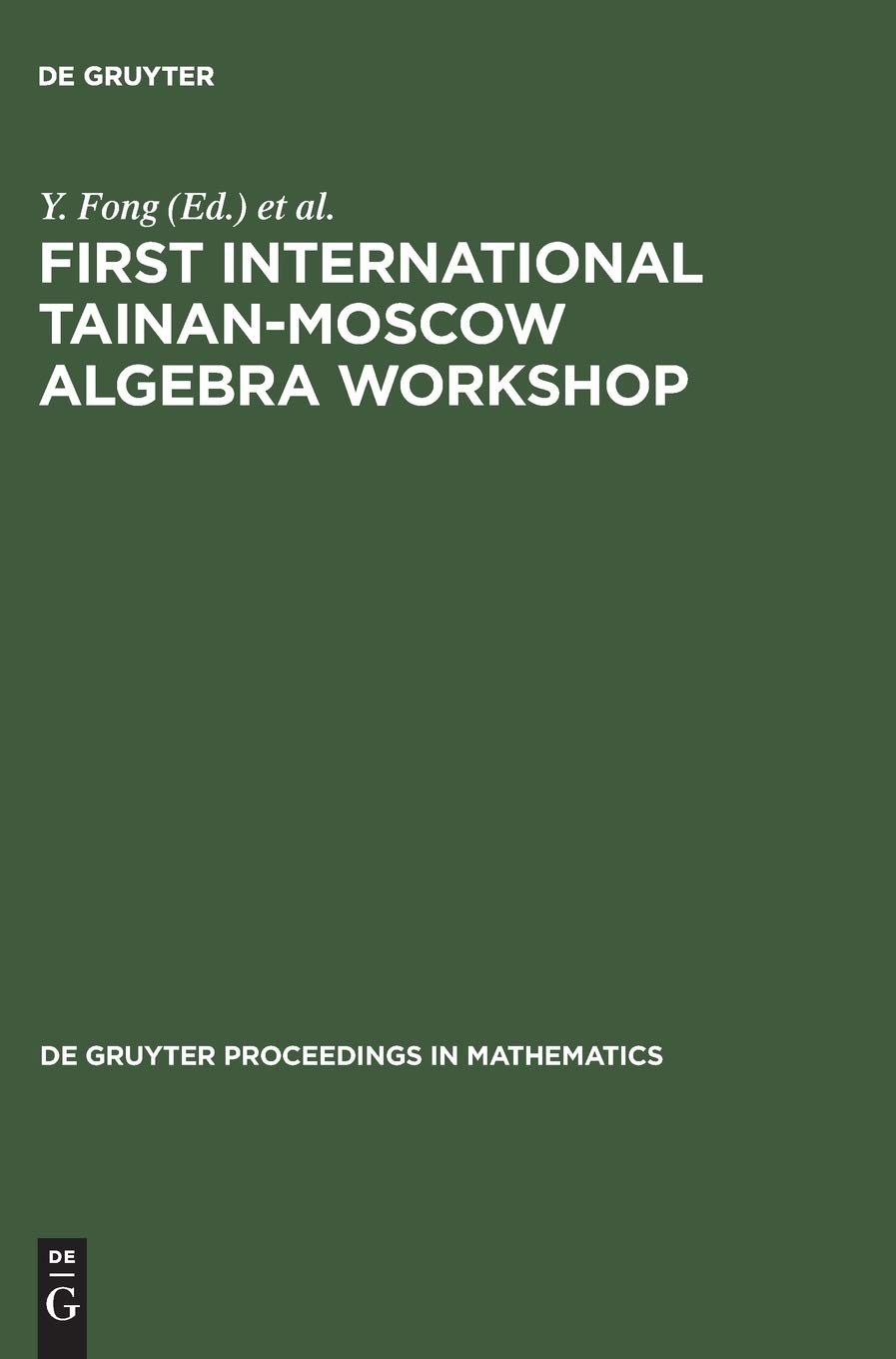
First International Tainan-Moscow Algebra Workshop: Proceedings of the International Conference held at National Cheng Kung University Tainan, Taiwan, ... 1994 (De Gruyter Proceedings in Mathematics)
Mathematics
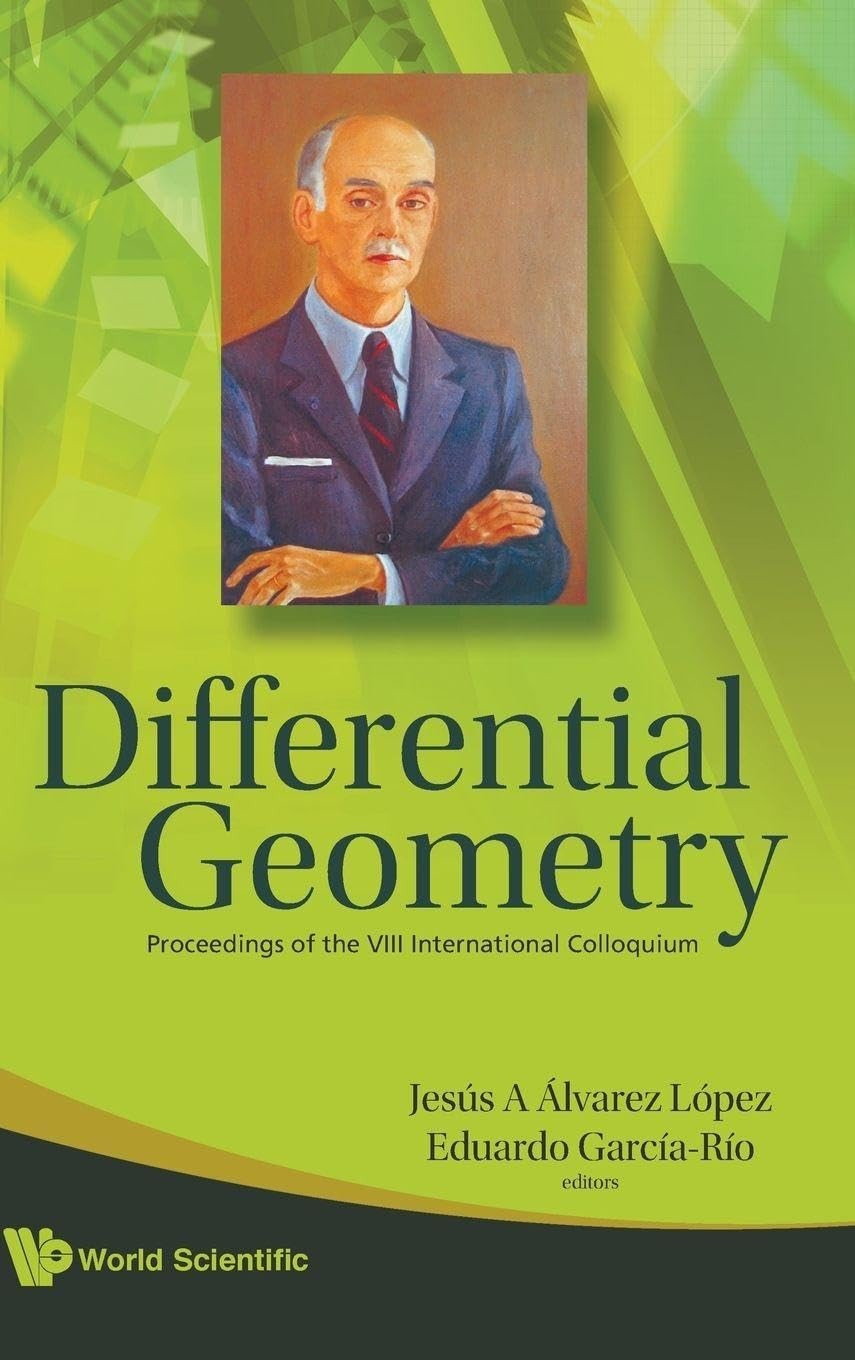
Differential Geometry - Proceedings of the VIII International Colloquium (English, Jesus A. Alvarez Lopez | Eduardo Garcia-Rio)
Mathematics
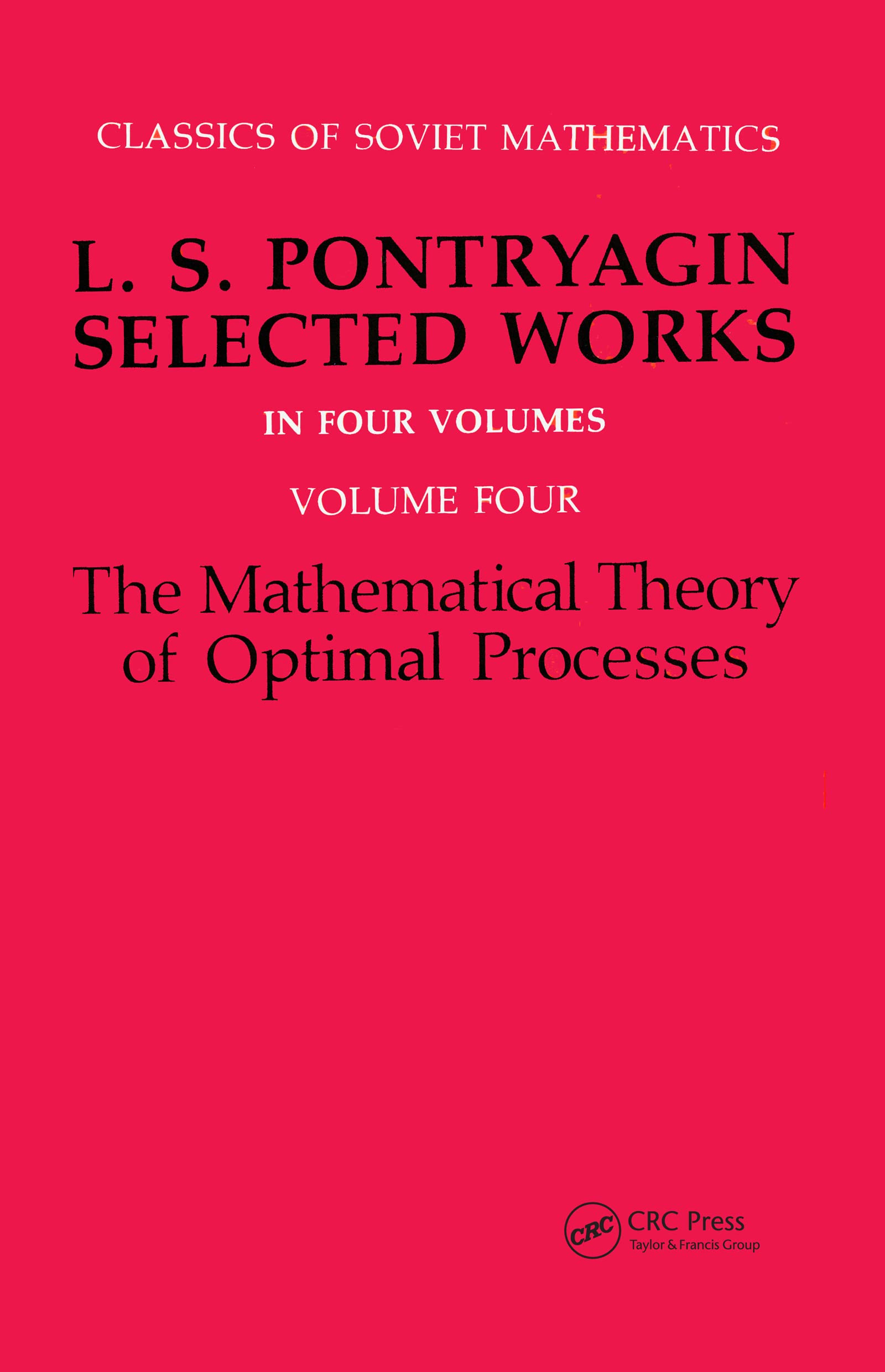
Mathematical Theory of Optimal Processes (Classics of Soviet Mathematics)
Related Products
View AllMathematics
Stereotype Spaces and Algebras: 73 (De Gruyter Expositions in Mathematics, 73)
Mathematics
Semigroups in Algebra, Geometry and Analysis: 20 (De Gruyter Expositions in Mathematics, 20)
Mathematics
Geometry from the Pacific Rim: Proceedings of the Pacific Rim Geometry Conference held at National University of Singapore, Republic of Singapore, ... 1994 (De Gruyter Proceedings in Mathematics)
Mathematics
First International Tainan-Moscow Algebra Workshop: Proceedings of the International Conference held at National Cheng Kung University Tainan, Taiwan, ... 1994 (De Gruyter Proceedings in Mathematics)
Mathematics
Differential Geometry - Proceedings of the VIII International Colloquium (English, Jesus A. Alvarez Lopez | Eduardo Garcia-Rio)
Mathematics