
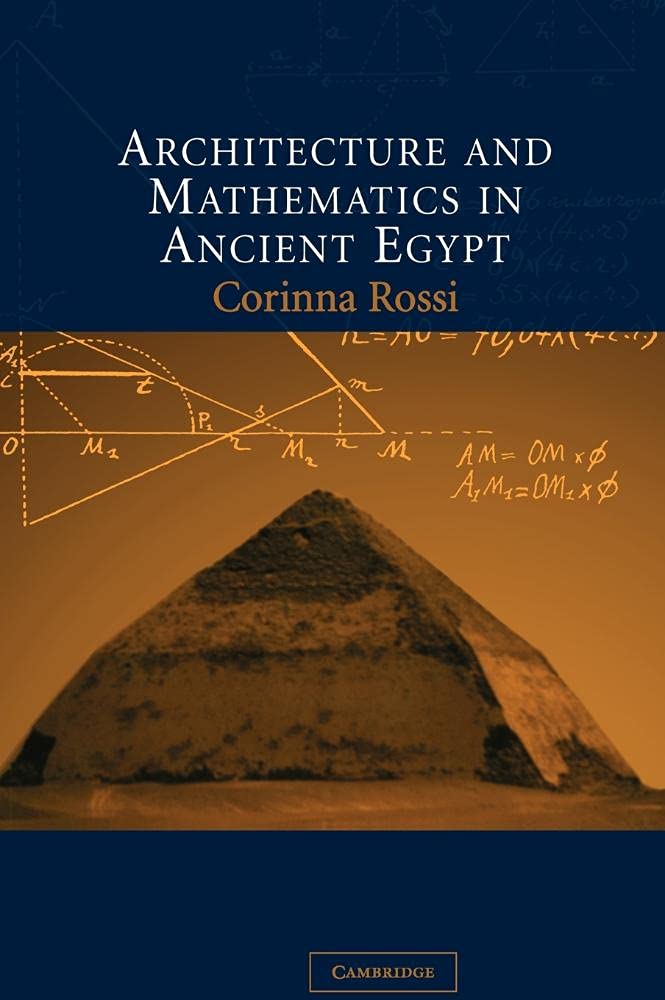
Architecture and Mathematics in Ancient Egypt: A Study of Pyramids and Geometric Principles by Corinna Rossi
Inclusive of all applicable taxes. FREE shipping on all orders.
Available Offers
- 🚚Free Delivery — Free shipping on all orders
- 💵Cash on Delivery — Pay when your order arrives
- ↩️15-Day Easy Returns — Hassle-free return policy
- 🔒Cash on Delivery — Pay safely when your order arrives
Check Delivery
Product Description
Introduction
In the vast, sun-scorched landscape of ancient Egypt, the pyramids and temples stand as enduring testaments to human ingenuity. But what if these monumental structures were not merely feats of brute labour, but the result of a deep, sophisticated understanding of mathematics? Architecture and Mathematics in Ancient Egypt by Corinna Rossi offers a groundbreaking exploration of this very question. This meticulously researched volume bridges the gap between archaeology, architectural history, and the history of mathematics, presenting a unified view of how numbers, geometry, and practical construction techniques were intertwined in the minds of the ancient builders. For Indian students and scholars fascinated by the intersection of science, art, and history, this book is an indispensable resource that will reshape your understanding of one of the world's greatest civilizations.
Book Overview
Published by the prestigious Cambridge University Press, this hardcover edition brings together decades of interdisciplinary research. Corinna Rossi, an architect and Egyptologist, challenges the long-held notion that ancient Egyptian architecture followed abstract, universal rules. Instead, she demonstrates that the design and construction of sacred structures were deeply rooted in a continuum of theory and practice. The book focuses on a specific group of monuments—the pyramids—and places them within their cultural, religious, and historical context. Through detailed analysis of plans, diagrams, and surviving texts, Rossi reconstructs the original planning processes, revealing a mathematical sophistication that is both elegant and profoundly human. This is not a dry academic treatise; it is a vivid journey into the minds of the builders who shaped the ancient world.
Key Highlights
- Interdisciplinary Approach: Uniquely merges perspectives from architecture, Egyptology, and the history of mathematics, offering a holistic understanding of ancient construction.
- Focus on the Pyramids: Provides a deep, case-study-driven analysis of the most iconic monuments, from the Step Pyramid to the Great Pyramid of Giza.
- Rich Visuals: Highly illustrated with original plans, diagrams, and figures that make complex geometrical concepts accessible and visually engaging.
- Cultural Context: Places mathematical knowledge within the broader framework of Egyptian religion, cosmology, and daily life, showing how numbers were imbued with meaning.
- Original Research: Presents Rossi's own groundbreaking arguments, challenging previous theories and offering fresh insights into ancient design methodologies.
Inside the Book
Open the cover, and you will find a carefully structured narrative that guides you through the evidence. The book begins by establishing the historical and methodological background, explaining how previous scholars have approached the subject. It then delves into the surviving mathematical papyri and architectural tools, revealing the practical knowledge available to Egyptian engineers. The core of the book is a detailed examination of the pyramids, where Rossi uses geometric analysis to uncover the original design intentions. Each chapter builds upon the last, moving from simple proportional systems to complex three-dimensional planning. The illustrations are not mere decorations; they are integral to the argument, allowing you to see the numbers come to life in stone. You will learn how the ancient surveyors used ropes and rods to lay out precise angles, and how the concept of the seked (a slope measurement) governed the shape of entire pyramids.
Key Topics
- The role of the seked in pyramid design and construction.
- Analysis of mathematical papyri, including the Rhind and Moscow papyri.
- Use of geometric shapes: squares, triangles, and circles in temple and tomb layouts.
- The relationship between architectural proportions and religious symbolism.
- Reconstruction of the design process for the Bent Pyramid and the Red Pyramid.
- Comparison of theoretical mathematical knowledge versus practical on-site problem-solving.
- The influence of the annual Nile flood on surveying and land measurement.
- Critical evaluation of the 'golden ratio' and other universal theories applied to Egyptian architecture.
Reader Benefits
By engaging with this book, you will gain a profound appreciation for the intellectual achievements of ancient Egyptian civilization. You will move beyond romanticized notions and understand the actual methods used by architects and builders. For students of architecture, this book offers a case study in how geometry can be both a practical tool and an artistic language. For students of mathematics, it reveals a non-Western tradition of numerical thinking that is both rigorous and creative. For history enthusiasts, it provides a richer, more human story of the people behind the monuments. Ultimately, you will develop the ability to 'read' an ancient building as a mathematical document, seeing the numbers embedded in every stone.
Learning Outcomes
- Understand the fundamental mathematical concepts used in ancient Egyptian architecture, including proportions, slopes, and area calculations.
- Analyze the design principles behind major pyramid complexes and funerary temples.
- Critically evaluate different scholarly interpretations of Egyptian architectural planning.
- Connect mathematical knowledge to the broader cultural and religious worldview of ancient Egypt.
- Apply the concept of 'theory-practice continuum' to other ancient construction traditions.
- Interpret architectural plans and diagrams with a new level of technical insight.
Who Should Read
This book is ideal for undergraduate and postgraduate students in architecture, archaeology, Egyptology, history of science, and mathematics. It is also a must-read for professional architects and engineers interested in historical construction techniques. History teachers and educators looking for authoritative, well-illustrated material will find it invaluable. Finally, any curious reader with a passion for ancient civilizations and a desire to understand the 'how' and 'why' behind the pyramids will be richly rewarded. The content is rigorous but accessible, making it suitable for serious enthusiasts as well as academics.
About the Author
Corinna Rossi is uniquely qualified to write this book. She holds a degree in architecture from the Politecnico di Milano and a PhD in Egyptology from the University of Cambridge. Her dual background allows her to navigate both the technical language of building design and the historical nuances of ancient Egyptian culture. She has conducted extensive fieldwork in Egypt and has published numerous papers on the intersection of architecture and mathematics. Her writing is clear, methodical, and passionate, reflecting a lifetime of curiosity about how the ancient world was built. In this book, she acts as a guide, leading the reader through complex evidence with patience and insight.
About the Publisher
Cambridge University Press is one of the oldest and most respected academic publishers in the world, with a history dating back to 1534. Renowned for its rigorous peer-review process and high editorial standards, Cambridge University Press ensures that every book it publishes meets the highest scholarly criteria. This volume is no exception. The quality of the paper, binding, and illustrations reflects the press's commitment to producing durable, beautiful books that are a pleasure to own. For Indian readers, a Cambridge University Press title is a mark of trust and academic excellence, making this hardcover edition a worthy addition to any personal or institutional library.
Conclusion
Architecture and Mathematics in Ancient Egypt is more than a book; it is an invitation to see the ancient world with new eyes. Corinna Rossi masterfully dismantles the myth of the 'mysterious' pyramid builders and replaces it with a picture of skilled, mathematically literate engineers who worked within a rich cultural framework. Whether you are a student preparing for a thesis, a teacher looking for authoritative material, or simply a lover of history, this book will deepen your understanding and spark your imagination. It is a testament to the power of interdisciplinary scholarship and a celebration of human intellect. Order your copy from Bookshops.in today and embark on a journey that bridges the gap between numbers and stones, theory and practice, the ancient and the modern.
Quick Summary
Architecture and Mathematics in Ancient Egypt by Corinna Rossi is a groundbreaking study that reveals the deep mathematical foundations of Egyptian monumental architecture. Unlike earlier works that sought universal rules, Rossi—an architect and Egyptologist—argues that theory and practice were inseparable in ancient construction. The book focuses on pyramids such as those at Giza and Saqqara, analyzing their proportions, alignments, and the use of the cubit system. It draws on mathematical papyri, archaeological evidence, and architectural plans to show how numbers and geometry were woven into the cultural and religious fabric of Pharaonic society. Readers will learn not only how the pyramids were built, but why specific numerical choices were made—reflecting cosmic and spiritual beliefs. This book is ideal for Indian students and researchers in Egyptology, archaeology, architecture, and history of science. Buying from Bookshops.in ensures you receive a genuine imported hardcover edition with fast delivery across India. It is a must-have for anyone serious about understanding one of humanity's greatest architectural achievements.
Book Highlights
Book Specifications
| ISBN-13 | 9780521829540 |
| ISBN-10 | 0521829542 |
| Publisher | Cambridge University Press |
| Language | English |
| Dimensions | 17.78 x 3.18 x 24.77 cm |
| Weight | 750 g |
| Country | India |
| Category | Science & Mathematics › Mathematics |
| Genre | Nonfiction |
| Original Language | English |
Frequently Asked Questions
What is the main focus of this book?
Who is Corinna Rossi?
Is this book suitable for beginners?
Does the book include illustrations?
What time period does it cover?
How does this book differ from other Egyptology books?
Does it discuss the Egyptian number system?
What is the significance of the cubit?
Does it cover temples as well as pyramids?
Can this book help in understanding Vedic architecture?
Is it available in Indian bookstores?
What is the price in India?
Readers Also Search For
Customers Also Bought
Mathematics
Stereotype Spaces and Algebras: 73 (De Gruyter Expositions in Mathematics, 73)
Mathematics
Semigroups in Algebra, Geometry and Analysis: 20 (De Gruyter Expositions in Mathematics, 20)
Mathematics
Geometry from the Pacific Rim: Proceedings of the Pacific Rim Geometry Conference held at National University of Singapore, Republic of Singapore, ... 1994 (De Gruyter Proceedings in Mathematics)
Mathematics
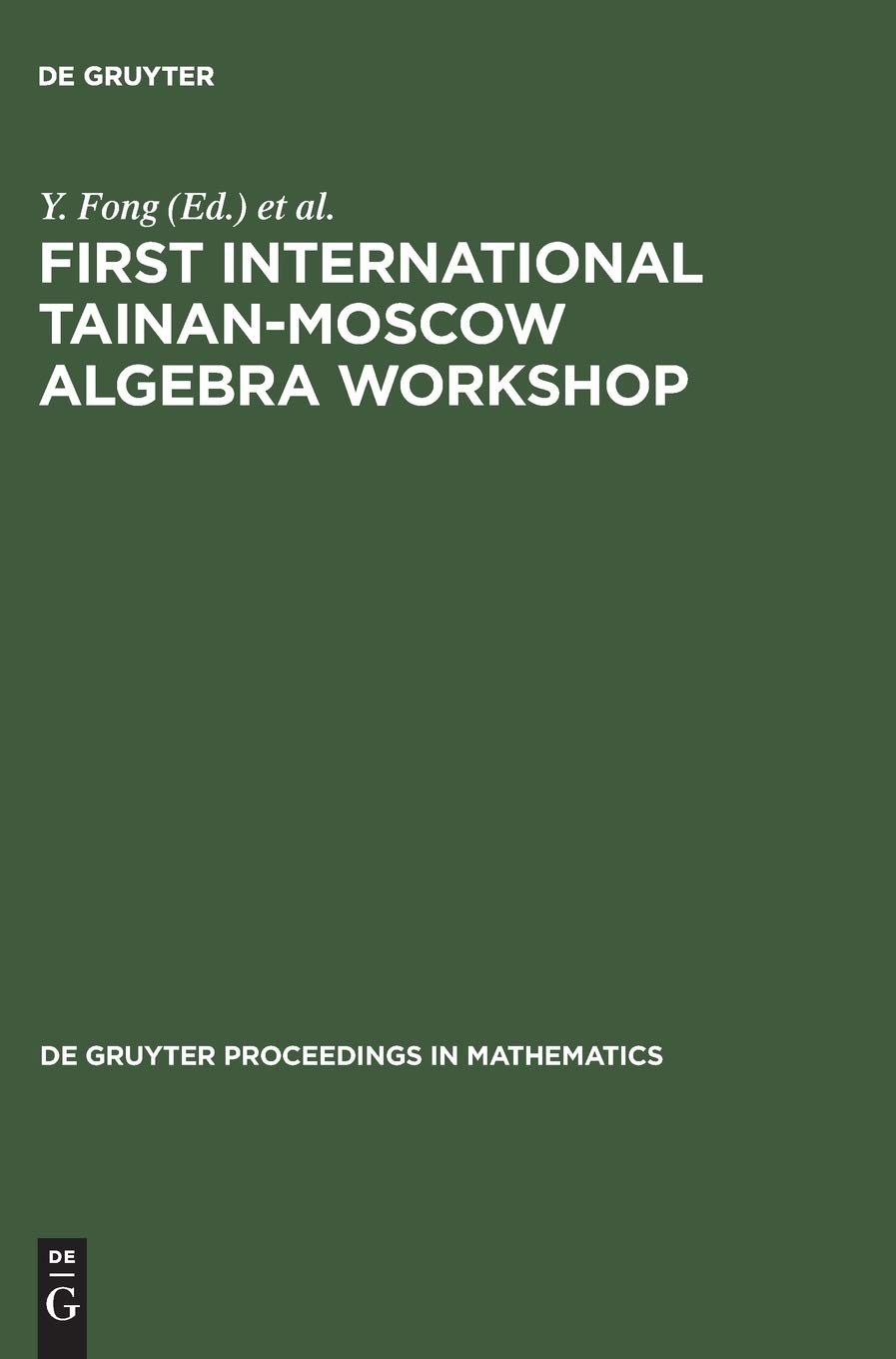
First International Tainan-Moscow Algebra Workshop: Proceedings of the International Conference held at National Cheng Kung University Tainan, Taiwan, ... 1994 (De Gruyter Proceedings in Mathematics)
Mathematics
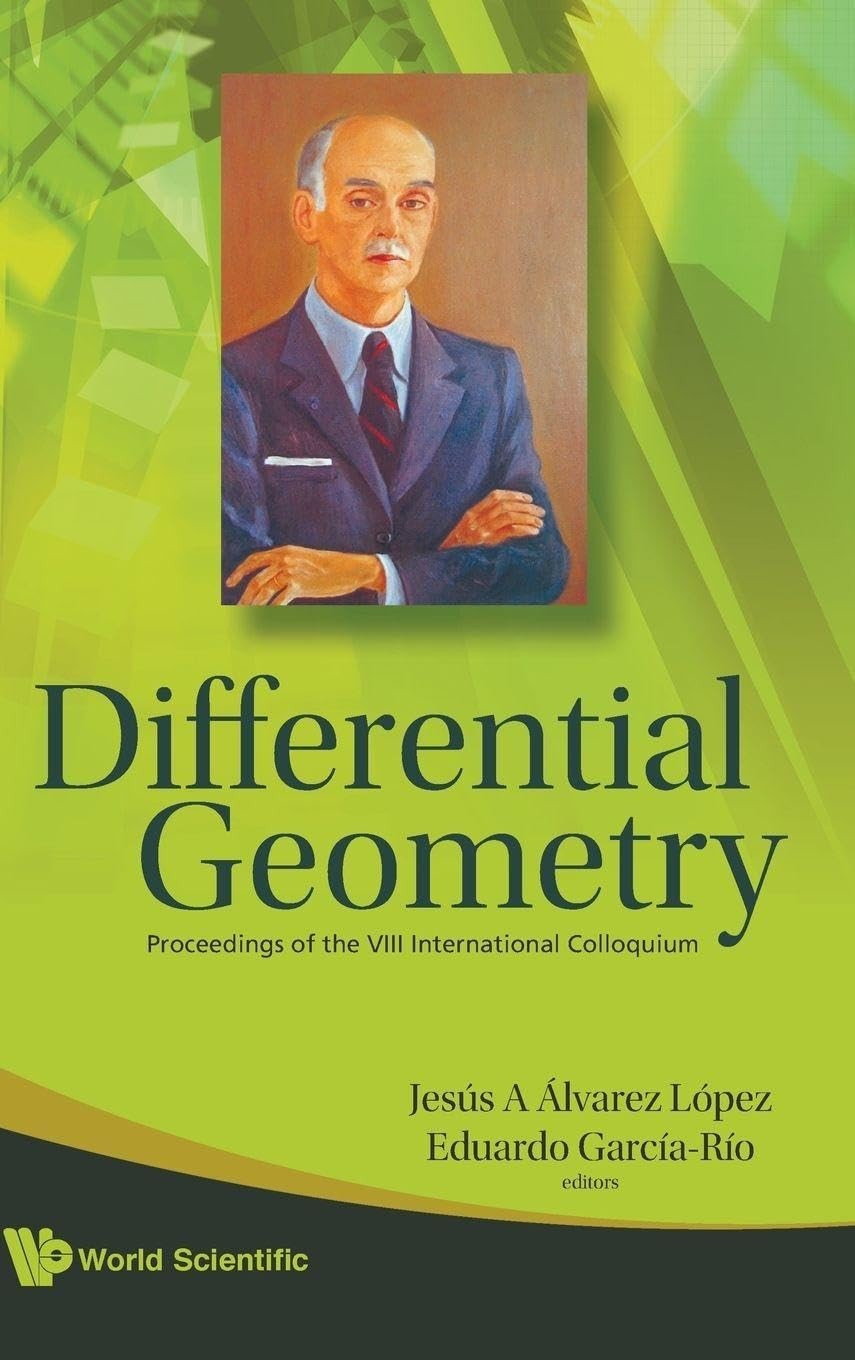
Differential Geometry - Proceedings of the VIII International Colloquium (English, Jesus A. Alvarez Lopez | Eduardo Garcia-Rio)
Mathematics
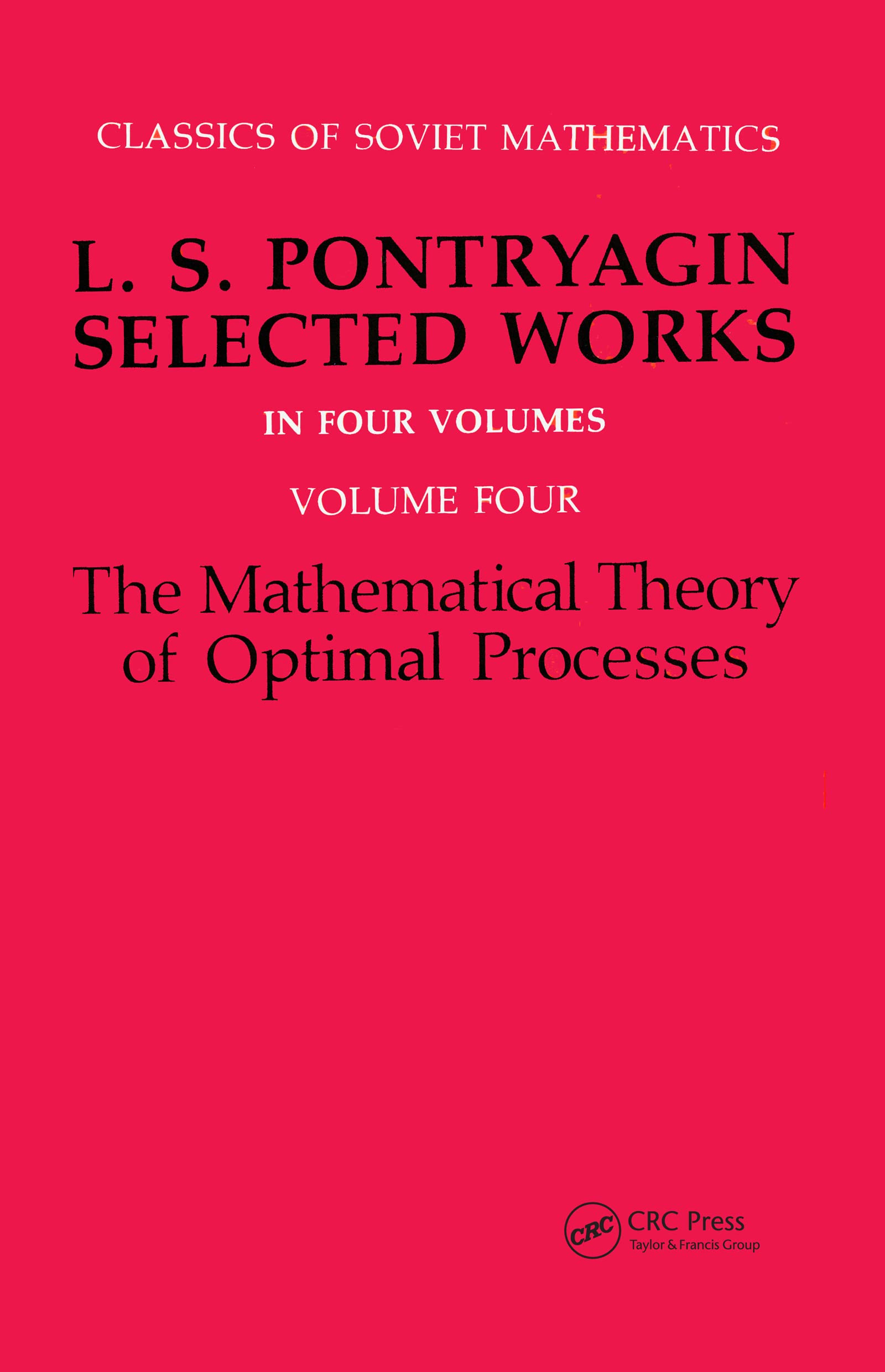
Mathematical Theory of Optimal Processes (Classics of Soviet Mathematics)
Related Products
View AllMathematics
Mathematical Theory of Optimal Processes (Classics of Soviet Mathematics)
Mathematics
Stereotype Spaces and Algebras: 73 (De Gruyter Expositions in Mathematics, 73)
Mathematics
Semigroups in Algebra, Geometry and Analysis: 20 (De Gruyter Expositions in Mathematics, 20)
Mathematics
Geometry from the Pacific Rim: Proceedings of the Pacific Rim Geometry Conference held at National University of Singapore, Republic of Singapore, ... 1994 (De Gruyter Proceedings in Mathematics)
Mathematics
First International Tainan-Moscow Algebra Workshop: Proceedings of the International Conference held at National Cheng Kung University Tainan, Taiwan, ... 1994 (De Gruyter Proceedings in Mathematics)
Mathematics