
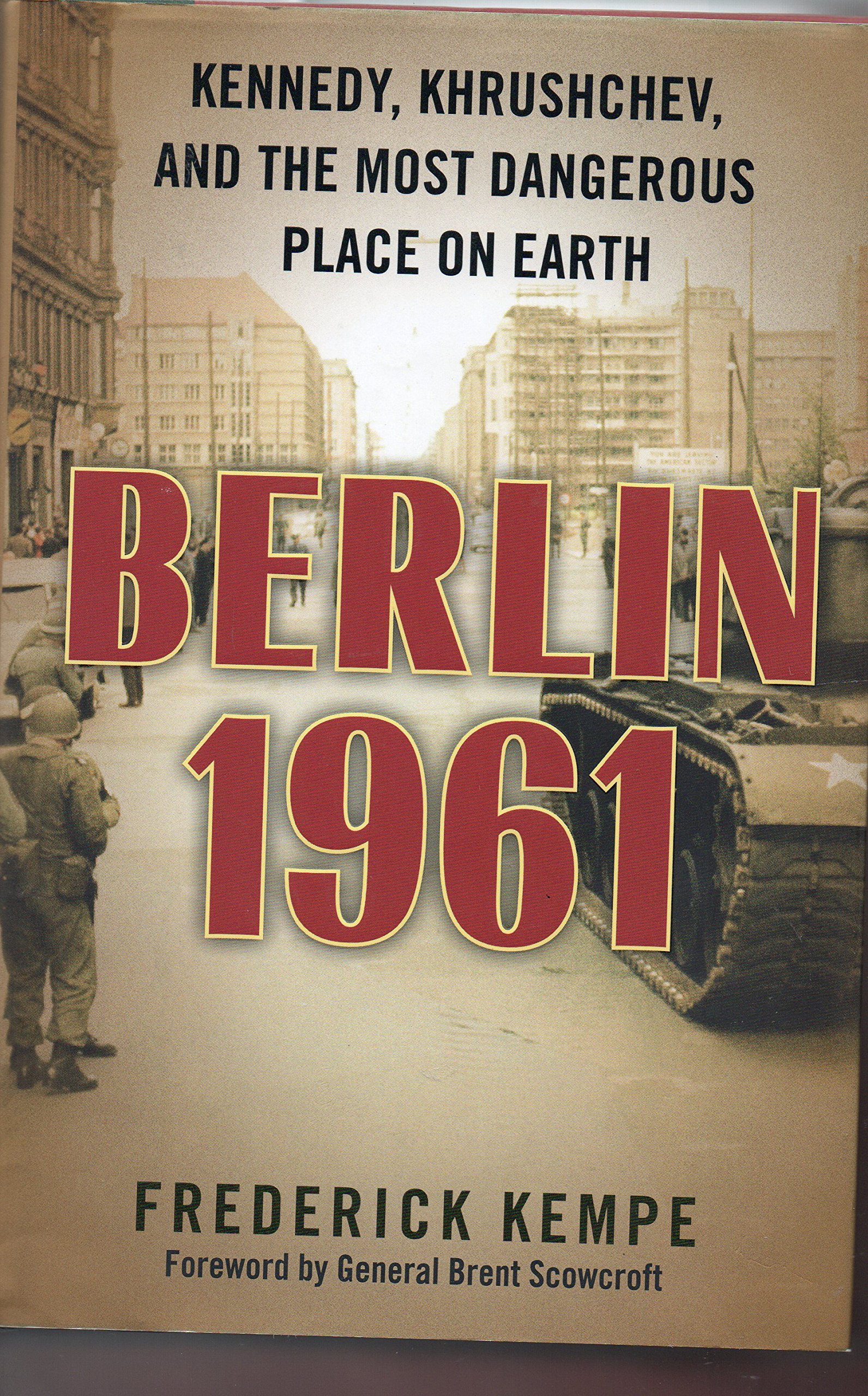
Berlin 1961
Inclusive of all applicable taxes. FREE shipping on all orders.
Available Offers
- 🚚Free Delivery — Free shipping on all orders
- 💵Cash on Delivery — Pay when your order arrives
- ↩️15-Day Easy Returns — Hassle-free return policy
- 🔒Cash on Delivery — Pay safely when your order arrives
Check Delivery
Product Description
"Berlin 1961: Kennedy, Khrushchev, and the Most Dangerous Place on Earth" by Frederick Kempe, published by Penguin. Amazon.com Review Author Q&A with Frederick Kempe Q: What led you to write this book? A: The Cold War is still the least understood and worst reported of our three world wars. Berlin was its epicenter. The year 1961 was the most decisive. I wanted to tell the story of that year. And I wanted to tell it through its protagonists, as rich a cast of characters as history could provide. I also wanted to satisfy my own questions about whether the Berlin Wall could have been avoidedand whether the Cold War could have been ended much earlier. Might we have been able to help liberate a whole generation of Eastern Europeanstens of millions of peoplethree decades earlier? Then, after President Obamas election, I was even more motivated to finish my research. The reason is that this is also a story of a brilliant but inexperienced president dealing with issues far beyond his skill set. Kennedys first year in office proved to be one of the worst of any modern presidency. U.S. presidents shape world historyand in this case it is not a positive story. Q: Much has been written about the Cold War in general and about this particular time and place. Whats different about this book? A: Two aspects are quite different from what has appeared before. First, I pull in all the strands about this historic year that havent been in a single book: the Kennedy story, the Khrushchev story, the Ulbricht and Adenauer stories. I also draw upon recently released documents in Russia, Germany, and the U.S. that havent yet been put into a single story. I weave these into a narrative that is both human and historic, as has been my instinct to do as a journalist. Second and more important, the book builds the best cases to date that Kennedy acquiesced to the border closure and the building of the Wall. The record shows that in many respects he wrote the script that Khrushchev followedas long as Khrushchev restricted his actions to Soviet-controlled East Berlin and East Germany, Kennedy would accept his actions. Kennedy falsely believed that if East Germany could end its refugee stampede, Khrushchev might become a more willing negotiator on a set of other issues. It was a tragic misreading of the man and of the situation. Berlin paid for itas did tens of millions of people. Q: Among the main points you highlight in this book are the self-reinforcing misinterpretations, miscommunications, and misunderstandings between the U.S. and the USSR. What examples stand out to you as the most important? A: They began years before Kennedy took office. The U.S. never fully recognized or acted upon how dramatic was the break between Khrushchev and Stalinism at the 20th Party Congress in 1956. Khrushchevs call for peaceful coexistence with the capitalist West was never fully explored. Nor did we ever answer or reward his support for Finnish and Austrian neutrality and his reductions in military personnel and spending. During Kennedys presidency, the misreading began when Khrushchev released captured U.S. airmen and Kennedy failed to recognize the potential importance of the gesture. It continued when he misinterpreted a relatively unimportant hard-line propaganda speech by Khrushchev as a declaration of an even more aggressive Soviet challenge aimed at him. From Khrushchevs side, he often listened more to his own insecurities than what was warranted by the situation. He was enormously vulnerable to perceived slightshe would respond excessively to moments like the U-2 incident and Kennedys State of the Union speech and the U.S. Minuteman missile test. However, there was one moment when Khrushchev listened closely to Kennedys communicationand that regarded what the president would be willing to accept in Berlin. Then Khrushchev acted very much according to the clear messages he received. Q: Do you think we could have ended the Cold War earlier if Kennedy had managed his relationship with Khrushchev differently? A: As General Brent Scowcroft says in the foreword to the book, history doesnt reveal its alternatives. My own view is that the Soviet empire would have begun to unravel earlier had Kennedy held the linebut we will never know. It is unclear how the Soviets would have responded to that without a Gorbachev and a Yeltsin in charge. Would they have backed down, as they did during the Berlin Airlift of 1948, or would they have defended what they controlled, as they did in Budapest in 1956? The key difference between those two events was a demonstration of resolve by the U.S. with its nuclear superiority. I am certain of one thing: East Germany would have collapsed if the communists hadnt put up the Wall to stop the refugee flowand that would have had severe consequences for the rest of the Soviet bloc. After all, it is the refugee flood that prompted its collapse twenty-eight years later. Whether or not the Cold War would have ended earlier, Kennedy certainly saved Khrushchev from a lot of trouble then by acquiescing to the building of the Wall. Q: Berlin 1961 is described as being based on a wealth of new documents and interviews. Please tell us about the research you did. What sort of new documents did you uncover, and what new interviews did you conduct? A: Some of these were new documents I was able to find through additional research in Berlin, Moscow, and the United States. Some were new interviews with witnesses of the time and the unearthing of interviews and oral histories that had previously received little notice. However, the real wealth of new material came from documents that had been released in all three countries that hadnt been brought together in a book that explained their meaning and their connections. Almost all of the most significant players from 1961 are no longer living; however their memoirs, oral histories, and documents recounting some of their most crucial meetings have either gone unnoticed or have attracted too little notice. Sadly, much of what we still need to know remains classified. But this book does make clear what we should be watching for most intensively when new documents are released, particularly those of President Kennedys brother Robert. Q: What surprised you most as you worked on the book, and what do you think will most surprise readers? A: What most surprised me is the body of evidence that Kennedy not only was relieved by the Berlin border closure, but in many respects wrote the script for it. Reading the documents, I was also struck by how refreshingly self-aware Kennedy was about the failure of his first year as president and the danger that Khrushchev would consider him weak. On the Soviet side, what interested me most was the power of a weak client and his failing state, Walter Ulbricht and East Germany, to influence the actions of a great power. The greatest mystery to me remains the Georgi BolshakovBobby Kennedy relationship, which Im now confident played a larger role than can be documented. Q: What do you want readers to get out of this book? A: I want Americans to understand how the decisions of their presidentsthen and nowshape world history in ways we dont always understand at the time of a specific event. I want readers to know that Kennedy could have prevented the Berlin Wall, if he had wished, and that in acquiescing to the border closure he not only created a more dangerous situationbut also contributed to mortgaging the future for tens of millions of Central and Eastern Europeans. The relatively small decisions that U.S. presidents make have huge, often global, consequences. Though most U.S. analysts and even historians have forgotten the events around Berlin in 1961, I want to start a debate about whether the U.S. actually could have ended the Cold War earlier. I also want to remind Americans of the cost to the world of perceived American weakness. Luckily, we escaped a nuclear conflictboth over Berlin and over Cubabut the greatest danger came not because we overreached but because our adversary had concluded that we wouldnt act to defend our interests. Review " Berlin 1961 is a gripping, well-researched, and thought- provoking book with many lessons for today." -Dr. Henry Kissinger "Good journalistic history in the tradition of William L. Shirer and Barbara Tuchman." - Kirkus Reviews "Frederick Kempe's compelling narrative, astute analysis, and meticulous research bring fresh insight into a crucial and perilous episode of the Cold War." -Strobe Talbott, President, Brookings Institution "History at its best. Kempe's book masterfully dissects the Cold War's strategically most significant East-West confrontation, and in the process significantly enlightens our understanding of the complexity of the Cold War itself." -Dr. Zbigniew Brzezinski, National Security Advisor to President Jimmy Carter " Berlin 1961 takes us to Ground Zero of the Cold War. Reading these pages, you feel as if you are standing at Checkpoint Charlie, amid the brutal tension of a divided Berlin." -David Ignatius, Columnist, The Washington Post "Informed...His chronology of memos and meetings dramatizes events behind closed doors...Kempe's history reflects balanced discernment about the creation of the Berlin Wall." - Booklist "Kempe...skillfully weaves oral histories and newly declassified documents into a sweeping, exhaustive narrative...Likely the best, most richly detailed account of the subject, this will engross serious readers of Cold War history who enjoyed W.R. Smyser's Kennedy and the Berlin Wall but appreciate further detail." - Library Journal Book details: published 2011. Order now on BookShops.in with fast, reliable delivery across India.
Book Specifications
| ISBN-13 | 9780399157295 |
| ISBN-10 | 0399157298 |
| Publisher | Penguin USA |
| Language | english |
| Print Length | 608 pages |
| Category | History |
Frequently Asked Questions
What is the price of Berlin 1961?
Does BookShops.in offer free delivery for Berlin 1961?
Is Cash on Delivery available for Berlin 1961?
What is the return policy for Berlin 1961?
Is Berlin 1961 authentic?
Related Products
View All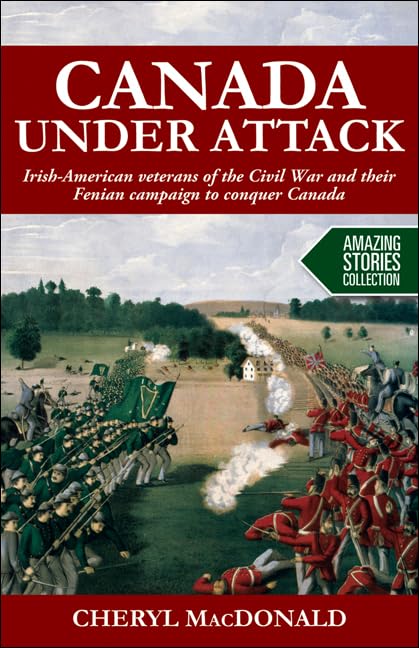
History
Canada Under Attack: Irish-American Veterans of the Civil War and Their Fenian Campaign to Conquer Canada (Amazing Stories)
History
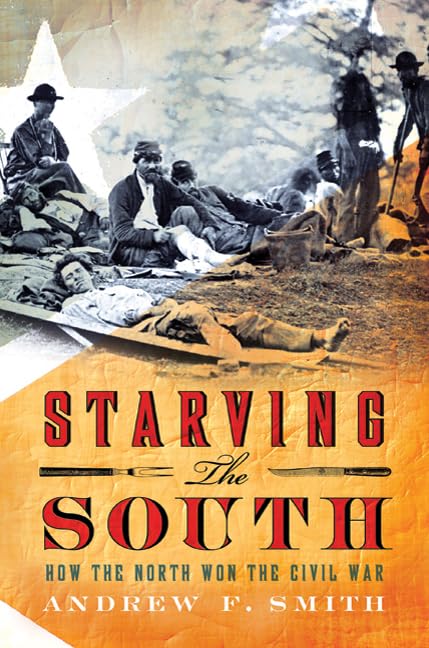
Starving the South: How the North Won the Civil War
History
A New Dictionary of Irish History from 1800
History
Chernobyl: The Devastation, Destruction and Consequences of the World's Worst Radiation Accident
History
The Time of Troubles: Russia in Crisis, 1604-1618 (The Russian Series, V. 36)
History