
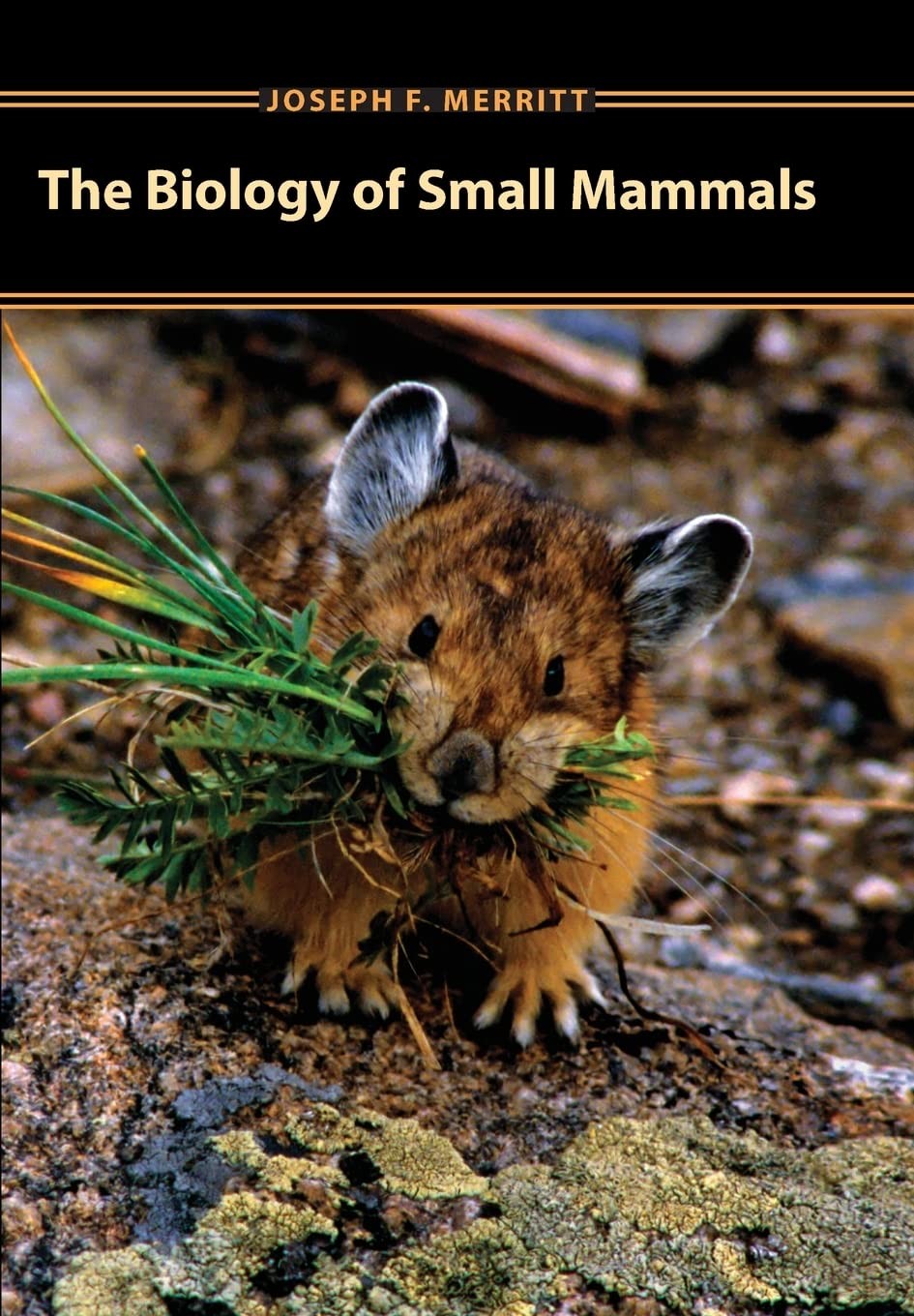
The Biology of Small Mammals: An In-Depth Study of Small Mammal Ecology, Behavior, and Physiology by Joseph F. Merritt
Inclusive of all applicable taxes. FREE shipping on all orders.
Available Offers
- 🚚Free Delivery — Free shipping on all orders
- 💵Cash on Delivery — Pay when your order arrives
- ↩️15-Day Easy Returns — Hassle-free return policy
- 🔒Cash on Delivery — Pay safely when your order arrives
Check Delivery
Product Description
Introduction
Small mammals may be tiny in size, but their impact on ecosystems and their fascinating adaptations are enormous. Joseph F. Merritt’s The Biology of Small Mammals offers a comprehensive and engaging look at the lives of creatures weighing under five kilograms, from the familiar squirrels and hedgehogs of Indian gardens to the more exotic tenrecs and shrews found across the globe. This hardcover volume is an essential addition for students, wildlife enthusiasts, and researchers who wish to understand the hidden world of these often overlooked animals.
Book Overview
This meticulously researched book provides the first broad synthesis of small mammal biology in decades. Merritt examines the physiological, ecological, and behavioral challenges that come with being small, such as rapid heat loss, high metabolic demands, and vulnerability to predators. Through vivid examples and clear explanations, the book reveals how these animals have evolved remarkable strategies to thrive in diverse habitats—from tropical rainforests to arid deserts and even urban environments. The Biology of Small Mammals bridges the gap between academic knowledge and accessible natural history, making it a valuable resource for both classroom learning and personal exploration.
Key Highlights
- Comprehensive coverage of small mammals worldwide, including Indian species like the Indian palm squirrel and the greater bandicoot rat.
- 2010 Outstanding Academic Title as recognized by Choice Magazine, reflecting its scholarly excellence.
- Engaging narrative style that combines scientific rigor with captivating storytelling about animal behaviour and survival.
- Detailed illustrations and photographs that bring the animals and their habitats to life.
- Focus on adaptations such as torpor, burrowing, and social structures that help small mammals cope with environmental extremes.
Inside the Book
The book opens with an introduction to the diversity of small mammals, then delves into chapters on locomotion, feeding habits, reproduction, and thermoregulation. Readers will learn how a shrew’s heart beats over 1,000 times per minute, how bats navigate using echolocation, and how the aye-aye uses its elongated finger to extract grubs. Merritt also explores the ecological roles of small mammals as seed dispersers, prey, and soil engineers, highlighting their importance in maintaining healthy ecosystems. The text is enriched with case studies from around the world, including examples from the Western Ghats and the Himalayas.
Key Topics
- Evolutionary history and classification of small mammals
- Energy budgets and metabolic adaptations
- Locomotion and foraging strategies
- Social behaviour and communication
- Reproductive strategies and parental care
- Thermoregulation and coping with cold climates
- Habitat selection and niche partitioning
- Conservation challenges and human interactions
Reader Benefits
- Gain a deep understanding of how small mammals survive and thrive in diverse environments.
- Learn about the unique physiological traits that distinguish small mammals from larger animals.
- Discover the ecological significance of species often ignored in mainstream wildlife studies.
- Enhance your knowledge of Indian and global small mammal fauna for academic or hobbyist pursuits.
- Access a well-organized reference that is suitable for both quick lookup and in-depth study.
Learning Outcomes
After reading this book, you will be able to identify key small mammal groups, explain their adaptive strategies, and appreciate their roles in ecosystems. You will understand the principles of allometry—how body size affects biology—and be equipped to apply these concepts in fields such as ecology, conservation biology, and wildlife management. The book also fosters critical thinking about the challenges these animals face in a changing world.
Who Should Read
This book is ideal for undergraduate and postgraduate students of zoology, ecology, and wildlife science. It is also perfect for naturalists, birdwatchers, and nature photographers who want to expand their knowledge beyond birds and large mammals. Teachers and researchers looking for a reliable textbook or reference will find it invaluable. Even curious readers with a passion for nature will enjoy Merritt’s accessible writing style.
About the Author
Joseph F. Merritt is a renowned mammalogist with decades of field and research experience. He has served as a senior scientist at the Illinois Natural History Survey and has published extensively on the ecology and behaviour of small mammals. His deep passion for these creatures shines through in every chapter, making complex concepts easy to grasp.
About the Publisher
Johns Hopkins University Press is one of the oldest and most respected academic publishers in the world. Known for its high-quality science and natural history titles, the press ensures that every book meets rigorous editorial and production standards. This hardcover edition is built to last, with crisp printing and durable binding—perfect for years of use in libraries, classrooms, or personal collections.
Conclusion
The Biology of Small Mammals is a masterful work that fills a significant gap in natural history literature. Whether you are a student preparing for exams, a teacher crafting lessons, or a wildlife lover eager to learn, this book will reward you with a richer understanding of the natural world. Order your copy from Bookshops.in today and discover the extraordinary lives of the smallest mammals on Earth.
Quick Summary
The Biology of Small Mammals by Joseph F. Merritt is a landmark work that offers the first comprehensive exploration of small mammals in decades. Focusing on mammals weighing under five kilograms, the book delves into their behavior, feeding strategies, locomotion, habitat use, reproduction, and the unique physiological challenges they face, particularly thermoregulation and heat loss. Merritt introduces a diverse array of species, from the rare Kitti's hog-nosed bat of Southeast Asia to the bizarre aye-aye of Madagascar and the familiar woodchuck of North America. This book is essential for Indian students and researchers in zoology, wildlife biology, and ecology, providing a modern synthesis that bridges gaps in existing literature. Readers will gain a deep understanding of how small mammals adapt to their environments and the evolutionary pressures shaping their lives. Published by Johns Hopkins University Press and recognized as a 2010 Outstanding Academic Title, this hardcover edition is a durable reference for academic and professional use. By purchasing from Bookshops.in, India's premium online bookstore, you receive a genuine copy with reliable delivery and customer support.
Book Highlights
Book Specifications
| ISBN-13 | 9780801879500 |
| ISBN-10 | 0801879507 |
| Publisher | Johns Hopkins Univ Pr |
| Language | English |
| Dimensions | 15.56 x 2.72 x 23.5 cm |
| Weight | 717 g |
| Country | India |
| Category | Biology & Life Sciences › Biology |
| Genre | Science & Mathematics |
| Original Language | English |
Frequently Asked Questions
What is The Biology of Small Mammals about?
Who is the author of this book?
Is this book suitable for Indian students?
Does the book cover Indian small mammal species?
What is the language of the book?
What is the ISBN of this book?
What is the price of this book in India?
Is this book available in hardcover?
What is the rating of this book?
Does the book include rare species?
What topics are covered in the book?
Can I buy this book from Bookshops.in?
Readers Also Search For
Customers Also Bought

Mathematics
Stereotype Spaces and Algebras: 73 (De Gruyter Expositions in Mathematics, 73)

Mathematics
Semigroups in Algebra, Geometry and Analysis: 20 (De Gruyter Expositions in Mathematics, 20)

Mathematics
Geometry from the Pacific Rim: Proceedings of the Pacific Rim Geometry Conference held at National University of Singapore, Republic of Singapore, ... 1994 (De Gruyter Proceedings in Mathematics)

Mathematics
First International Tainan-Moscow Algebra Workshop: Proceedings of the International Conference held at National Cheng Kung University Tainan, Taiwan, ... 1994 (De Gruyter Proceedings in Mathematics)

Mathematics
Differential Geometry - Proceedings of the VIII International Colloquium (English, Jesus A. Alvarez Lopez | Eduardo Garcia-Rio)

Mathematics
Mathematical Theory of Optimal Processes (Classics of Soviet Mathematics)
Related Products
View All
Biology
Evolution: What the Fossils Say and Why It Matters by Donald R. Prothero
Biology
From Taxonomy to Phylogenetics – Life and Work of Willi Hennig

Biology
The Marine Biology of the South China Sea

Biology
Genetics Meets Metabolomics: from Experiment to Systems Biology

Biology
The Elements of Natural or Experimental Philosophy: 2

Biology