
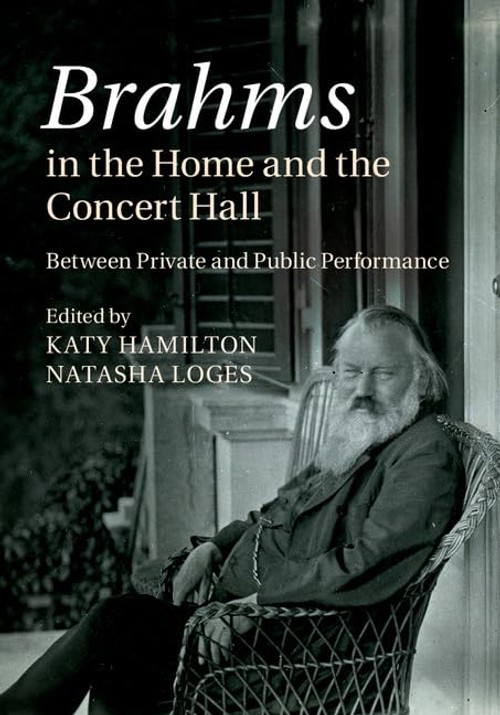
Brahms in the Home and the Concert Hall: Between Private and Public Performance by Katy Hamilton – A Cambridge Universit
Inclusive of all applicable taxes. FREE shipping on all orders.
Available Offers
- 🚚Free Delivery — Free shipping on all orders
- 💵Cash on Delivery — Pay when your order arrives
- ↩️15-Day Easy Returns — Hassle-free return policy
- 🔒Cash on Delivery — Pay safely when your order arrives
Check Delivery
Product Description
Introduction
Johannes Brahms is often remembered as a towering figure of the concert hall, a composer of symphonies, concertos, and large-scale choral works that defined the late Romantic era. Yet behind this public persona lay a musician deeply committed to the intimate world of home music-making, where amateurs and friends gathered to play and sing. Brahms in the Home and the Concert Hall: Between Private and Public Performance by Katy Hamilton offers a fascinating exploration of this dual identity. Published by Cambridge University Press, this hardcover volume sheds light on how Brahms navigated the boundaries between professional prestige and the joy of domestic music. For Indian readers, students, and music enthusiasts, this book provides a unique lens into 19th-century musical culture, revealing how the composer’s private and public lives intertwined.
Book Overview
This scholarly yet accessible work brings together a collection of essays that examine Brahms’s musical activities beyond the stage. The book delves into his compositions written specifically for amateur performers, his piano arrangements of his own and others’ works, and his relationships with arrangers. It also uncovers a previously unpublished memoir that offers a vivid glimpse into Brahms’s Viennese social circle. By tracing the overlapping worlds of private and public music-making, the book challenges the conventional divide between professional and amateur musicianship. For readers in India, where classical music traditions often blend formal training with home-based practice, this theme resonates deeply.
Key Highlights
- Original insights into Brahms’s lesser-known works created for amateur enjoyment
- Detailed analysis of his piano arrangements, revealing his creative process
- Historical memoir that brings Brahms’s personal and social life to the forefront
- Interdisciplinary approach connecting musicology, social history, and performance studies
- Rich context for understanding 19th-century European domestic music culture
Inside the Book
The volume is structured around thematic chapters that explore different facets of Brahms’s musical identity. Readers will find discussions of his vocal and instrumental works intended for home performance, as well as his strategic use of arrangements to reach broader audiences. The book also examines how Brahms collaborated with publishers and arrangers to distribute music for amateur players. A standout feature is the memoir by a contemporary, which paints a lively picture of Brahms’s interactions with friends, patrons, and fellow musicians in Vienna. This combination of scholarly analysis and primary source material makes the book both rigorous and engaging.
Key Topics
- Brahms’s compositions for amateur musicians and their social significance
- The role of piano arrangements in 19th-century music dissemination
- Boundaries between professional and amateur music-making in Brahms’s era
- Brahms’s relationships with arrangers and editors
- The symbolism of private music-making in Victorian and Romantic culture
- Viennese musical society as seen through unpublished memoirs
Reader Benefits
This book offers Indian readers a chance to deepen their appreciation of Brahms beyond his well-known masterpieces. It provides practical insights for musicians, teachers, and students who wish to understand how classical music was experienced in everyday life. The volume also inspires reflection on the value of amateur music-making, a tradition strong in Indian households where music is often passed down through generations. By reading this book, you will gain a nuanced perspective on how a great composer balanced artistic ambition with the simple pleasures of shared music.
Learning Outcomes
- Understand the historical context of domestic music-making in the 19th century
- Recognize Brahms’s strategies for reaching amateur performers
- Analyze the relationship between public performance and private creativity
- Explore the social networks that supported Brahms’s career
- Appreciate the role of arrangements in making music accessible
Who Should Read
This book is ideal for music students, scholars, and enthusiasts in India who study Western classical music. It is also valuable for pianists, vocalists, and conductors interested in Brahms’s repertoire. Teachers of music history and performance will find it a rich resource for course material. Additionally, anyone curious about the cultural history of music—how it moved from salons to concert halls—will be captivated by this detailed study. The book assumes some familiarity with Brahms’s works but remains accessible to dedicated readers.
About the Author
Katy Hamilton is a respected musicologist and writer based in the United Kingdom. She has published widely on 19th-century music, with a special focus on Johannes Brahms and his circle. Her research combines archival work with performance practice, making her an authoritative voice on the intersection of private and public music-making. Hamilton’s clear and engaging writing style ensures that complex ideas are presented with clarity, making this book a pleasure to read for both specialists and general readers.
About the Publisher
Cambridge University Press is one of the world’s oldest and most prestigious academic publishers. With a history dating back to 1534, it is renowned for producing high-quality scholarly works in music, history, and the humanities. This hardcover edition reflects the Press’s commitment to meticulous editing, durable binding, and authoritative content. For Indian readers, Cambridge University Press books represent a gold standard in academic publishing, trusted by universities and libraries across the country.
Conclusion
Brahms in the Home and the Concert Hall is a must-read for anyone who wishes to see beyond the myth of the solitary genius. It reveals a composer who cherished the warmth of domestic music and understood its power to connect people. By exploring the delicate balance between private joy and public acclaim, this book enriches our understanding of Brahms and his world. Whether you are a student, teacher, or lifelong music lover, this volume will inspire you to listen to Brahms with fresh ears and a deeper heart.
Quick Summary
Brahms in the Home and the Concert Hall: Between Private and Public Performance by Katy Hamilton is a scholarly exploration of Johannes Brahms' multifaceted musical life. The book examines how Brahms, a consummate professional, also deeply valued and contributed to private music-making for amateurs. Through original compositions, piano arrangements, and his relationships with arrangers, Brahms bridged the gap between domestic and concert hall settings. Contributors analyze the cultural significance of private music in 19th-century Vienna, including a previously unpublished memoir that brings his social world to life. This volume is ideal for music students, historians, and classical music lovers in India who wish to understand the social and artistic contexts of Brahms' work. Readers will gain insights into the interplay between public performance and intimate musical experiences. By purchasing from Bookshops.in, you receive a premium hardcover edition from Cambridge University Press, ensuring a durable and authoritative addition to your library.
Book Highlights
Book Specifications
| ISBN-13 | 9781107042704 |
| ISBN-10 | 1107042704 |
| Publisher | Cambridge University Press |
| Language | English |
| Dimensions | 17.78 x 2.54 x 24.77 cm |
| Weight | 1 kg |
| Country | India |
| Category | Arts, Film & Photography › Music |
| Genre | Music History |
| Original Language | English |
Frequently Asked Questions
What is the main theme of this book?
Who is the author?
Is this book suitable for beginners in music history?
Does the book include musical examples?
What time period does the book cover?
Is this a biography of Brahms?
What is the price in India?
Is it available in hardcover?
Can I use this for my university research?
Does it discuss Brahms' piano works?
What is unique about this book?
Where can I buy it in India?
Readers Also Search For
Customers Also Bought
Art History
The Italian Renaissance in Art

Art History
Photovoltaic Design & Installation For Dummies | by Mayfield | ForDummies | by Mayfield | ForDummies | by Mayfield | ForDummies | by Mayfield | ForDummies | by Mayfield | ForDummies | by Mayfield | ForDummies | by Mayfield | ForDummies | by Mayfield | ForDummies | by Mayfield | ForDummies | by Mayfield | ForDummies | by Mayfield | ForDummies | by Mayfield | ForDummies | by Mayfield | ForDummies | by Mayfield | ForDummies | by Mayfield | ForDummies | by Mayfield | ForDummies | by Mayfield | ForDu
Art History
Designing School Systems for All Students (English, Robert J. Manley | Richard J. Hawkins)

Art History
Routledge Library Editions: Art and Culture in the Nineteenth Century

Art History
An Errant Design (English, S. H. Long)

Art History
Distributed System Design | by Jie Wu | CRC Press | by Jie Wu | CRC Press | by Jie Wu | CRC Press | by Jie Wu | CRC Press | by Jie Wu | CRC Press | by Jie Wu | CRC Press | by Jie Wu | CRC Press | by Jie Wu | CRC Press | by Jie Wu | CRC Press | by Jie Wu | CRC Press | by Jie Wu | CRC Press | by Jie Wu | CRC Press | by Jie Wu | CRC Press | by Jie Wu | CRC Press | by Jie Wu | CRC Press | by Jie Wu | CRC Press | by Jie Wu | CRC Press | by Jie Wu | CRC Press | by Jie Wu | CRC Press | by Jie Wu | CRC
Related Products
View All
Music
Making Light: Haydn, Musical Camp, and the Long Shadow of German Idealism
Music
Music and the Crises of the Modern Subject by Michael L. Klein – Music Theory & Criticism

Music
Opera and Drama in Eighteenth-Century London: The King's Theatre, Garrick and the Business of Perfor
Music
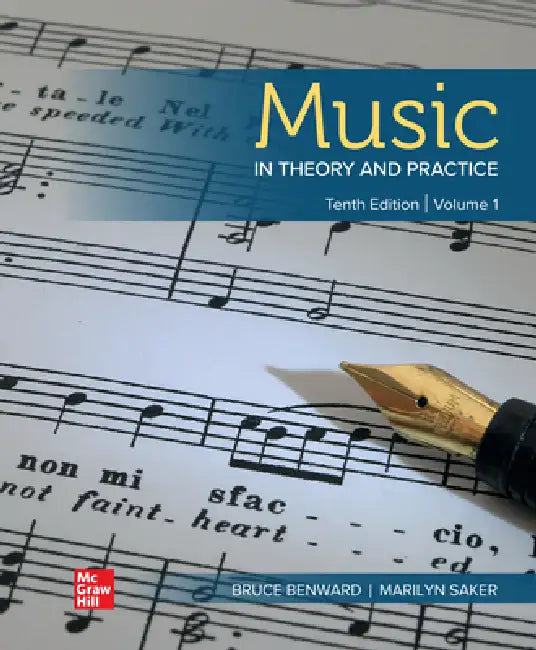
Music in Theory and Practice Volume 1 | by Bruce Benward | Marilyn Saker | McGraw-Hill Companies | by Bruce Benward | Marilyn Saker | McGraw-Hill Companies | by Bruce Benward | Marilyn Saker | McGraw-Hill Companies | by Bruce Benward | Marilyn Saker | McGraw-Hill Companies | by Bruce Benward | Marilyn Saker | McGraw-Hill Companies | by Bruce Benward | Marilyn Saker | McGraw-Hill Companies | by Bruce Benward | Marilyn Saker | McGraw-Hill Companies | by Bruce Benward | Marilyn Saker | McGraw-Hill

Music
Music, Gestalt, and Computing | by A. Camurri | Marc Leman | J. Louhivuori | Springer | by A. Camurri | Marc Leman | J. Louhivuori | Springer | by A. Camurri | Marc Leman | J. Louhivuori | Springer | by A. Camurri | Marc Leman | J. Louhivuori | Springer | by A. Camurri | Marc Leman | J. Louhivuori | Springer | by A. Camurri | Marc Leman | J. Louhivuori | Springer | by A. Camurri | Marc Leman | J. Louhivuori | Springer | by A. Camurri | Marc Leman | J. Louhivuori | Springer | by A. Camurri | Marc

Music