
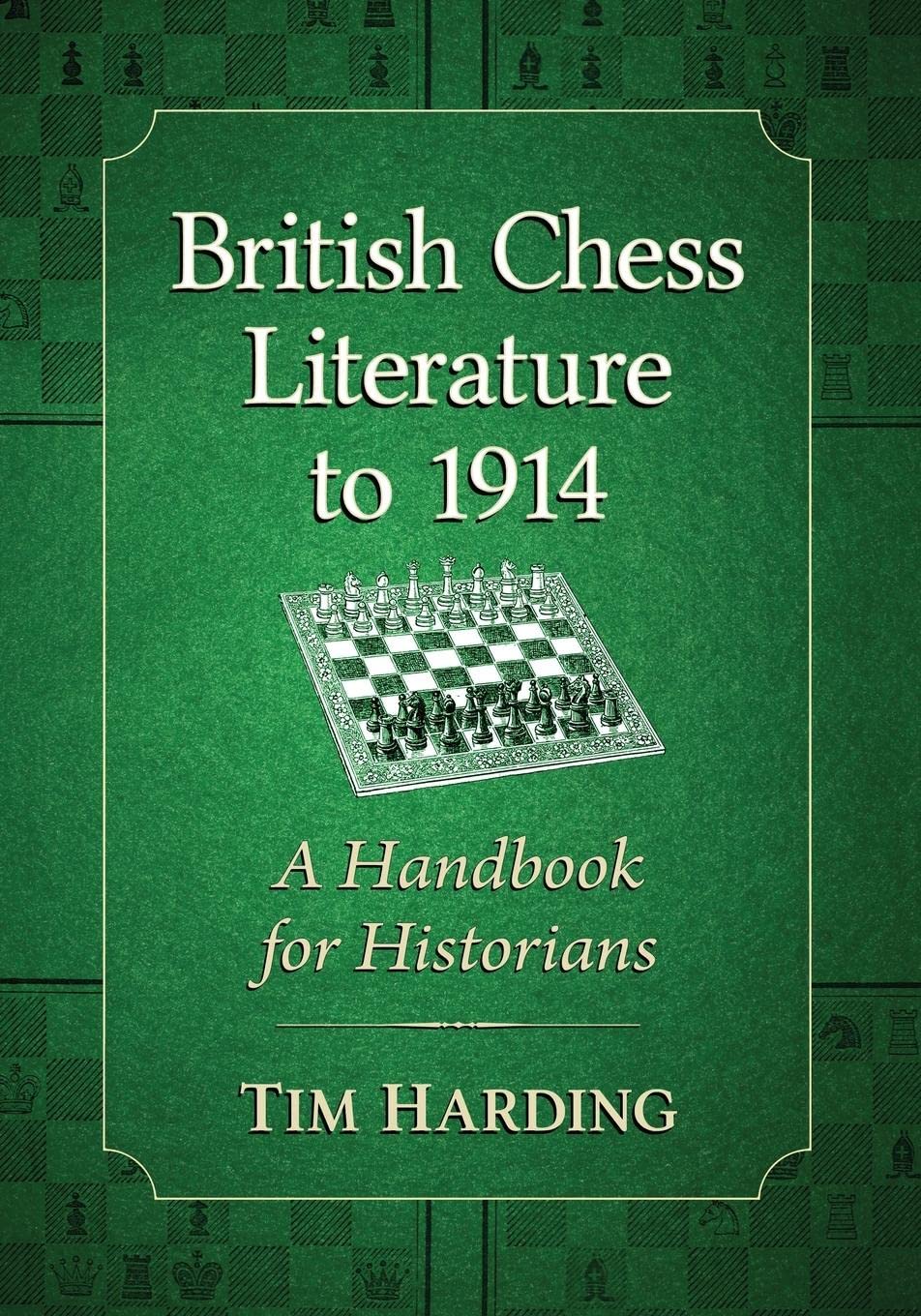
British Chess Literature to 1914: A Handbook for Historians by Tim Harding – Uncovering the Golden Age of Chess Publishi
Inclusive of all applicable taxes. FREE shipping on all orders.
Available Offers
- 🚚Free Delivery — Free shipping on all orders
- 💵Cash on Delivery — Pay when your order arrives
- ↩️15-Day Easy Returns — Hassle-free return policy
- 🔒Cash on Delivery — Pay safely when your order arrives
Check Delivery
Product Description
Introduction
For scholars, collectors, and enthusiasts of chess history, British Chess Literature to 1914: A Handbook for Historians by Tim Harding stands as an indispensable resource. This meticulously researched volume from McFarland & Company offers a comprehensive survey of the vast body of chess writing produced in the United Kingdom before the First World War. Whether you are a student of Victorian culture, a librarian building a reference collection, or a chess player curious about the game’s golden age in Britain, this handbook opens a window into a world where chess columns in newspapers and magazines flourished, and where the first systematic attempts to document the game’s past were made. Harding’s work is not merely a bibliography; it is a guide to understanding how chess was played, studied, and discussed during a transformative era.
Book Overview
This hardcover volume traces the evolution of British chess literature from the early nineteenth century through the eve of the Great War. Tim Harding combines original research with practical advice for historians, detailing the rise of chess periodicals, the emergence of specialist publishers, and the role of provincial and national newspapers in spreading chess knowledge. The book begins with the earliest chess columns in 1813 and follows the development of the literature well into the twentieth century. It also addresses modern research methods, including the use of digitized archives and online resources, while emphasizing the irreplaceable value of physical collections in libraries such as the John G. White Collection and the British Library. A lengthy first appendix—an A-to-Z listing of nearly 600 chess columns—serves as a detailed research aid, while additional appendices provide corrections and supplements to standard reference works.
Key Highlights
- Comprehensive Coverage: Surveys chess books, magazines, and newspaper columns published in the UK from 1813 to 1914, with insights extending into the early twentieth century.
- Research Tool: Includes an extensive appendix cataloguing almost 600 chess columns, making it an essential reference for anyone tracing the history of the game.
- Practical Guidance: Offers advice on using digital archives and navigating major chess libraries, balancing traditional scholarship with modern technology.
- Corrections and Supplements: Provides errata and additions to established bibliographies, ensuring accuracy for future researchers.
- Victorian Context: Places chess literature within the broader cultural and social history of Victorian Britain, showing how the game reflected the era’s intellectual pursuits.
Story Themes
While not a narrative work, the book explores several recurring themes that give structure to its content. One central theme is the democratization of chess knowledge—how columns in local newspapers made strategy and analysis accessible to players of all levels, from beginners to club champions. Another theme is the tension between amateur and professional approaches to the game, as seen in the proliferation of problem-solving contests, match reports, and instructional series. Harding also highlights the role of chess as a respectable pastime for the middle class, often promoted in magazines alongside literature, science, and music. The decline of certain publishing formats and the rise of others, such as the shift from monthly magazines to weekly columns, mirrors broader changes in print culture. Finally, the book underscores the fragility of historical records, urging readers to preserve and study surviving materials before they are lost.
Reader Benefits
Readers of British Chess Literature to 1914 will gain a deep understanding of how chess was documented and disseminated in the pre-digital age. The handbook saves countless hours of archival work by organizing scattered references into a coherent guide. Historians will appreciate the rigorous methodology and the corrections to earlier bibliographies. Chess enthusiasts will enjoy discovering forgotten columns and the personalities behind them—editors, problemists, and correspondents who shaped the game. Librarians and collectors will find the appendices invaluable for identifying rare items and verifying editions. Moreover, the book’s advice on using online databases ensures that even those far from major libraries can access primary sources. For Indian readers, this volume offers a unique perspective on a global game’s British roots, which influenced chess culture in the colonies and beyond.
Who Should Read
This handbook is tailored for academic researchers and graduate students in sports history, Victorian studies, and library science. It is equally valuable for chess historians, tournament organizers, and collectors of antique chess books. Club players with a passion for the game’s heritage will find the narrative sections engaging, while the reference material suits serious scholars. The book assumes some familiarity with chess terminology but explains historical context clearly, making it accessible to curious general readers. Indian readers interested in the British colonial legacy in India, where chess (chaturanga) originated, will find this work a fascinating companion to studies of the game’s journey through the empire.
About the Author
Tim Harding is a respected chess historian and author known for his meticulous research into the game’s past. A longtime contributor to chess periodicals, he has written extensively on nineteenth-century chess, including biographies of players and studies of forgotten tournaments. His expertise in archival methods and his ability to synthesize scattered sources have earned him recognition among academic historians and chess enthusiasts alike. Harding’s work bridges the gap between popular chess writing and serious historical scholarship, making him a trusted guide for anyone exploring the literature of the game.
About the Publisher
McFarland & Company is an independent American publisher renowned for its scholarly monographs in history, sports, and popular culture. With a reputation for producing well-researched, niche titles that serve specialized audiences, McFarland has become a go-to source for academic libraries and collectors. Their commitment to preserving and advancing knowledge in fields often overlooked by larger publishers makes them an ideal home for a work like British Chess Literature to 1914. This book exemplifies their dedication to providing rigorous, accessible reference works that stand the test of time.
Conclusion
British Chess Literature to 1914: A Handbook for Historians is more than a bibliography; it is a portal to a vanished world of ink-stained chess columns, heated debates in Victorian drawing rooms, and the quiet persistence of scholars who first tried to document the game. Tim Harding has created a work that serves both as a practical research tool and as a celebration of chess’s literary heritage. For anyone seeking to understand how chess was played, taught, and discussed before the modern era, this volume is an essential addition to the library. Order your copy today from Bookshops.in and step into the rich history of British chess.
Quick Summary
British Chess Literature to 1914: A Handbook for Historians by Tim Harding is an essential reference work for anyone studying the history of chess in the United Kingdom before the First World War. The book systematically surveys the enormous output of chess books, magazines, and newspaper columns that flourished during the Victorian and Edwardian eras. Harding provides practical guidance on using major chess libraries—such as the British Library and the John G. White Collection—and on leveraging digital archives for research. Readers will learn how to locate and interpret chess columns in national and provincial newspapers, evaluate the credibility of early texts, and understand the social context of chess publishing. The handbook also profiles key figures in Victorian chess literature and discusses the evolution of chess writing from instructional manuals to competitive analysis. This book is ideal for academic researchers, chess historians, collectors of antique chess books, and librarians. By purchasing from Bookshops.in, Indian readers gain access to a premium, carefully sourced hardcover edition that supports their scholarly pursuits.
Book Highlights
Book Specifications
| ISBN-13 | 9781476668390 |
| ISBN-10 | 1476668396 |
| Publisher | McFarland & Co Inc |
| Language | English |
| Dimensions | 17.78 x 2.03 x 25.4 cm |
| Weight | 658 g |
| Country | India |
| Category | Region & Countries › Europe |
| Genre | Nonfiction |
| Reading Age | Adult |
| Original Language | English |
Frequently Asked Questions
What is the main focus of British Chess Literature to 1914?
Who is the author Tim Harding?
Is this book suitable for beginners in chess history?
Does the book cover chess columns in Indian newspapers?
Are digital resources discussed in this handbook?
What major chess libraries are mentioned?
Can this book help me identify rare chess books?
Does the book include a bibliography?
Is this a hardcover edition?
What time period does the book cover?
Are there illustrations or facsimiles in the book?
How can I use this book for academic research?
Does the book cover chess periodicals from Scotland or Ireland?
Is this book part of a series?
Where can I buy this book in India?
Readers Also Search For
Related Products
View All
History
The Information Revolution: Transforming the World Through Technology (World History)
History
Human Nature and the French Revolution: From the Enlightenment to the Napoleonic Code: 3 (Polygons: Cultural Diversities and Intersections, 3)
History
The Unmaking of Home in Contemporary Art (Cultural Spaces)

History
Handbook to Life in Medieval and Early Modern Japan | by William E. Deal | Oxford University Press | by William E. Deal | Oxford University Press | by William E. Deal | Oxford University Press | by William E. Deal | Oxford University Press | by William E. Deal | Oxford University Press | by William E. Deal | Oxford University Press | by William E. Deal | Oxford University Press | by William E. Deal | Oxford University Press | by William E. Deal | Oxford University Press | by William E. Deal | Ox

History
The Narrators of Barbarian History (A.D. 550-800) | by Walter Goffart | University of Notre Dame Press | by Walter Goffart | University of Notre Dame Press | by Walter Goffart | University of Notre Dame Press | by Walter Goffart | University of Notre Dame Press | by Walter Goffart | University of Notre Dame Press | by Walter Goffart | University of Notre Dame Press | by Walter Goffart | University of Notre Dame Press | by Walter Goffart | University of Notre Dame Press | by Walter Goffart | Univ
History