
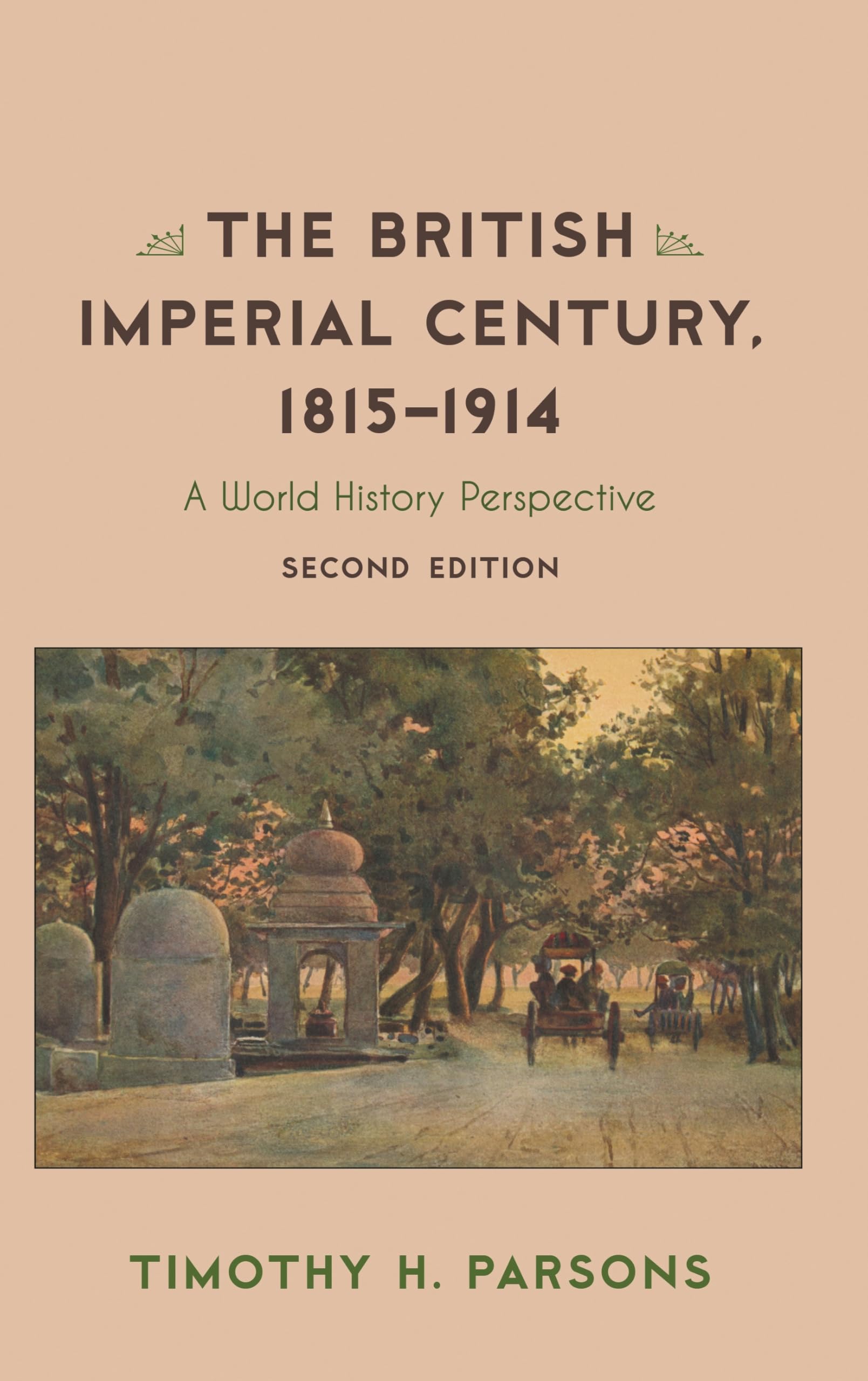
The British Imperial Century, 1815-1914: A World History Perspective by Timothy H. Parsons – A Concise Overview of Empir
Inclusive of all applicable taxes. FREE shipping on all orders.
Available Offers
- 🚚Free Delivery — Free shipping on all orders
- 💵Cash on Delivery — Pay when your order arrives
- ↩️15-Day Easy Returns — Hassle-free return policy
- 🔒Cash on Delivery — Pay safely when your order arrives
Check Delivery
Product Description
Introduction
In the vast canvas of world history, few empires have left as deep and enduring a mark as the British Empire. For Indian readers and students, understanding this imperial century is not merely an academic exercise—it is a journey into the very forces that shaped the subcontinent’s modern identity. The British Imperial Century, 1815-1914: A World History Perspective by Timothy H. Parsons offers a masterful, concise yet comprehensive exploration of the empire from its early nineteenth-century origins to its twilight on the eve of the First World War. This hardcover edition, published by Rowman & Littlefield, is an essential addition to any serious history library.
Book Overview
This book is not a dry chronological account; it is a vibrant, thematic analysis that places the British Empire within the broader currents of global history. Parsons moves beyond the traditional narrative of conquest and administration to examine the profound cross-cultural and environmental interactions that defined imperial rule. He traces the transition from informal economic influence to formal territorial control, showing how Britain’s reach extended into Asia, Africa, the Americas, and the crumbling Ottoman and Chinese empires. The establishment of the Raj in India, the scramble for Africa, the occupation of Egypt—all are examined with nuance and depth. By focusing on the perspectives of subject peoples, the book reveals the empire as a complex, contested space where power, culture, and environment intersected.
Key Highlights
- World History Lens: The book situates the British Empire within global processes, making it relevant for students of international relations and comparative history.
- Concise Yet Comprehensive: Despite its broad scope, the narrative remains focused and accessible, ideal for both undergraduate courses and general readers.
- Cross-Cultural Focus: Parsons gives voice to colonized peoples, examining how imperial rule reshaped societies, economies, and environments from the ground up.
- Environmental History: A unique emphasis on how British policies transformed landscapes, agriculture, and natural resources across the globe.
- Critical Perspective: The book does not shy away from the violence, exploitation, and resistance that characterized imperial rule.
Inside the Book
The volume is structured to guide the reader through the empire’s lifecycle. It begins with the post-Napoleonic era, when Britain emerged as the world’s dominant naval and industrial power. Subsequent chapters explore the expansion of informal empire through trade and finance, the consolidation of formal colonies, and the ideological justifications for imperialism. A significant portion is devoted to India, examining the administrative machinery of the Raj, the economic drain, and the rise of nationalist movements. The book also covers Britain’s interventions in Latin America, China’s treaty ports, and the Ottoman domains. Each chapter is enriched with primary source excerpts, maps, and historiographical debates, making it a valuable resource for research and discussion.
Key Topics
- The transition from informal to formal empire (1815–1850)
- The Indian Rebellion of 1857 and the establishment of the Raj
- The Scramble for Africa and the Berlin Conference
- British economic imperialism in Latin America and China
- Environmental and demographic impacts of colonial rule
- Resistance, collaboration, and cultural exchange
- The decline of British hegemony and the road to World War I
Reader Benefits
Indian readers will find particular value in this book. It provides a balanced, scholarly perspective on the colonial experience that is neither triumphalist nor simplistic. Students preparing for competitive exams such as UPSC, NET, or state civil services will appreciate the clear thematic organization and the inclusion of global comparative frameworks. The hardcover format ensures durability for repeated reference. Moreover, Parsons’ accessible prose makes complex ideas understandable without sacrificing academic rigor.
Learning Outcomes
By engaging with this book, readers will be able to: analyze the mechanisms of imperial control and collaboration; evaluate the long-term economic and social consequences of British rule in India and beyond; understand the environmental transformations wrought by colonialism; compare British imperialism with other European empires; and critically assess the legacies of empire in contemporary global inequalities. The book also hones skills in interpreting primary sources and engaging with historiographical debates.
Who Should Read
- History Students: Undergraduate and postgraduate students of modern world history, British Empire studies, and colonial/postcolonial studies.
- Competitive Exam Aspirants: Those preparing for UPSC, UGC NET, SSC, or state-level exams that include world history and modern Indian history.
- General Enthusiasts: Readers with a keen interest in understanding how the British Empire shaped the modern world, especially from an Indian perspective.
- Educators: Teachers and professors seeking a well-structured textbook for courses on imperialism or global history.
About the Author
Timothy H. Parsons is a distinguished historian and professor of African history at Washington University in St. Louis. He has written extensively on imperialism, colonial warfare, and the social history of Africa. His works, including The British Imperial Century, are known for their clarity, critical insight, and commitment to presenting history from multiple viewpoints. Parsons’ expertise ensures that this book is both authoritative and engaging.
About the Publisher
Rowman & Littlefield Publishers is a respected academic and trade publisher based in the United States. Renowned for producing high-quality scholarly works in history, politics, and the social sciences, Rowman & Littlefield has a long-standing reputation for rigorous editorial standards. This hardcover edition reflects their commitment to durable, well-crafted books that serve students and scholars alike.
Conclusion
The British Imperial Century, 1815-1914: A World History Perspective is more than a history book—it is a key to understanding the forces that shaped modern India and the world. Timothy H. Parsons offers a thoughtful, balanced, and deeply researched account that will enrich your perspective on empire, power, and human societies. Whether you are a student, a teacher, or a curious reader, this hardcover volume deserves a place on your shelf. Order your copy from Bookshops.in today and embark on a journey through the imperial century that changed everything.
Quick Summary
The British Imperial Century, 1815-1914: A World History Perspective by Timothy H. Parsons is a concise academic work that surveys the British Empire from its early 19th-century origins through its mid-century peak to its decline on the eve of the First World War. The author adopts a world history lens, emphasizing cross-cultural social and environmental interactions between the British and subject peoples in Asia, Africa, and the western hemisphere. The book traces the transition from informal to formal empire, examining the establishment of colonies and protectorates in Africa, the occupation of Egypt, and the declaration of the Raj in India. It also explores the economic and political integration that intensified Britain's global influence. This volume is ideal for Indian undergraduate and postgraduate history students, researchers in colonial studies, and general readers seeking a balanced, scholarly overview. Readers will gain a clear understanding of imperial administration, the impact on colonized societies, and the global forces that shaped the empire. Buying from Bookshops.in ensures access to a genuine hardcover edition with reliable delivery across India.
Book Highlights
Book Specifications
| ISBN-13 | 9781442250925 |
| ISBN-10 | 1442250925 |
| Publisher | Rowman & Littlefield Pub Inc |
| Language | English |
| Dimensions | 15.6 x 1.14 x 22.86 cm |
| Weight | 318 g |
| Category | Region & Countries › Africa |
| Genre | History |
| Original Language | English |
Frequently Asked Questions
What is the main focus of The British Imperial Century, 1815-1914?
Who is the author of this book?
Is this book suitable for Indian students?
What time period does the book cover?
Does the book include information about Africa and Asia?
What is unique about the world history perspective?
Can I use this book for my history degree coursework?
Does the book cover the economic impact of the empire?
Is the book written in a difficult academic style?
Does the book include maps or illustrations?
Where can I buy this book in India?
What is the price of this book?
Readers Also Search For
Related Products
View All
History
The Information Revolution: Transforming the World Through Technology (World History)
History
Human Nature and the French Revolution: From the Enlightenment to the Napoleonic Code: 3 (Polygons: Cultural Diversities and Intersections, 3)
History
The Unmaking of Home in Contemporary Art (Cultural Spaces)

History
Handbook to Life in Medieval and Early Modern Japan | by William E. Deal | Oxford University Press | by William E. Deal | Oxford University Press | by William E. Deal | Oxford University Press | by William E. Deal | Oxford University Press | by William E. Deal | Oxford University Press | by William E. Deal | Oxford University Press | by William E. Deal | Oxford University Press | by William E. Deal | Oxford University Press | by William E. Deal | Oxford University Press | by William E. Deal | Ox

History
The Narrators of Barbarian History (A.D. 550-800) | by Walter Goffart | University of Notre Dame Press | by Walter Goffart | University of Notre Dame Press | by Walter Goffart | University of Notre Dame Press | by Walter Goffart | University of Notre Dame Press | by Walter Goffart | University of Notre Dame Press | by Walter Goffart | University of Notre Dame Press | by Walter Goffart | University of Notre Dame Press | by Walter Goffart | University of Notre Dame Press | by Walter Goffart | Univ
History