
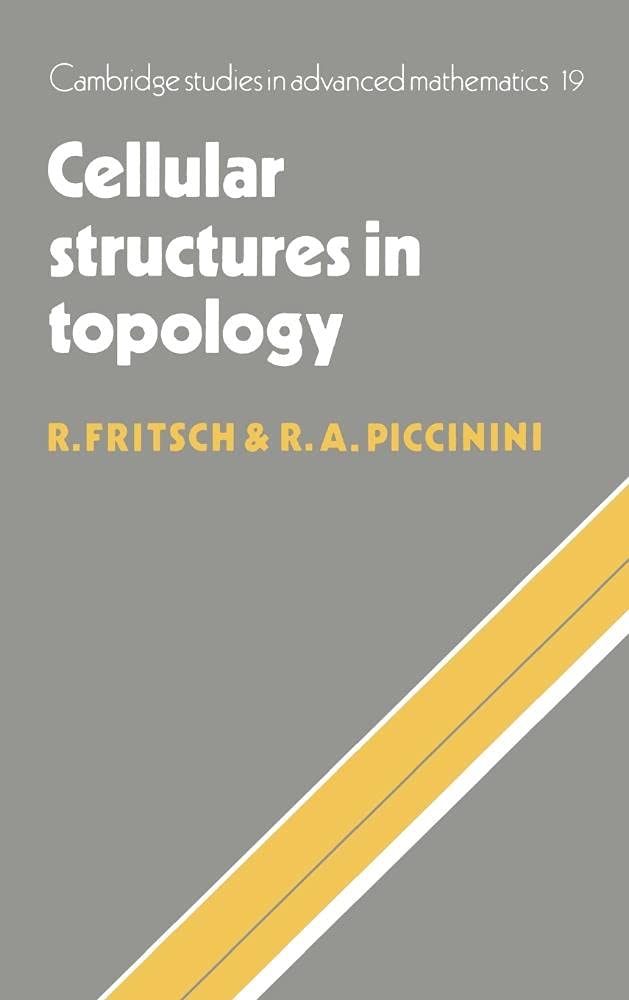
Cellular Structures in Topology by Rudolf Fritsch – A Deep Dive into CW-Complexes and Homotopy Theory
Inclusive of all applicable taxes. FREE shipping on all orders.
Available Offers
- 🚚Free Delivery — Free shipping on all orders
- 💵Cash on Delivery — Pay when your order arrives
- ↩️15-Day Easy Returns — Hassle-free return policy
- 🔒Cash on Delivery — Pay safely when your order arrives
Check Delivery
Product Description
Introduction
Cellular Structures in Topology by Rudolf Fritsch, published by Cambridge University Press, is a definitive hardcover volume that stands as a cornerstone for students and researchers venturing into the world of algebraic topology. This book offers a rigorous and comprehensive treatment of CW-complexes—the fundamental building blocks of modern homotopy theory. Designed for graduate-level study, it bridges the gap between abstract theory and practical application, making it an indispensable resource for Indian mathematics departments and self-learners alike.
Book Overview
This work systematically explores the construction, properties, and significance of CW-complexes. The author begins with foundational concepts, then advances into the theory of finite CW-complexes, their relationship with fibrations, and Milnor’s influential work on spaces of CW-type. The text meticulously establishes the connection between CW-complexes and simplicial complexes, providing a unified perspective. Each chapter is enriched with exercises—ranging from straightforward checks to non-trivial extensions—and concludes with historical sketches that contextualize the development of the ideas. An appendix supplies essential results from topology, homology, and homotopy theory, ensuring readers have the necessary background.
Key Highlights
- Rigorous Foundation: Develops the theory of CW-complexes from first principles, with clear definitions and proofs.
- Comprehensive Coverage: Includes finite CW-complexes, fibrations, and Milnor’s theorems, giving a complete picture.
- Historical Context: Each chapter ends with a section tracing the historical evolution, helping readers appreciate the subject’s lineage.
- Extensive Exercises: Over 100 exercises, some with references to solutions, to reinforce learning and extend the text.
- Integrated Appendices: Provides a quick refresher on basic topology, homology, and homotopy theory, making the book self-contained.
Inside the Book
The book is structured into well-organized chapters that progress logically. Early chapters introduce the concept of cell complexes and their topological properties. Subsequent chapters delve into the homotopy theory of CW-complexes, including Whitehead’s theorem, cellular approximation, and the theory of cofibrations. The latter part of the book addresses more advanced topics such as the classification of finite CW-complexes, the role of CW-complexes in fibration theory, and Milnor’s results on classifying spaces. The appendix contains essential lemmas and theorems, including the Seifert–van Kampen theorem and the Hurewicz theorem, which are referenced throughout.
Key Topics
- CW-Complexes: Definition, examples, and basic properties like closure finiteness and weak topology.
- Homotopy Theory: Cellular maps, homotopy extension property, and cellular approximation.
- Finite CW-Complexes: Euler characteristic, cell decompositions, and their role in algebraic topology.
- Fibrations: Serre fibrations, Hurewicz fibrations, and their interaction with CW-structures.
- Milnor’s Work: Spaces of the homotopy type of CW-complexes and classifying spaces.
- Simplicial Complexes vs. CW-Complexes: A detailed comparison and the advantages of each framework.
Reader Benefits
Indian graduate students and researchers will find this book particularly valuable for its clear exposition and pedagogical approach. The exercises are designed to build confidence, while the historical notes provide a deeper understanding of how topology evolved. The hardcover binding ensures durability for repeated use in libraries or personal collections. By working through this text, readers will gain the ability to construct and analyze CW-complexes, a skill essential for advanced research in algebraic topology, geometric group theory, and related fields.
Learning Outcomes
- Master the definition and construction of CW-complexes and their cellular structures.
- Understand the homotopy theory of CW-complexes, including cellular approximation and Whitehead’s theorem.
- Analyze finite CW-complexes and compute invariants like the Euler characteristic.
- Connect CW-complexes with fibration theory and Milnor’s results.
- Differentiate between simplicial and CW-complex approaches and choose the appropriate framework.
- Apply the appendix results to solve problems in homology and homotopy.
Who Should Read
This book is ideal for graduate students in mathematics who have completed a first course in algebraic topology. It is also a valuable reference for researchers in topology, geometry, and theoretical physics who need a solid grasp of CW-complexes. Indian students preparing for competitive exams like the CSIR-NET or GATE in mathematical sciences will benefit from the rigorous treatment and the wealth of exercises. The book serves as a primary text for advanced topology courses and as a supplementary resource for self-study.
About the Author
Rudolf Fritsch is a distinguished mathematician known for his contributions to topology and category theory. He has held academic positions at the University of Konstanz and other institutions, and his research has focused on homotopy theory and cellular structures. His deep understanding of the subject and his ability to present complex ideas clearly make this book a trusted resource in the mathematical community.
About the Publisher
Cambridge University Press is a world-renowned academic publisher with a legacy of producing high-quality textbooks and monographs. Their mathematics catalogue includes many foundational works that have shaped modern research and education. This hardcover edition reflects their commitment to excellence, with durable binding and clear typesetting that make it suitable for long-term use in Indian libraries and classrooms.
Conclusion
Cellular Structures in Topology is more than a textbook—it is a gateway to understanding the geometric and combinatorial foundations of modern topology. Whether you are a graduate student embarking on your first serious study of homotopy theory or a seasoned researcher seeking a comprehensive reference, this book delivers clarity, depth, and historical insight. Add this essential volume to your collection and explore the intricate world of CW-complexes with confidence.
Quick Summary
Cellular Structures in Topology by Rudolf Fritsch is a rigorous academic textbook that delves into the theory and applications of CW-complexes, which are fundamental objects in homotopy theory. The book begins with the construction of CW-complexes and explores their properties, including their role in the study of continuous deformations. It also covers simplicial complexes in depth, highlighting the connections between these two types of topological structures. Advanced topics such as finite CW-complexes, fibrations, and Milnor's contributions are discussed, making it a valuable resource for graduate students and researchers in algebraic topology. The book includes numerous exercises that range from basic to challenging, with references for solutions, allowing readers to test and deepen their understanding. Each chapter concludes with a summary and references for further reading. Published by Cambridge University Press, this hardcover edition is built to last and is ideal for academic libraries or personal collections. Indian students and mathematicians will find it a comprehensive guide to one of the most important concepts in modern topology. By purchasing from Bookshops.in, customers get a genuine copy with reliable delivery and support.
Book Highlights
Book Specifications
| ISBN-13 | 9780521327848 |
| ISBN-10 | 0521327849 |
| Publisher | Cambridge University Press |
| Language | English |
| Dimensions | 16.51 x 2.54 x 24.13 cm |
| Weight | 633 g |
| Country | India |
| Category | Mathematics › Geometry |
| Genre | Non-fiction |
| Original Language | English |
Frequently Asked Questions
What is a CW-complex?
Who is Rudolf Fritsch?
What is the main topic of this book?
Is this book suitable for beginners?
Does the book include exercises?
How does this book relate to simplicial complexes?
What is the price of this book?
Can I use this book for self-study?
Does the book cover Milnor's work?
What is the binding of this book?
Is this book available in English?
What is the ISBN-13 of this book?
Why should I buy from Bookshops.in?
Readers Also Search For
Customers Also Bought
Mathematics
Stereotype Spaces and Algebras: 73 (De Gruyter Expositions in Mathematics, 73)
Mathematics
Semigroups in Algebra, Geometry and Analysis: 20 (De Gruyter Expositions in Mathematics, 20)
Mathematics
Geometry from the Pacific Rim: Proceedings of the Pacific Rim Geometry Conference held at National University of Singapore, Republic of Singapore, ... 1994 (De Gruyter Proceedings in Mathematics)
Mathematics
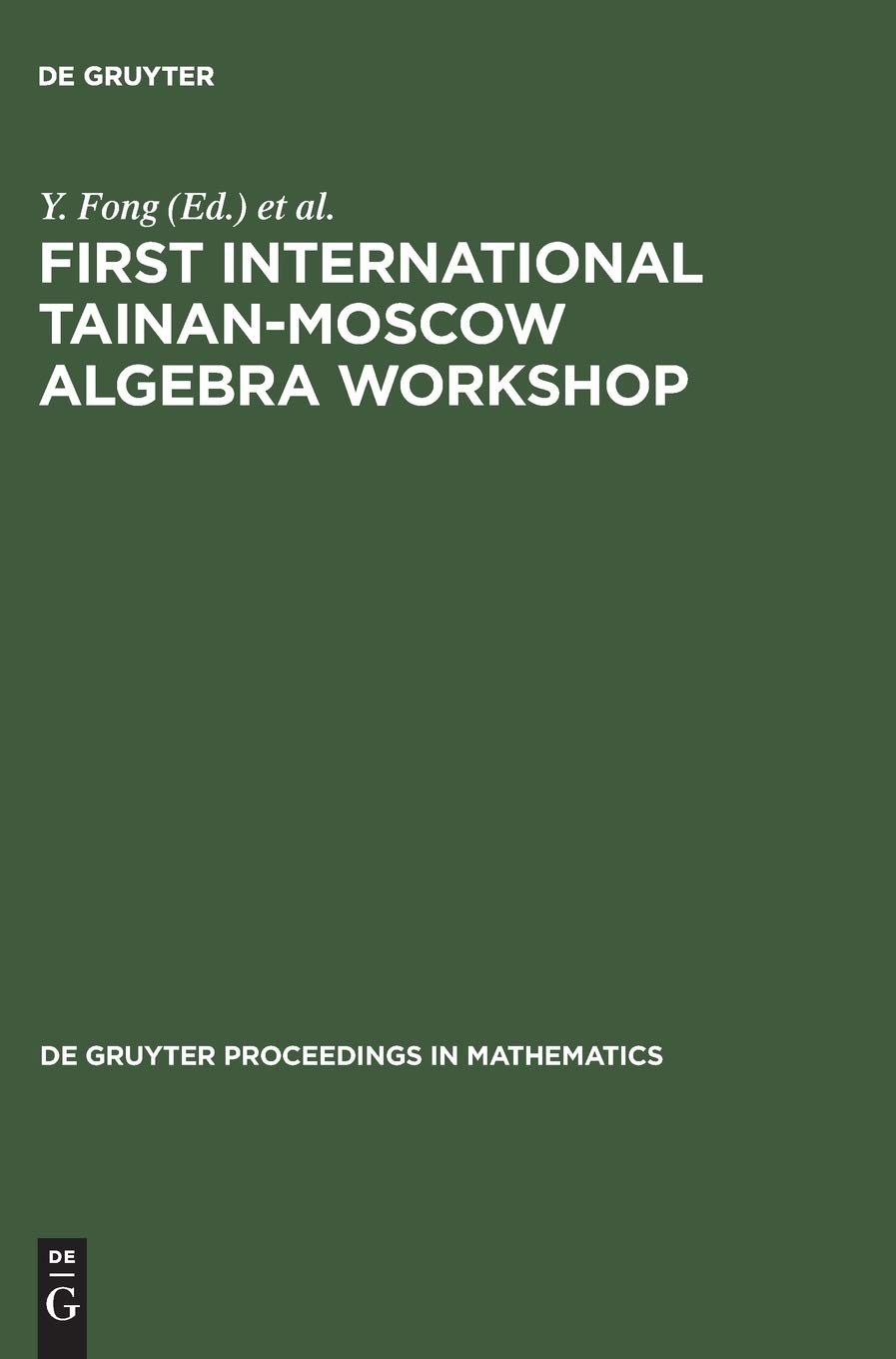
First International Tainan-Moscow Algebra Workshop: Proceedings of the International Conference held at National Cheng Kung University Tainan, Taiwan, ... 1994 (De Gruyter Proceedings in Mathematics)
Mathematics
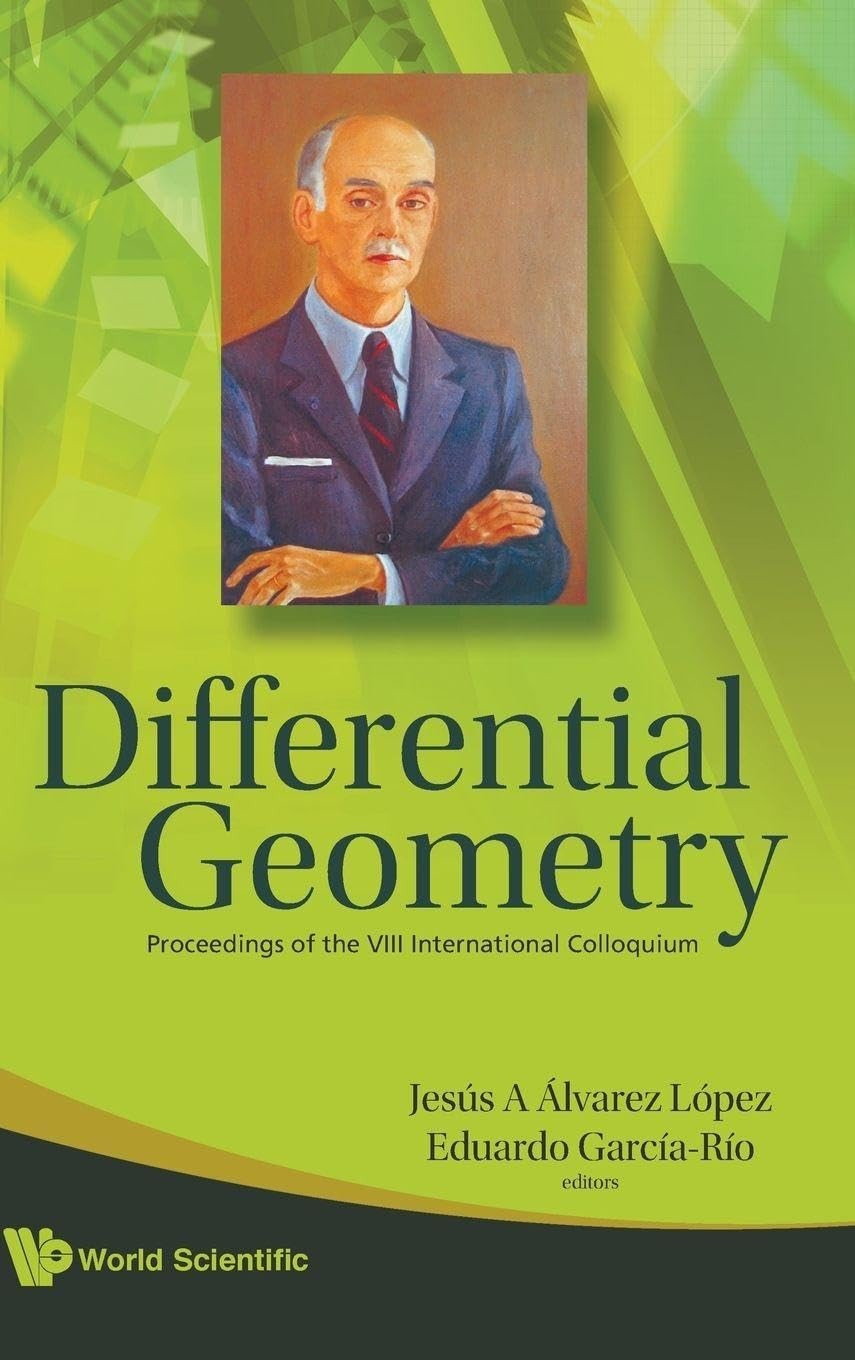
Differential Geometry - Proceedings of the VIII International Colloquium (English, Jesus A. Alvarez Lopez | Eduardo Garcia-Rio)
Mathematics
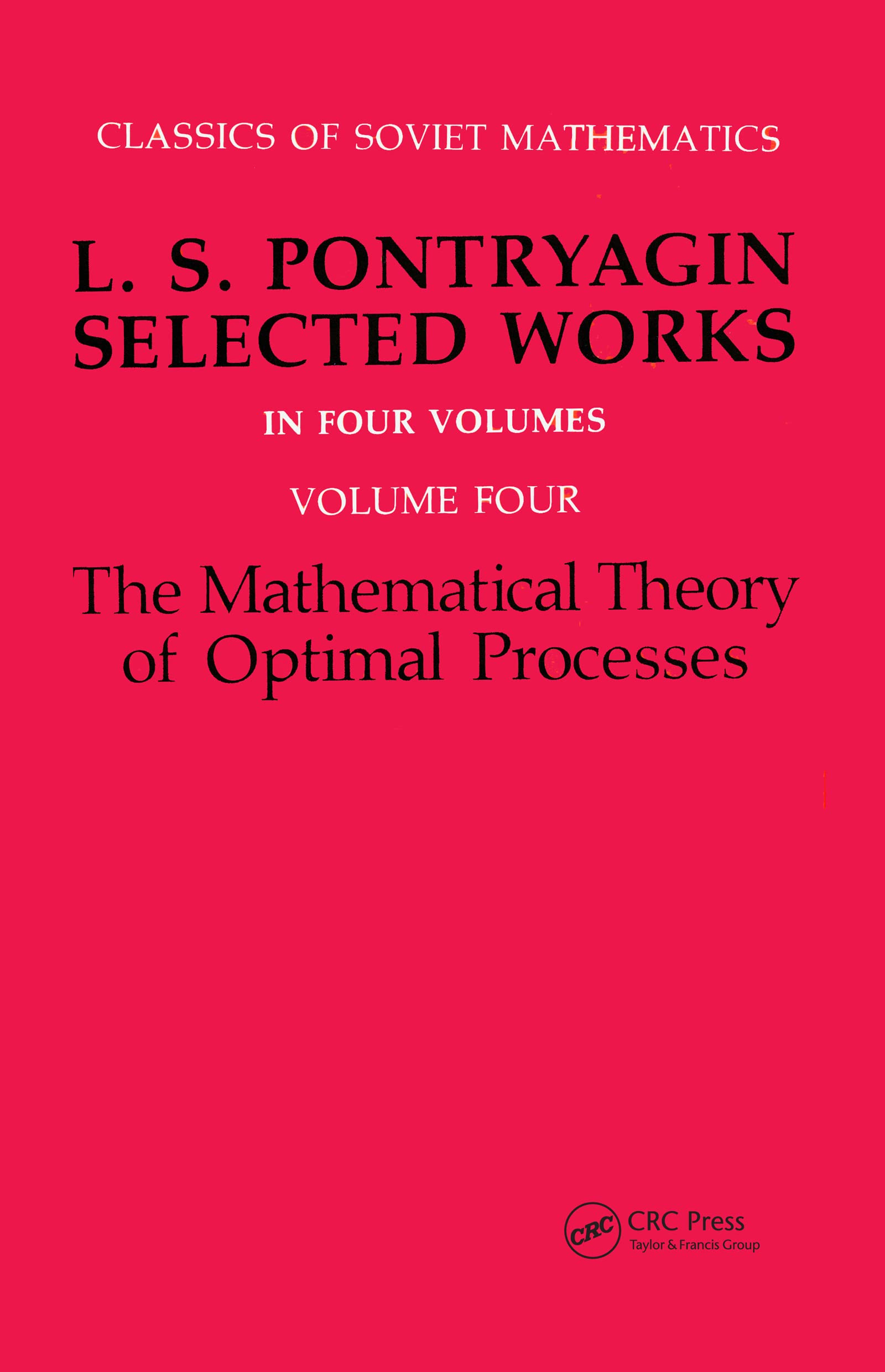
Mathematical Theory of Optimal Processes (Classics of Soviet Mathematics)
Related Products
View AllMathematics
Mathematical Theory of Optimal Processes (Classics of Soviet Mathematics)
Mathematics
Stereotype Spaces and Algebras: 73 (De Gruyter Expositions in Mathematics, 73)
Mathematics
Semigroups in Algebra, Geometry and Analysis: 20 (De Gruyter Expositions in Mathematics, 20)
Mathematics
Geometry from the Pacific Rim: Proceedings of the Pacific Rim Geometry Conference held at National University of Singapore, Republic of Singapore, ... 1994 (De Gruyter Proceedings in Mathematics)
Mathematics
First International Tainan-Moscow Algebra Workshop: Proceedings of the International Conference held at National Cheng Kung University Tainan, Taiwan, ... 1994 (De Gruyter Proceedings in Mathematics)
Mathematics