
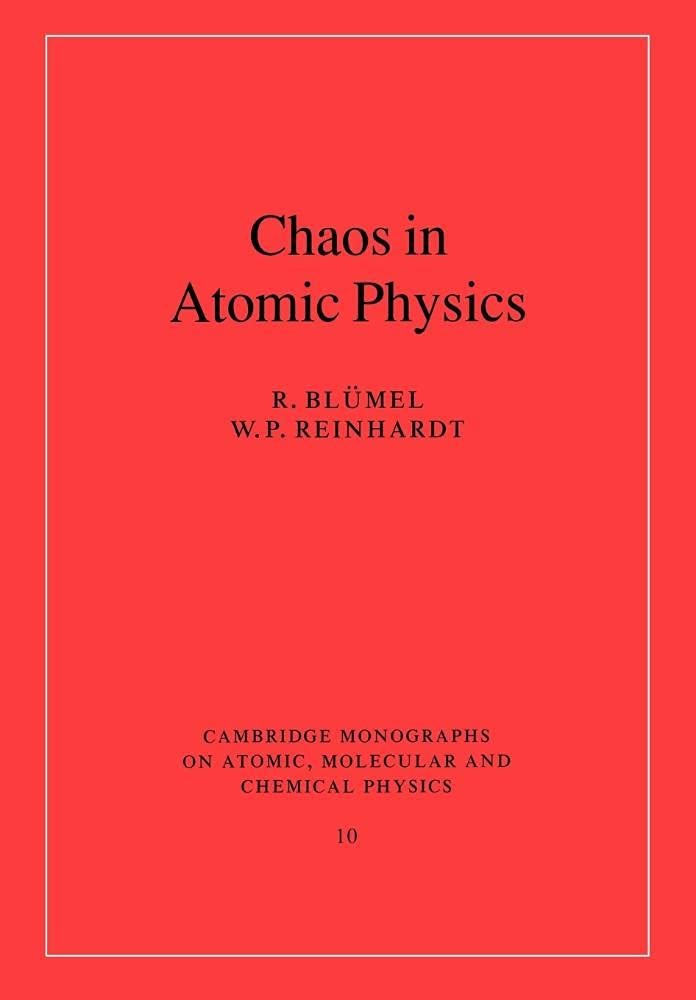
Chaos in Atomic Physics: A Detailed Introduction to Classical Chaos in Atomic and Molecular Systems by R. Blumel
Inclusive of all applicable taxes. FREE shipping on all orders.
Available Offers
- 🚚Free Delivery — Free shipping on all orders
- 💵Cash on Delivery — Pay when your order arrives
- ↩️15-Day Easy Returns — Hassle-free return policy
- 🔒Cash on Delivery — Pay safely when your order arrives
Check Delivery
Product Description
Introduction
Chaos in Atomic Physics is a groundbreaking exploration of how classical chaos theory illuminates the behavior of atoms and molecules. Written by R. Blumel and published by Cambridge University Press, this hardcover volume bridges the gap between abstract dynamical systems and real-world quantum phenomena. For Indian students and researchers in physics, this book offers a rare opportunity to delve into one of the most active and prolific areas of modern atomic physics. Whether you are a postgraduate student at an Indian university or a faculty member seeking deeper insights, this book provides a coherent and rigorous introduction to a fascinating subject that has reshaped our understanding of atomic and molecular systems.
Book Overview
Structured in two complementary parts, Chaos in Atomic Physics systematically builds a foundation in classical chaos before applying it to specific atomic and molecular systems. The first five chapters lay down the theoretical principles of classical chaos, including phase space dynamics, nonlinear resonances, and the KAM theorem. The remaining five chapters transition to applications, covering microwave-driven surface state electrons, the hydrogen atom in strong microwave fields, the kicked hydrogen atom, chaotic scattering with CsI molecules, and the helium atom. Each chapter is enriched with detailed diagrams and a comprehensive reference list, making it an ideal resource for both self-study and classroom use. The book’s focus on concrete systems ensures that theoretical concepts are grounded in observable physical phenomena.
Key Highlights
- Pioneering Integration: First coherent introduction to chaos in atomic physics, linking classical chaos to quantum systems.
- Dual Structure: Clear division into theory (Chapters 1–5) and applications (Chapters 6–10) for progressive learning.
- Real-World Systems: In-depth analysis of microwave-driven electrons, kicked hydrogen, and chaotic molecular scattering.
- Visual Learning: Numerous diagrams and illustrations clarify complex dynamical behaviors.
- Academic Rigor: Detailed references support further research and advanced study.
Inside the Book
The book opens with foundational concepts in classical chaos, such as Hamiltonian mechanics, integrability, and the onset of chaos. Readers are guided through the mathematical framework using accessible language and illustrative examples. The second half dives into specific atomic systems: surface state electrons driven by microwave fields reveal striking chaotic dynamics; the hydrogen atom in strong fields exhibits ionization thresholds linked to classical chaos; the kicked hydrogen atom model demonstrates quantum signatures of chaos; CsI molecules show chaotic scattering patterns; and the helium atom’s two-electron dynamics display intricate chaotic behaviors. Every chapter balances theoretical depth with experimental relevance, making the content valuable for both theorists and experimentalists.
Key Topics
- Classical chaos theory and phase space dynamics
- Nonlinear resonances and the KAM theorem
- Microwave-driven surface state electrons
- Hydrogen atom in strong microwave fields
- Kicked hydrogen atom and quantum chaos
- Chaotic scattering in CsI molecules
- Helium atom and two-electron chaos
- Quantum-classical correspondence in atomic systems
Reader Benefits
This book empowers readers with a robust understanding of how chaos theory applies to atomic physics. Students gain the ability to analyze complex dynamical systems using both classical and quantum frameworks. Researchers benefit from detailed case studies that illustrate experimental signatures of chaos, aiding in the design of new experiments. The clear progression from theory to application reduces the learning curve, making advanced topics accessible. Additionally, the extensive reference list serves as a gateway to primary literature, enabling deeper exploration. For Indian readers, the book’s focus on fundamental principles ensures relevance across diverse research areas, from quantum optics to molecular physics.
Learning Outcomes
- Master the principles of classical chaos, including phase space analysis and bifurcations.
- Understand how chaos manifests in atomic and molecular systems through specific examples.
- Apply theoretical concepts to interpret experimental data on microwave-driven atoms and molecules.
- Recognize quantum signatures of chaos and their implications for quantum control.
- Develop skills to model chaotic scattering and ionization processes.
- Connect classical chaos to quantum mechanics via the correspondence principle.
Who Should Read
This book is ideal for postgraduate students in physics at Indian universities, especially those specializing in atomic, molecular, or optical physics. It is also highly recommended for researchers and faculty members who wish to incorporate chaos theory into their work. Undergraduate students with a strong background in classical mechanics and quantum physics will find the first part accessible. Professionals in related fields such as nonlinear dynamics, condensed matter physics, and theoretical chemistry will also benefit from the book’s interdisciplinary approach. The content is tailored for readers who appreciate rigorous mathematics but seek physical intuition.
About the Author
R. Blumel is a distinguished physicist known for his contributions to the field of quantum chaos and atomic physics. With decades of research experience, he has published extensively on the dynamics of atoms in external fields and the interplay between classical and quantum mechanics. His teaching expertise shines through in the book’s clear explanations and structured progression. Blumel’s ability to distill complex ideas into digestible content makes this book a valuable addition to any physicist’s library.
About the Publisher
Cambridge University Press is a globally renowned academic publisher with a legacy of producing high-quality scientific literature. Established in 1534, it has been at the forefront of publishing groundbreaking works in physics, mathematics, and engineering. This hardcover edition reflects the press’s commitment to durability and scholarly excellence, ensuring that the book remains a lasting resource in institutional libraries and personal collections across India.
Conclusion
Chaos in Atomic Physics is an essential read for anyone seeking to understand the profound role of chaos in the quantum world. Its unique blend of theory and application, supported by clear diagrams and rigorous references, makes it a standout choice for students and researchers alike. By demystifying complex dynamical behaviors, this book opens new avenues for exploring atomic and molecular systems. Order your copy from Bookshops.in today and embark on a journey into the fascinating interplay between order and randomness in nature.
Quick Summary
Chaos in Atomic Physics by R. Blumel is a pioneering textbook that offers the first coherent introduction to the manifestations of classical chaos in atomic and molecular systems. Divided into two clear parts, the book first lays down the theoretical foundations of classical chaos in chapters 1 through 5, covering essential concepts such as phase space dynamics, periodic orbits, and KAM theory. The second part applies these ideas to real-world atomic and molecular physics experiments, including microwave-driven surface state electrons, the hydrogen atom in a strong microwave field, the kicked hydrogen atom, chaotic scattering with CsI molecules, and the helium atom. This book is ideal for advanced undergraduate and graduate physics students, as well as researchers seeking to understand nonlinear dynamics in atomic contexts. With numerous diagrams and an extensive reference list, it serves as both a classroom text and a research companion. Readers will gain a deep appreciation for how chaos theory explains complex atomic behaviors and will be equipped to explore further in this active field. Purchasing from Bookshops.in ensures you receive an authentic hardcover edition from Cambridge University Press, delivered across India.
Book Highlights
Book Specifications
| ISBN-13 | 9780521017909 |
| ISBN-10 | 0521017904 |
| Publisher | Cambridge University Press |
| Language | English |
| Dimensions | 16.99 x 1.98 x 24.41 cm |
| Weight | 544 g |
| Country | India |
| Category | Science & Mathematics › Mathematics |
| Genre | Non-fiction |
| Original Language | English |
Frequently Asked Questions
What is Chaos in Atomic Physics about?
Who is the author of this book?
Is this book suitable for beginners?
Does the book include practical examples?
What is the ISBN-13?
Is this a hardcover or paperback?
Which publisher released this book?
What is the price in India?
Can I use this book for my PhD research?
Does the book cover quantum chaos?
Are there diagrams in the book?
What topics are in the first part?
What topics are in the second part?
Readers Also Search For
Customers Also Bought
Mathematics
Stereotype Spaces and Algebras: 73 (De Gruyter Expositions in Mathematics, 73)

Chemistry
Concise Encyclopedia of Biochemistry

Chemistry
Proceedings of the Third USSR - FRG Symposium, Makhachkala (USSR), October 2–6, 1980: 001
Physics
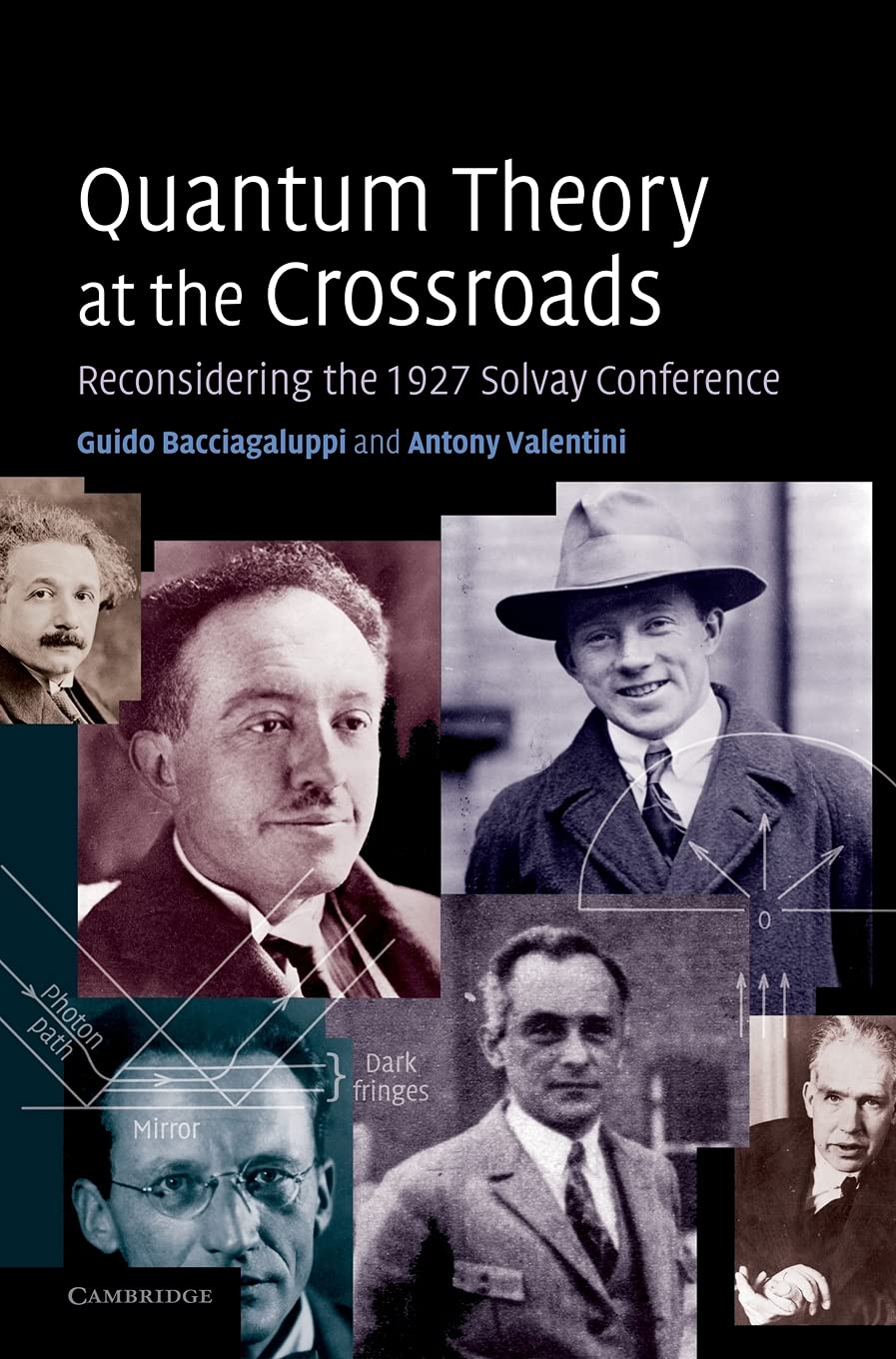
Quantum Theory at the Crossroads by Guido Bacciagaluppi – Quantum Mechanics History
Physics
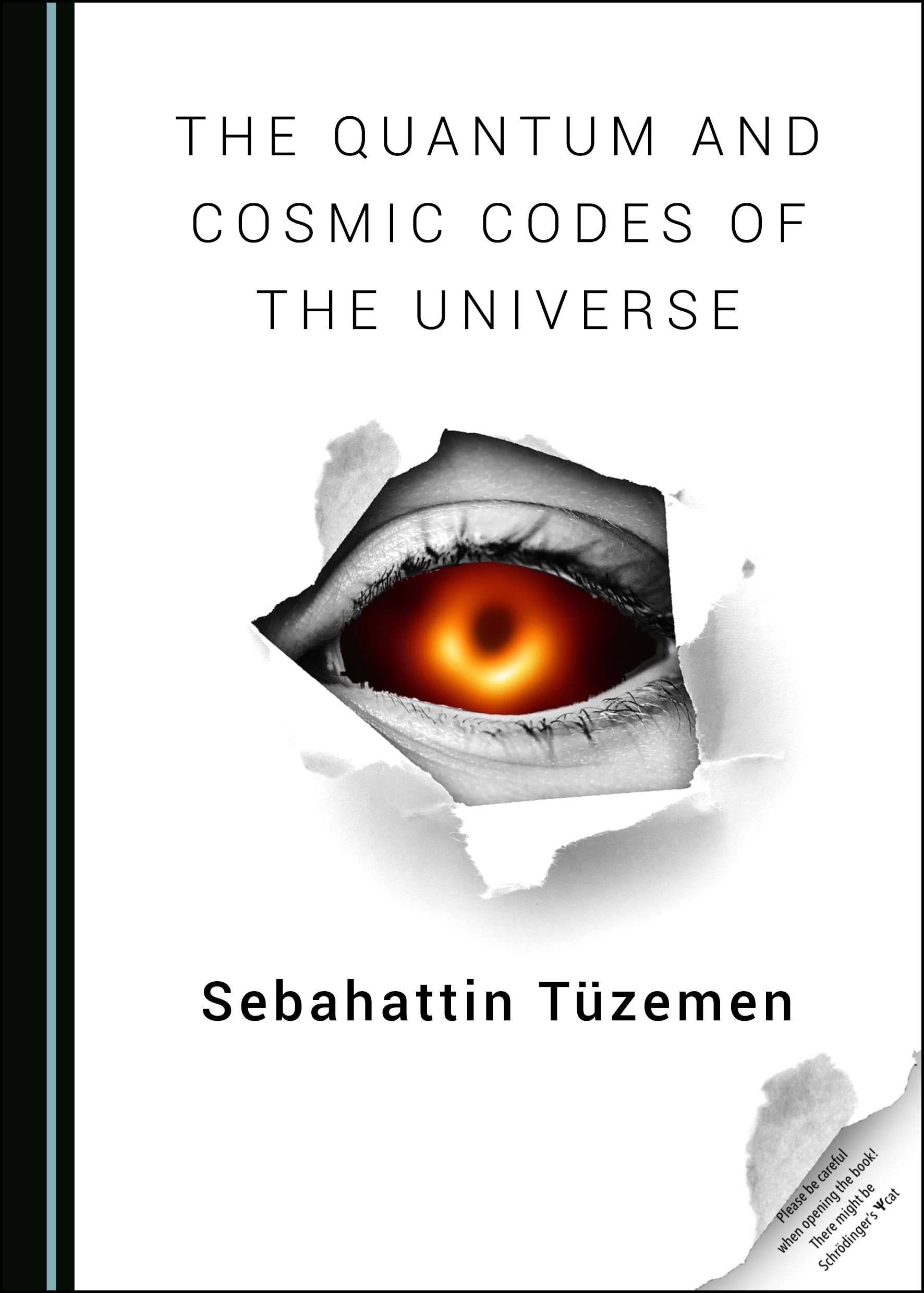
The Quantum and Cosmic Codes of the Universe
Mathematics
Mathematical Theory of Optimal Processes (Classics of Soviet Mathematics)
Related Products
View AllMathematics
Stereotype Spaces and Algebras: 73 (De Gruyter Expositions in Mathematics, 73)
Mathematics
Semigroups in Algebra, Geometry and Analysis: 20 (De Gruyter Expositions in Mathematics, 20)
Mathematics
Geometry from the Pacific Rim: Proceedings of the Pacific Rim Geometry Conference held at National University of Singapore, Republic of Singapore, ... 1994 (De Gruyter Proceedings in Mathematics)
Mathematics
First International Tainan-Moscow Algebra Workshop: Proceedings of the International Conference held at National Cheng Kung University Tainan, Taiwan, ... 1994 (De Gruyter Proceedings in Mathematics)
Mathematics
Differential Geometry - Proceedings of the VIII International Colloquium (English, Jesus A. Alvarez Lopez | Eduardo Garcia-Rio)
Mathematics