
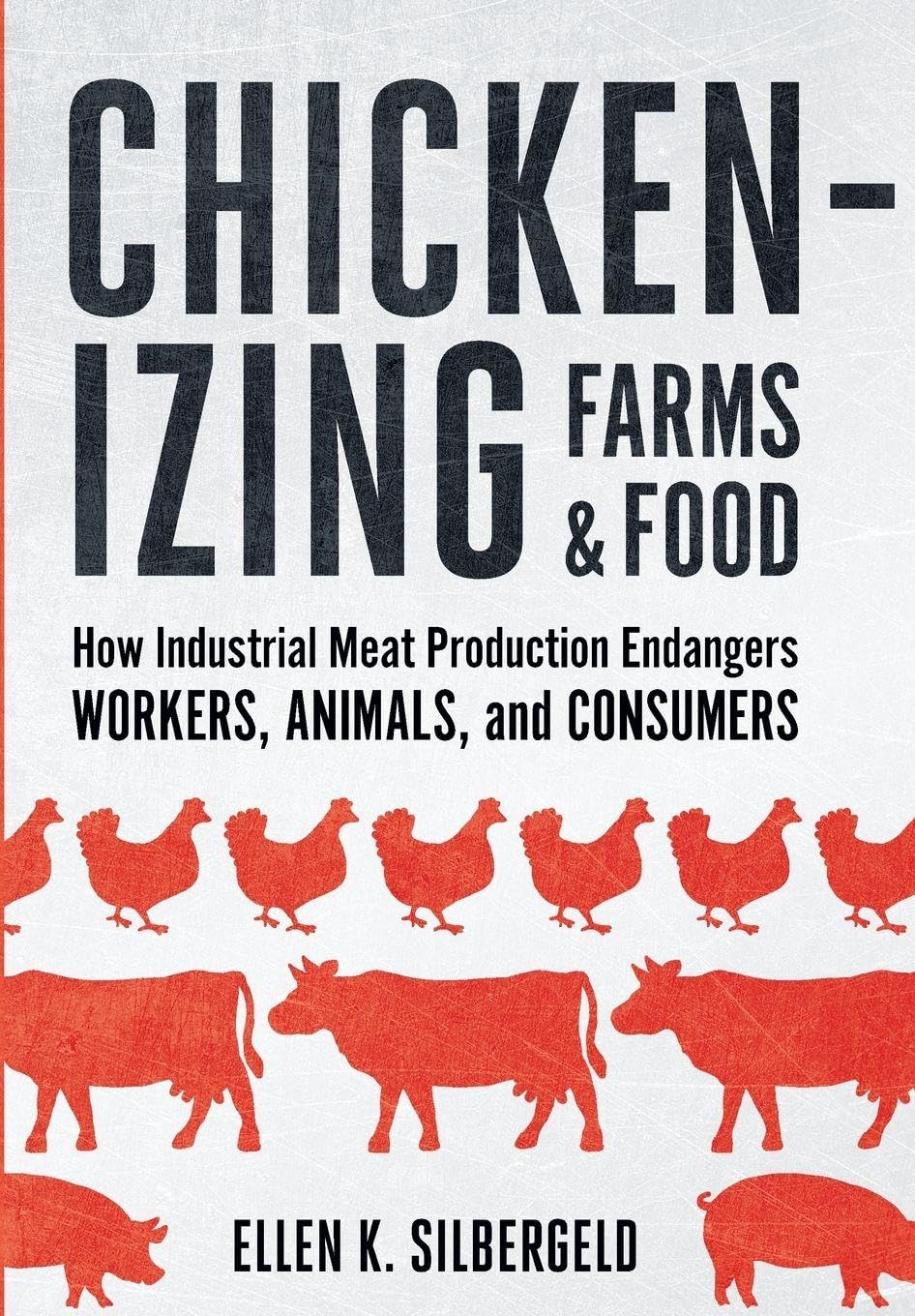
Chickenizing Farms & Food: How Industrial Meat Production Endangers Workers, Animals, and Consumers by Ellen K. Silberge
Inclusive of all applicable taxes. FREE shipping on all orders.
Available Offers
- 🚚Free Delivery — Free shipping on all orders
- 💵Cash on Delivery — Pay when your order arrives
- ↩️15-Day Easy Returns — Hassle-free return policy
- 🔒Cash on Delivery — Pay safely when your order arrives
Check Delivery
Product Description
Introduction
In an era where food safety and ethical farming are becoming critical concerns for consumers worldwide, Chickenizing Farms & Food: How Industrial Meat Production Endangers Workers, Animals, and Consumers by Ellen K. Silbergeld offers a groundbreaking investigation into the hidden costs of modern meat production. This hardcover volume, published by Johns Hopkins University Press, is an essential read for Indian students, environmentalists, policymakers, and anyone concerned about the true price of cheap chicken. Silbergeld, a leading environmental toxicologist, uncovers the dark underbelly of industrial agriculture—a system she terms 'chickenization'—and its devastating impact on human health, animal welfare, and the environment.
Book Overview
This meticulously researched book traces the evolution of factory farming from its roots in post-war America to its global dominance today. Silbergeld explains how Arthur Perdue's innovations transformed poultry production into a highly efficient but deeply problematic model, now applied to all livestock. The author reveals how antibiotics were introduced into animal feed in the 1940s, leading to the rise of drug-resistant bacteria, and exposes the social and economic structures that trap farmers in exploitative contracts while endangering workers and consumers. Chickenizing Farms & Food is not just a critique—it is a call to action for safer, more sustainable food systems.
Key Highlights
- Pioneering Research: Silbergeld draws on decades of expertise in environmental engineering and toxicology to present data-driven insights into industrial farming hazards.
- The 'Chickenization' Concept: A clear explanation of how top-down, contract-based farming systems prioritize profit over people and animals.
- Antibiotic Resistance Crisis: A deep dive into how routine antibiotic use in animal feed fuels superbugs that threaten global health.
- Worker and Consumer Safety: Detailed accounts of occupational hazards, foodborne illnesses, and environmental degradation caused by factory farms.
- Policy Implications: Practical recommendations for reforming agricultural practices to protect public health and the environment.
Inside the Book
The book is structured to guide readers through the complex web of industrial agriculture. Early chapters lay out the historical context of chickenization, while middle sections examine the science behind antibiotic resistance and toxic waste. Later chapters explore the socioeconomic consequences for rural communities, the ethical treatment of animals, and the regulatory failures that allow these practices to continue. Silbergeld uses case studies, scientific data, and personal narratives to make the content accessible yet rigorous. Each chapter builds a compelling case for urgent reform, making it a powerful resource for academic study and advocacy.
Key Topics
- History of industrial food animal production (IFAP)
- The role of antibiotics in animal feed and the emergence of multidrug-resistant bacteria
- Environmental pollution from concentrated animal feeding operations (CAFOs)
- Occupational health risks for farm and slaughterhouse workers
- Consumer exposure to pathogens and chemical residues
- Economic exploitation of contract farmers
- Comparative analysis of global meat production systems
- Policy frameworks for sustainable and ethical farming
Reader Benefits
Readers will gain a comprehensive understanding of how the modern meat industry operates behind closed doors. This book equips you with the knowledge to make informed food choices, advocate for stronger regulations, and understand the link between dinner plates and public health crises. Students will find it invaluable for courses in environmental science, public health, agriculture, and food policy. For activists and concerned citizens, it provides evidence-based arguments to challenge corporate agribusiness and promote alternatives like organic and regenerative farming.
Learning Outcomes
- Analyze the historical and economic drivers of industrial meat production
- Identify the health risks associated with antibiotic use in livestock
- Evaluate the environmental impact of factory farming on soil, water, and air
- Understand the social justice dimensions of agricultural labor exploitation
- Critically assess existing food safety regulations and propose improvements
- Develop strategies for supporting sustainable, ethical food systems
Who Should Read
This book is ideal for undergraduate and postgraduate students in environmental studies, veterinary science, public health, and agricultural economics. It is also essential for policymakers, food industry professionals, nutritionists, animal welfare advocates, and journalists covering food systems. Indian readers, particularly those concerned with the rapid expansion of poultry and livestock farming in states like Andhra Pradesh, Tamil Nadu, and Maharashtra, will find the insights directly relevant to local challenges. Anyone who eats meat and wants to understand its true cost will benefit from this eye-opening work.
About the Author
Ellen K. Silbergeld is a professor of environmental health sciences at the Johns Hopkins Bloomberg School of Public Health. With a PhD in environmental engineering and toxicology, she has spent over four decades researching the health impacts of industrial pollution, food production, and occupational hazards. She has served on numerous national and international advisory committees, including the U.S. Environmental Protection Agency and the World Health Organization. Her work has been instrumental in shaping policies on lead poisoning, mercury toxicity, and antibiotic resistance. Chickenizing Farms & Food represents the culmination of her lifelong commitment to making science serve public health.
About the Publisher
Johns Hopkins University Press is one of the oldest and most prestigious university presses in the United States, renowned for publishing authoritative works in science, medicine, and public policy. With a legacy dating back to 1878, the press is committed to disseminating scholarship that advances knowledge and addresses critical global issues. This hardcover edition reflects the press's dedication to rigorous editing, high-quality production, and lasting value—making it a trusted source for academic and general readers alike.
Conclusion
Chickenizing Farms & Food is a vital contribution to the global conversation on food safety, animal welfare, and environmental justice. Ellen K. Silbergeld's expert analysis pulls back the curtain on an industry that prioritizes profit over people, offering a roadmap for a healthier, more humane future. Whether you are a student, a professional, or a concerned consumer, this book will transform the way you think about the food on your plate. Order your copy from Bookshops.in today and join the movement for a better food system.
Quick Summary
Chickenizing Farms & Food by Ellen K. Silbergeld is a groundbreaking exposé of the industrial meat production system that dominates global agriculture. Drawing on her expertise in environmental engineering and toxicology, Silbergeld traces the rise of 'chickenization'—a contract farming model pioneered by Arthur Perdue that concentrates power in the hands of agribusiness giants while exposing workers, animals, and consumers to serious risks. The book reveals how feed additives, antibiotics, and intensive confinement create a perfect storm of antibiotic resistance, environmental pollution, and occupational hazards. It also examines the hidden costs of cheap meat, from rural community disruption to food safety scandals. Ideal for students, policymakers, activists, and conscious consumers, this book provides a compelling, evidence-based critique of factory farming. By purchasing from Bookshops.in, Indian readers gain access to a vital resource for understanding and challenging the industrial food system, delivered to their doorstep with trusted service.
Book Highlights
Book Specifications
| ISBN-13 | 9781421420301 |
| ISBN-10 | 1421420309 |
| Publisher | Johns Hopkins Univ Pr |
| Language | English |
| Dimensions | 15.24 x 2.64 x 22.86 cm |
| Weight | 612 g |
| Country | India |
| Category | Economics › Labor & Industrial Relations |
| Genre | Nonfiction |
| Reading Age | Adult |
| Original Language | English |
Frequently Asked Questions
What is 'chickenization'?
Who is Ellen K. Silbergeld?
Is this book relevant to Indian readers?
Does the book cover animal welfare?
What are the main health risks highlighted?
Is this a scientific or popular book?
Does the book propose solutions?
How does the book connect to environmental issues?
What is the role of Arthur Perdue in the book?
Can this book help me in academic research?
Does the book discuss Indian agriculture?
Is the book easy to read for non-experts?
Where can I buy this book in India?
Readers Also Search For
Customers Also Bought
Entrepreneurship
Chinese Economic Revolution (English, Linda Grove)
Entrepreneurship
Engines of Innovation: The Entrepreneurial University in the Twenty-First Century by Holden Thorp
Entrepreneurship
Invention to Innovation (English, PhD Marshall Larry | Jenna Daroczy)
Entrepreneurship
Database Management Systems by Raghu Ramakrishnan – DBMS Textbook

Entrepreneurship
Decision-making for Technology Executives by Harold A. Linstone
Entrepreneurship
The Business Innovation Audit (English, William Tate)
Related Products
View All
Economics
Political Economy from Pufendorf to Marx (English, István Hont | Lasse S. Andersen | Béla Kapossy)
Economics
Women's Entrepreneurship and Economics (English, Miguel-Angel Galindo | Domingo Ribeiro)
Economics
Trade Policy and Industrialization in Turbulent Times | by Gerry Helleiner | Routledge | by Gerry Helleiner | Routledge | by Gerry Helleiner | Routledge | by Gerry Helleiner | Routledge | by Gerry Helleiner | Routledge | by Gerry Helleiner | Routledge | by Gerry Helleiner | Routledge | by Gerry Helleiner | Routledge | by Gerry Helleiner | Routledge | by Gerry Helleiner | Routledge | by Gerry Helleiner | Routledge | by Gerry Helleiner | Routledge | by Gerry Helleiner | Routledge | by Gerry Hellei
Economics
History of Economic Analysis | by Schumpeter Joseph A. | Taylor & Francis Ltd | by Schumpeter Joseph A. | Taylor & Francis Ltd | by Schumpeter Joseph A. | Taylor & Francis Ltd | by Schumpeter Joseph A. | Taylor & Francis Ltd | by Schumpeter Joseph A. | Taylor & Francis Ltd | by Schumpeter Joseph A. | Taylor & Francis Ltd | by Schumpeter Joseph A. | Taylor & Francis Ltd | by Schumpeter Joseph A. | Taylor & Francis Ltd | by Schumpeter Joseph A. | Taylor & Franci
Economics
OECD Compendium of Productivity Indicators 2015 | by Organization for Economic Cooperation an | Organization for Economic Co-Operation & Deve | by Organization for Economic Cooperation an | Organization for Economic Co-Operation & Deve | by Organization for Economic Cooperation an | Organization for Economic Co-Operation & Deve | by Organization for Economic Cooperation an | Organization for Economic Co-Operation & Deve | by Organization for Economic Cooperation an | Organization

Economics