
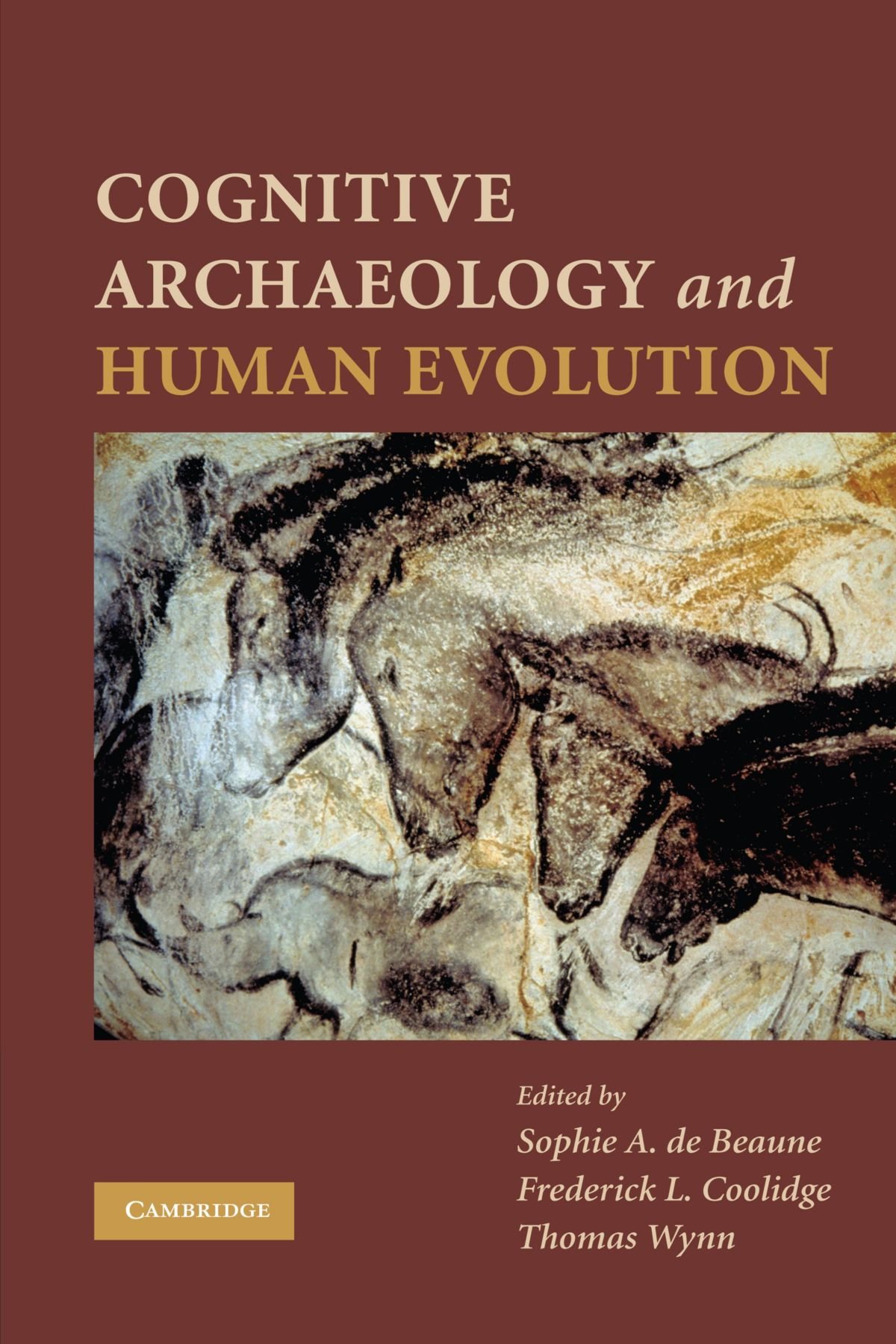
Cognitive Archaeology and Human Evolution: Understanding the Origins of Modern Human Thinking by Sophie de Beaune
Inclusive of all applicable taxes. FREE shipping on all orders.
Available Offers
- 🚚Free Delivery — Free shipping on all orders
- 💵Cash on Delivery — Pay when your order arrives
- ↩️15-Day Easy Returns — Hassle-free return policy
- 🔒Cash on Delivery — Pay safely when your order arrives
Check Delivery
Product Description
Introduction
Cognitive Archaeology and Human Evolution, edited by Sophie de Beaune and published by Cambridge University Press, is a landmark volume that bridges the gap between archaeology, neuroscience, and evolutionary theory. This hardbound edition offers Indian students and researchers a rigorous yet accessible exploration of how human cognition emerged and transformed over millennia. By examining material evidence from prehistoric times, the book sheds light on the cognitive processes that define modern thinking.
Book Overview
This collection of twelve essays by an international team of scholars presents fresh perspectives on cognitive archaeology. The contributors investigate the conditions that fostered the development of diverse cognitive abilities during human evolution. Moving beyond simple anatomical explanations, the book probes whether early hominins actively shaped their own mental growth through tool-making, social cooperation, and environmental adaptation. Each essay combines empirical data with theoretical speculation, making this volume essential for anyone interested in the origins of the human mind.
Key Highlights
- Interdisciplinary Approach: Integrates archaeology, neuroscience, and philosophy to understand cognitive evolution.
- Global Scholarship: Features contributions from leading researchers across Europe, America, and Asia.
- Empirical Rigor: Uses stone tools, cave art, and settlement patterns as evidence for cognitive change.
- Theoretical Depth: Challenges traditional views by considering hominins as active agents in their own development.
- Accessible Language: Written for both advanced students and curious general readers in India.
Inside the Book
The volume is organized into thematic sections that guide readers from foundational concepts to cutting-edge debates. Early chapters establish the methodological framework of cognitive archaeology, while later essays explore specific case studies—from the earliest stone tools to symbolic artifacts. Readers will encounter discussions on working memory, social cognition, language origins, and the role of material culture in shaping neural pathways. Each chapter includes references for further study, making it a valuable resource for academic research.
Key Topics
- Origins of Symbolic Thought: How prehistoric art and ornaments reflect emerging cognitive capacities.
- Tool Use and Brain Evolution: The feedback loop between manual skills and neural reorganization.
- Social Intelligence: Cooperation, teaching, and cultural transmission in early hominin groups.
- Language and Cognition: The archaeological evidence for the development of linguistic abilities.
- Hominin Agency: Did early humans actively drive their own cognitive evolution?
Reader Benefits
- Gain a comprehensive understanding of cognitive archaeology as a discipline.
- Learn to interpret material evidence for mental processes.
- Explore diverse theoretical perspectives from world-renowned scholars.
- Connect archaeological findings to modern neuroscience and psychology.
- Develop critical thinking skills through engaging with complex evolutionary debates.
Learning Outcomes
After reading this book, you will be able to: identify key milestones in human cognitive evolution; evaluate archaeological evidence for symbolic behavior; discuss the role of material culture in shaping cognition; compare different theories about the emergence of modern thinking; and apply cognitive archaeological methods to other anthropological questions.
Who Should Read
- Students of archaeology, anthropology, and evolutionary psychology at Indian universities.
- Researchers seeking a state-of-the-art overview of cognitive archaeology.
- Educators designing courses on human evolution or prehistoric mind.
- Enthusiasts interested in the deep history of human intelligence.
About the Author
Sophie de Beaune is a distinguished professor of prehistoric archaeology at Université Jean Moulin Lyon 3 and a research associate at the CNRS in France. Her work focuses on the cognitive and technical abilities of early humans, particularly through the study of stone tools and symbolic artifacts. She has edited several influential volumes on the evolution of human cognition and is widely recognized for her interdisciplinary approach.
About the Publisher
Cambridge University Press is one of the world's oldest and most prestigious academic publishers. With a history spanning over 400 years, Cambridge University Press is renowned for its rigorous peer-review process and high-quality scholarly publications. This volume reflects their commitment to advancing knowledge in the sciences and humanities, making it a trusted source for Indian readers.
Conclusion
Cognitive Archaeology and Human Evolution is an indispensable resource for anyone seeking to understand the origins of the human mind. By combining archaeological evidence with theoretical innovation, this book offers a fresh and compelling narrative of our cognitive past. Whether you are a student, teacher, or lifelong learner, this hardcover edition from Bookshops.in will enrich your understanding of what makes us human.
Quick Summary
Cognitive Archaeology and Human Evolution, edited by Sophie de Beaune and published by Cambridge University Press, is a seminal collection of twelve essays that explores the origins and development of human cognition through archaeological evidence. The book brings together an international team of scholars who present both empirical studies and theoretical frameworks to understand how hominins evolved complex thinking. It addresses key questions such as whether cognitive development simply made better use of existing anatomical structures or involved active innovation by hominoids. Readers will gain insights into the evolutionary context of modern thought, the methods used to infer ancient cognition, and the interdisciplinary nature of this field. This volume is ideal for Indian students and researchers in archaeology, anthropology, cognitive science, and evolutionary psychology. By purchasing from Bookshops.in, customers receive a genuine hardcover edition with fast delivery across India, making it a valuable addition to any academic library.
Book Highlights
Book Specifications
| ISBN-13 | 9780521746113 |
| ISBN-10 | 0521746116 |
| Publisher | Cambridge University Press |
| Language | English |
| Dimensions | 15.24 x 1.27 x 22.86 cm |
| Weight | 270 g |
| Country | India |
| Category | Biology & Life Sciences › Biology |
| Genre | Non-fiction |
| Original Language | English |
Frequently Asked Questions
What is cognitive archaeology?
Who edited Cognitive Archaeology and Human Evolution?
Is this book suitable for Indian students?
How many essays are in this book?
What topics does the book cover?
Does the book include case studies?
Is this book only for experts?
What is the ISBN-13?
How much does this book cost in India?
Can I use this book for research?
Does the book discuss hominoid cognition?
What is the format of this book?
Why should I buy from Bookshops.in?
Readers Also Search For
Customers Also Bought
Mathematics
Stereotype Spaces and Algebras: 73 (De Gruyter Expositions in Mathematics, 73)
Mathematics
Semigroups in Algebra, Geometry and Analysis: 20 (De Gruyter Expositions in Mathematics, 20)
Mathematics
Geometry from the Pacific Rim: Proceedings of the Pacific Rim Geometry Conference held at National University of Singapore, Republic of Singapore, ... 1994 (De Gruyter Proceedings in Mathematics)

Mathematics
First International Tainan-Moscow Algebra Workshop: Proceedings of the International Conference held at National Cheng Kung University Tainan, Taiwan, ... 1994 (De Gruyter Proceedings in Mathematics)

Mathematics
Differential Geometry - Proceedings of the VIII International Colloquium (English, Jesus A. Alvarez Lopez | Eduardo Garcia-Rio)

Mathematics
Mathematical Theory of Optimal Processes (Classics of Soviet Mathematics)
Related Products
View All
Biology
Evolution: What the Fossils Say and Why It Matters by Donald R. Prothero
Biology
From Taxonomy to Phylogenetics – Life and Work of Willi Hennig

Biology
The Marine Biology of the South China Sea

Biology
Genetics Meets Metabolomics: from Experiment to Systems Biology
Biology
The Elements of Natural or Experimental Philosophy: 2
Biology