
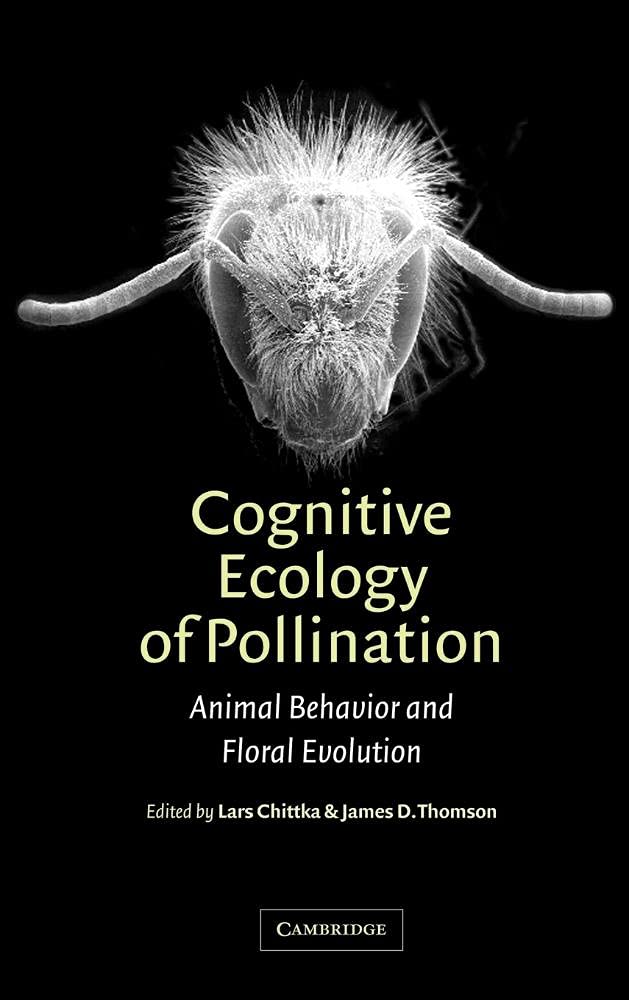
Cognitive Ecology of Pollination: Animal Behaviour and Floral Evolution by Lars Chittka – A Multidisciplinary Guide for
Inclusive of all applicable taxes. FREE shipping on all orders.
Available Offers
- 🚚Free Delivery — Free shipping on all orders
- 💵Cash on Delivery — Pay when your order arrives
- ↩️15-Day Easy Returns — Hassle-free return policy
- 🔒Cash on Delivery — Pay safely when your order arrives
Check Delivery
Product Description
Introduction
In the intricate dance between flowers and their pollinators, the cognitive abilities of bees, butterflies, birds, and bats play a far more decisive role than previously imagined. Cognitive Ecology of Pollination: Animal Behaviour and Floral Evolution offers a groundbreaking synthesis of neuroethology and evolutionary ecology, revealing how the sensory and mental capacities of pollinators have shaped the astonishing diversity of floral forms, colours, and scents. Edited by Lars Chittka, this volume brings together leading researchers to present a unified, modern perspective on one of nature's most vital interactions.
Book Overview
Published by Cambridge University Press, this hardbound edition is an essential reference for students and researchers in behavioural ecology, pollination biology, plant evolutionary biology, and neuroethology. The book bridges the gap between the study of animal cognition and the evolution of floral traits, demonstrating how pollinators perceive, learn, memorise, and respond to floral signals and rewards. It explores how these cognitive processes influence foraging patterns, pollen transport, and ultimately the reproductive success of plants. With contributions from outstanding scholars across multiple disciplines, the text offers a comprehensive look at the latest breakthroughs in understanding the cognitive and sensory ecology of pollination.
Key Highlights
- Integrates neuroethology and evolutionary ecology for the first time in a single volume
- Examines how pollinators perceive colour, shape, scent, and texture of flowers
- Discusses learning and memory mechanisms in bees, butterflies, and other key pollinators
- Explores the co-evolution of floral signals and pollinator sensory systems
- Features contributions from leading international researchers
- Provides a modern view of floral evolution driven by animal cognition
Inside the Book
The chapters delve into the neural and behavioural foundations of pollinator decision-making. Readers will find detailed analyses of how bees navigate complex floral arrays, how bumblebees learn to manipulate flowers for nectar, and how floral colour patterns are tuned to the visual systems of their visitors. The book also covers the role of olfaction, the economics of foraging, and the spatial memory that allows pollinators to return to rewarding flowers. Each chapter is rich with empirical data, conceptual frameworks, and directions for future research.
Key Topics
- Pollinator cognition: perception, learning, and memory
- Floral signals and their evolution
- Neuroethology of bees, butterflies, and birds
- Foraging behaviour and movement ecology
- Pollen transport dynamics and plant reproductive success
- Evolutionary constraints and trade-offs in floral design
- Comparative sensory ecology across pollinator taxa
Reader Benefits
Graduate students will gain a solid foundation in an emerging interdisciplinary field, while established researchers will find updated perspectives that challenge traditional views. The book's clear organisation and accessible language make it suitable for advanced undergraduates as well. Indian readers, especially those studying tropical pollination systems or working with native bee species, will appreciate the universal principles that can be applied to local ecosystems. The hardcover format ensures durability for frequent reference in the library or field station.
Learning Outcomes
By engaging with this book, readers will learn to: analyse how sensory and cognitive abilities of pollinators influence floral evolution; evaluate experimental approaches used in cognitive ecology; understand the co-evolutionary arms race between flowers and their visitors; apply concepts of learning and memory to pollination networks; and design original research questions at the intersection of behaviour, ecology, and plant biology.
Who Should Read
This book is ideal for postgraduate students and researchers in behavioural ecology, pollination ecology, plant evolutionary biology, and neuroethology. It is also highly relevant for entomologists, botanists, conservation biologists, and anyone fascinated by the hidden intelligence of pollinators. Indian students preparing for competitive exams or research in ecology and evolution will find this a valuable resource for understanding the complexity of plant-animal interactions.
About the Author
Lars Chittka is a professor of sensory and behavioural ecology at Queen Mary University of London, and one of the world's foremost experts on bee cognition. His pioneering work on colour vision, learning, and navigation in bumblebees has reshaped our understanding of insect intelligence. He has published extensively in leading journals and is known for his ability to communicate complex scientific ideas with clarity and enthusiasm.
About the Publisher
Cambridge University Press is one of the oldest and most respected academic publishers in the world. With a legacy dating back to 1534, it is committed to advancing knowledge, education, and research across all disciplines. Their science and mathematics titles are known for rigorous peer review, editorial excellence, and global reach. This book exemplifies their dedication to publishing transformative works that shape the frontiers of science.
Conclusion
Cognitive Ecology of Pollination is not just a collection of research findings—it is a roadmap for a new way of thinking about the natural world. By placing the mind of the pollinator at the centre of floral evolution, this book opens up exciting avenues for research and conservation. For anyone seeking to understand the beauty and complexity of pollination from a truly interdisciplinary perspective, this volume is an indispensable addition to their bookshelf.
Quick Summary
Cognitive Ecology of Pollination: Animal Behaviour and Floral Evolution, edited by Lars Chittka, is a landmark work that bridges the gap between neuroethology and evolutionary ecology. The book delves into how pollinators such as bees, butterflies, and birds perceive floral signals, learn from rewards, and make foraging decisions. It then shows how these cognitive abilities shape the evolution of flower colour, shape, scent, and nectar production. Written for graduate students and researchers, this volume brings together contributions from leading international scientists. Readers will gain a mechanistic understanding of plant-pollinator interactions, from sensory biology to population-level consequences. The book is especially valuable for those studying pollination ecology, plant evolution, and behavioural biology. By purchasing from Bookshops.in, Indian students and academics receive a genuine Cambridge University Press hardcover, ensuring long-lasting reference quality. This book is a must-have for any serious biology library.
Book Highlights
Book Specifications
| ISBN-13 | 9780521781954 |
| ISBN-10 | 0521781957 |
| Publisher | Cambridge University Press |
| Language | English |
| Dimensions | 16.51 x 2.54 x 24.13 cm |
| Weight | 727 g |
| Country | India |
| Category | Biology & Life Sciences › Biology |
| Genre | Non-fiction |
| Reading Age | 18+ |
| Original Language | English |
Frequently Asked Questions
What is Cognitive Ecology of Pollination about?
Who is the author of this book?
Is this book suitable for Indian students?
What makes this book different from other pollination books?
Does the book cover Indian pollinators?
Is the book available in hardcover?
Can this book help with competitive exams?
Does it include colour illustrations?
What is the ISBN?
Is it a textbook or a research monograph?
How is the book structured?
What is the price in India?
Why buy from Bookshops.in?
Readers Also Search For
Customers Also Bought
Mathematics
Stereotype Spaces and Algebras: 73 (De Gruyter Expositions in Mathematics, 73)

Mathematics
Semigroups in Algebra, Geometry and Analysis: 20 (De Gruyter Expositions in Mathematics, 20)

Mathematics
Geometry from the Pacific Rim: Proceedings of the Pacific Rim Geometry Conference held at National University of Singapore, Republic of Singapore, ... 1994 (De Gruyter Proceedings in Mathematics)

Mathematics
First International Tainan-Moscow Algebra Workshop: Proceedings of the International Conference held at National Cheng Kung University Tainan, Taiwan, ... 1994 (De Gruyter Proceedings in Mathematics)

Mathematics
Differential Geometry - Proceedings of the VIII International Colloquium (English, Jesus A. Alvarez Lopez | Eduardo Garcia-Rio)

Mathematics
Mathematical Theory of Optimal Processes (Classics of Soviet Mathematics)
Related Products
View All
Biology
Evolution: What the Fossils Say and Why It Matters by Donald R. Prothero
Biology
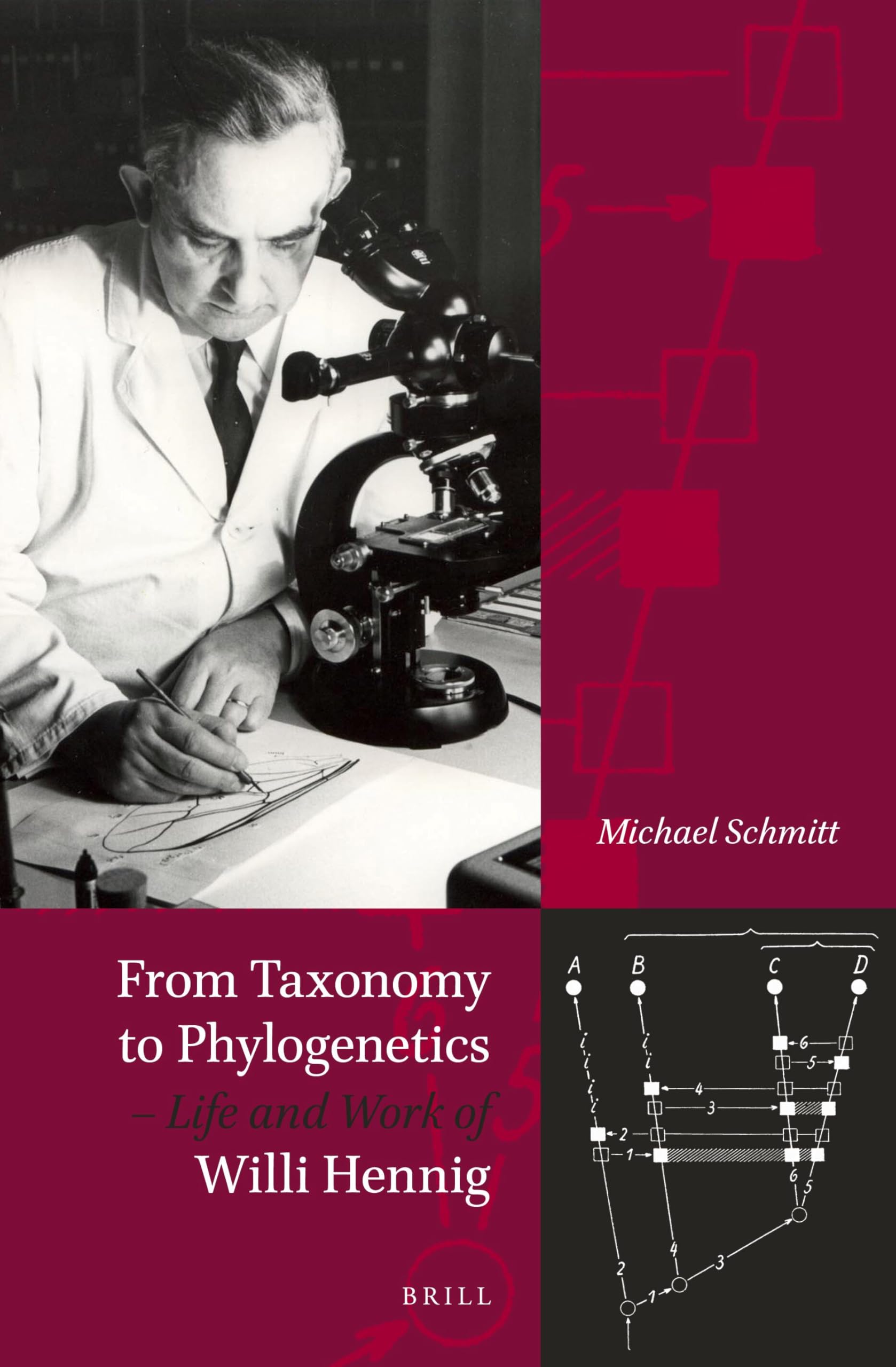
From Taxonomy to Phylogenetics – Life and Work of Willi Hennig

Biology
The Marine Biology of the South China Sea

Biology
Genetics Meets Metabolomics: from Experiment to Systems Biology
Biology
The Elements of Natural or Experimental Philosophy: 2
Biology