
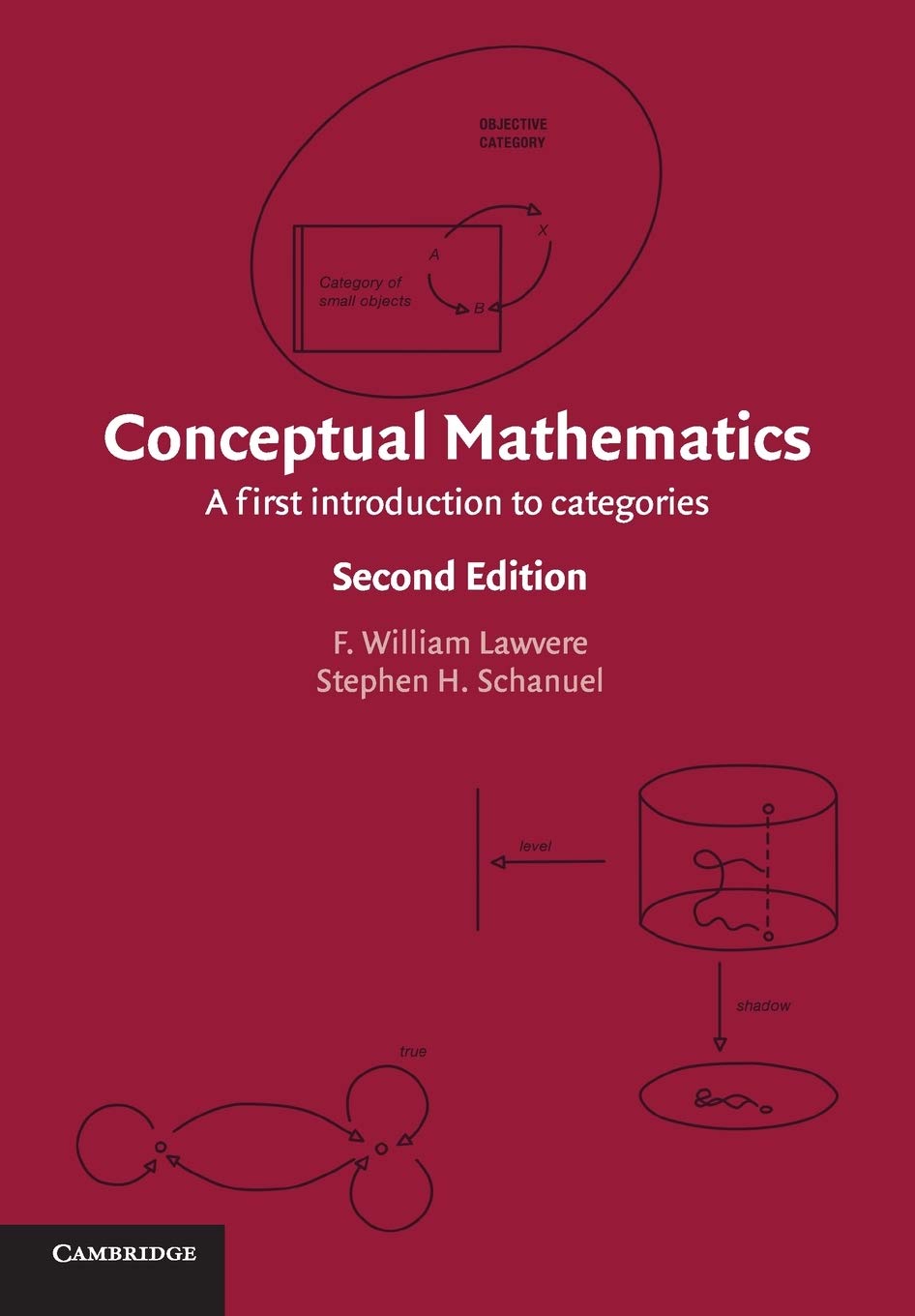
Conceptual Mathematics: A First Introduction to Categories by F. William Lawvere – An Essential Guide to Category Theory
Inclusive of all applicable taxes. FREE shipping on all orders.
Available Offers
- 🚚Free Delivery — Free shipping on all orders
- 💵Cash on Delivery — Pay when your order arrives
- ↩️15-Day Easy Returns — Hassle-free return policy
- 🔒Cash on Delivery — Pay safely when your order arrives
Check Delivery
Product Description
Introduction
Mathematics, at its core, is about seeing patterns and connections. For students and researchers in India, mastering these connections often feels like navigating a vast, uncharted ocean. Conceptual Mathematics: A First Introduction to Categories by F. William Lawvere serves as a compass, offering a unified language to understand and simplify the entire mathematical landscape. Published by the prestigious Cambridge University Press, this hardcover edition is an essential resource for anyone serious about moving beyond rote computation to genuine conceptual understanding.
Book Overview
This seminal work introduces category theory—a powerful framework that has revolutionised modern mathematics—to absolute beginners and seasoned practitioners alike. Unlike traditional textbooks that assume prior knowledge of advanced algebra or topology, this book starts from the ground up. It builds fundamental concepts using familiar examples like discrete dynamical systems and directed graphs, making abstract ideas tangible. The second edition enriches the journey with new appendices, including concise introductions to adjoint functors and geometric structures, alongside a carefully annotated bibliography for further study. It is not merely a textbook; it is a skeleton key to unlocking the unity of pure and applied mathematics.
Key Highlights
- Accessible Introduction: No prior knowledge of category theory is required, making it ideal for undergraduate students in Indian universities.
- Unified Perspective: Demonstrates how categories simplify and connect diverse branches of mathematics, from algebra to topology.
- Practical Examples: Uses concrete categories such as sets, graphs, and dynamical systems to illustrate abstract principles.
- Expanded Second Edition: Includes new appendices on adjoint functors, geometrical structures, and historical context.
- Authoritative Publisher: Cambridge University Press ensures academic rigour and clarity.
Inside the Book
The journey begins with the definition of a category and quickly moves to exploring elementary categories like sets, ordered sets, and monoids. Each chapter builds on the last, introducing functors, natural transformations, and universal properties through carefully chosen examples. The book avoids unnecessary jargon, instead focusing on how categorical thinking emerges from everyday mathematical practice. Appendices offer a gateway to advanced topics, including a sketch of the historical development of category theory, making it a self-contained study companion. The hardcover binding ensures durability for repeated reference.
Key Topics
- Definition and examples of categories (sets, graphs, dynamical systems)
- Functors and natural transformations
- Universal mapping properties and limits
- Adjoint functors (introduced in appendices)
- Geometric structures and their categorical foundations
- Connections to logic, computation, and physics
Reader Benefits
- Clarity over Complexity: Learn to think in terms of relationships rather than isolated formulas.
- Foundation for Advanced Study: Prepare for higher-level courses in algebra, topology, and theoretical computer science.
- Enhanced Problem-Solving: Develop a conceptual toolkit that applies across disciplines.
- Self-Paced Learning: The logical progression and appendices allow for independent study.
- Indian Context: The book’s emphasis on fundamental ideas aligns well with the rigorous curricula of Indian institutes like IITs, IISc, and central universities.
Learning Outcomes
By the end of this book, readers will be able to: identify and construct categories from familiar mathematical structures; use functors to translate problems between different domains; recognise universal properties in algebraic and geometric settings; understand the basic language of adjoint functors; and appreciate the historical evolution that led to modern categorical thinking. These outcomes equip students with a mental framework that makes advanced mathematics more intuitive and cohesive.
Who Should Read
- Undergraduate and postgraduate students in mathematics, physics, or computer science seeking a conceptual foundation.
- Research scholars looking to apply categorical methods in their work.
- Teachers and professors who want to introduce category theory early in the curriculum.
- Self-learners with a curiosity for the deeper structure of mathematics.
- Professionals in data science or theoretical computing interested in the mathematical underpinnings of their fields.
About the Author
F. William Lawvere is a towering figure in modern mathematics, best known for his foundational contributions to category theory and its application to logic and physics. A student of Samuel Eilenberg, Lawvere has taught at institutions including the University of Chicago, the University at Buffalo, and the University of Perugia. His work on the category of categories, the elementary theory of the category of sets, and the concept of adjointness has influenced generations of mathematicians. This book distils his lifelong passion for making categorical thinking accessible to all.
About the Publisher
Cambridge University Press is one of the world’s oldest and most respected academic publishers, with a legacy of excellence in mathematics and science. Their commitment to rigorous peer review and clear exposition ensures that every title, including this one, meets the highest scholarly standards. For Indian readers, Cambridge books are a hallmark of quality, trusted by universities and libraries across the country.
Conclusion
Conceptual Mathematics: A First Introduction to Categories is more than a book—it is an invitation to see mathematics as a unified, beautiful tapestry. Whether you are a student at an Indian university preparing for competitive exams like JAM or GATE, or a researcher exploring new frontiers, this hardcover edition offers a lasting companion. Embrace the power of categorical thinking and transform your mathematical journey. Order your copy from Bookshops.in today and step into a world where every theorem connects.
Quick Summary
Conceptual Mathematics: A First Introduction to Categories by F. William Lawvere is a groundbreaking book that makes the powerful language of category theory accessible to everyone. Starting from basic definitions, it uses familiar examples like dynamical systems and directed graphs to introduce objects, arrows, functors, and natural transformations. This book is perfect for Indian mathematics students, researchers, and professionals who want to understand the unifying principles behind modern mathematics. Readers will learn how categories connect algebra, topology, logic, and more, developing a deep conceptual understanding rather than rote memorization. The second edition includes updated content and pointers to advanced topics, making it a lifelong resource. By buying from Bookshops.in, you get a genuine hardcover copy delivered across India with reliable service. Whether you are a beginner or an experienced mathematician, this book will transform the way you think about mathematics.
Book Highlights
Book Specifications
| ISBN-13 | 9780521719162 |
| ISBN-10 | 052171916X |
| Publisher | Cambridge University Press |
| Language | English |
| Dimensions | 16.99 x 2.34 x 24.41 cm |
| Weight | 780 g |
| Country | India |
| Category | Mathematics › Algebra & Trigonometry |
| Genre | Non-fiction |
| Reading Age | 18+ |
| Original Language | English |
Frequently Asked Questions
What is Conceptual Mathematics about?
Who is the author of this book?
Do I need prior knowledge of category theory to read this book?
Is this book suitable for Indian students?
What topics are covered in the book?
What is the price of this book?
Is this book available in India?
What is the ISBN of this book?
Can I use this book for self-study?
Does the book include exercises?
What makes this book different from other category theory books?
How will this book help my career?
Readers Also Search For
Customers Also Bought
Mathematics
Stereotype Spaces and Algebras: 73 (De Gruyter Expositions in Mathematics, 73)
Mathematics
Semigroups in Algebra, Geometry and Analysis: 20 (De Gruyter Expositions in Mathematics, 20)
Mathematics
Geometry from the Pacific Rim: Proceedings of the Pacific Rim Geometry Conference held at National University of Singapore, Republic of Singapore, ... 1994 (De Gruyter Proceedings in Mathematics)
Mathematics
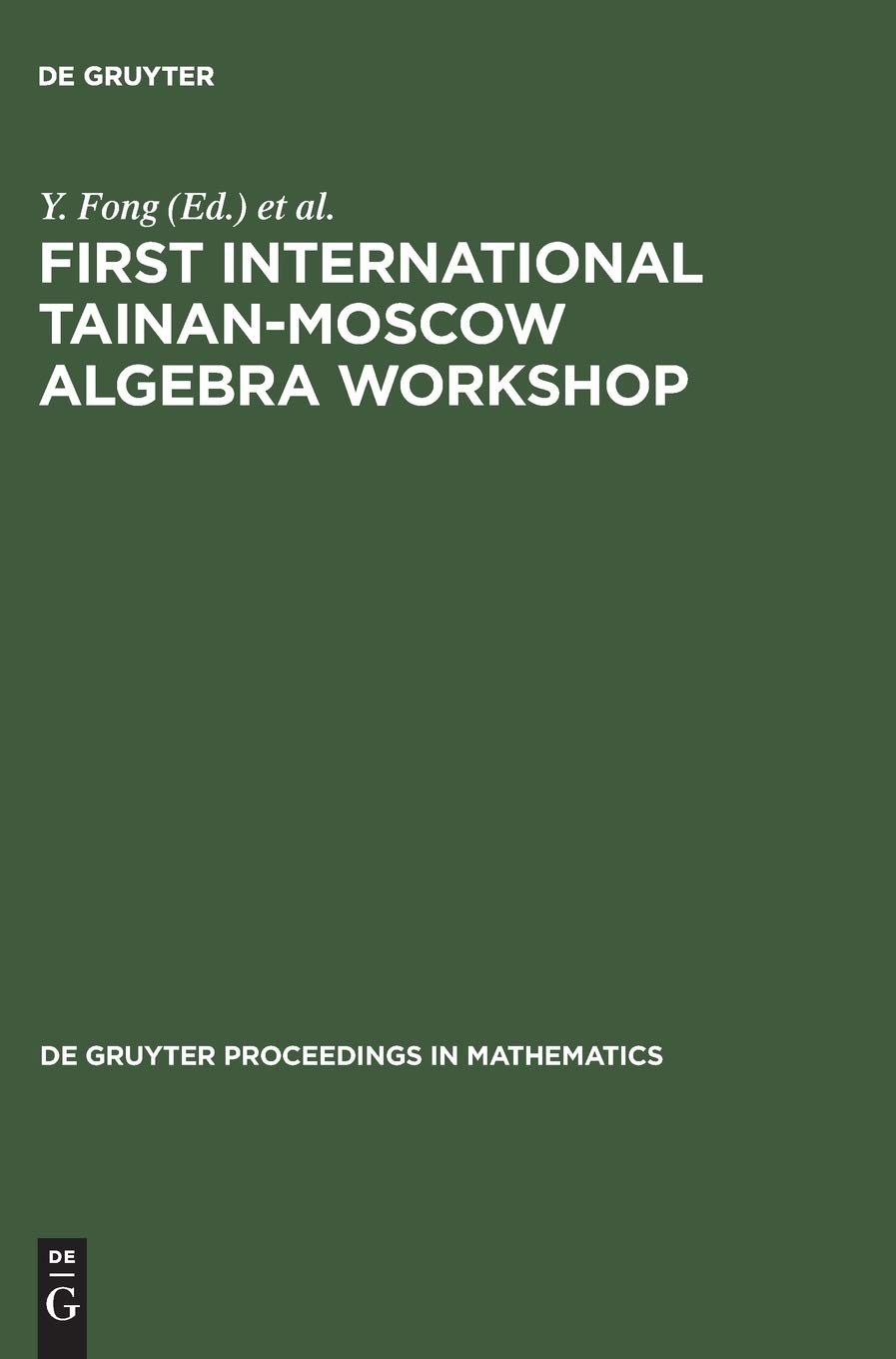
First International Tainan-Moscow Algebra Workshop: Proceedings of the International Conference held at National Cheng Kung University Tainan, Taiwan, ... 1994 (De Gruyter Proceedings in Mathematics)
Mathematics
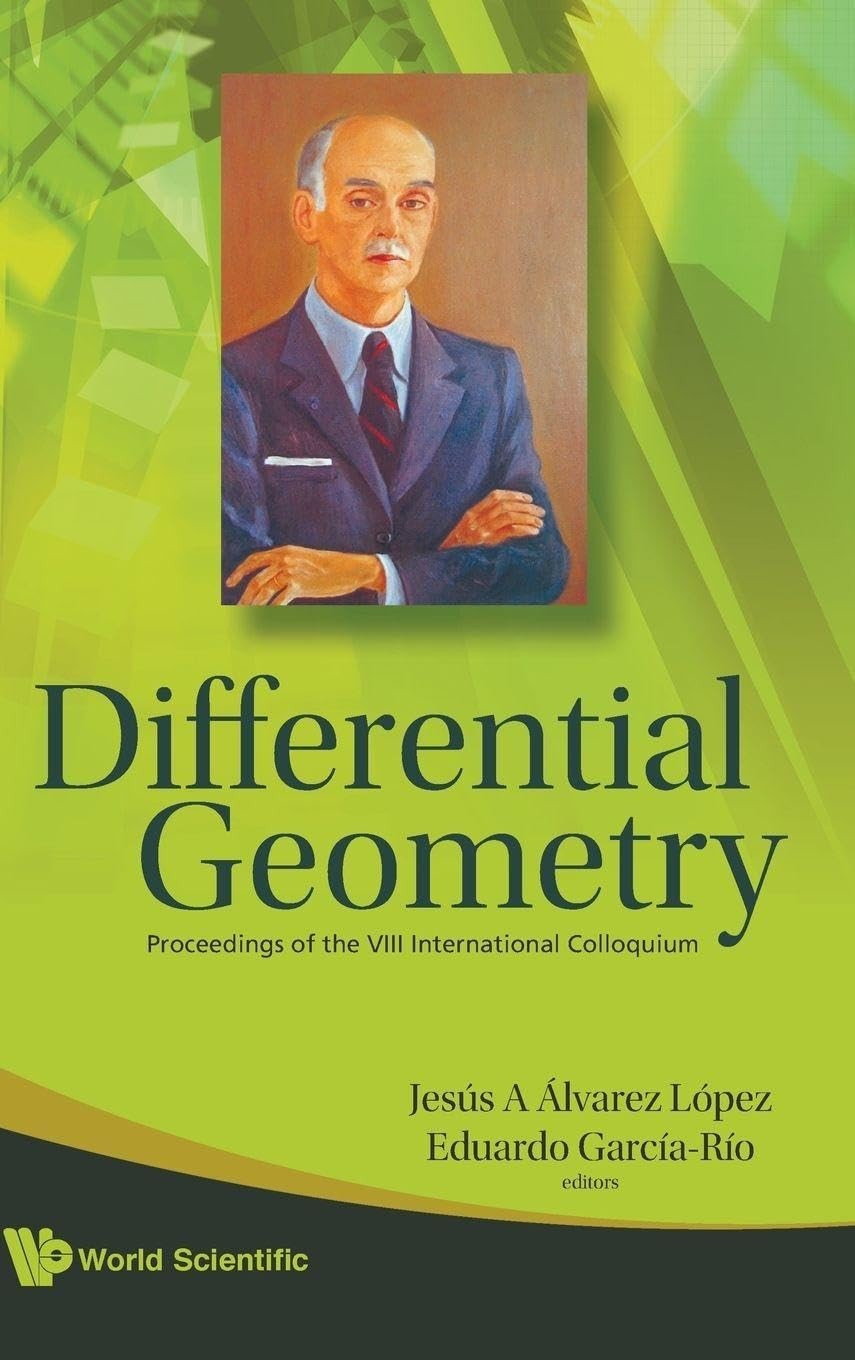
Differential Geometry - Proceedings of the VIII International Colloquium (English, Jesus A. Alvarez Lopez | Eduardo Garcia-Rio)
Mathematics
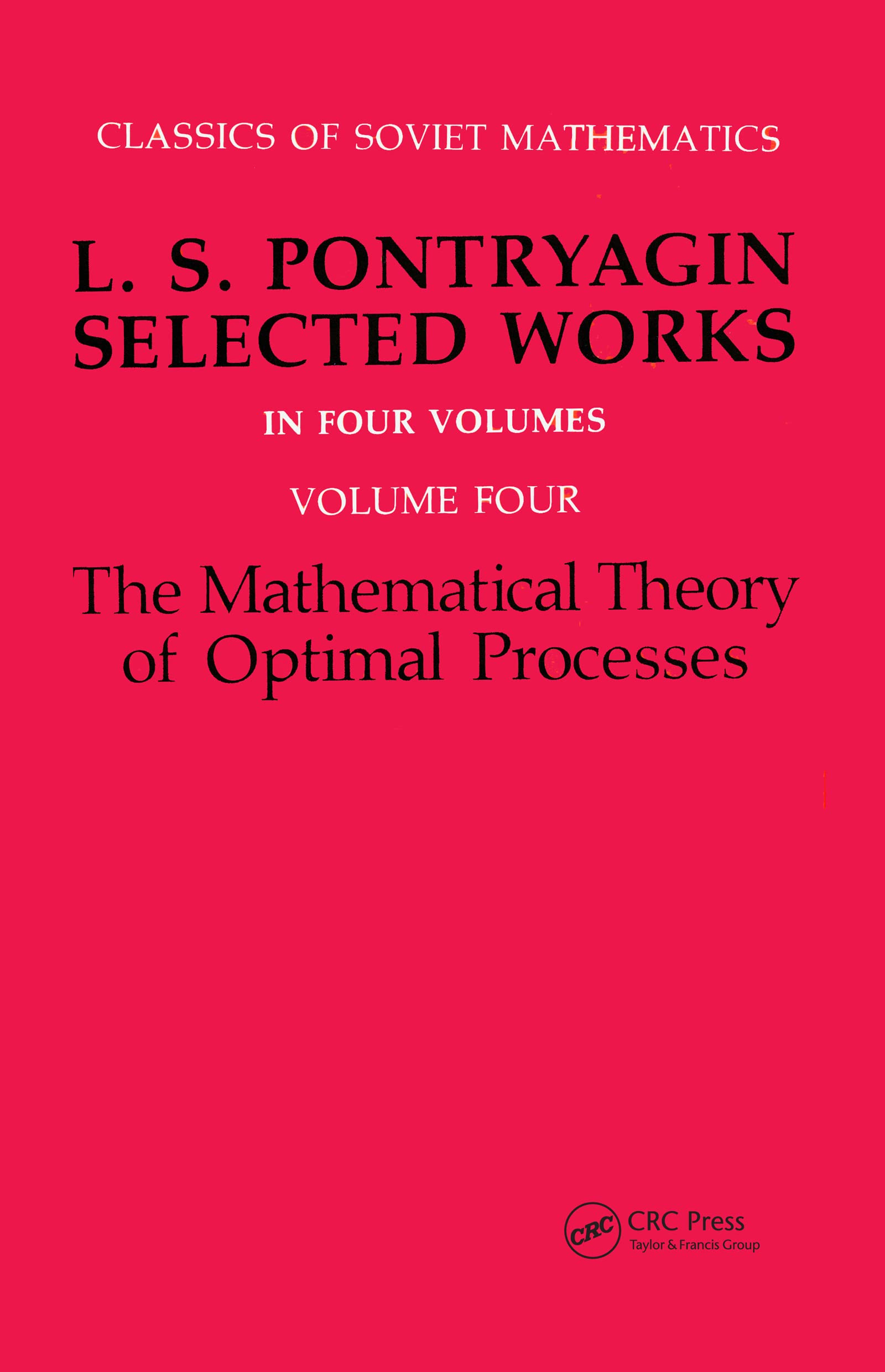
Mathematical Theory of Optimal Processes (Classics of Soviet Mathematics)
Related Products
View AllMathematics
Stereotype Spaces and Algebras: 73 (De Gruyter Expositions in Mathematics, 73)
Mathematics
Semigroups in Algebra, Geometry and Analysis: 20 (De Gruyter Expositions in Mathematics, 20)
Mathematics
Geometry from the Pacific Rim: Proceedings of the Pacific Rim Geometry Conference held at National University of Singapore, Republic of Singapore, ... 1994 (De Gruyter Proceedings in Mathematics)
Mathematics
First International Tainan-Moscow Algebra Workshop: Proceedings of the International Conference held at National Cheng Kung University Tainan, Taiwan, ... 1994 (De Gruyter Proceedings in Mathematics)
Mathematics
Differential Geometry - Proceedings of the VIII International Colloquium (English, Jesus A. Alvarez Lopez | Eduardo Garcia-Rio)
Mathematics