
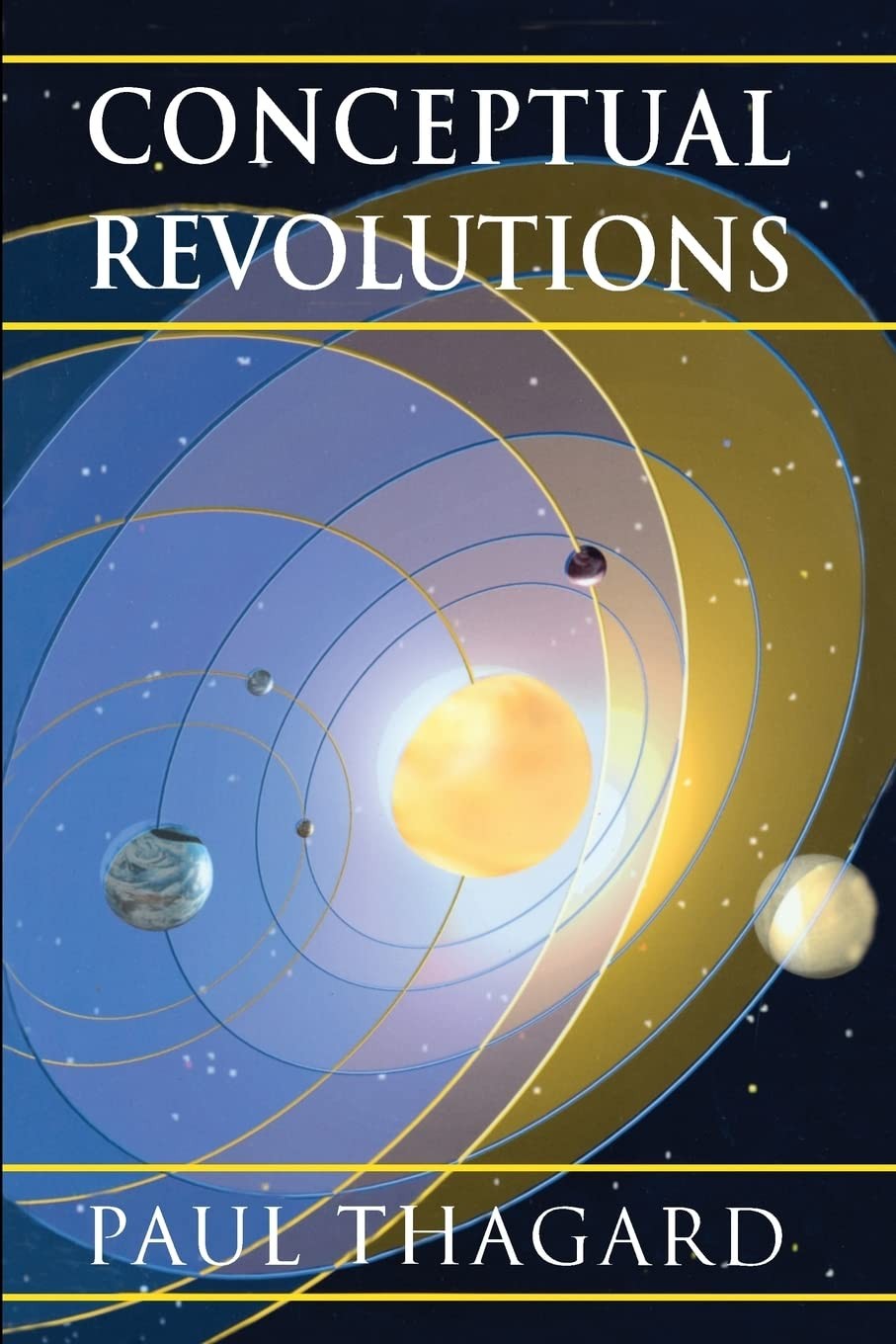
Conceptual Revolutions: How Scientific Thinking Transforms – A Cognitive Science Perspective by Paul Thagard
Inclusive of all applicable taxes. FREE shipping on all orders.
Available Offers
- 🚚Free Delivery — Free shipping on all orders
- 💵Cash on Delivery — Pay when your order arrives
- ↩️15-Day Easy Returns — Hassle-free return policy
- 🔒Cash on Delivery — Pay safely when your order arrives
Check Delivery
Product Description
Introduction
What drives the great leaps in human understanding? How do entire systems of thought collapse and give way to new paradigms? In Conceptual Revolutions, cognitive scientist Paul Thagard offers a groundbreaking exploration of the mechanisms behind the most transformative shifts in scientific thinking. This hardcover edition from Princeton University Press is an essential read for Indian students, researchers, and anyone fascinated by the intersection of mind, science, and history.
Book Overview
Thagard synthesizes insights from cognitive psychology, artificial intelligence, and the history of science to build a unified theory of conceptual change. Unlike traditional accounts that treat scientific revolutions as isolated events, this book shows how new concepts and explanatory frameworks emerge through a combination of psychological processes and logical coherence. From Copernicus to quantum mechanics, Thagard demonstrates that revolutions are not just about new facts but about the restructuring of our very categories of thought.
Key Highlights
- Interdisciplinary Approach: Bridges cognitive science, philosophy, and history to explain how scientists replace old concepts with new ones.
- Computational Theory: Introduces a formal model of explanatory coherence that judges the superiority of new theories over old ones.
- Historical Depth: Analyzes the Copernican revolution, Darwinian evolution, Newtonian mechanics, Lavoisier's oxygen theory, Einstein's relativity, quantum theory, and plate tectonics.
- Psychological Mechanisms: Explores how analogies, mental models, and conceptual combinations drive innovation.
Inside the Book
The book is structured to first lay out the problem of conceptual change, then delve into case studies of major revolutions, and finally present a computational model of explanatory coherence. Each chapter examines a specific revolution, dissecting the conceptual shifts that occurred and the cognitive processes that made them possible. Thagard uses diagrams and formal representations to clarify how conceptual systems are reorganized, making complex ideas accessible to readers from diverse backgrounds.
Key Topics
- Conceptual change in science and its psychological foundations
- Explanatory coherence and theory choice
- Analogical reasoning and mental models
- Scientific revolutions as conceptual reorganizations
- Computational models of scientific discovery
- Case studies: Copernicus, Darwin, Newton, Lavoisier, Einstein, Bohr, and Wegener
Reader Benefits
For Indian readers pursuing studies in science, philosophy, or cognitive science, this book offers a rare synthesis that clarifies how knowledge evolves. It helps students understand that science is not a static collection of facts but a dynamic process of conceptual refinement. Researchers in AI will find the computational model particularly valuable for designing systems that can learn and restructure knowledge. History buffs will appreciate the detailed narratives of how revolutionary thinkers broke free from entrenched frameworks.
Learning Outcomes
- Understand the psychological mechanisms behind paradigm shifts
- Analyze how new concepts are formed and linked
- Evaluate competing theories using explanatory coherence
- Apply insights from cognitive science to historical case studies
- Recognize patterns of conceptual change across disciplines
Who Should Read
This book is ideal for undergraduate and postgraduate students in science, philosophy, psychology, and artificial intelligence. It is also a valuable resource for educators designing courses on the history and philosophy of science. General readers with an interest in how human thinking evolves will find Thagard's arguments both accessible and profound. If you are curious about the cognitive roots of innovation, this book is for you.
About the Author
Paul Thagard is a distinguished professor of philosophy and cognitive science at the University of Waterloo, Canada. He is a leading figure in the field of cognitive science, known for his work on conceptual change, explanatory coherence, and computational models of scientific reasoning. His research integrates philosophy, psychology, and artificial intelligence to understand how humans think and learn.
About the Publisher
Princeton University Press, established in 1905, is a renowned academic publisher committed to disseminating scholarship across the humanities, social sciences, and sciences. Known for its rigorous editorial standards and high-quality production, Princeton University Press brings authoritative works to readers worldwide, including this hardcover edition of Conceptual Revolutions.
Conclusion
Conceptual Revolutions is not just a book about science; it is a window into the very machinery of human thought. By showing how our concepts are built, broken, and rebuilt, Paul Thagard equips readers with a deeper appreciation of intellectual progress. Whether you are a student, a researcher, or a lifelong learner, this hardcover volume deserves a place on your shelf as a guide to the transformative power of ideas.
Quick Summary
'Conceptual Revolutions' by Paul Thagard is a landmark work that bridges history of science, cognitive psychology, and artificial intelligence to explain how scientific revolutions fundamentally alter our conceptual frameworks. Thagard systematically examines seven major revolutions—from Copernicus to plate tectonics—showing that scientific progress involves not just new facts but the replacement of entire systems of concepts. He identifies cognitive mechanisms such as explanatory coherence, analogical mapping, and computational modeling that drive these transformations. This book is ideal for advanced students and researchers in philosophy of science, cognitive science, history of science, and AI who want a deeper understanding of how scientific thinking evolves. Readers will learn to analyze conceptual shifts, appreciate the psychological underpinnings of discovery, and see how AI can simulate creative scientific reasoning. By purchasing from Bookshops.in, Indian readers get a premium hardcover edition of this classic work, delivered with care.
Book Highlights
Book Specifications
| ISBN-13 | 9780691024905 |
| ISBN-10 | 0691024901 |
| Publisher | Princeton University Press |
| Language | English |
| Dimensions | 14.99 x 1.93 x 22.61 cm |
| Weight | 454 g |
| Country | USA |
| Category | Biology & Life Sciences › Biology |
| Genre | Non-fiction |
| Original Language | English |
Frequently Asked Questions
What is 'Conceptual Revolutions' about?
Who is the author Paul Thagard?
Which scientific revolutions does the book cover?
Is this book suitable for undergraduate students?
Does the book use AI to study science?
How is this book different from Thomas Kuhn's 'Structure of Scientific Revolutions'?
What is the main theory proposed in the book?
Is this book relevant for Indian readers?
Does the book include case studies?
What background knowledge is needed to read this book?
Is this a textbook or a scholarly monograph?
Does the book discuss Indian scientific contributions?
Where can I buy this book in India?
Readers Also Search For
Customers Also Bought
Mathematics
Stereotype Spaces and Algebras: 73 (De Gruyter Expositions in Mathematics, 73)

Mathematics
Semigroups in Algebra, Geometry and Analysis: 20 (De Gruyter Expositions in Mathematics, 20)

Mathematics
Geometry from the Pacific Rim: Proceedings of the Pacific Rim Geometry Conference held at National University of Singapore, Republic of Singapore, ... 1994 (De Gruyter Proceedings in Mathematics)

Mathematics
First International Tainan-Moscow Algebra Workshop: Proceedings of the International Conference held at National Cheng Kung University Tainan, Taiwan, ... 1994 (De Gruyter Proceedings in Mathematics)

Mathematics
Differential Geometry - Proceedings of the VIII International Colloquium (English, Jesus A. Alvarez Lopez | Eduardo Garcia-Rio)
Mathematics
Mathematical Theory of Optimal Processes (Classics of Soviet Mathematics)
Related Products
View All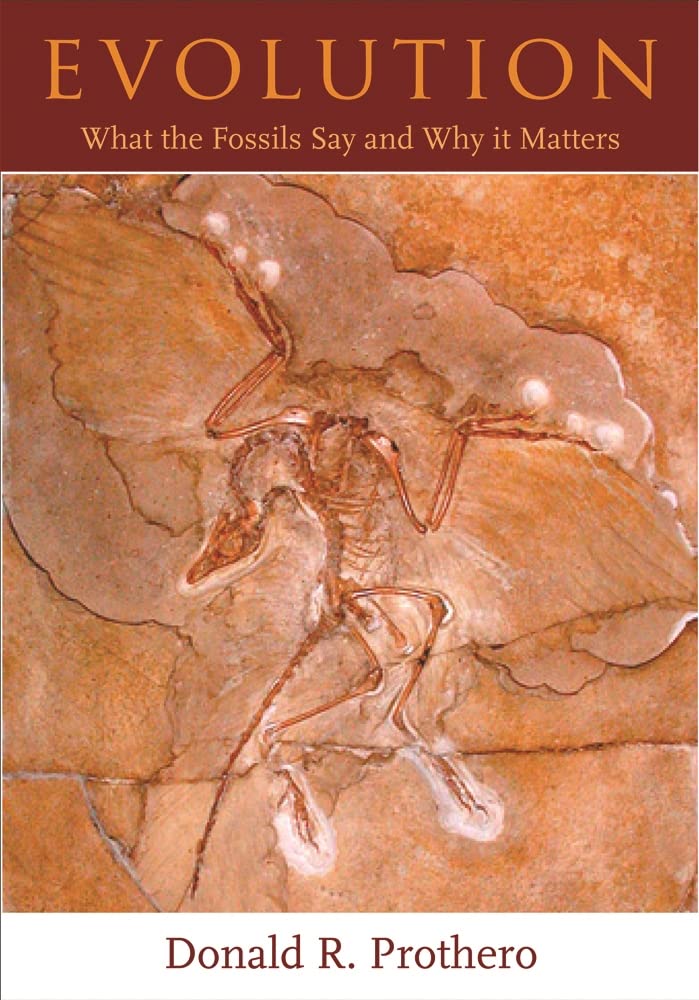
Biology
Evolution: What the Fossils Say and Why It Matters by Donald R. Prothero
Biology
From Taxonomy to Phylogenetics – Life and Work of Willi Hennig

Biology
The Marine Biology of the South China Sea

Biology
Genetics Meets Metabolomics: from Experiment to Systems Biology
Biology
The Elements of Natural or Experimental Philosophy: 2
Biology