
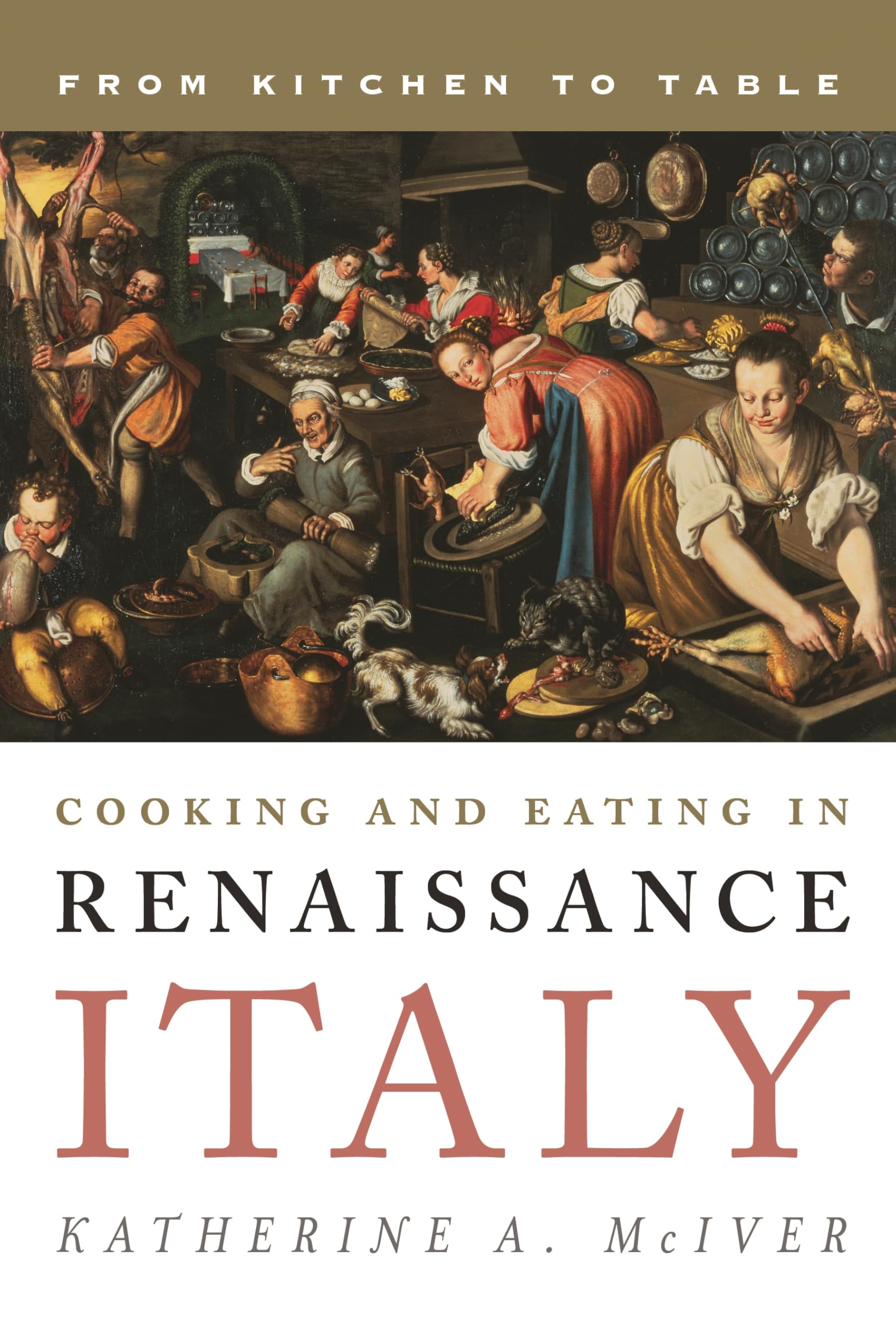
Cooking and Eating in Renaissance Italy: From Kitchen to Table by Katherine A. McIver – A Journey into Renaissance Cuisi
Inclusive of all applicable taxes. FREE shipping on all orders.
Available Offers
- 🚚Free Delivery — Free shipping on all orders
- 💵Cash on Delivery — Pay when your order arrives
- ↩️15-Day Easy Returns — Hassle-free return policy
- 🔒Cash on Delivery — Pay safely when your order arrives
Check Delivery
Product Description
Introduction
Cooking and Eating in Renaissance Italy: From Kitchen to Table by Katherine A. McIver offers a captivating journey into the heart of Italian domestic life during one of history's most creative periods. This meticulously researched hardcover volume transports readers beyond the famous art and architecture of the Renaissance to the bustling kitchens and elegant dining rooms where daily meals and grand banquets were prepared and enjoyed. For Indian readers passionate about culinary history, food culture, or Renaissance studies, this book provides a rare glimpse into the social rituals, architectural innovations, and gastronomic traditions that shaped Italian identity. McIver’s work is not merely a cookbook but a cultural history that reveals how food, space, and society intertwined in fifteenth- and sixteenth-century Italy.
Book Overview
Published by Rowman & Littlefield Publishers, this hardcover edition brings together architectural history, material culture, and culinary scholarship. Katherine A. McIver examines the design and location of kitchens, food storage areas, and dining spaces in both middle-class urban homes and sprawling country estates. She explores the orchestration of dining as a theatrical experience, the tools and equipment used for preparation, and the role of renowned food scholars of the era. The book bridges the gap between the private domestic sphere and the public spectacle of Renaissance hospitality, making it an essential resource for anyone interested in the everyday life behind the masterpieces of Michelangelo and Leonardo da Vinci.
Key Highlights
- Comprehensive Analysis: Covers kitchen design, equipment, and storage in both modest homes and grand villas.
- Cultural Context: Connects dining practices to broader Renaissance social hierarchies and gender roles.
- Architectural Focus: Examines how kitchen and dining room layouts evolved during the period.
- Primary Sources: Draws from contemporary cookbooks, household inventories, and architectural treatises.
- Illustrative Detail: Includes descriptions of utensils, hearths, and serving vessels used across social classes.
Inside the Book
Readers will discover the hidden world behind Renaissance feasts. McIver takes you inside the kitchen—often a separate building in wealthy households—where fires roared, spices were ground, and elaborate dishes took shape. She describes the pantry, the cellar, and the credenza where food was stored and displayed. The dining room, or sala, is presented as a stage for social performance, with seating arrangements, tableware, and service rituals reflecting the host’s status. The book also delves into the sensory experience of dining: the aromas, tastes, and visual presentations that made meals memorable. McIver’s narrative brings to life the bustling activity of servants, the expertise of cooks, and the expectations of guests, offering a vivid tableau of Renaissance domesticity.
Key Topics
- Kitchen Architecture: Layout, ventilation, and water sources in Renaissance homes.
- Cooking Techniques: Methods for roasting, boiling, baking, and preserving food.
- Dining Etiquette: Rules of service, seating hierarchies, and table manners.
- Food and Society: How meals reflected wealth, power, and regional identity.
- Material Culture: Ceramics, glassware, cutlery, and linens used at table.
- Feasts and Banquets: The planning and execution of grand public dinners.
Reader Benefits
This book enriches your understanding of history through the lens of food. It offers practical insights into how Renaissance kitchens were organized, which can inspire modern culinary spaces. For students of history, art, or architecture, it provides a concrete link between abstract cultural movements and everyday life. Cooks and food enthusiasts will appreciate the detailed descriptions of ingredients and preparation methods, while travellers to Italy will gain deeper appreciation for the historical roots of Italian cuisine. The book also challenges modern assumptions about domestic labour, showing how cooking and dining were central to Renaissance identity and power dynamics.
Learning Outcomes
- Understand the relationship between kitchen design and social status in Renaissance Italy.
- Identify key ingredients, tools, and cooking techniques used in the period.
- Analyse the role of dining in reinforcing family honour and political alliances.
- Recognize the contributions of forgotten food scholars and household managers.
- Compare Renaissance domestic practices with contemporary Indian culinary traditions.
Who Should Read
This book is ideal for students and scholars of Renaissance history, food studies, and material culture. It will also appeal to chefs, culinary historians, and home cooks curious about the origins of Italian cuisine. Architecture enthusiasts and interior designers seeking historical inspiration will find the detailed descriptions of kitchen and dining spaces invaluable. Indian readers with an interest in global food traditions or the cultural history of feasting will discover fascinating parallels and contrasts with their own heritage. Additionally, anyone planning a trip to Italy and wanting to understand the historical context of its regional foods will benefit from McIver’s research.
About the Author
Katherine A. McIver is a respected scholar of Renaissance art and architecture, with a focus on domestic spaces and material culture. Her research has appeared in numerous academic journals and books, and she has contributed to major exhibitions on Renaissance life. McIver’s expertise lies in uncovering the stories of everyday objects and spaces, making her a trusted guide through the kitchens and dining rooms of the past. Her work bridges art history, social history, and culinary studies, offering a multidisciplinary perspective that enriches our understanding of the Renaissance world.
About the Publisher
Rowman & Littlefield Publishers is a distinguished academic and trade publisher known for producing high-quality works in the humanities and social sciences. With a strong commitment to scholarly excellence, they bring authoritative texts to readers worldwide. This hardcover edition reflects their dedication to durable binding and clear presentation, ensuring that McIver’s research reaches students, libraries, and general readers with the seriousness it deserves. For Indian readers, Rowman & Littlefield’s global distribution ensures access to cutting-edge scholarship on European cultural history.
Conclusion
Cooking and Eating in Renaissance Italy: From Kitchen to Table is more than a history of food—it is a window into the soul of an era. Katherine A. McIver’s meticulous research and engaging narrative reveal how the preparation and consumption of meals shaped Renaissance society. Whether you are a student, a chef, or a history lover, this book will transform the way you think about the spaces where we cook and eat. Order your hardcover copy today from Bookshops.in and bring the flavours of Renaissance Italy into your library.
Quick Summary
Cooking and Eating in Renaissance Italy: From Kitchen to Table by Katherine A. McIver offers a captivating exploration of food culture in Renaissance Italy. This scholarly work takes readers into the kitchens and dining rooms of the period, revealing how meals were prepared, stored, and consumed. McIver examines the design and location of kitchens, the equipment used, and the theatrical experience of dining—from everyday family meals to extravagant banquets. Drawing on contemporary food and architectural scholars, the book bridges material culture and social history. It is ideal for students of Renaissance history, food studies, and architecture, as well as general readers fascinated by Italian culture. By purchasing from Bookshops.in, Indian readers receive a premium hardcover edition with trusted service and fast delivery. This book enriches understanding of domestic life in one of history's most creative eras.
Book Highlights
Book Specifications
| ISBN-13 | 9781442227187 |
| ISBN-10 | 1442227184 |
| Publisher | Rowman & Littlefield Pub Inc |
| Language | English |
| Dimensions | 15.24 x 1.57 x 22.86 cm |
| Weight | 454 g |
| Category | World › Civilization & Culture |
| Genre | History |
| Original Language | English |
Frequently Asked Questions
What is Cooking and Eating in Renaissance Italy about?
Who is the author of this book?
Does the book cover both rich and poor households?
What time period does the book focus on?
Are there illustrations or images in the book?
Can I use this book for a university course?
What makes this book different from other food history books?
Does the book include recipes?
What is the binding type of this book?
Where can I buy this book in India?
Is this book part of a series?
Why is the price ₹4983?
Readers Also Search For
Related Products
View All
History
The Information Revolution: Transforming the World Through Technology (World History)

History
Human Nature and the French Revolution: From the Enlightenment to the Napoleonic Code: 3 (Polygons: Cultural Diversities and Intersections, 3)
History
The Unmaking of Home in Contemporary Art (Cultural Spaces)

History
Handbook to Life in Medieval and Early Modern Japan | by William E. Deal | Oxford University Press | by William E. Deal | Oxford University Press | by William E. Deal | Oxford University Press | by William E. Deal | Oxford University Press | by William E. Deal | Oxford University Press | by William E. Deal | Oxford University Press | by William E. Deal | Oxford University Press | by William E. Deal | Oxford University Press | by William E. Deal | Oxford University Press | by William E. Deal | Ox

History
The Narrators of Barbarian History (A.D. 550-800) | by Walter Goffart | University of Notre Dame Press | by Walter Goffart | University of Notre Dame Press | by Walter Goffart | University of Notre Dame Press | by Walter Goffart | University of Notre Dame Press | by Walter Goffart | University of Notre Dame Press | by Walter Goffart | University of Notre Dame Press | by Walter Goffart | University of Notre Dame Press | by Walter Goffart | University of Notre Dame Press | by Walter Goffart | Univ

History