
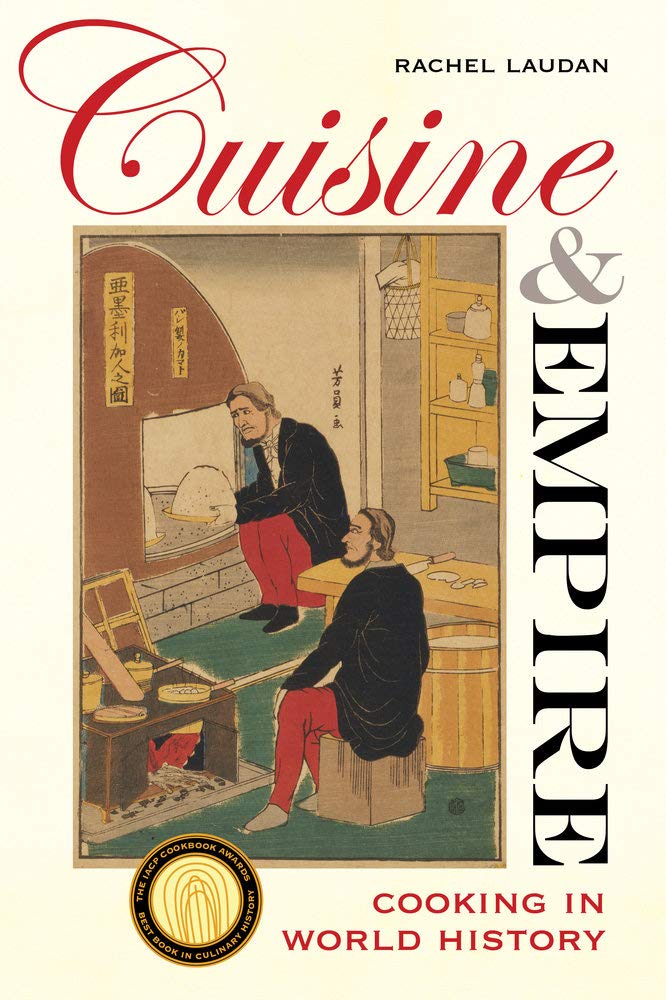
Cuisine and Empire: Cooking in World History by Rachel Laudan – A Global Journey Through Culinary Traditions and Food Em
Inclusive of all applicable taxes. FREE shipping on all orders.
Available Offers
- 🚚Free Delivery — Free shipping on all orders
- 💵Cash on Delivery — Pay when your order arrives
- ↩️15-Day Easy Returns — Hassle-free return policy
- 🔒Cash on Delivery — Pay safely when your order arrives
Check Delivery
Product Description
Introduction
In Cuisine and Empire: Cooking in World History, Rachel Laudan offers a sweeping, original narrative that transforms how we understand the food on our plates. Moving beyond recipes and regional dishes, this book reveals cuisine as a powerful force in shaping human civilization—from the first mastery of grain cooking twenty thousand years ago to the globalised culinary landscape of today. For Indian readers and students of history, this work provides a fresh lens to view the subcontinent’s own rich food traditions within a worldwide story of empire, trade, and cultural exchange.
Book Overview
Rachel Laudan, a renowned historian of food, argues that cuisines are not accidental collections of dishes but deliberate constructions—shaped by beliefs about health, the economy, politics, society, and the divine. She traces how a handful of these cuisines, adopted by empires, came to dominate the globe. The book follows merchants, missionaries, and soldiers who carried culinary ideas across mountains, oceans, and deserts. Laudan’s global perspective challenges the usual nation-centred food histories, showing how cooking transforms raw farm products into meaningful meals. This is not just a history of food; it is a history of the world through its kitchens.
Key Highlights
- Global Scope: Covers cuisines from ancient Mesopotamia, China, India, and the Mediterranean to modern industrial food systems.
- Culinary Philosophy: Explains how major shifts in beliefs about health, religion, and politics sparked the rise of new cuisines.
- Empire and Exchange: Reveals how imperial expansion spread ingredients, techniques, and tastes across continents.
- Underlying Simplicity: Demystifies the apparent chaos of world cuisines by revealing a single culinary family tree.
- Fresh Perspective: Treats cuisine as a human invention—like language or architecture—rather than a natural phenomenon.
Inside the Book
Inside this hardcover volume, readers will find a meticulously researched narrative that moves from the earliest grain-based cooking to the elaborate court cuisines of ancient empires, through the spice-fuelled trade routes of the medieval world, and into the age of colonialism and modern globalisation. Laudan examines how the cuisines of imperial centres—such as Rome, Persia, China, and later Europe—absorbed and transformed local traditions. She pays close attention to the role of religious beliefs, from Hindu dietary laws to Islamic halal and Christian fasting practices, in shaping culinary systems. The book also explores how the Industrial Revolution and modern science created entirely new ways of producing and thinking about food.
Key Topics
- The origins of cooking and the mastery of grain
- The rise of court cuisines in ancient empires
- Spice routes and the global exchange of flavours
- Cuisine as a marker of social hierarchy and identity
- Colonialism and the transformation of local food systems
- The impact of modern agriculture and food processing
- Contemporary debates about health, sustainability, and culinary authenticity
Reader Benefits
This book offers Indian readers a deeper understanding of how historical forces—trade with the Roman world, the spread of Buddhism and Islam, British colonial rule—have shaped India’s diverse culinary traditions. It helps students and enthusiasts connect local food practices to global patterns. By emphasising the constructed nature of cuisine, the book empowers readers to see cooking not as a fixed tradition but as a dynamic, creative act. It also provides valuable context for contemporary issues such as food nationalism, the slow food movement, and the politics of authenticity.
Learning Outcomes
- Understand the major historical phases in the development of world cuisines.
- Analyse how political power and religious beliefs influence what people eat.
- Identify the key ingredients, techniques, and philosophies that define major culinary traditions.
- Trace the global movement of foods such as wheat, rice, spices, and sugar.
- Critically evaluate modern food trends in light of deep historical patterns.
Who Should Read
Cuisine and Empire is ideal for history and food studies students at Indian universities, culinary professionals seeking a broader perspective, and general readers passionate about understanding the cultural significance of what they eat. It is especially valuable for those interested in world history, anthropology, sociology, and the interconnections between food and power. Anyone who has ever wondered why we cook the way we do—and how our meals connect to ancient empires—will find this book enlightening.
About the Author
Rachel Laudan is a prize-winning historian of food and a former professor at the University of Hawaii and the University of Pittsburgh. She is the author of several influential works, including The Food of Paradise: Exploring Hawaii’s Culinary Heritage. Her research focuses on the global history of cuisine, and she has written extensively on topics ranging from ancient Roman cooking to modern food science. Laudan’s work is known for its clarity, depth, and ability to connect scholarly insights to everyday eating.
About the Publisher
University of California Press is one of the most distinguished academic publishers in the world, known for producing authoritative works in history, cultural studies, and the sciences. Their books are widely used in universities across India and globally. This hardcover edition reflects the press’s commitment to quality scholarship and durable production, making it a valuable addition to any library.
Conclusion
Cuisine and Empire: Cooking in World History is a landmark work that redefines the way we think about food and its role in human affairs. Rachel Laudan’s engaging narrative, global vision, and deep research make this book an essential read for anyone curious about the historical forces that have shaped what we eat today. Whether you are a student, a chef, or simply a lover of good food, this book will change the way you see your kitchen. Order your copy from Bookshops.in and embark on a delicious journey through world history.
Quick Summary
Cuisine and Empire: Cooking in World History by Rachel Laudan is a groundbreaking exploration of how food has shaped human civilization over the past 20,000 years. The book traces the evolution of cuisines from the mastery of grain cooking to the complex global food systems of today. Laudan argues that culinary philosophies—beliefs about health, the economy, politics, society, and the gods—have driven the creation of new cuisines, with a select few becoming the cuisines of empires that dominated the globe. Through the movements of merchants, missionaries, and military forces, these cuisines crossed mountains, oceans, and political frontiers. This book is ideal for Indian students of history and food studies, as well as general readers curious about the roots of their own culinary traditions. It offers a unique lens to understand how Indian cuisine connects to world history. By purchasing from Bookshops.in, you support a trusted Indian bookstore that delivers authentic hardcover editions across the country. Readers will come away with a richer appreciation of the global forces that have shaped every meal we eat today.
Book Highlights
Book Specifications
| ISBN-13 | 9780520266452 |
| ISBN-10 | 0520266455 |
| Publisher | Univ of California Pr |
| Language | English |
| Dimensions | 15.24 x 3.56 x 22.86 cm |
| Weight | 794 g |
| Category | World › Civilization & Culture |
| Genre | Non-Fiction |
| Original Language | English |
Frequently Asked Questions
What is Cuisine and Empire about?
Who is the author of Cuisine and Empire?
Is this book suitable for Indian readers?
What is the binding of this book?
What is the ISBN?
What is the price in India?
What is the book's rating?
Does the book cover Indian cuisine?
Is this book easy to read for non-academics?
What topics does the book cover?
Where can I buy this book in India?
Does the book include recipes?
Readers Also Search For
Related Products
View All
History
The Information Revolution: Transforming the World Through Technology (World History)
History
Human Nature and the French Revolution: From the Enlightenment to the Napoleonic Code: 3 (Polygons: Cultural Diversities and Intersections, 3)
History
The Unmaking of Home in Contemporary Art (Cultural Spaces)

History
Handbook to Life in Medieval and Early Modern Japan | by William E. Deal | Oxford University Press | by William E. Deal | Oxford University Press | by William E. Deal | Oxford University Press | by William E. Deal | Oxford University Press | by William E. Deal | Oxford University Press | by William E. Deal | Oxford University Press | by William E. Deal | Oxford University Press | by William E. Deal | Oxford University Press | by William E. Deal | Oxford University Press | by William E. Deal | Ox

History
The Narrators of Barbarian History (A.D. 550-800) | by Walter Goffart | University of Notre Dame Press | by Walter Goffart | University of Notre Dame Press | by Walter Goffart | University of Notre Dame Press | by Walter Goffart | University of Notre Dame Press | by Walter Goffart | University of Notre Dame Press | by Walter Goffart | University of Notre Dame Press | by Walter Goffart | University of Notre Dame Press | by Walter Goffart | University of Notre Dame Press | by Walter Goffart | Univ
History