
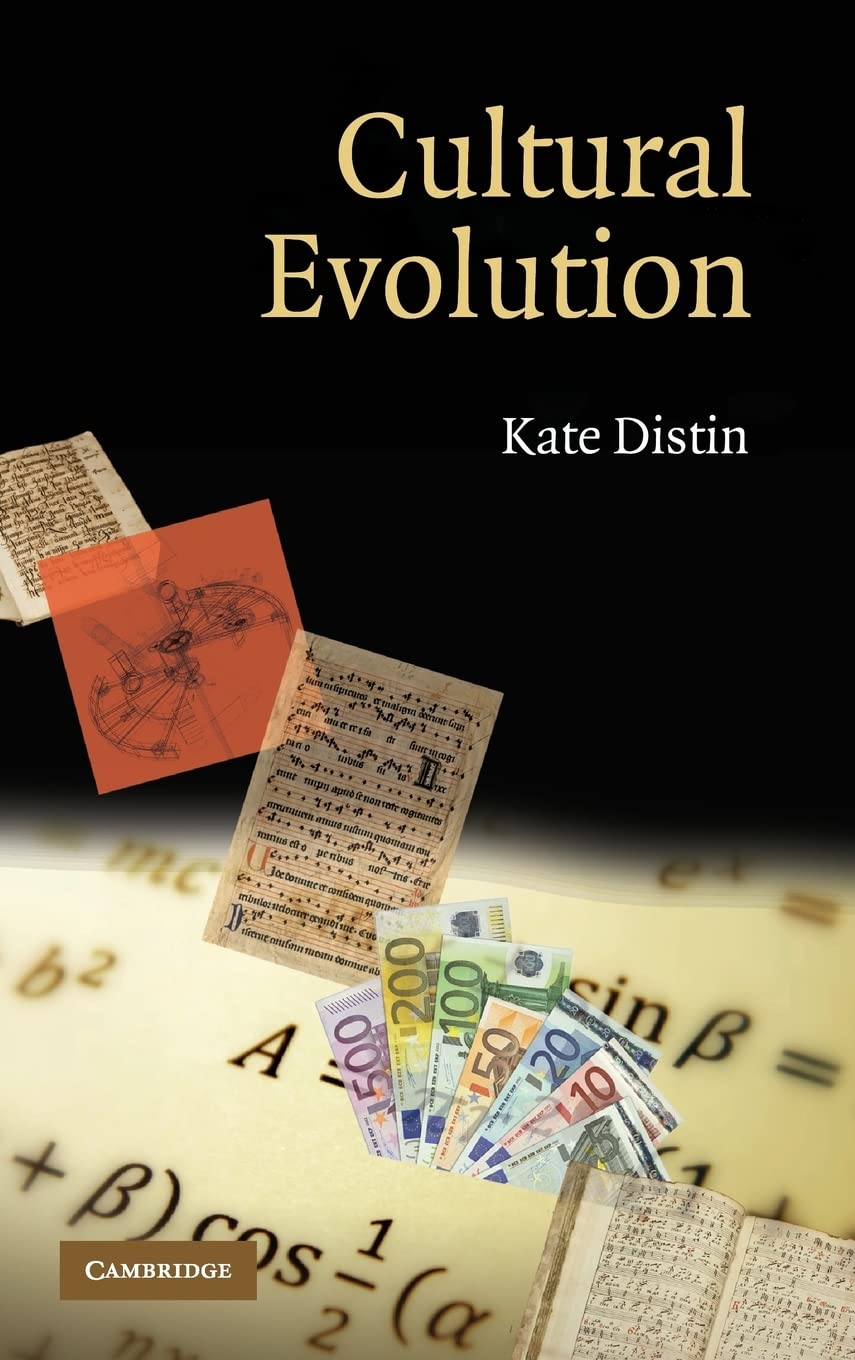
Cultural Evolution: Understanding Human Culture Through Language and Metarepresentation by Kate Distin – A Cambridge Uni
Inclusive of all applicable taxes. FREE shipping on all orders.
Available Offers
- 🚚Free Delivery — Free shipping on all orders
- 💵Cash on Delivery — Pay when your order arrives
- ↩️15-Day Easy Returns — Hassle-free return policy
- 🔒Cash on Delivery — Pay safely when your order arrives
Check Delivery
Product Description
Introduction
What makes human culture so uniquely complex and diverse? How do ideas, customs, and innovations spread and transform across generations? In Cultural Evolution, Kate Distin offers a groundbreaking exploration of these questions, presenting a compelling theory that reimagines culture as an evolving system. This book bridges the gap between biology and the humanities, providing Indian readers—whether students, academics, or curious minds—with a fresh lens to understand the dynamic fabric of human societies.
Book Overview
Cultural Evolution is a thought-provoking work published by Cambridge University Press. Distin argues that culture evolves through a mechanism similar to biological evolution, but with a crucial twist: the role of language. She proposes that humans share information not only through natural languages (spoken or signed) but also through artefactual languages like writing, musical notation, and other human-made media. These languages act as vehicles for transmitting variations in cultural information, driving the evolutionary process. The book delves into how our capacity for metarepresentation—thinking about how we think—accelerates cultural evolution, freeing ideas from the constraints of any single language. This work is essential for anyone seeking a deeper understanding of cultural complexity and diversity.
Key Highlights
- Original Theory: Presents a novel framework for cultural evolution, distinct from biological evolution yet parallel in its mechanisms.
- Language as a Catalyst: Explores how both natural and artefactual languages enable the transmission and variation of cultural information.
- Metarepresentation: Highlights the human ability to reflect on our own thinking, which accelerates cultural change.
- Interdisciplinary Approach: Connects insights from economics, linguistics, developmental biology, and philosophy to build a cohesive argument.
- Clear and Accessible: Written in a style that balances academic rigor with readability, making it suitable for both specialists and general readers.
Inside the Book
Distin takes readers on a structured journey, beginning with the foundations of cultural evolution and gradually building her case. The book examines how languages—both natural and artefactual—serve as the primary mechanism for cultural inheritance. She uses examples from diverse fields to illustrate how variations in cultural information are selected, retained, and transmitted. The concept of metarepresentation is explored in depth, showing how it allows humans to transcend the limitations of individual languages, fostering innovation and complexity. The later chapters apply the theory to real-world phenomena, including economic systems, linguistic change, and developmental biology, demonstrating its explanatory power.
Key Topics
- Cultural Evolution Theory: Core principles and how they differ from biological evolution.
- Natural and Artefactual Languages: The role of spoken, signed, and written media in cultural transmission.
- Metarepresentation: Thinking about thought and its impact on cultural acceleration.
- Information and Resources: How cultural information is received, varied, and passed on.
- Interdisciplinary Connections: Links to economics, linguistics, and developmental biology.
- Human Diversity: Explaining the complexity of global cultures through an evolutionary lens.
Reader Benefits
- Deepen Understanding: Gain a robust framework for analysing how cultures change and persist.
- Bridge Disciplines: Connect insights from science, social science, and humanities in one cohesive narrative.
- Enhance Critical Thinking: Develop a metarepresentational perspective that sharpens your own reasoning.
- Practical Relevance: Apply evolutionary concepts to contemporary issues like globalisation, language preservation, and cultural innovation.
- Academic Edge: Ideal for students and researchers looking for a fresh theoretical foundation in cultural studies.
Learning Outcomes
After reading this book, you will be able to: explain the mechanisms of cultural evolution and distinguish them from biological evolution; identify how natural and artefactual languages facilitate cultural transmission; analyse the role of metarepresentation in accelerating cultural change; apply the theory to real-world examples from economics, linguistics, and biology; and critically evaluate existing models of cultural development. You will also gain a deeper appreciation for the intricate processes that shape human societies, from ancient traditions to modern innovations.
Who Should Read
- Students and Academics: Those studying anthropology, sociology, linguistics, evolutionary biology, or philosophy will find this book invaluable.
- Researchers: Scholars seeking an interdisciplinary framework for cultural studies will benefit from Distin’s original insights.
- Curious Readers: Anyone fascinated by why cultures evolve the way they do and how ideas spread across generations.
- Indian Readers: With India’s rich linguistic and cultural diversity, this book offers a unique perspective on how traditions and languages evolve in a rapidly changing world.
About the Author
Kate Distin is a respected philosopher and author known for her work on cultural evolution and the philosophy of language. She has a background in both philosophy and science, which enables her to bridge the gap between these fields with clarity and insight. Distin’s previous work, The Selfish Meme, established her as a leading voice in the study of cultural transmission. In Cultural Evolution, she builds on her earlier ideas, offering a refined and comprehensive theory that has been praised by scholars worldwide. Her writing is characterised by logical rigour and a talent for making complex ideas accessible.
About the Publisher
Cambridge University Press is one of the world’s oldest and most prestigious academic publishers, with a history dating back to 1534. Known for its commitment to scholarly excellence, Cambridge publishes works that push the boundaries of knowledge across disciplines. This book is part of their distinguished catalogue, ensuring high editorial standards and a lasting impact on the academic community. For Indian readers, Cambridge University Press titles are widely respected in universities and research institutions, making this a reliable addition to any library.
Conclusion
Cultural Evolution is not just a book—it is a paradigm shift in how we understand the forces that shape human culture. Kate Distin’s elegant theory, grounded in the power of language and metarepresentation, offers readers a powerful toolkit for decoding the complexity of our social world. Whether you are a student, a researcher, or a lifelong learner, this hardcover edition from Cambridge University Press will enrich your perspective and spark new ideas. Dive into this intellectual journey and discover how culture, like life itself, evolves in fascinating and unexpected ways.
Quick Summary
Cultural Evolution by Kate Distin is a groundbreaking academic work that proposes a comprehensive theory of how human culture evolves. The book argues that culture evolves through the transmission of information via natural languages (spoken or signed) and artefactual languages (such as writing and musical notation). Distin introduces the concept of metarepresentation—the human ability to think about thinking—as a key accelerator of cultural change, freeing cultural information from the limitations of individual languages. This book is ideal for students and researchers in anthropology, cognitive science, philosophy, and evolutionary biology. Readers will gain a deep understanding of the mechanisms behind cultural development and the role of language in shaping societies. Published by Cambridge University Press, this hardcover edition is a valuable addition to any academic library. By purchasing from Bookshops.in, Indian readers receive authentic copies with prompt service and competitive prices.
Book Highlights
Book Specifications
| ISBN-13 | 9780521769013 |
| ISBN-10 | 0521769019 |
| Publisher | Cambridge University Press |
| Language | English |
| Dimensions | 15.24 x 1.91 x 22.86 cm |
| Weight | 520 g |
| Category | Language, Linguistics & Writing › Linguistics |
| Genre | Nonfiction |
| Original Language | English |
Frequently Asked Questions
What is the main thesis of Cultural Evolution?
Who is Kate Distin?
Is this book suitable for undergraduate students?
Does the book cover memetics?
What are artefactual languages?
How does metarepresentation accelerate cultural evolution?
What disciplines does this book relate to?
Can I use this book for a research paper?
Does the book include case studies?
Is the book available in hardcover?
What is the ISBN of this book?
Why buy from Bookshops.in?
Readers Also Search For
Customers Also Bought

Journalism
Rock Critic Law (English, Michael Azerrad)
Journalism
What Is Sustainable Journalism?: Integrating the Environmental, Social, and Economic Challenges of Journalism

Journalism
The Power of Sports: Media and Spectacle in American Culture: 23 (Postmillennial Pop)
Journalism
Research Guide to People's Daily Editorials, 1949-1975

Vocabulary
Prince Edward Island Sayings (Heritage)

Vocabulary
Grammar Survival for Primary Teachers: A Practical Toolkit by Jo Shackleton
Related Products
View All
Language, Linguistics & Writing
The Language of Turn and Sequence | by Cecilia E. Ford | Barbara A. Fox | Sandra A. Thompson | Oxford University Press | by Cecilia E. Ford | Barbara A. Fox | Sandra A. Thompson | Oxford University Press | by Cecilia E. Ford | Barbara A. Fox | Sandra A. Thompson | Oxford University Press | by Cecilia E. Ford | Barbara A. Fox | Sandra A. Thompson | Oxford University Press | by Cecilia E. Ford | Barbara A. Fox | Sandra A. Thompson | Oxford University Press | by Cecilia E. Ford | Barbara A. Fox | S

Language, Linguistics & Writing
Handbook of Color Psychology by Andrew J. Elliot
Language, Linguistics & Writing
The Language of Postcolonial Literatures (English, Ismail S. Talib)

Language, Linguistics & Writing
The Other Side of Language | by Gemma Corradi Fiumara | Routledge | by Gemma Corradi Fiumara | Routledge | by Gemma Corradi Fiumara | Routledge | by Gemma Corradi Fiumara | Routledge | by Gemma Corradi Fiumara | Routledge | by Gemma Corradi Fiumara | Routledge | by Gemma Corradi Fiumara | Routledge | by Gemma Corradi Fiumara | Routledge | by Gemma Corradi Fiumara | Routledge | by Gemma Corradi Fiumara | Routledge | by Gemma Corradi Fiumara | Routledge | by Gemma Corradi Fiumara | Routledge | by
Language, Linguistics & Writing
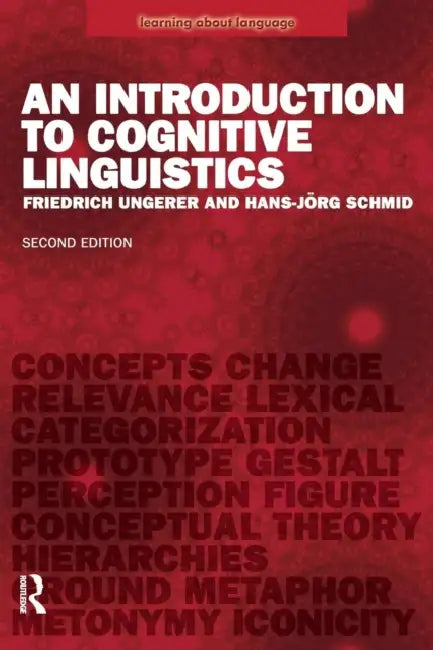
An Introduction to Cognitive Linguistics | by Friedrich Ungerer | Hans-Jorg Schmid | Routledge | by Friedrich Ungerer | Hans-Jorg Schmid | Routledge | by Friedrich Ungerer | Hans-Jorg Schmid | Routledge | by Friedrich Ungerer | Hans-Jorg Schmid | Routledge | by Friedrich Ungerer | Hans-Jorg Schmid | Routledge | by Friedrich Ungerer | Hans-Jorg Schmid | Routledge | by Friedrich Ungerer | Hans-Jorg Schmid | Routledge | by Friedrich Ungerer | Hans-Jorg Schmid | Routledge | by Friedrich Ungerer | Ha

Language, Linguistics & Writing