
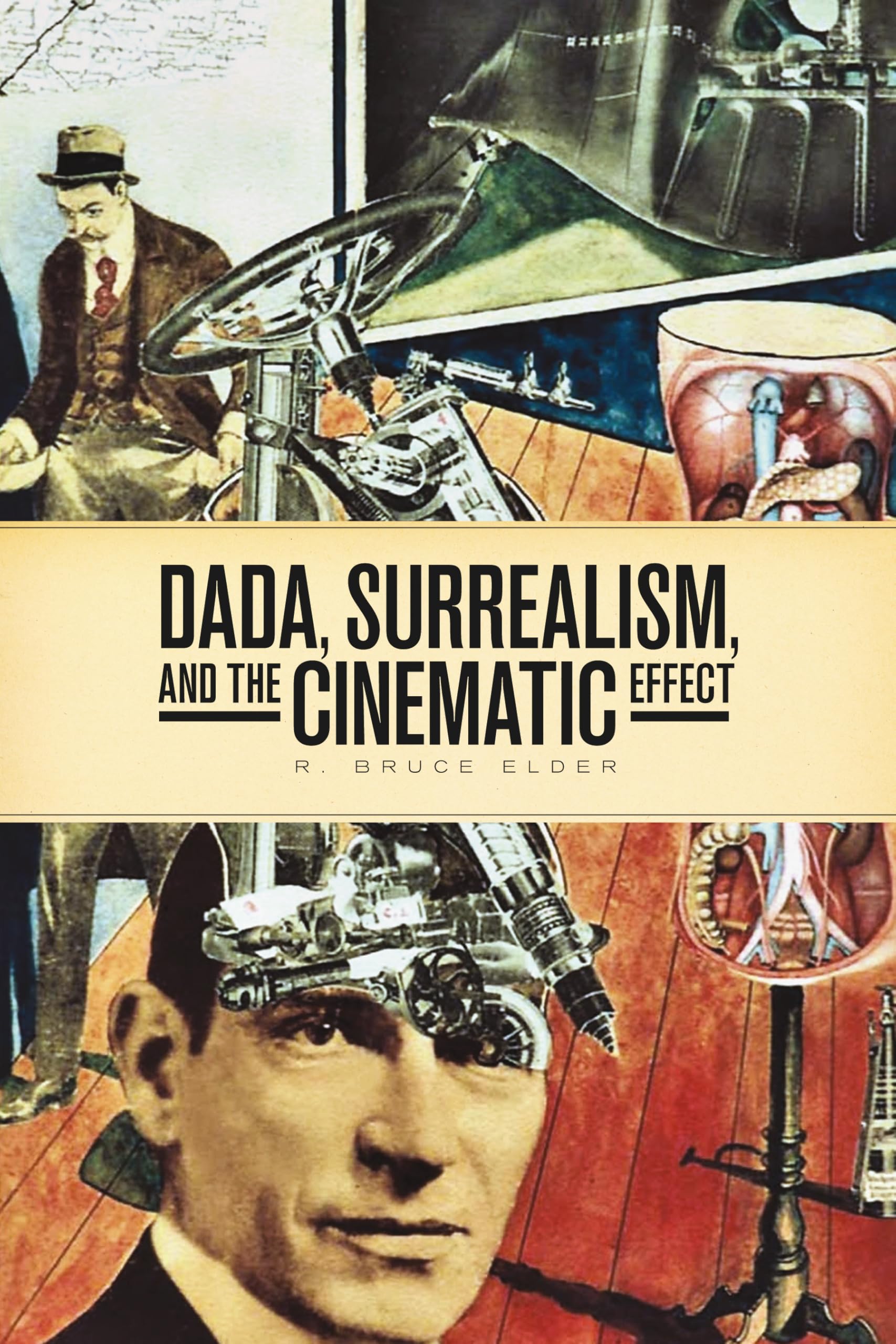
Dada, Surrealism, and the Cinematic Effect by R. Bruce Elder – Avant-Garde Art and Film Theory
Inclusive of all applicable taxes. FREE shipping on all orders.
Available Offers
- 🚚Free Delivery — Free shipping on all orders
- 💵Cash on Delivery — Pay when your order arrives
- ↩️15-Day Easy Returns — Hassle-free return policy
- 🔒Cash on Delivery — Pay safely when your order arrives
Check Delivery
Product Description
Introduction
In the early decades of the twentieth century, the cinema emerged not merely as a popular entertainment but as a radical artistic force that reshaped how thinkers and creators understood modern life. Dada, Surrealism, and the Cinematic Effect by R. Bruce Elder offers a deep, scholarly exploration of how avant-garde movements—particularly Dada and Surrealism—embraced the cinema as a model for reimagining art itself. This hardbound edition, published by Wilfrid Laurier University Press, is an indispensable resource for students, scholars, and cinephiles in India who wish to trace the intellectual and aesthetic currents that connected early film to revolutionary art practices.
Book Overview
This meticulously researched work challenges the conventional notion that early writers on film were troubled by its lowbrow origins. Instead, R. Bruce Elder reveals a powerful counter-narrative: many vanguard artists and theorists celebrated the cinema as the most vital art form of the modern age. The book examines how Dadaists and Surrealists, along with other avant-garde movements, saw in film a dynamic medium that could break free from traditional artistic constraints, embodying the speed, fragmentation, and energy of contemporary urban life. Through a rich tapestry of philosophical arguments and historical analysis, Elder demonstrates that the cinematic effect became a conceptual core for rethinking painting, poetry, photography, and performance.
Key Highlights
- Original Thesis: Challenges the idea that early film theorists were anxious about cinema's popular roots, presenting instead a celebratory reception among avant-garde artists.
- Interdisciplinary Approach: Blends art theory, philosophy, cultural history, and film studies to provide a holistic understanding of early twentieth-century aesthetics.
- Focus on Dada and Surrealism: Offers detailed analysis of how these movements used cinema as a model for radical artistic experimentation.
- Scholarly Rigour: Backed by extensive primary sources, including writings by artists, critics, and philosophers of the era.
- Hardcover Edition: A durable, premium binding suitable for academic libraries and personal collections.
Inside the Book
The volume is structured to guide readers through the intellectual landscape of the early twentieth century. It begins with an examination of the philosophical debates surrounding the cinema's emergence, then moves into case studies of key Dada and Surrealist figures such as Tristan Tzara, André Breton, and Luis Buñuel. Elder also explores lesser-known but influential writers and artists who contributed to the discourse. Each chapter weaves together close readings of manifestos, artworks, and films, showing how the cinematic effect—its montage, movement, and illusion—inspired new ways of seeing and creating. The book concludes by reflecting on the lasting impact of these ideas on contemporary art and film theory.
Key Topics
- The reception of cinema among early twentieth-century avant-garde movements
- Dada's embrace of film as a tool for chaos and anti-art
- Surrealist theories of the unconscious and cinematic dream logic
- Montage as a model for artistic fragmentation and synthesis
- The influence of film on painting, poetry, and photography
- Philosophical undercurrents: Bergson, Nietzsche, and the modern condition
- The cinema as a reflection of urban modernity and technological change
Reader Benefits
- Deepen Understanding: Gain a nuanced perspective on the origins of modern art and cinema.
- Academic Edge: Ideal for research papers, dissertations, and coursework in art history, film studies, and cultural theory.
- Critical Thinking: Engage with a provocative thesis that challenges mainstream historiography.
- Cultural Context: Explore how Indian and global modernisms might relate to these early avant-garde ideas.
- Premium Quality: A hardcover edition that will last for years of study and reference.
Learning Outcomes
By reading this book, you will be able to articulate the complex relationship between early cinema and avant-garde art movements. You will learn to identify how Dada and Surrealist artists used cinematic techniques to break with tradition, and you will understand the philosophical debates that shaped early film theory. Additionally, you will develop skills in analyzing primary texts and artworks from a critical-historical perspective, making connections between visual culture, philosophy, and modernity. This knowledge is particularly valuable for students preparing for competitive exams or advanced research in the humanities.
Who Should Read
- Students of film studies, art history, and cultural studies at Indian universities
- Academics and researchers specializing in modernism, avant-garde art, or early cinema
- Artists and filmmakers interested in the historical roots of experimental practice
- Curators and museum professionals looking for contextual depth in exhibition planning
- General readers with a passion for the intellectual history of the twentieth century
About the Author
R. Bruce Elder is a distinguished scholar and professor emeritus at Ryerson University (now Toronto Metropolitan University), where he taught film and art history for decades. He is the author of numerous books on avant-garde cinema, including Harmony and Dissent: Film and Avant-Garde Art Movements in the Early Twentieth Century and A Body of Vision: Representations of the Body in Recent Film and Poetry. Elder's work is known for its rigorous interdisciplinary approach, combining philosophy, aesthetics, and detailed historical analysis. His research has been widely cited in film studies and art history circles globally.
About the Publisher
Wilfrid Laurier University Press (WLU Press) is a Canadian academic publisher based in Waterloo, Ontario. Known for its strong list in film studies, cultural theory, and the humanities, WLU Press has a reputation for producing high-quality scholarly works that push disciplinary boundaries. This hardcover edition reflects their commitment to durable, beautifully designed books that serve the academic community and serious general readers alike.
Conclusion
Dada, Surrealism, and the Cinematic Effect is more than a history of early film reception; it is a vital contribution to our understanding of how modernity itself was imagined through the lens of the cinema. For Indian readers, students, and scholars, this book opens up a fascinating dialogue between Western avant-garde movements and the broader questions of art, technology, and society. Whether you are studying for a degree, preparing a lecture, or simply exploring the roots of experimental filmmaking, this hardcover volume will be a treasured addition to your library. Order your copy today from Bookshops.in and dive into the revolutionary world where Dada, Surrealism, and the cinematic effect converge.
Quick Summary
Dada, Surrealism, and the Cinematic Effect by R. Bruce Elder reexamines the early intellectual reception of cinema, focusing on how avant-garde artists of the first decades of the 20th century embraced film as a vibrant modern art form. Contrary to the common notion that early writers were troubled by cinema's popular origins, Elder shows that Dadaists and Surrealists celebrated film for its dynamism and connection to contemporary life. Drawing on art theory, philosophy, and cultural criticism, the book explores how these artists sought to recast traditional media and saw cinema as the most important art for moderns. This hardcover edition is ideal for students and scholars of film studies, art history, and modernist culture. Readers will gain a fresh perspective on the relationship between avant-garde art and early cinema, learning how a positive strain of film reception influenced artistic practices. By purchasing from Bookshops.in, you support a premium Indian bookstore that values scholarly works and offers reliable service across the country.
Book Highlights
Book Specifications
| ISBN-13 | 9781771121996 |
| ISBN-10 | 1771121998 |
| Publisher | Wilfrid Laurier University Press |
| Language | English |
| Dimensions | 15.24 x 5.08 x 22.86 cm |
| Weight | 1 kg 20 g |
| Category | Arts, Film & Photography › Cinema & Broadcast |
| Genre | Film & Cinema |
| Original Language | English |
Frequently Asked Questions
What is the main argument of this book?
Who is the author R. Bruce Elder?
Is this book suitable for undergraduate students?
Does the book cover specific Dada or Surrealist films?
How does this book differ from other film history texts?
Is this a hardcover or paperback?
What is the ISBN-13?
Can I use this book for my research paper?
Does the book discuss other art movements besides Dada and Surrealism?
What is the price in INR?
Is this book available in English?
Why should I buy from Bookshops.in?
Readers Also Search For
Customers Also Bought
Art History
The Italian Renaissance in Art
Art History
Photovoltaic Design & Installation For Dummies | by Mayfield | ForDummies | by Mayfield | ForDummies | by Mayfield | ForDummies | by Mayfield | ForDummies | by Mayfield | ForDummies | by Mayfield | ForDummies | by Mayfield | ForDummies | by Mayfield | ForDummies | by Mayfield | ForDummies | by Mayfield | ForDummies | by Mayfield | ForDummies | by Mayfield | ForDummies | by Mayfield | ForDummies | by Mayfield | ForDummies | by Mayfield | ForDummies | by Mayfield | ForDummies | by Mayfield | ForDu
Art History
Designing School Systems for All Students (English, Robert J. Manley | Richard J. Hawkins)
Art History
Routledge Library Editions: Art and Culture in the Nineteenth Century
Art History
An Errant Design (English, S. H. Long)
Art History
Distributed System Design | by Jie Wu | CRC Press | by Jie Wu | CRC Press | by Jie Wu | CRC Press | by Jie Wu | CRC Press | by Jie Wu | CRC Press | by Jie Wu | CRC Press | by Jie Wu | CRC Press | by Jie Wu | CRC Press | by Jie Wu | CRC Press | by Jie Wu | CRC Press | by Jie Wu | CRC Press | by Jie Wu | CRC Press | by Jie Wu | CRC Press | by Jie Wu | CRC Press | by Jie Wu | CRC Press | by Jie Wu | CRC Press | by Jie Wu | CRC Press | by Jie Wu | CRC Press | by Jie Wu | CRC Press | by Jie Wu | CRC
Related Products
View All
Arts, Film & Photography
Stars of '90s Dance Pop: 29 Hitmakers Discuss Their Careers by James Arena
Arts, Film & Photography
Edgar Heap of Birds by Bill Anthes – Native American Art Study

Arts, Film & Photography
Movement, Text, Performance (Elements in Contemporary Performance Texts)
Arts, Film & Photography
Analyzing Art, Culture, and Design in the Digital Age (English, Gianluca Mura)
Arts, Film & Photography
From The Inside: A Backdrop to the Music of My Life
Arts, Film & Photography