
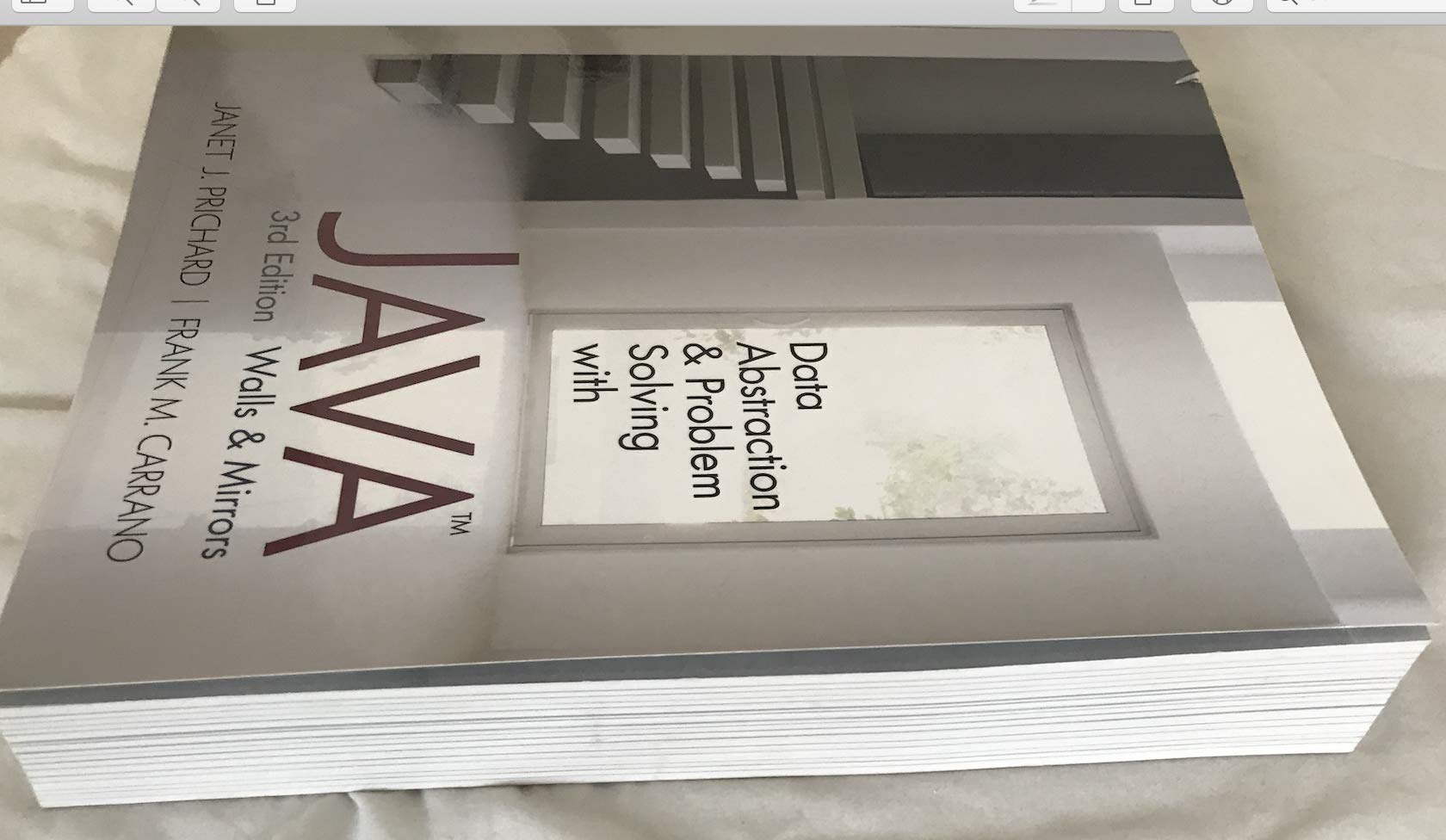
Data Abstraction & Problem Solving With Java: Walls and Mirrors by Janet Prichard – A Foundational Java Textbook for Ind
Inclusive of all applicable taxes. FREE shipping on all orders.
Available Offers
- 🚚Free Delivery — Free shipping on all orders
- 💵Cash on Delivery — Pay when your order arrives
- ↩️15-Day Easy Returns — Hassle-free return policy
- 🔒Cash on Delivery — Pay safely when your order arrives
Check Delivery
Product Description
Introduction
For students and professionals navigating the intricate world of Java programming, Data Abstraction & Problem Solving With Java: Walls and Mirrors by Janet Prichard stands as a definitive resource. Published by Pearson, this hardcover edition is meticulously designed to bridge the gap between theoretical concepts and practical application. The book's unique title draws from two powerful analogies: Walls represent data abstraction, shielding implementation details from the user, while Mirrors symbolize recursion, reflecting problems back onto simpler versions of themselves. This approach makes complex ideas accessible, especially for Indian readers pursuing computer science degrees or self-study in programming.
Book Overview
The Third Edition of this acclaimed textbook offers a comprehensive journey through Java's object-oriented paradigm. It systematically builds from foundational data structures to advanced problem-solving techniques. Unlike many programming guides that rush through theory, this volume emphasizes a deep understanding of abstraction layers, enabling learners to design robust, maintainable code. The content is tailored for classroom use and independent learning, with a strong focus on algorithm design, data encapsulation, and recursive thinking. Every chapter is structured to reinforce learning through clear explanations, annotated code examples, and thoughtful exercises.
Key Highlights
- Dual Analogy Framework: The Walls (abstraction) and Mirrors (recursion) metaphors simplify two of the most challenging topics in computer science.
- Java-Specific Pedagogy: Carefully addresses Java's strengths and weaknesses, including memory management, exception handling, and generic types.
- Practical Problem-Solving: Numerous real-world case studies and programming projects that mirror industry challenges.
- Gradual Complexity: Concepts are introduced incrementally, ensuring students build confidence before tackling advanced material.
- Updated for Modern Java: The Third Edition incorporates contemporary Java features while retaining classic data structure implementations.
Inside the Book
Readers will find a rich collection of resources within these pages. Each chapter opens with clear learning objectives and closes with a summary, review questions, and programming exercises. The book includes hundreds of code snippets written in standard Java, with detailed annotations explaining design decisions. Special sections titled “Programming Tips” and “Common Errors” help Indian students avoid pitfalls. Additionally, the appendix provides a quick reference for Java syntax, making it a durable companion for coursework and exam preparation.
Key Topics
- Data abstraction and encapsulation principles
- Recursion: from basic functions to backtracking algorithms
- Linked lists, stacks, queues, and trees
- Hashing, heaps, and graph algorithms
- Sorting and searching techniques (quicksort, mergesort, binary search)
- Object-oriented design patterns in Java
- Exception handling and file I/O
- Generic programming and collections framework
Reader Benefits
This book offers tangible advantages for Indian learners. It builds a solid foundation for competitive coding exams like GATE, campus placements, and technical interviews. The emphasis on abstraction and recursion directly translates to solving complex problems efficiently. Students will develop the ability to write cleaner, more modular code—a skill highly valued in India's growing IT sector. The hardcover format ensures durability for repeated use throughout a semester or self-study period.
Learning Outcomes
By completing this book, readers will be able to: design and implement abstract data types (ADTs) using Java interfaces; write recursive solutions for problems involving tree traversal, permutations, and divide-and-conquer strategies; analyze algorithm efficiency using Big-O notation; build linked data structures from scratch; apply object-oriented principles like inheritance and polymorphism effectively; and debug programs systematically. These outcomes align with university curricula across India, including those of IITs, NITs, and state universities.
Who Should Read
This book is ideal for undergraduate computer science and engineering students in their second or third year of study. It also suits self-taught programmers aiming to strengthen their theoretical grounding in data structures and Java. Professionals preparing for certification exams or transitioning into software development roles will find the structured approach invaluable. The content assumes basic familiarity with Java syntax, making it accessible after an introductory programming course.
About the Author
Janet Prichard is a respected computer science educator with decades of experience teaching data structures and object-oriented programming. Her clear, student-centric writing style has made her textbooks popular in universities worldwide. She holds a deep understanding of how beginners grapple with abstraction and recursion, which she addresses directly through the Walls and Mirrors framework. Her work reflects a commitment to making advanced topics approachable without sacrificing depth.
About the Publisher
Pearson is a global leader in educational publishing, known for producing high-quality academic textbooks used in institutions across India. Their titles undergo rigorous peer review and are updated regularly to reflect current industry standards. This hardcover edition is printed on durable paper with clear typography, ensuring a comfortable reading experience for students who spend long hours studying.
Conclusion
Data Abstraction & Problem Solving With Java: Walls and Mirrors is more than a textbook—it is a mentor that guides readers through the most challenging aspects of programming with clarity and patience. For Indian students aiming to excel in computer science, this book offers a proven pathway to mastering data abstraction and recursion. Its practical focus, combined with the authoritative teaching of Janet Prichard, makes it an essential addition to any programmer's library. Invest in this hardcover edition from Bookshops.in and build the analytical skills that set apart great developers.
Quick Summary
Data Abstraction & Problem Solving With Java: Walls and Mirrors by Janet Prichard is a foundational Java textbook designed for Indian engineering and computer science students. The book employs the creative analogies of Walls (data abstraction) and Mirrors (recursion) to demystify complex programming concepts. Readers will learn to design abstract data types, implement recursive algorithms, and apply object-oriented principles to solve real-world problems. The content is structured to support self-paced learning with numerous exercises, programming projects, and review questions. Ideal for B.Tech, BCA, and MCA curricula, this book prepares students for academic success and IT placements. By purchasing from Bookshops.in, you get a genuine Pearson hardcover edition at a competitive price, with reliable delivery across India. Whether you are a beginner or looking to solidify your Java skills, this book offers a clear, engaging path to mastery.
Book Highlights
Book Specifications
| ISBN-13 | 9780132122306 |
| ISBN-10 | 0132122308 |
| Publisher | Pearson College Div |
| Language | English |
| Dimensions | 18.54 x 5.84 x 23.11 cm |
| Weight | 1 kg 220 g |
| Category | Software Design, Testing & Engineering › Object-Oriented Design |
| Genre | Non-fiction |
| Reading Age | 18+ years |
| Original Language | English |
Frequently Asked Questions
What is Data Abstraction & Problem Solving With Java about?
Who is the author of this book?
Is this book suitable for beginners in Java?
What is the Walls and Mirrors analogy?
Which Indian courses does this book cover?
Does the book include programming exercises?
Is this a hardcover or paperback edition?
What is the price of this book on Bookshops.in?
Can I use this book for self-study?
Does it cover Java collections?
Is this book recommended for placement preparation?
What is the ISBN of this book?
Does the book include recursion examples?
How is this book different from other Java textbooks?
Readers Also Search For
Customers Also Bought

Programming
Algorithmische Sprache Und Programmentwicklung | by H. Partsch | F. L. Bauer | P. Pepper | Springer | by H. Partsch | F. L. Bauer | P. Pepper | Springer | by H. Partsch | F. L. Bauer | P. Pepper | Springer | by H. Partsch | F. L. Bauer | P. Pepper | Springer | by H. Partsch | F. L. Bauer | P. Pepper | Springer | by H. Partsch | F. L. Bauer | P. Pepper | Springer | by H. Partsch | F. L. Bauer | P. Pepper | Springer | by H. Partsch | F. L. Bauer | P. Pepper | Springer | by H. Partsch | F. L. Bauer
Programming
Distributed Algorithms | by Jean-Claude Bermond | Michel Raynal | Springer | by Jean-Claude Bermond | Michel Raynal | Springer | by Jean-Claude Bermond | Michel Raynal | Springer | by Jean-Claude Bermond | Michel Raynal | Springer | by Jean-Claude Bermond | Michel Raynal | Springer | by Jean-Claude Bermond | Michel Raynal | Springer | by Jean-Claude Bermond | Michel Raynal | Springer | by Jean-Claude Bermond | Michel Raynal | Springer | by Jean-Claude Bermond | Michel Raynal | Springer | by Jean

Programming
Meta-Level Control for Deductive Database Systems | by Helmut Schmidt | Springer | by Helmut Schmidt | Springer | by Helmut Schmidt | Springer | by Helmut Schmidt | Springer | by Helmut Schmidt | Springer | by Helmut Schmidt | Springer | by Helmut Schmidt | Springer | by Helmut Schmidt | Springer | by Helmut Schmidt | Springer | by Helmut Schmidt | Springer | by Helmut Schmidt | Springer | by Helmut Schmidt | Springer | by Helmut Schmidt | Springer | by Helmut Schmidt | Springer | by Helmut Schm
Programming
Java Web Services | by David A. Chappell | Tyler Jewell | O'Reilly Media | by David A. Chappell | Tyler Jewell | O'Reilly Media | by David A. Chappell | Tyler Jewell | O'Reilly Media | by David A. Chappell | Tyler Jewell | O'Reilly Media | by David A. Chappell | Tyler Jewell | O'Reilly Media | by David A. Chappell | Tyler Jewell | O'Reilly Media | by David A. Chappell | Tyler Jewell | O'Reilly Media | by David A. Chappell | Tyler Jewell | O'Reilly Media | by David A. Chappell | Tyler Jewell | O'
Programming
Database in Depth | by Chris J. Date | O'Reilly Media | by Chris J. Date | O'Reilly Media | by Chris J. Date | O'Reilly Media | by Chris J. Date | O'Reilly Media | by Chris J. Date | O'Reilly Media | by Chris J. Date | O'Reilly Media | by Chris J. Date | O'Reilly Media | by Chris J. Date | O'Reilly Media | by Chris J. Date | O'Reilly Media | by Chris J. Date | O'Reilly Media | by Chris J. Date | O'Reilly Media | by Chris J. Date | O'Reilly Media | by Chris J. Date | O'Reilly Media | by Chris J.

Programming
Integration of AI and OR Techniques in Constraint Programming for Combinatorial Optimization Problem | by Nicolas Beldiceanu | Narendra Jussien | Eric Pinson | Springer | by Nicolas Beldiceanu | Narendra Jussien | Eric Pinson | Springer | by Nicolas Beldiceanu | Narendra Jussien | Eric Pinson | Springer | by Nicolas Beldiceanu | Narendra Jussien | Eric Pinson | Springer | by Nicolas Beldiceanu | Narendra Jussien | Eric Pinson | Springer | by Nicolas Beldiceanu | Narendra Jussien | Eric Pinson |
Related Products
View All
Computers & Internet
Modern Full-Stack React Projects by Daniel Bugl
Computers & Internet
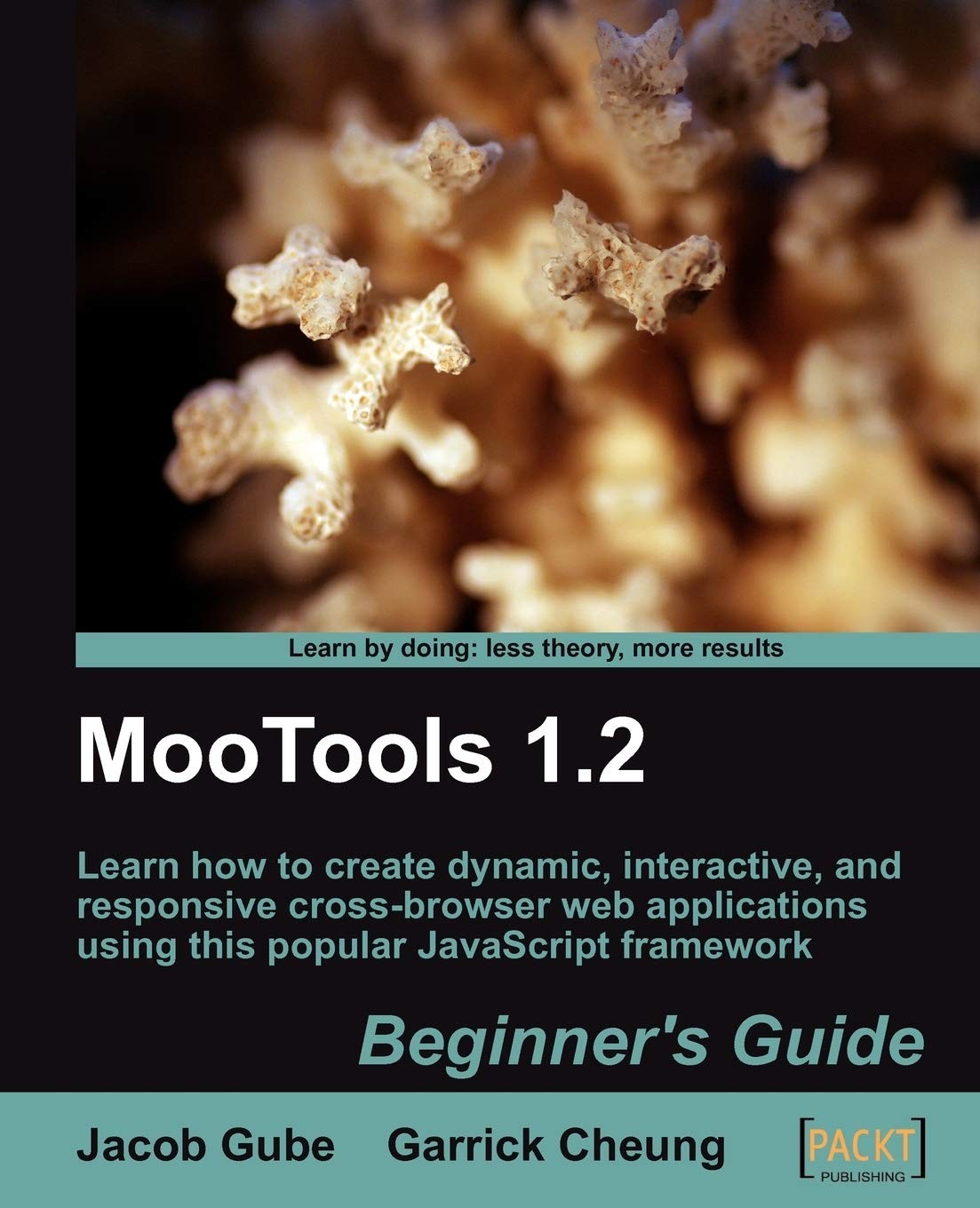
Mootools 1.2 Beginner's Guide (English, Jacob Gube)
Computers & Internet
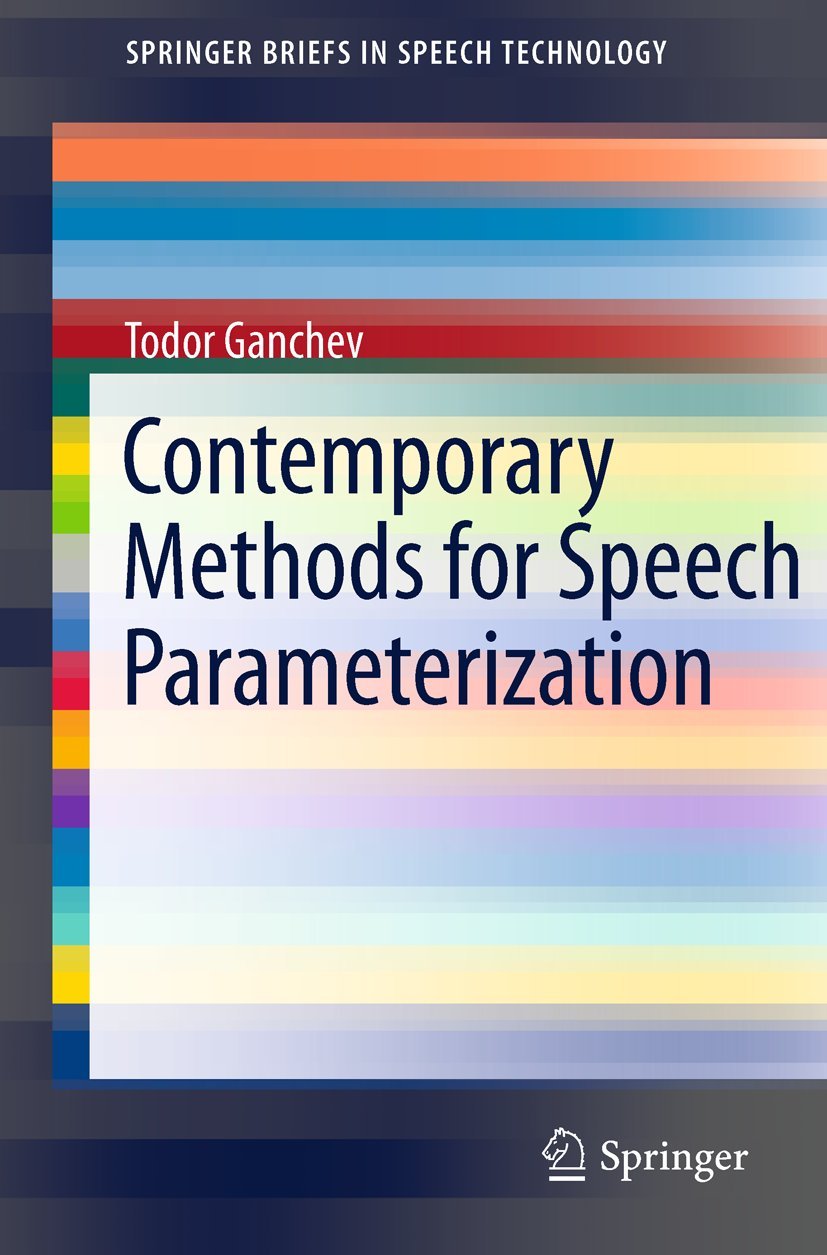
Contemporary Methods for Speech Parameterization (Springerbriefs in Electrical and Computer Engineering / Springerbriefs in Speech Technology)

Computers & Internet
Information Technology and Lawyers | by Arno R. Lodder | Anja Oskamp | Springer | by Arno R. Lodder | Anja Oskamp | Springer | by Arno R. Lodder | Anja Oskamp | Springer | by Arno R. Lodder | Anja Oskamp | Springer | by Arno R. Lodder | Anja Oskamp | Springer | by Arno R. Lodder | Anja Oskamp | Springer | by Arno R. Lodder | Anja Oskamp | Springer | by Arno R. Lodder | Anja Oskamp | Springer | by Arno R. Lodder | Anja Oskamp | Springer | by Arno R. Lodder | Anja Oskamp | Springer | by Arno R. Lo

Computers & Internet
Digital Analysis of Remotely Sensed Imagery | by Jay Gao | McGraw-Hill Companies | by Jay Gao | McGraw-Hill Companies | by Jay Gao | McGraw-Hill Companies | by Jay Gao | McGraw-Hill Companies | by Jay Gao | McGraw-Hill Companies | by Jay Gao | McGraw-Hill Companies | by Jay Gao | McGraw-Hill Companies | by Jay Gao | McGraw-Hill Companies | by Jay Gao | McGraw-Hill Companies | by Jay Gao | McGraw-Hill Companies | by Jay Gao | McGraw-Hill Companies | by Jay Gao | McGraw-Hill Companies | by Jay Gao

Computers & Internet