
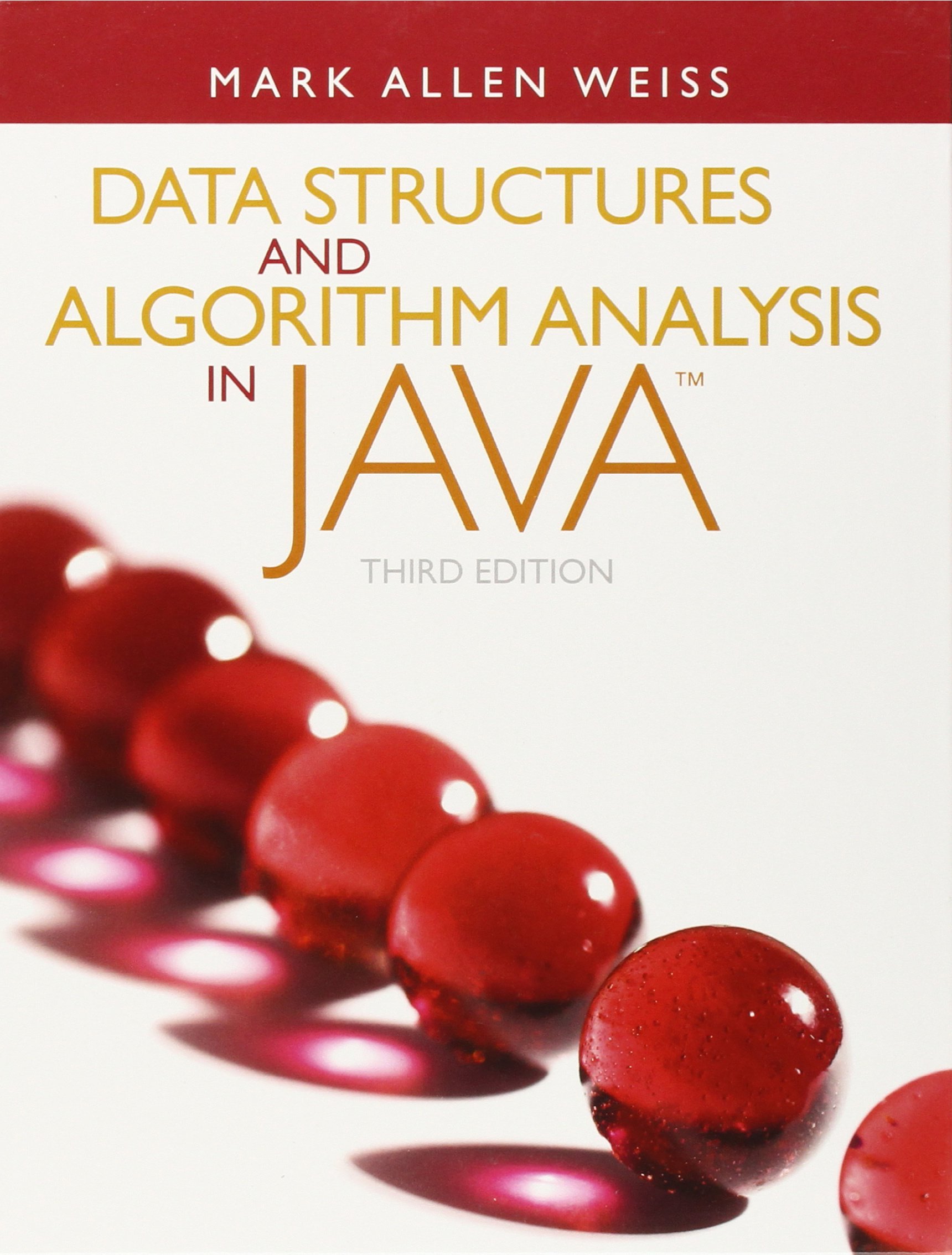
Data Structures and Algorithm Analysis in Java by Mark Weiss – A Complete Guide to Advanced Algorithms and Data Structur
Inclusive of all applicable taxes. FREE shipping on all orders.
Available Offers
- 🚚Free Delivery — Free shipping on all orders
- 💵Cash on Delivery — Pay when your order arrives
- ↩️15-Day Easy Returns — Hassle-free return policy
- 🔒Cash on Delivery — Pay safely when your order arrives
Check Delivery
Product Description
Introduction
In the ever-evolving world of software development, mastering the art of efficient programming is as crucial as understanding the theoretical underpinnings of algorithms. Data Structures and Algorithm Analysis in Java by Mark Weiss is a definitive resource for Indian students and professionals who aim to bridge the gap between intermediate coding skills and advanced algorithmic thinking. This hardbound edition from Pearson is tailored for those who want to write Java programs that are not just correct, but also optimized for speed and memory—a skill highly valued in competitive exams, campus placements, and real-world projects across India.
Book Overview
This book is designed for learners who have already taken a foundational course in programming and possess a basic grasp of object-oriented concepts and recursion. It goes beyond typical data structures textbooks by emphasizing algorithm analysis from the very first chapter. Mark Weiss integrates rigorous mathematical reasoning with practical Java implementations, ensuring that readers can both understand the theory and apply it. The text covers everything from elementary data structures like stacks and queues to advanced topics such as amortized analysis and NP-completeness. It serves as a perfect companion for courses like CS2, CS7, or any algorithms elective in Indian universities following the ACM or UGC curriculum.
Key Highlights
- Java-Focused Approach: All algorithms and data structures are implemented in modern Java, making it easy for students to run and test code immediately.
- Rigorous Algorithm Analysis: Every chapter includes detailed Big-O, Big-Omega, and amortized analysis, helping readers understand performance trade-offs.
- Comprehensive Coverage: From binary heaps and sorting algorithms to graph algorithms and NP-completeness, the book leaves no stone unturned.
- Practical Examples: Real-world case studies and exercises drawn from typical programming problems encountered in Indian tech interviews.
- Updated Content: This third edition includes new material on advanced data structures like Fibonacci heaps and disjoint sets, reflecting current industry practices.
Inside the Book
The book is structured into 12 well-organized chapters, each building upon the previous one. The journey begins with a review of Java basics, recursion, and generic programming, then moves into fundamental data structures such as lists, stacks, and queues. Later chapters delve into trees (including AVL and B-trees), hashing, priority queues (binary heaps), and sorting algorithms (from insertion sort to radix sort). A special chapter is dedicated to the disjoint set data structure, and the final chapters cover graph algorithms, NP-completeness, and advanced topics like amortized analysis with potential functions. Every concept is accompanied by clear Java code, mathematical proofs, and a variety of exercises—from simple drills to challenging programming projects.
Key Topics
- Algorithm analysis and asymptotic notation
- Lists, stacks, and queues (array-based and linked)
- Trees: binary search trees, AVL trees, splay trees, and B-trees
- Hashing and hash tables
- Priority queues and binary heaps
- Sorting algorithms and lower bounds
- Graph algorithms: BFS, DFS, shortest paths, and minimum spanning trees
- Amortized analysis and advanced data structures
- NP-completeness and approximation algorithms
Reader Benefits
Indian readers will find this book particularly valuable for cracking technical interviews at top product-based companies like Google, Microsoft, Amazon, and Indian unicorns. The strong focus on algorithm analysis helps students answer “why” questions—such as why quicksort is faster than mergesort in practice, or when to use a hash table over a binary search tree. The book also prepares students for competitive programming contests (like ACM ICPC) and advanced graduate courses. By working through the exercises, readers develop the ability to design custom data structures for novel problems—a skill that distinguishes great engineers from average ones.
Learning Outcomes
By the end of this book, readers will be able to: analyze the time and space complexity of any algorithm using Big-O notation; implement and compare classic data structures in Java; choose the most appropriate data structure for a given problem; understand the mathematical foundations of algorithms, including recurrence relations and amortized analysis; solve complex problems involving graphs, trees, and hashing; and recognize NP-complete problems and apply heuristic or approximation methods. These outcomes align well with the learning objectives of B.Tech, MCA, and MSc Computer Science programs across India.
Who Should Read
This book is ideal for undergraduate and postgraduate computer science students in India who have completed an introductory programming course in Java or C++. It is also highly recommended for self-taught programmers and working professionals who wish to strengthen their algorithmic foundations. Faculty members teaching data structures or algorithm analysis courses will find it an excellent textbook for lectures and assignments. Additionally, anyone preparing for GATE (Computer Science) or UGC NET examinations will benefit from the depth of coverage and the numerous practice problems.
About the Author
Mark Allen Weiss is a renowned computer science educator and a professor at Florida International University. He has authored several best-selling textbooks on data structures and algorithms, including titles for Java, C++, and Python. With decades of teaching experience, Weiss has a unique ability to explain complex mathematical concepts in an accessible manner. His books are widely adopted in Indian universities and are known for their clarity, rigor, and practical relevance. He continues to contribute to the field through research and curriculum development.
About the Publisher
Pearson is a global leader in educational publishing, with a strong presence in India. Known for producing high-quality academic and professional books, Pearson has been a trusted partner for Indian students and educators for decades. This hardcover edition is printed on durable paper with clear typography, making it a long-lasting addition to any library. Pearson’s commitment to accuracy and pedagogical excellence ensures that every title, including this one, meets the highest standards of learning.
Conclusion
Data Structures and Algorithm Analysis in Java is more than just a textbook—it is a gateway to mastering the core of computer science. Whether you are a student in an Indian engineering college, a self-learner aiming for a tech job, or a teacher looking for a reliable course resource, this book delivers unmatched depth and clarity. With its blend of theory, Java code, and analytical rigor, it equips you with the skills to write efficient, scalable software. Order your copy from Bookshops.in today and take a decisive step toward becoming a proficient algorithm designer.
Quick Summary
Data Structures and Algorithm Analysis in Java by Mark Weiss is a comprehensive textbook designed for advanced undergraduate and graduate computer science students. It bridges the gap between introductory programming and rigorous algorithm analysis, teaching readers how to design efficient programs by mastering both data structures and algorithm performance evaluation. The book covers fundamental and advanced topics including arrays, linked lists, stacks, queues, trees, graphs, hash tables, sorting, searching, recursion, dynamic programming, and NP-completeness. Every concept is illustrated with complete Java code examples, making it practical for Indian students who want to apply theory to real-world problems. Readers will learn to analyze time and space complexity, choose appropriate data structures, and implement algorithms that scale. This book is ideal for students preparing for technical interviews, software engineers seeking deeper algorithmic knowledge, and instructors teaching advanced courses. By purchasing from Bookshops.in, Indian readers get an authentic Pearson hardcover edition delivered to their doorstep, ensuring a reliable and lasting reference for their academic and professional growth.
Book Highlights
Book Specifications
| ISBN-13 | 9780132576277 |
| ISBN-10 | 0132576279 |
| Publisher | Pearson College Div |
| Language | English |
| Dimensions | 1 x 1 x 1 cm |
| Weight | 971 g |
| Category | Languages › C & C++ |
| Genre | Non-fiction |
| Original Language | English |
Frequently Asked Questions
What is the main focus of this book?
Who is the author?
What prerequisites are needed?
Is this book suitable for beginners?
Does the book include Java code examples?
What topics are covered in the book?
Is this book used in Indian universities?
What is the price in INR?
Can I use this book for interview preparation?
Does the book cover algorithm analysis in detail?
Is there a digital version available?
What is the language of the book?
Why should I buy from Bookshops.in?
Readers Also Search For
Customers Also Bought

Programming
Algorithmische Sprache Und Programmentwicklung | by H. Partsch | F. L. Bauer | P. Pepper | Springer | by H. Partsch | F. L. Bauer | P. Pepper | Springer | by H. Partsch | F. L. Bauer | P. Pepper | Springer | by H. Partsch | F. L. Bauer | P. Pepper | Springer | by H. Partsch | F. L. Bauer | P. Pepper | Springer | by H. Partsch | F. L. Bauer | P. Pepper | Springer | by H. Partsch | F. L. Bauer | P. Pepper | Springer | by H. Partsch | F. L. Bauer | P. Pepper | Springer | by H. Partsch | F. L. Bauer
Programming
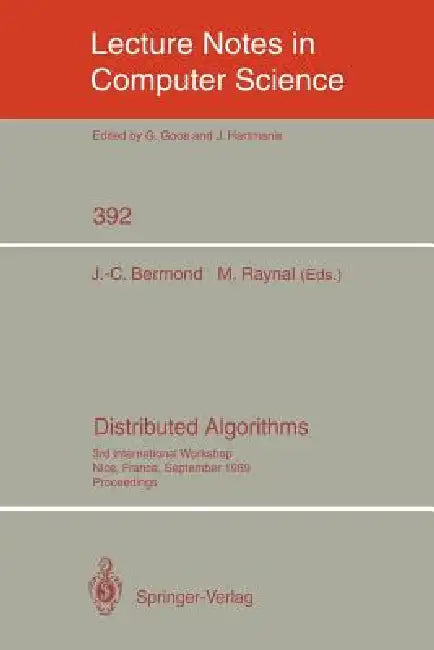
Distributed Algorithms | by Jean-Claude Bermond | Michel Raynal | Springer | by Jean-Claude Bermond | Michel Raynal | Springer | by Jean-Claude Bermond | Michel Raynal | Springer | by Jean-Claude Bermond | Michel Raynal | Springer | by Jean-Claude Bermond | Michel Raynal | Springer | by Jean-Claude Bermond | Michel Raynal | Springer | by Jean-Claude Bermond | Michel Raynal | Springer | by Jean-Claude Bermond | Michel Raynal | Springer | by Jean-Claude Bermond | Michel Raynal | Springer | by Jean
Programming
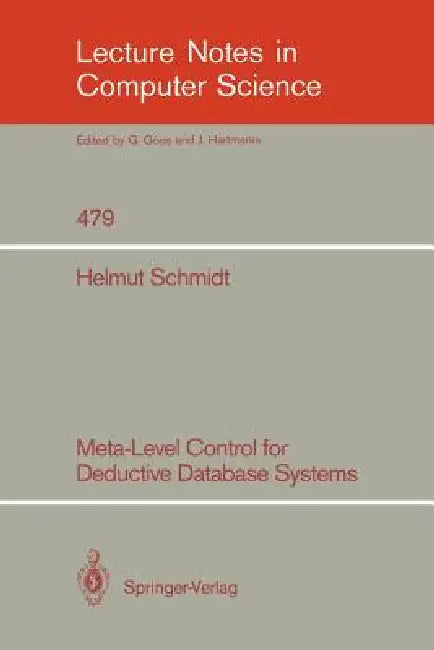
Meta-Level Control for Deductive Database Systems | by Helmut Schmidt | Springer | by Helmut Schmidt | Springer | by Helmut Schmidt | Springer | by Helmut Schmidt | Springer | by Helmut Schmidt | Springer | by Helmut Schmidt | Springer | by Helmut Schmidt | Springer | by Helmut Schmidt | Springer | by Helmut Schmidt | Springer | by Helmut Schmidt | Springer | by Helmut Schmidt | Springer | by Helmut Schmidt | Springer | by Helmut Schmidt | Springer | by Helmut Schmidt | Springer | by Helmut Schm
Programming
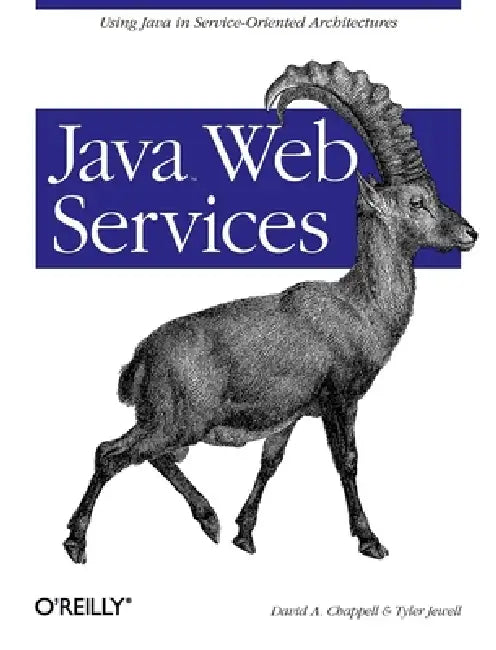
Java Web Services | by David A. Chappell | Tyler Jewell | O'Reilly Media | by David A. Chappell | Tyler Jewell | O'Reilly Media | by David A. Chappell | Tyler Jewell | O'Reilly Media | by David A. Chappell | Tyler Jewell | O'Reilly Media | by David A. Chappell | Tyler Jewell | O'Reilly Media | by David A. Chappell | Tyler Jewell | O'Reilly Media | by David A. Chappell | Tyler Jewell | O'Reilly Media | by David A. Chappell | Tyler Jewell | O'Reilly Media | by David A. Chappell | Tyler Jewell | O'
Programming
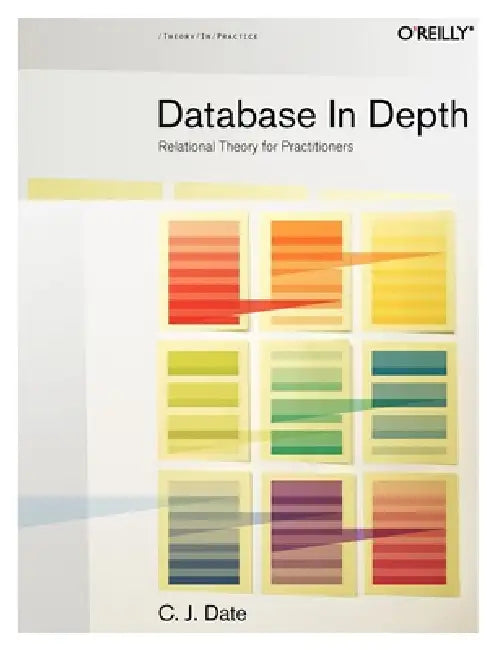
Database in Depth | by Chris J. Date | O'Reilly Media | by Chris J. Date | O'Reilly Media | by Chris J. Date | O'Reilly Media | by Chris J. Date | O'Reilly Media | by Chris J. Date | O'Reilly Media | by Chris J. Date | O'Reilly Media | by Chris J. Date | O'Reilly Media | by Chris J. Date | O'Reilly Media | by Chris J. Date | O'Reilly Media | by Chris J. Date | O'Reilly Media | by Chris J. Date | O'Reilly Media | by Chris J. Date | O'Reilly Media | by Chris J. Date | O'Reilly Media | by Chris J.
Programming
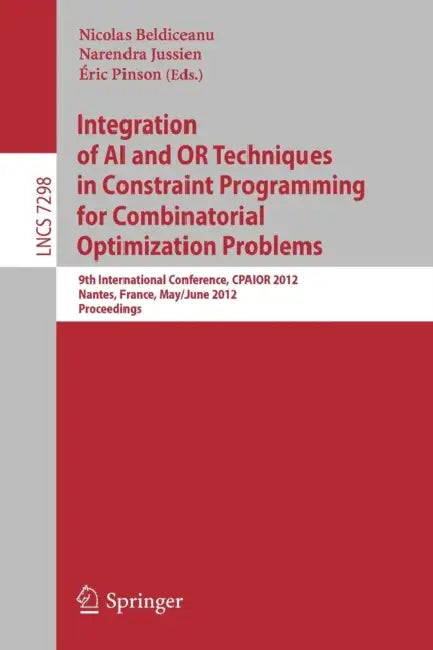
Integration of AI and OR Techniques in Constraint Programming for Combinatorial Optimization Problem | by Nicolas Beldiceanu | Narendra Jussien | Eric Pinson | Springer | by Nicolas Beldiceanu | Narendra Jussien | Eric Pinson | Springer | by Nicolas Beldiceanu | Narendra Jussien | Eric Pinson | Springer | by Nicolas Beldiceanu | Narendra Jussien | Eric Pinson | Springer | by Nicolas Beldiceanu | Narendra Jussien | Eric Pinson | Springer | by Nicolas Beldiceanu | Narendra Jussien | Eric Pinson |
Related Products
View All
Computers & Internet
Modern Full-Stack React Projects by Daniel Bugl
Computers & Internet
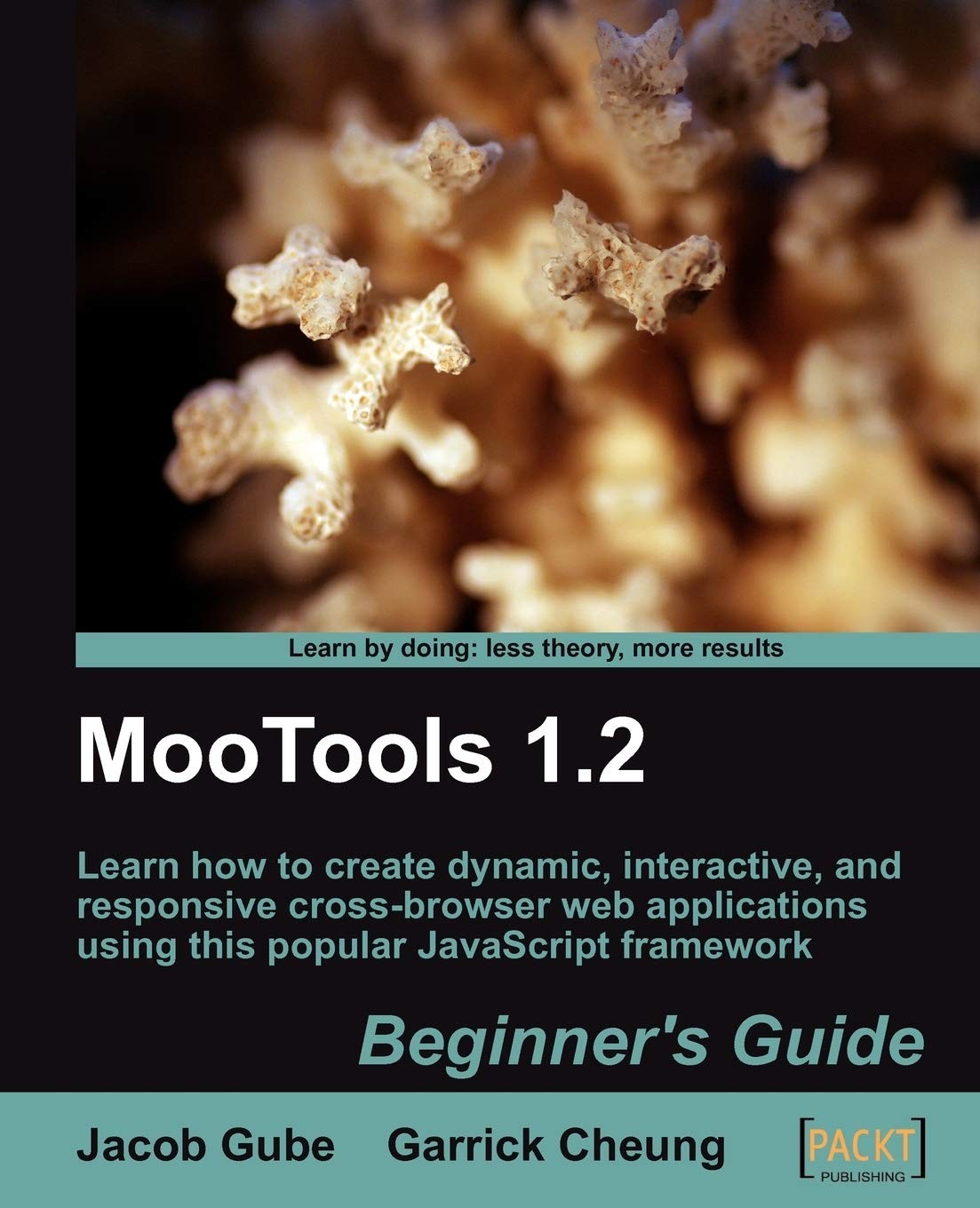
Mootools 1.2 Beginner's Guide (English, Jacob Gube)
Computers & Internet
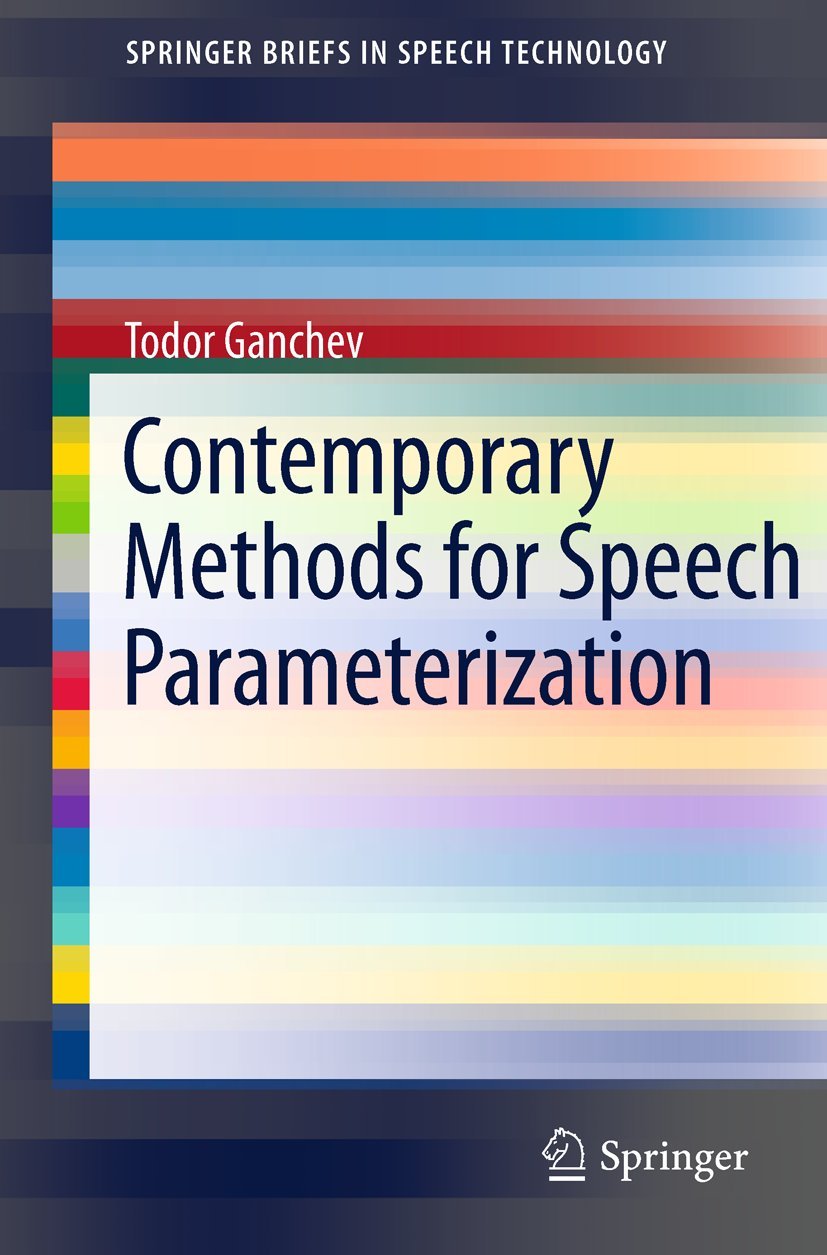
Contemporary Methods for Speech Parameterization (Springerbriefs in Electrical and Computer Engineering / Springerbriefs in Speech Technology)

Computers & Internet
Information Technology and Lawyers | by Arno R. Lodder | Anja Oskamp | Springer | by Arno R. Lodder | Anja Oskamp | Springer | by Arno R. Lodder | Anja Oskamp | Springer | by Arno R. Lodder | Anja Oskamp | Springer | by Arno R. Lodder | Anja Oskamp | Springer | by Arno R. Lodder | Anja Oskamp | Springer | by Arno R. Lodder | Anja Oskamp | Springer | by Arno R. Lodder | Anja Oskamp | Springer | by Arno R. Lodder | Anja Oskamp | Springer | by Arno R. Lodder | Anja Oskamp | Springer | by Arno R. Lo

Computers & Internet
Digital Analysis of Remotely Sensed Imagery | by Jay Gao | McGraw-Hill Companies | by Jay Gao | McGraw-Hill Companies | by Jay Gao | McGraw-Hill Companies | by Jay Gao | McGraw-Hill Companies | by Jay Gao | McGraw-Hill Companies | by Jay Gao | McGraw-Hill Companies | by Jay Gao | McGraw-Hill Companies | by Jay Gao | McGraw-Hill Companies | by Jay Gao | McGraw-Hill Companies | by Jay Gao | McGraw-Hill Companies | by Jay Gao | McGraw-Hill Companies | by Jay Gao | McGraw-Hill Companies | by Jay Gao
Computers & Internet