
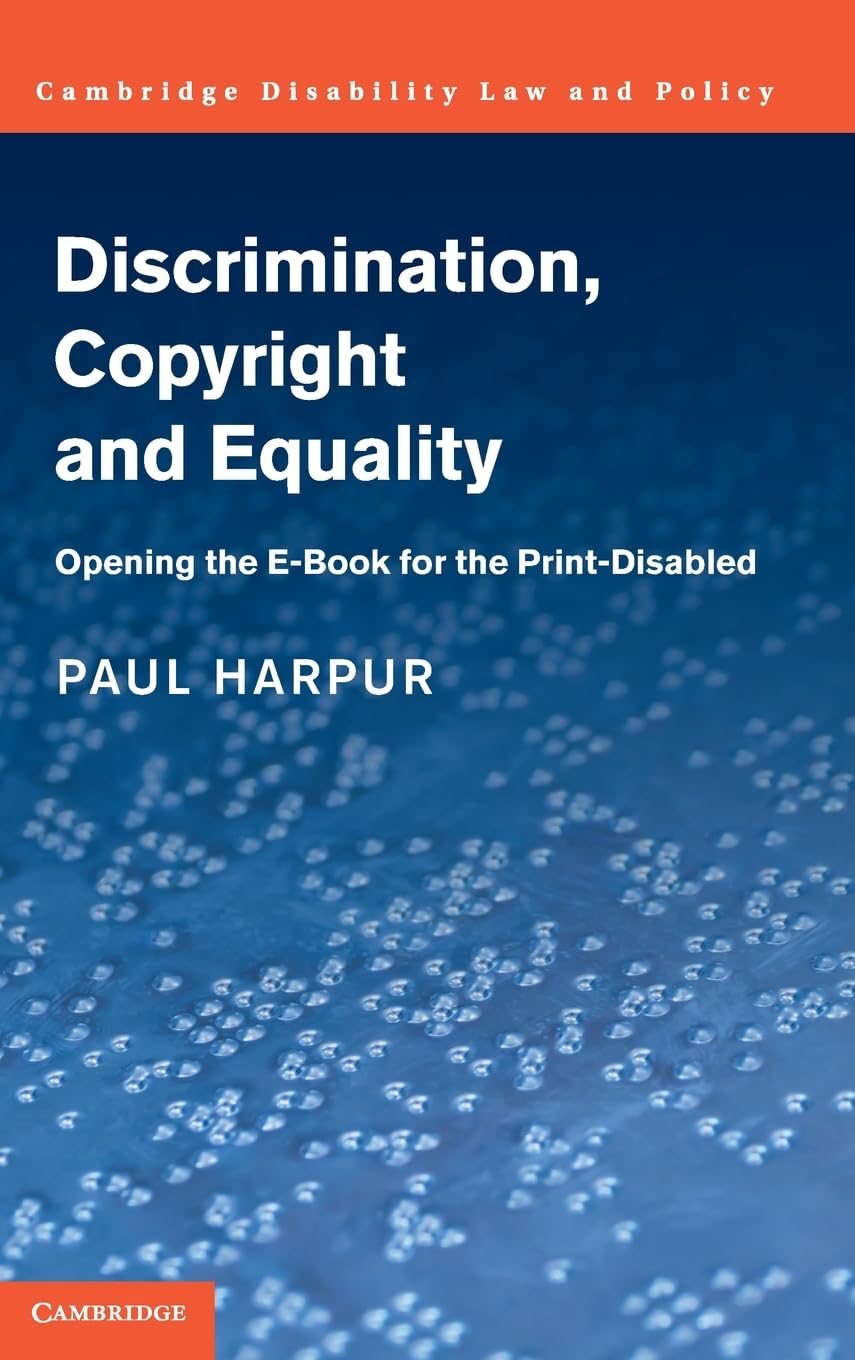
Discrimination, Copyright and Equality: Opening the e-Book for the Print-Disabled by Paul Harpur – A Cambridge Universit
Inclusive of all applicable taxes. FREE shipping on all orders.
Available Offers
- 🚚Free Delivery — Free shipping on all orders
- 💵Cash on Delivery — Pay when your order arrives
- ↩️15-Day Easy Returns — Hassle-free return policy
- 🔒Cash on Delivery — Pay safely when your order arrives
Check Delivery
Product Description
Introduction
In an age where information flows freely across digital networks, the right to read remains an elusive privilege for millions of print-disabled individuals in India and around the world. Discrimination, Copyright and Equality: Opening the e-Book for the Print-Disabled by Paul Harpur offers a groundbreaking legal and social analysis of how copyright laws and market forces systematically exclude persons with visual, physical, or cognitive impairments from accessing the written word. Published by the prestigious Cambridge University Press, this hardcover volume is an essential resource for Indian legal scholars, disability rights advocates, policymakers, and students seeking to understand the intersection of intellectual property rights, anti-discrimination frameworks, and the pursuit of reading equality.
Book Overview
This meticulously researched work examines the tension between copyright regimes that prioritize commercial interests and the fundamental human right to access information. Paul Harpur argues that while technology has created unprecedented opportunities for universal reading access, legal structures continue to erect barriers for the print-disabled community. The book explores how the United Nations Convention on the Rights of Persons with Disabilities and the World Intellectual Property Organization's Marrakesh Treaty have introduced a new legal paradigm, but domestic implementation remains fraught with challenges. Through comparative analysis of disability anti-discrimination laws, civil rights protections, and constitutional provisions across jurisdictions, Harpur demonstrates why copyright reform is essential for achieving genuine digital equality.
Key Highlights
- Comprehensive legal framework analysis covering disability rights, copyright law, and human rights instruments
- In-depth examination of the Marrakesh Treaty and its implications for Indian copyright law and accessibility mandates
- Critical evaluation of market forces that perpetuate reading inequality despite technological solutions
- Comparative study of domestic laws from India, the United States, the United Kingdom, and Australia
- Practical insights for advocates working to dismantle barriers to information access
Inside the Book
The volume is structured to guide readers from foundational concepts to complex legal arguments. Early chapters establish the theoretical underpinnings of reading equality as a human right, while subsequent sections dissect the shortcomings of existing copyright exceptions for the print-disabled. Harpur meticulously analyzes landmark cases and legislative developments, offering a balanced critique of how anti-discrimination laws often fail when confronted with the overriding power of copyright protection. The book also delves into the role of technology in creating accessible formats, and why legal reform must accompany technological innovation to ensure meaningful access. Each chapter builds upon the last, creating a cohesive narrative that is both intellectually rigorous and accessible to non-specialists.
Key Topics
- Reading equality as a dimension of disability rights and social justice
- Copyright exceptions and limitations for persons with print disabilities
- International legal frameworks including the Marrakesh Treaty and UNCRPD
- Anti-discrimination laws and their limitations in promoting access to information
- Digital divide and the intersection of disability, poverty, and literacy
- Constitutional rights to education and information in the Indian context
Reader Benefits
Readers will gain a deep understanding of how legal systems can either enable or obstruct the fundamental right to read. This book equips Indian law students and practitioners with the knowledge to advocate for stronger copyright exceptions and accessible publishing practices. Disability rights activists will find powerful arguments to support campaigns for inclusive education and library access. Policymakers will benefit from comparative insights that can inform the amendment of Indian copyright laws to align with international standards. The book also empowers librarians, educators, and publishers to recognize their role in dismantling barriers to reading equality.
Learning Outcomes
- Understand the legal and social dimensions of print disability and reading inequality
- Analyze the interplay between copyright law, anti-discrimination measures, and human rights
- Evaluate the effectiveness of the Marrakesh Treaty in transforming domestic legal landscapes
- Identify strategies to challenge market-driven barriers to accessible information
- Develop critical perspectives on how equality laws can be strengthened to promote universal reading access
Who Should Read
This book is indispensable for law students specializing in intellectual property, human rights, or disability law. It is equally valuable for academics researching access to information, social justice, and legal reform. Practicing lawyers and judges dealing with copyright or disability cases will find authoritative analysis and precedent-setting arguments. Disability rights organizations, accessible publishing initiatives, and library professionals will benefit from its practical recommendations. Additionally, policymakers in the Ministry of Law and Justice, Ministry of Social Justice and Empowerment, and Copyright Office will find this work essential for drafting inclusive legislation.
About the Author
Paul Harpur is a leading scholar in disability law and intellectual property, holding a distinguished academic position at the University of Queensland. His research focuses on the intersection of human rights, technology, and access to information. A prolific author and advocate, Harpur has advised international bodies including the World Intellectual Property Organization and has contributed to shaping disability-inclusive policies globally. His expertise brings both academic rigor and real-world relevance to this critical subject.
About the Publisher
Cambridge University Press is one of the world's oldest and most respected academic publishers, with a legacy of producing authoritative works in law, social sciences, and humanities. Known for its rigorous peer-review process and commitment to scholarly excellence, Cambridge University Press ensures that each publication meets the highest standards of accuracy and intellectual depth. This volume continues that tradition, offering Indian readers a globally relevant yet locally applicable resource for advancing reading equality.
Conclusion
Discrimination, Copyright and Equality: Opening the e-Book for the Print-Disabled is more than a legal treatise—it is a call to action for a more inclusive information society. As India moves toward implementing the Marrakesh Treaty and strengthening its disability rights framework, this book provides the critical analysis needed to ensure that no reader is left behind. Whether you are a student, scholar, activist, or policymaker, this hardcover volume belongs on your shelf as a definitive guide to achieving reading equality for all.
Quick Summary
The book examines how market forces and copyright restrictions often override the intent of equality laws, leaving visually impaired readers without full access to the written word. Harpur analyses key international instruments such as the Marrakesh Treaty and the UN Convention on the Rights of Persons with Disabilities, arguing for a new legal paradigm that prioritises digital equality. This book is essential for Indian law students, disability rights advocates, policymakers, and academics who want to understand the legal and practical barriers faced by print-disabled communities. Readers will learn about the limitations of current frameworks, the potential of technology to bridge gaps, and the need for systemic reform. By purchasing from Bookshops.in, a premium Indian bookstore, you support local business and gain access to a carefully curated academic title that is often hard to find in India.
Book Highlights
Book Specifications
| ISBN-13 | 9781107119000 |
| ISBN-10 | 1107119006 |
| Publisher | Cambridge University Press |
| Language | English |
| Dimensions | 15.54 x 2.49 x 23.85 cm |
| Weight | 630 g |
| Country | India |
| Category | Politics › Freedom & Security |
| Genre | Non-fiction |
| Reading Age | Adult |
| Original Language | English |
Frequently Asked Questions
What is the main subject of this book?
Who is the author Paul Harpur?
Is this book relevant to Indian readers?
Does the book cover digital accessibility?
What format is this book available in?
How does this book help disability advocates?
Is this book suitable for undergraduate students?
What are the key themes of the book?
Does the book compare different countries' laws?
How does the book address market forces?
Who is the publisher?
Can this book be used as a textbook?
Readers Also Search For
Customers Also Bought

International Relations
Clients, Rivals, and Rogues: Why Great Powers Intervene in Revolutionary Civil Wars

International Relations
Foreign Ministries and the Information Revolution: Going Virtual?: 2 (Diplomatic Studies)
International Relations
From Pki to Comintern, 1924-1941: The Apprenticeship of the Malayan Communist Party: 8 (Southeast Asia Program Series, 8)

International Relations
The Evolving Terrorist Threat to Southeast Asia: A Net Assessment
International Relations
The Naval Policy of Austria-Hungary 1867-1918: Navalism, Industrial Development, and the Politics of Dualism (Central European Studies)

International Relations
New Technologies and Law of the Marine Environment: Nouvelles Technologies Et Droit De L'Environment Marin: 55 (International Enviornmental Law and Policy, 55)
Related Products
View All
Politics
Chicano Politics | by Juan Gómez-Quiñones | Unm Press | by Juan Gómez-Quiñones | Unm Press | by Juan Gómez-Quiñones | Unm Press | by Juan Gómez-Quiñones | Unm Press | by Juan Gómez-Quiñones | Unm Press | by Juan Gómez-Quiñones | Unm Press | by Juan Gómez-Quiñones | Unm Press | by Juan Gómez-Quiñones | Unm Press | by Juan Gómez-Quiñones | Unm Press | by Juan Gómez-Quiñones | Unm Press | by Juan Gómez-Quiñones | Unm Press | by Juan Gómez-Quiñones | Unm Press | by Juan Gómez-Quiñones | Unm Press |
Politics
Political Humor in a Changing Media Landscape | by Jody C. Baumgartner | Amy B. Becker | Jody C. Baumgartner | Lexington Books | by Jody C. Baumgartner | Amy B. Becker | Jody C. Baumgartner | Lexington Books | by Jody C. Baumgartner | Amy B. Becker | Jody C. Baumgartner | Lexington Books | by Jody C. Baumgartner | Amy B. Becker | Jody C. Baumgartner | Lexington Books | by Jody C. Baumgartner | Amy B. Becker | Jody C. Baumgartner | Lexington Books | by Jody C. Baumgartner | Amy B. Becker | Jody C
Politics
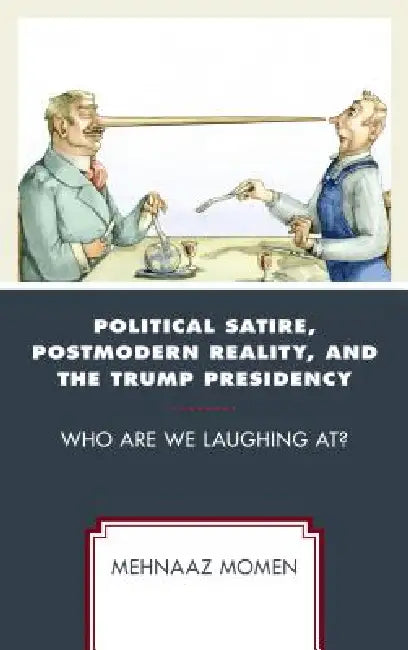
Political Satire, Postmodern Reality, and the Trump Presidency | by Mehnaaz Momen | Lexington Books | by Mehnaaz Momen | Lexington Books | by Mehnaaz Momen | Lexington Books | by Mehnaaz Momen | Lexington Books | by Mehnaaz Momen | Lexington Books | by Mehnaaz Momen | Lexington Books | by Mehnaaz Momen | Lexington Books | by Mehnaaz Momen | Lexington Books | by Mehnaaz Momen | Lexington Books | by Mehnaaz Momen | Lexington Books | by Mehnaaz Momen | Lexington Books | by Mehnaaz Momen | Lexington
Politics
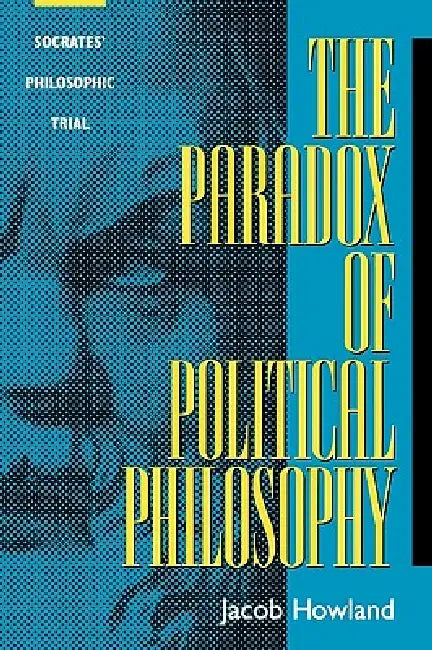
The Paradox of Political Philosophy | by Jacob Howland | Rowman & Littlefield Publishers | by Jacob Howland | Rowman & Littlefield Publishers | by Jacob Howland | Rowman & Littlefield Publishers | by Jacob Howland | Rowman & Littlefield Publishers | by Jacob Howland | Rowman & Littlefield Publishers | by Jacob Howland | Rowman & Littlefield Publishers | by Jacob Howland | Rowman & Littlefield Publishers | by Jacob Howland | Rowman & Littlefield Publishers | by Jac
Politics
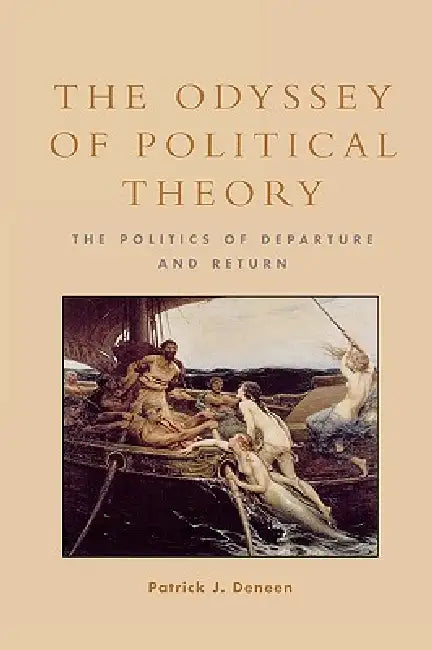
Odyssey of Political Theory | by Patrick J. Deneen | Rowman & Littlefield Publishers | by Patrick J. Deneen | Rowman & Littlefield Publishers | by Patrick J. Deneen | Rowman & Littlefield Publishers | by Patrick J. Deneen | Rowman & Littlefield Publishers | by Patrick J. Deneen | Rowman & Littlefield Publishers | by Patrick J. Deneen | Rowman & Littlefield Publishers | by Patrick J. Deneen | Rowman & Littlefield Publishers | by Patrick J. Deneen | Rowman & Littlef
Politics