
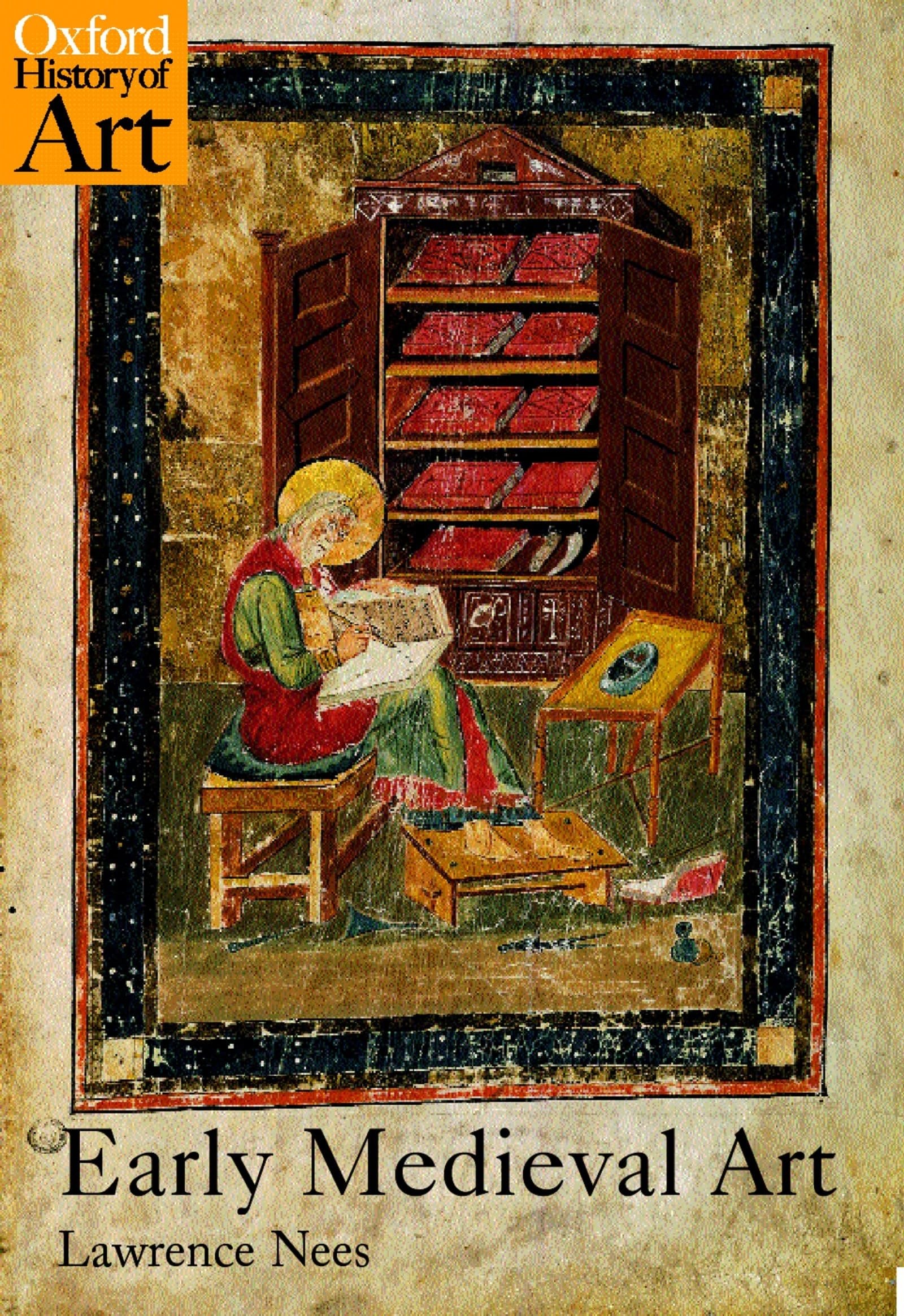
Early Medieval Art by Lawrence Nees – A Comprehensive Study of European Art From 300 AD to 1000 AD
Inclusive of all applicable taxes. FREE shipping on all orders.
Available Offers
- 🚚Free Delivery — Free shipping on all orders
- 💵Cash on Delivery — Pay when your order arrives
- ↩️15-Day Easy Returns — Hassle-free return policy
- 🔒Cash on Delivery — Pay safely when your order arrives
Check Delivery
Product Description
Introduction
Between the decline of Rome and the flowering of the high Middle Ages, Europe produced a distinctive and often overlooked artistic tradition. Early Medieval Art by Lawrence Nees explores this rich period in depth, tracing its development from around 300 AD through to 1000 AD and restoring a frequently marginalised subject to its rightful place in art history.
Book Overview
Nees surveys an extraordinary range of artistic expression from this millennium, including brilliantly illuminated manuscripts, decorative furniture, rich embroidery and precious metalwork. Rather than treating early Christian art in the late Roman tradition and the art of the newly formed northern European kingdoms as separate, opposing traditions, he takes a holistic view, presenting them as interconnected aspects of a single, larger historical moment.
Key Highlights
- Covers European art from roughly 300 AD to 1000 AD in a single unified narrative.
- Explores illuminated manuscripts, metalwork, embroidery and decorative arts.
- Treats early Christian Roman-tradition art and northern European art holistically.
- Examines the role of monasteries, courts and patrons in artistic production.
- Restores a frequently marginalised period to central art historical status.
- Explains the expressive and educational roles medieval art served.
Inside the Book
The book examines artist patronage, craftsmanship, and the roles played by holy men and women, monasteries and secular courts in shaping artistic production. Nees is especially interested in the expressive and educational functions art served in this period, showing how visual culture helped forge new relationships between the church and ordinary people across medieval Europe.
Key Topics
Recurring themes include the tension and dialogue between Roman inheritance and emerging local traditions, the role of religious institutions as artistic patrons, and the way craftsmanship carried both spiritual and social meaning. Readers will also encounter the reintegration of northern European artistic traditions into the broader European narrative, challenging older, narrower accounts of the period.
Reader Benefits
- Gain a comprehensive overview of European art from 300 to 1000 AD.
- Understand how illuminated manuscripts and metalwork reflected religious and social life.
- See early medieval art treated as a unified historical tradition rather than fragments.
- Learn about the role of monasteries, courts and patrons in artistic production.
- Access scholarly analysis written in clear, accessible academic language.
- Build a strong foundation for further study in medieval art history.
Learning Outcomes
Readers will come away able to identify major forms of early medieval artistic expression, explain how patronage from monasteries and courts shaped what was produced, and understand why treating Roman-tradition and northern European art as one connected story gives a fuller, more accurate picture of the period.
Who Should Read
- Art history students studying medieval or Byzantine art.
- Museum professionals and curators working with medieval collections.
- History enthusiasts interested in early medieval Europe.
- Academics researching Christian art and material culture.
- Readers curious about the origins of European visual culture.
About the Author
Lawrence Nees is a respected art historian specialising in early medieval and Carolingian art, known for scholarship that reframes the period as a coherent, connected artistic tradition rather than a transitional gap between antiquity and the high Middle Ages.
About the Publisher
This book is published by Oxford University Press, a globally respected academic publisher known for authoritative scholarship across art history, humanities and the sciences.
Conclusion
Early Medieval Art offers a thorough, thoughtfully argued survey of a period too often treated as a footnote in art history. For students, scholars and general readers alike, Lawrence Nees restores this era to its rightful place as a foundational chapter in the story of European art.
Quick Summary
Early Medieval Art by Lawrence Nees offers a comprehensive survey of European artistic tradition from roughly 300 AD to 1000 AD, a period often marginalised in broader art historical narratives. Nees explores an impressive range of artistic expression, from brilliantly illuminated manuscripts to decorative furniture, rich embroidery and precious metalwork, showing how these forms reflected the religious, social and political life of their time. Rather than treating early Christian art in the late Roman tradition and the art of newly established northern European kingdoms as separate or opposing traditions, Nees adopts a holistic approach that presents them as interconnected aspects of a single historical moment. The book pays close attention to the mechanics of artistic production, examining patronage, craftsmanship, and the roles played by holy men and women, monasteries and secular courts. Throughout, Nees is particularly interested in how art functioned expressively and educationally, revealing an evolving visual relationship between the church and the wider population across medieval Europe. By restoring this often overlooked subject to a central place in our understanding of European artistic and cultural heritage, the book offers valuable insight for art history students, museum professionals, and general readers interested in how medieval visual culture actually took shape.
Book Highlights
Book Specifications
| ISBN-13 | 9780192842435 |
| ISBN-10 | 0192842439 |
| Publisher | Oxford Univ Pr |
| Language | English |
| Dimensions | 23.88 x 1.52 x 16.76 cm |
| Weight | 1 kg 50 g |
| Category | Humanities › Art History |
| Genre | Art History |
| Reading Age | Adult |
| Original Language | English |
Frequently Asked Questions
What is this book about?
Who wrote this book?
Does the book cover only religious art?
Is this book suitable for beginners in art history?
What time period does the book cover?
Does the book compare Roman and northern European traditions?
Is this book useful for museum professionals?
What language is this book written in?
Does the book discuss art patronage?
Readers Also Search For
Customers Also Bought
Art History
The Italian Renaissance in Art
Art History
Photovoltaic Design & Installation For Dummies | by Mayfield | ForDummies | by Mayfield | ForDummies | by Mayfield | ForDummies | by Mayfield | ForDummies | by Mayfield | ForDummies | by Mayfield | ForDummies | by Mayfield | ForDummies | by Mayfield | ForDummies | by Mayfield | ForDummies | by Mayfield | ForDummies | by Mayfield | ForDummies | by Mayfield | ForDummies | by Mayfield | ForDummies | by Mayfield | ForDummies | by Mayfield | ForDummies | by Mayfield | ForDummies | by Mayfield | ForDu
Art History
Designing School Systems for All Students (English, Robert J. Manley | Richard J. Hawkins)
Art History
Routledge Library Editions: Art and Culture in the Nineteenth Century
Art History
An Errant Design (English, S. H. Long)
Art History
Distributed System Design | by Jie Wu | CRC Press | by Jie Wu | CRC Press | by Jie Wu | CRC Press | by Jie Wu | CRC Press | by Jie Wu | CRC Press | by Jie Wu | CRC Press | by Jie Wu | CRC Press | by Jie Wu | CRC Press | by Jie Wu | CRC Press | by Jie Wu | CRC Press | by Jie Wu | CRC Press | by Jie Wu | CRC Press | by Jie Wu | CRC Press | by Jie Wu | CRC Press | by Jie Wu | CRC Press | by Jie Wu | CRC Press | by Jie Wu | CRC Press | by Jie Wu | CRC Press | by Jie Wu | CRC Press | by Jie Wu | CRC
Related Products
View AllArt History
Distributed System Design | by Jie Wu | CRC Press | by Jie Wu | CRC Press | by Jie Wu | CRC Press | by Jie Wu | CRC Press | by Jie Wu | CRC Press | by Jie Wu | CRC Press | by Jie Wu | CRC Press | by Jie Wu | CRC Press | by Jie Wu | CRC Press | by Jie Wu | CRC Press | by Jie Wu | CRC Press | by Jie Wu | CRC Press | by Jie Wu | CRC Press | by Jie Wu | CRC Press | by Jie Wu | CRC Press | by Jie Wu | CRC Press | by Jie Wu | CRC Press | by Jie Wu | CRC Press | by Jie Wu | CRC Press | by Jie Wu | CRC
Art History
The Italian Renaissance in Art
Art History
Photovoltaic Design & Installation For Dummies | by Mayfield | ForDummies | by Mayfield | ForDummies | by Mayfield | ForDummies | by Mayfield | ForDummies | by Mayfield | ForDummies | by Mayfield | ForDummies | by Mayfield | ForDummies | by Mayfield | ForDummies | by Mayfield | ForDummies | by Mayfield | ForDummies | by Mayfield | ForDummies | by Mayfield | ForDummies | by Mayfield | ForDummies | by Mayfield | ForDummies | by Mayfield | ForDummies | by Mayfield | ForDummies | by Mayfield | ForDu
Art History
Designing School Systems for All Students (English, Robert J. Manley | Richard J. Hawkins)
Art History
Routledge Library Editions: Art and Culture in the Nineteenth Century
Art History