

Ecology of Populations by Esa Ranta – A Detailed Examination of Spatial Population Dynamics and Environmental Variabilit
Inclusive of all applicable taxes. FREE shipping on all orders.
Available Offers
- 🚚Free Delivery — Free shipping on all orders
- 💵Cash on Delivery — Pay when your order arrives
- ↩️15-Day Easy Returns — Hassle-free return policy
- 🔒Cash on Delivery — Pay safely when your order arrives
Check Delivery
Product Description
Introduction
Understanding how populations of organisms are distributed and how their numbers change over time is a cornerstone of ecology. For Indian students and researchers delving into the complexities of life sciences, Ecology of Populations by Esa Ranta offers a rigorous yet accessible exploration of these fundamental processes. Published by Cambridge University Press, this hardcover edition is an essential resource for anyone seeking a deeper grasp of population dynamics, spatial ecology, and the mathematical tools that underpin modern ecological thinking.
Book Overview
This book presents a comprehensive framework for studying the distribution and abundance of species across space and time. It moves beyond simple descriptions to examine how local births and deaths interact with emigration and immigration, and how environmental variability at different scales shapes population fluctuations. The author integrates stochastic processes and spatial structure to show how elementary analytical tools can reveal patterns of synchrony, range distributions, community structure, and species coexistence. Real-world data from multiple study systems are woven into the narrative, making the concepts tangible for Indian readers interested in both theoretical and applied ecology.
Key Highlights
- Foundational yet advanced: Bridges basic ecological principles with sophisticated spatial population models.
- Data-driven approach: Uses real datasets from diverse ecosystems to illustrate theoretical concepts.
- Interdisciplinary relevance: Connects population ecology with life history evolution and evolutionary game theory.
- Mathematical clarity: Employs analytical and numerical methods that are explained step by step, ensuring accessibility for students with a background in basic mathematics.
Inside the Book
The book is structured around the core theme of how local demographic processes—births and deaths—are linked to larger-scale movements of individuals. It explores environmental variability as a driver of population dynamics, emphasizing the role of stochasticity in shaping patterns. Spatial structure is treated not as an add-on but as a central feature of population biology. Readers will find detailed discussions on population synchrony, the mechanisms behind range expansions and contractions, and the factors that allow multiple species to coexist in heterogeneous landscapes. Later chapters extend these ideas to understand life history evolution and aspects of evolutionary game theory, showing how spatial dynamics influence traits like dispersal and reproductive strategies.
Key Topics
- Distribution and abundance of organisms in space and time
- Local birth-death processes and their coupling with migration
- Environmental variability and stochastic population dynamics
- Spatial synchrony and metapopulation theory
- Community structure, species coexistence, and niche partitioning
- Life history evolution and evolutionary game theory in spatial contexts
Reader Benefits
- Builds strong analytical skills: Learn to apply mathematical tools to real ecological questions.
- Enhances research capability: Gain insights into designing studies on population fluctuations and spatial patterns.
- Supports academic success: Ideal for coursework in population ecology, conservation biology, and wildlife management.
- Encourages critical thinking: Understand how environmental change and spatial processes interact to shape biodiversity.
Learning Outcomes
By working through this book, readers will be able to: explain the drivers of population fluctuations using stochastic and spatial models; analyze how immigration and emigration affect local population persistence; interpret patterns of synchrony across populations; evaluate the role of spatial structure in community assembly; and apply concepts from evolutionary game theory to understand life history trade-offs. These skills are directly applicable to careers in ecology, conservation, environmental consulting, and academic research.
Who Should Read
This book is designed for advanced undergraduate and postgraduate students in ecology, environmental science, zoology, botany, and related disciplines. It is also a valuable reference for researchers and professionals in wildlife biology, conservation planning, and natural resource management. Indian students preparing for competitive exams like the CSIR-UGC NET in life sciences or pursuing PhDs in population ecology will find the content particularly enriching.
About the Author
Esa Ranta is a distinguished ecologist known for his contributions to population dynamics and spatial ecology. With decades of research experience, he has published extensively on how environmental variability and spatial processes influence animal populations. His work combines theoretical models with empirical data, making him a leading voice in the field.
About the Publisher
Cambridge University Press is one of the world's oldest and most respected academic publishers. Renowned for its rigorous peer-review process and high-quality scholarly works, Cambridge University Press brings this authoritative volume to readers, ensuring accuracy, depth, and lasting value for the academic community.
Conclusion
Ecology of Populations is an indispensable guide for anyone serious about understanding the forces that govern life on our planet. Its blend of theory, mathematics, and real-world examples makes it a standout text for Indian students and professionals alike. Whether you are exploring population synchrony in the Western Ghats or modeling species ranges in the Himalayas, this book provides the conceptual tools and analytical techniques you need. Add this hardcover edition to your library and deepen your appreciation for the intricate dance of populations across space and time.
Quick Summary
Ecology of Populations by Esa Ranta is a rigorous academic work that delves into the spatial and temporal dynamics of populations. The book explores how local births, deaths, emigration, and immigration interact with environmental variability to determine the distribution and abundance of organisms. It uses analytical and numerical models to explain phenomena like population fluctuations, synchrony, range distribution, and species coexistence. Additionally, the book applies spatial population models to life history evolution and evolutionary game theory, making it a valuable resource for ecologists and evolutionary biologists. This book is ideal for postgraduate students, researchers, and professionals in ecology, conservation, and wildlife biology. Readers will gain a deep understanding of stochastic processes, spatial structure, and community ecology. By purchasing from Bookshops.in, you get a high-quality hardcover edition at a competitive price, delivered across India with trusted service.
Book Highlights
Book Specifications
| ISBN-13 | 9780521854351 |
| ISBN-10 | 0521854350 |
| Publisher | Cambridge University Press |
| Language | English |
| Dimensions | 15.24 x 1.91 x 22.86 cm |
| Weight | 746 g |
| Country | India |
| Category | Biology & Life Sciences › Biology |
| Genre | Science & Mathematics |
| Original Language | English |
Frequently Asked Questions
What is the main theme of Ecology of Populations?
Who is the author of this book?
Is this book suitable for undergraduate students?
What mathematical background is needed?
Does the book include Indian case studies?
Is this book available in paperback?
How does the book handle environmental variability?
Can this book help with conservation planning?
Is the book written in English?
Does the book cover evolutionary game theory?
Where can I buy this book in India?
Is this book part of a series?
What is the ISBN?
Readers Also Search For
Customers Also Bought
Mathematics
Stereotype Spaces and Algebras: 73 (De Gruyter Expositions in Mathematics, 73)
Mathematics
Semigroups in Algebra, Geometry and Analysis: 20 (De Gruyter Expositions in Mathematics, 20)

Mathematics
Geometry from the Pacific Rim: Proceedings of the Pacific Rim Geometry Conference held at National University of Singapore, Republic of Singapore, ... 1994 (De Gruyter Proceedings in Mathematics)

Mathematics
First International Tainan-Moscow Algebra Workshop: Proceedings of the International Conference held at National Cheng Kung University Tainan, Taiwan, ... 1994 (De Gruyter Proceedings in Mathematics)

Mathematics
Differential Geometry - Proceedings of the VIII International Colloquium (English, Jesus A. Alvarez Lopez | Eduardo Garcia-Rio)
Mathematics
Mathematical Theory of Optimal Processes (Classics of Soviet Mathematics)
Related Products
View All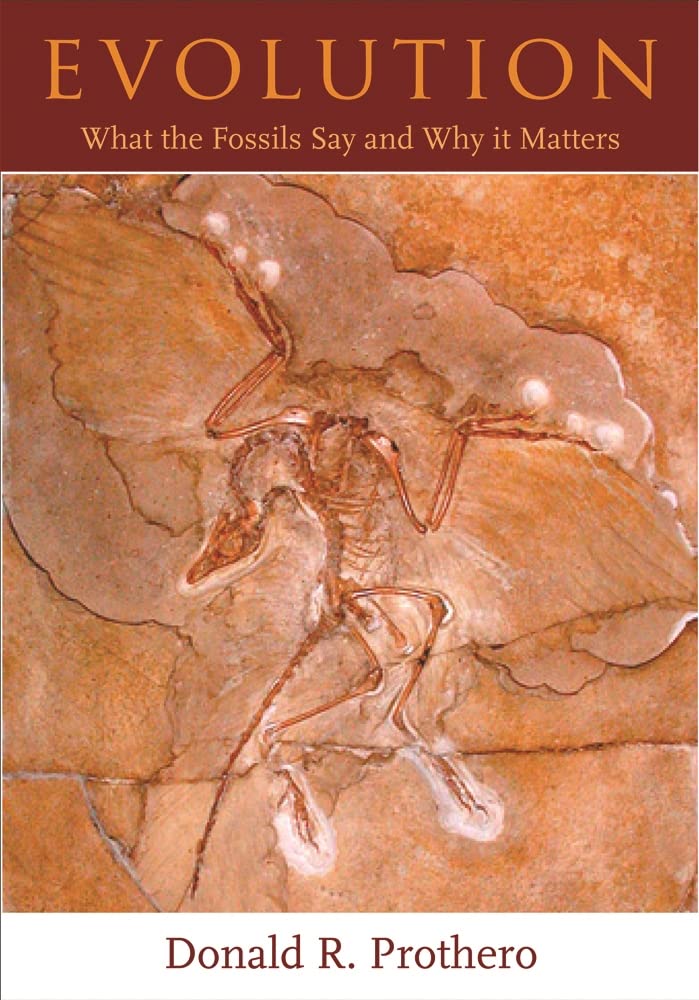
Biology
Evolution: What the Fossils Say and Why It Matters by Donald R. Prothero
Biology
From Taxonomy to Phylogenetics – Life and Work of Willi Hennig

Biology
The Marine Biology of the South China Sea

Biology
Genetics Meets Metabolomics: from Experiment to Systems Biology
Biology
The Elements of Natural or Experimental Philosophy: 2
Biology