
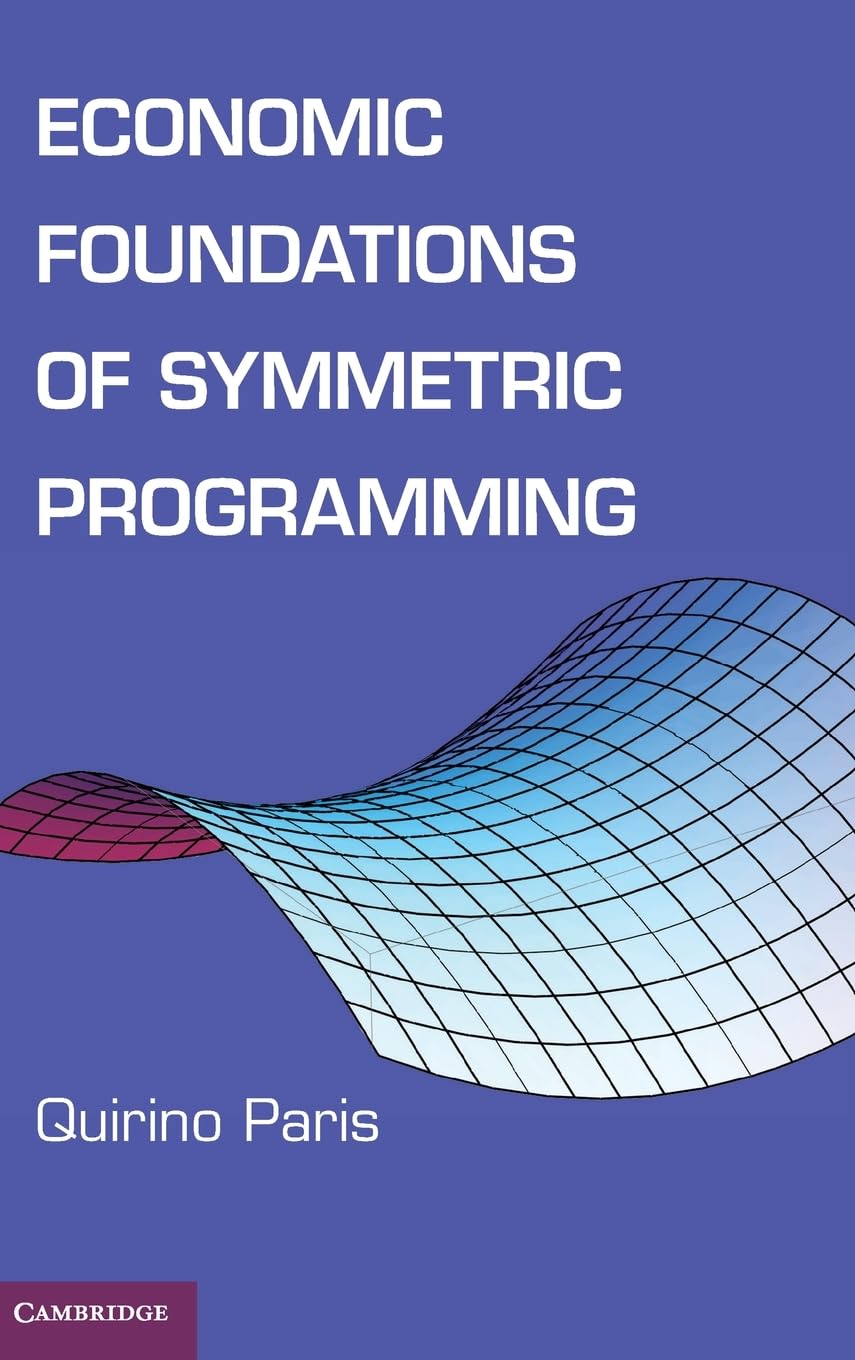
Economic Foundations of Symmetric Programming: A Mathematical Economics Textbook by Quirino Paris
Inclusive of all applicable taxes. FREE shipping on all orders.
Available Offers
- 🚚Free Delivery — Free shipping on all orders
- 💵Cash on Delivery — Pay when your order arrives
- ↩️15-Day Easy Returns — Hassle-free return policy
- 🔒Cash on Delivery — Pay safely when your order arrives
Check Delivery
Product Description
Introduction
In the realm of economic theory, the quest for symmetry has long been a driving force in mathematics and physics. Economic Foundations of Symmetric Programming, authored by the distinguished Quirino Paris and published by Cambridge University Press, marks a bold and original attempt to extend this scientific paradigm into economics. This hardcover volume offers Indian students, researchers, and professionals a fresh lens through which to understand complex economic behaviors—from price-taking producers to monopolists, and from market equilibria to game theory. By unifying these diverse phenomena under the elegant structure of the linear complementarity problem, the book challenges conventional assumptions and introduces a powerful algorithmic approach to solving a wide class of economic models. Whether you are a graduate student in economics or a quantitative analyst, this book promises to reshape your understanding of economic programming.
Book Overview
Economic Foundations of Symmetric Programming is not just another textbook on mathematical economics; it is a pioneering work that redefines how we model economic behavior. The book systematically explores the behavior of price-taking producers, monopolists, monopsonists, sectoral market equilibria, decision-making under risk and uncertainty, and both zero-sum and non-zero-sum games. At its core lies the linear complementarity problem—a unifying mathematical framework that simplifies the analysis of these seemingly disparate economic scenarios. By relaxing often-stated but unnecessary assumptions, Paris provides a more flexible and realistic toolkit for economic modeling. The result is a text that is as rigorous as it is accessible, making it an indispensable resource for anyone seeking to master the intersection of economics and programming.
Key Highlights
- Unifying Framework: The linear complementarity problem serves as a single structure to analyze diverse economic behaviors, from competitive markets to strategic games.
- Algorithmic Elegance: Introduces the simplest and most elegant algorithm for solving a broad range of economic problems, making complex computations intuitive.
- Relaxation of Assumptions: Challenges traditional economic models by removing unnecessary constraints, offering a more realistic view of market dynamics.
- Comprehensive Coverage: Includes topics on risk, uncertainty, and game theory, bridging microeconomics and mathematical programming seamlessly.
- Rigorous Yet Practical: Balances theoretical depth with clear, step-by-step explanations suitable for both classroom learning and self-study.
Inside the Book
This Cambridge University Press hardcover spans over 400 pages of meticulously crafted content. Each chapter builds on the previous, starting with foundational concepts of linear complementarity and progressing to advanced applications. The book features numerous worked examples, exercises, and case studies drawn from real-world economic scenarios. Diagrams and mathematical derivations are presented with clarity, ensuring that even readers new to symmetric programming can follow along. The text is organized into logical sections, covering price-taking behavior, monopoly and monopsony, market equilibrium, decision-making under uncertainty, and game-theoretic models. A comprehensive index and bibliography make it easy to navigate and reference specific topics.
Key Topics
- Linear complementarity problem and its economic interpretations
- Behavior of price-taking producers and profit maximization
- Monopoly and monopsony pricing strategies
- Sectoral market equilibrium analysis
- Decision-making under risk and uncertainty
- Two-person zero-sum and non-zero-sum games
- Algorithmic solutions for economic models
- Relaxation of convexity and differentiability assumptions
Reader Benefits
Indian readers—especially those in academic institutions like the Delhi School of Economics, IITs, IIMs, and JNU—will find this book immensely valuable. It bridges the gap between theoretical economics and practical computation, equipping readers with tools to analyze real-world markets. The symmetric programming approach reduces complex problems to manageable algorithms, saving time and enhancing accuracy. For students preparing for competitive exams or research, the book offers a unique edge by presenting a unified perspective not found in standard textbooks. Professionals in economic consulting, policy analysis, and data science will also benefit from the clear, actionable insights into market behavior and optimization.
Learning Outcomes
- Master the linear complementarity problem as a unifying tool for economic analysis
- Model and solve problems involving price-taking, monopoly, and monopsony behaviors
- Analyze sectoral equilibria with relaxed assumptions for greater realism
- Apply symmetric programming to decision-making under risk and uncertainty
- Understand game-theoretic models through a single algorithmic framework
- Develop skills to design and implement elegant computational solutions for economic problems
Who Should Read
This book is tailored for graduate and advanced undergraduate students in economics, mathematics, and operations research. It is ideal for those enrolled in courses on mathematical economics, microeconomic theory, or optimization. Researchers seeking a fresh perspective on economic modeling will find it indispensable, as will professionals in fields like quantitative finance, policy formulation, and market analysis. Anyone with a background in basic calculus and linear algebra will be able to engage with the material, making it accessible yet challenging. For the Indian academic community, this book serves as a bridge between traditional economic theory and modern computational methods.
About the Author
Quirino Paris is a renowned economist and professor emeritus at the University of California, Davis. With decades of experience in agricultural economics and mathematical programming, Paris has contributed significantly to the fields of production economics, risk analysis, and symmetric programming. His research has been published in leading journals, and he is known for his ability to translate complex mathematical concepts into practical economic insights. This book represents the culmination of his life's work—a synthesis of theory and application that challenges economists to think symmetrically.
About the Publisher
Cambridge University Press is a world-leading academic publisher with a history spanning over 400 years. Known for its rigorous peer review and commitment to scholarly excellence, CUP publishes groundbreaking works in economics, mathematics, and the sciences. This hardcover edition reflects the publisher's dedication to producing high-quality, durable books that serve as lasting resources for students and researchers worldwide. For Indian readers, Cambridge University Press titles are synonymous with trust and intellectual rigor.
Conclusion
Economic Foundations of Symmetric Programming is a seminal work that reimagines the landscape of economic modeling. By placing symmetry and the linear complementarity problem at the heart of analysis, Quirino Paris offers a powerful, elegant, and practical toolkit for understanding markets, games, and decision-making. This hardcover volume is a must-have for any serious student or professional in economics and related fields. Order your copy from Bookshops.in today and embark on a journey that will transform how you think about economic problems.
Quick Summary
Economic Foundations of Symmetric Programming by Quirino Paris is a groundbreaking academic work that applies the symmetry paradigm—central to mathematics and physics—to economic theory. Using the linear complementarity problem as a unifying framework, the book systematically analyzes price-taking producers, monopolists, monopsonists, sectoral market equilibria, behavior under risk and uncertainty, and two-person zero- and non-zero-sum games. Paris demonstrates how this approach relaxes often-unnecessary assumptions, offering a clearer and more elegant understanding of economic models. The book also introduces a simple yet powerful algorithm for solving a wide class of economic problems. This hardcover volume is published by Cambridge University Press and is ideal for graduate students, researchers, and academics in mathematical economics, operations research, and related fields. Indian readers will find it particularly valuable for advanced coursework and research. By purchasing from Bookshops.in, customers receive a genuine copy with fast, reliable delivery across India, along with competitive pricing and excellent customer service.
Book Highlights
Book Specifications
| ISBN-13 | 9780521194723 |
| ISBN-10 | 0521194725 |
| Publisher | Cambridge University Press |
| Language | English |
| Dimensions | 15.24 x 3.18 x 22.86 cm |
| Weight | 880 g |
| Country | United Kingdom |
| Category | Economics › Economic Theory |
| Genre | Non-fiction |
| Original Language | English |
Frequently Asked Questions
What is Economic Foundations of Symmetric Programming about?
Who is the author of this book?
What topics are covered in this book?
Is this book suitable for Indian students?
What is the linear complementarity problem?
Does the book include game theory?
What is the format of this book?
What is the ISBN of this book?
What is the price of this book on Bookshops.in?
What is the rating of this book?
Can I use this book for self-study?
Does the book require prior knowledge of programming?
Why should I buy this book from Bookshops.in?
Readers Also Search For
Customers Also Bought

Entrepreneurship
Chinese Economic Revolution (English, Linda Grove)

Entrepreneurship
Engines of Innovation: The Entrepreneurial University in the Twenty-First Century by Holden Thorp
Entrepreneurship
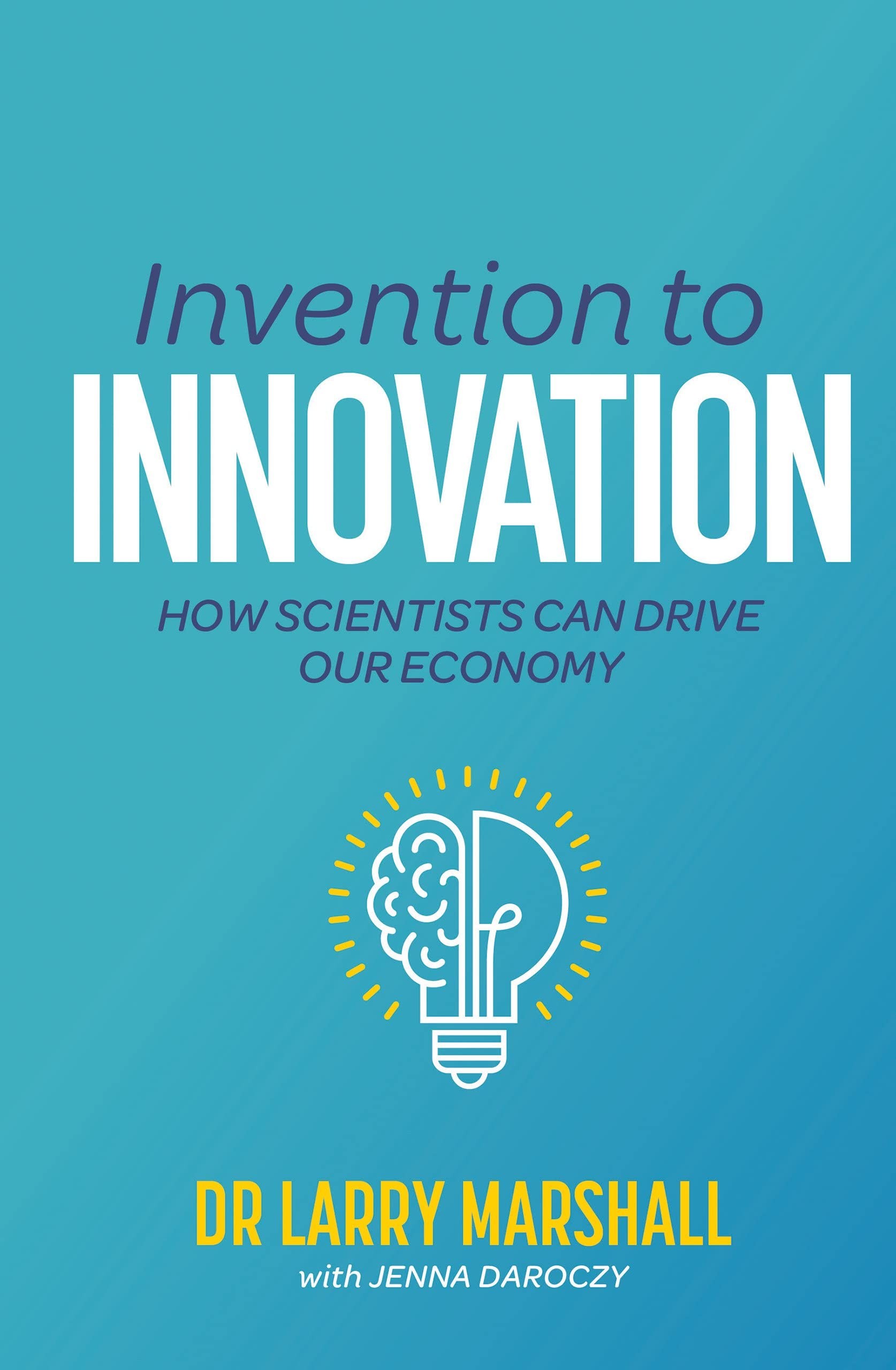
Invention to Innovation (English, PhD Marshall Larry | Jenna Daroczy)

Entrepreneurship
Database Management Systems by Raghu Ramakrishnan – DBMS Textbook

Entrepreneurship
Decision-making for Technology Executives by Harold A. Linstone

Entrepreneurship
The Business Innovation Audit (English, William Tate)
Related Products
View All
Economics
Political Economy from Pufendorf to Marx (English, István Hont | Lasse S. Andersen | Béla Kapossy)
Economics
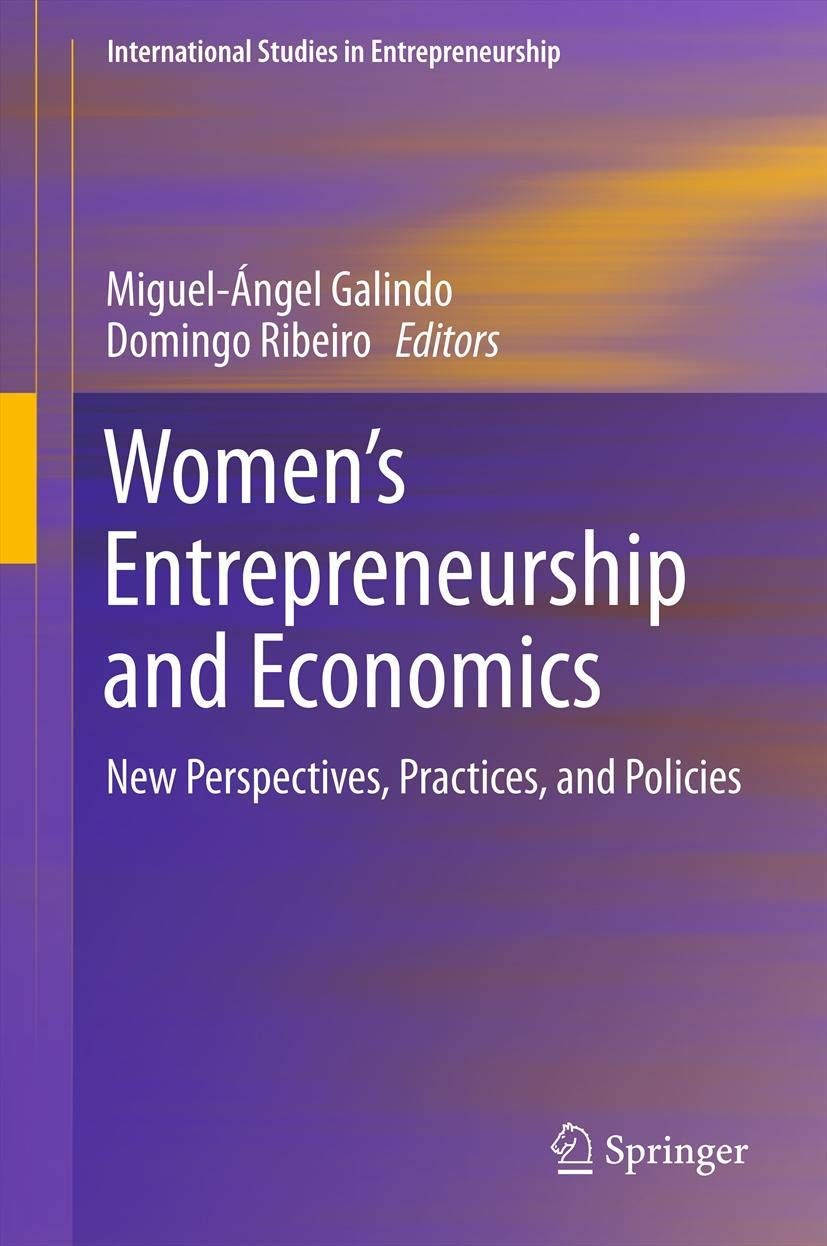
Women's Entrepreneurship and Economics (English, Miguel-Angel Galindo | Domingo Ribeiro)

Economics
Trade Policy and Industrialization in Turbulent Times | by Gerry Helleiner | Routledge | by Gerry Helleiner | Routledge | by Gerry Helleiner | Routledge | by Gerry Helleiner | Routledge | by Gerry Helleiner | Routledge | by Gerry Helleiner | Routledge | by Gerry Helleiner | Routledge | by Gerry Helleiner | Routledge | by Gerry Helleiner | Routledge | by Gerry Helleiner | Routledge | by Gerry Helleiner | Routledge | by Gerry Helleiner | Routledge | by Gerry Helleiner | Routledge | by Gerry Hellei
Economics
History of Economic Analysis | by Schumpeter Joseph A. | Taylor & Francis Ltd | by Schumpeter Joseph A. | Taylor & Francis Ltd | by Schumpeter Joseph A. | Taylor & Francis Ltd | by Schumpeter Joseph A. | Taylor & Francis Ltd | by Schumpeter Joseph A. | Taylor & Francis Ltd | by Schumpeter Joseph A. | Taylor & Francis Ltd | by Schumpeter Joseph A. | Taylor & Francis Ltd | by Schumpeter Joseph A. | Taylor & Francis Ltd | by Schumpeter Joseph A. | Taylor & Franci

Economics
OECD Compendium of Productivity Indicators 2015 | by Organization for Economic Cooperation an | Organization for Economic Co-Operation & Deve | by Organization for Economic Cooperation an | Organization for Economic Co-Operation & Deve | by Organization for Economic Cooperation an | Organization for Economic Co-Operation & Deve | by Organization for Economic Cooperation an | Organization for Economic Co-Operation & Deve | by Organization for Economic Cooperation an | Organization

Economics