
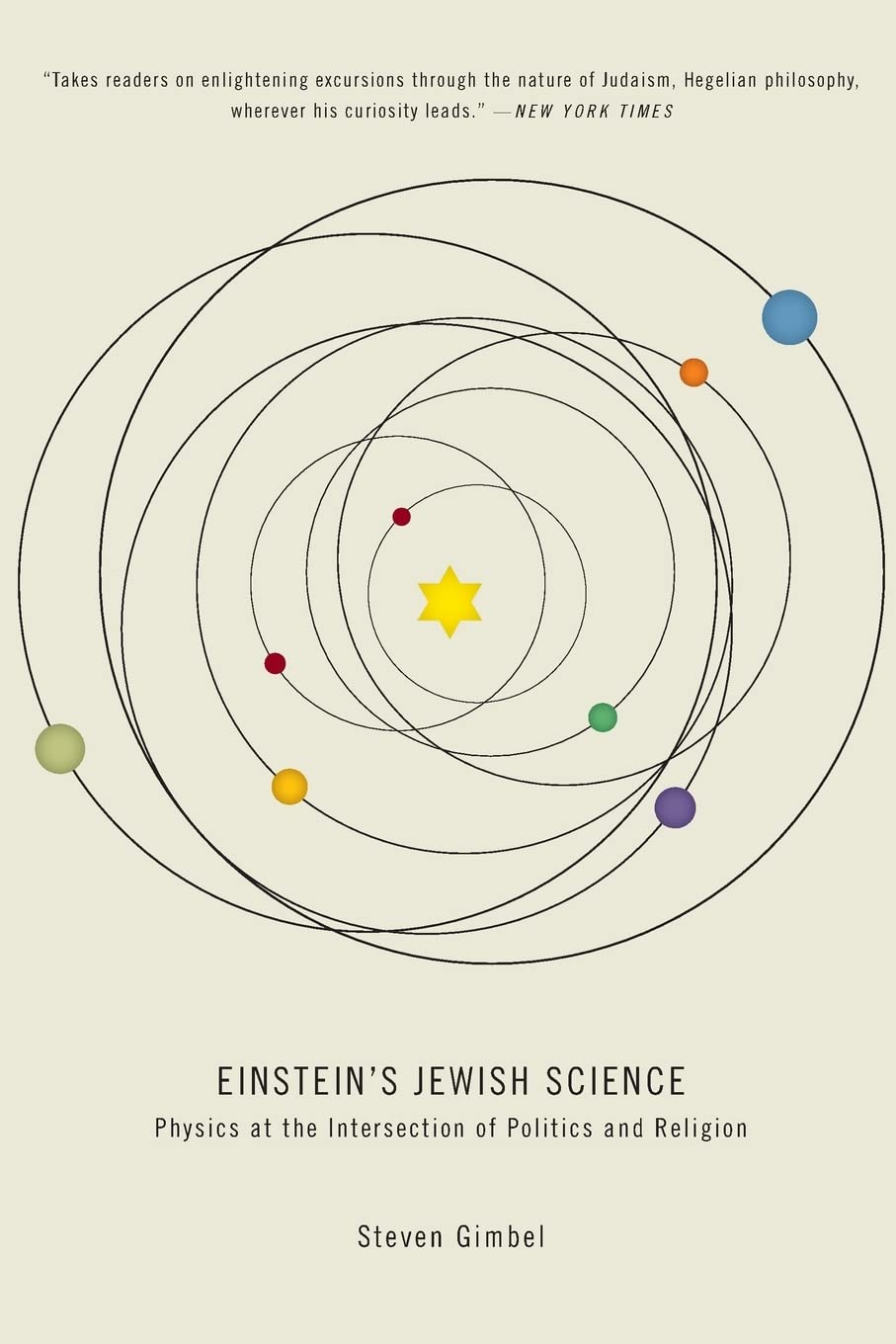
Einstein's Jewish Science: Physics at the Intersection of Politics and Religion by Steven Gimbel – A Deep Dive into the
Inclusive of all applicable taxes. FREE shipping on all orders.
Available Offers
- 🚚Free Delivery — Free shipping on all orders
- 💵Cash on Delivery — Pay when your order arrives
- ↩️15-Day Easy Returns — Hassle-free return policy
- 🔒Cash on Delivery — Pay safely when your order arrives
Check Delivery
Product Description
Introduction
In the annals of modern physics, few figures loom as large as Albert Einstein. Yet, his monumental theory of relativity was not merely a scientific breakthrough—it became a lightning rod for ideological battlegrounds. In Einstein's Jewish Science: Physics at the Intersection of Politics and Religion, philosopher of science Steven Gimbel takes readers on a provocative journey into the heart of a question that still resonates today: Was Einstein's theory, as the Nazis scornfully claimed, 'Jewish science'? This book is not just about physics; it is a deep exploration of identity, prejudice, and the hidden influences that shape scientific thought.
Book Overview
Steven Gimbel challenges us to confront an uncomfortable possibility: that the Nazis' label, however hateful, might contain a kernel of truth—not about racial inferiority, but about the cultural and philosophical roots of scientific inquiry. Gimbel argues that to fully understand Einstein's work, one must understand the man: his Jewish heritage, his philosophical leanings, and the religious and political environment in which he lived. The book weaves together history, religion, and physics to reveal how Einstein's background may have subtly shaped his revolutionary ideas. It is a compelling narrative that refuses to separate the scientist from the person, showing that science is never done in a vacuum.
Key Highlights
- Finalist for the Gerrard and Ella Berman Memorial Award of the Jewish Book Council, underscoring its scholarly and cultural significance.
- Explores the controversial phrase 'Jewish science' from historical, political, and philosophical angles.
- Examines Einstein's Jewish identity and how it influenced his approach to physics, without resorting to stereotypes.
- Bridges the gap between science and humanities, making complex ideas accessible to non-scientists.
- Offers a balanced perspective that takes the Nazi claim seriously while dismantling its racist foundations.
Inside the Book
The book is divided into carefully crafted chapters that move from historical context to philosophical analysis. Gimbel begins with the rise of anti-Semitism in early 20th-century Germany and the political weaponization of science. He then delves into Einstein's personal writings, his philosophical influences (including Spinoza and Kant), and his views on religion. The middle sections explore how Einstein's theory of relativity was received differently in Jewish and non-Jewish circles, and what that says about the sociology of knowledge. The final chapters tackle the broader question: Can a scientific theory have a cultural or religious identity? Throughout, Gimbel uses clear, engaging prose that makes dense topics feel immediate and relevant.
Key Topics
- The political misuse of science by Nazi ideology
- Einstein's Jewish heritage and its role in his intellectual development
- The philosophy of science and the nature of objectivity
- Relativity theory and its cultural reception
- The intersection of religion, politics, and scientific discovery
- Identity formation in the context of persecution
Reader Benefits
This book offers readers a rare chance to see Einstein not as a disembodied genius, but as a human being shaped by his times. You will gain a deeper appreciation for how cultural forces influence even the most abstract scientific theories. The book also sharpens critical thinking about labels and stereotypes, showing how a pejorative term can be re-examined to reveal hidden truths. For students of physics, history, or philosophy, it provides a rich interdisciplinary perspective that standard textbooks ignore.
Learning Outcomes
By reading this book, you will be able to: understand the historical context of the 'Jewish science' slur; analyze how personal identity can influence scientific creativity; evaluate the relationship between politics and scientific legitimacy; and articulate a nuanced view of Einstein's legacy that goes beyond equations. The book also equips readers with tools to recognize ideological biases in scientific discourse, a skill increasingly valuable in today's world.
Who Should Read
Einstein's Jewish Science is ideal for curious readers who love science but also care about history and culture. It is perfect for university students in physics, philosophy, religious studies, or modern history. Teachers and educators looking for a thought-provoking supplementary text will find it invaluable. General readers with an interest in Einstein, the Holocaust, or the sociology of knowledge will be deeply engaged. If you have ever wondered whether science can ever be truly neutral, this book is for you.
About the Author
Steven Gimbel is a professor of philosophy at Gettysburg College, where he specializes in the philosophy of science, the history of physics, and Jewish thought. He has written extensively on Einstein, including the acclaimed book Einstein: A Biography. Gimbel's work is known for its clarity, depth, and willingness to tackle controversial questions head-on. His unique blend of scientific literacy and philosophical rigor makes him the perfect guide for this challenging topic.
About the Publisher
Johns Hopkins University Press is one of the oldest and most respected academic publishers in the United States, known for producing works of exceptional scholarship in science, medicine, and the humanities. Their commitment to intellectual rigor and accessible writing ensures that this book meets the highest standards of quality. For Indian readers, this hardcover edition brings world-class research into your hands, perfect for building a serious personal library.
Conclusion
Einstein's Jewish Science is a bold and necessary book that forces us to rethink the relationship between identity and knowledge. It is not an easy read—it asks hard questions and refuses to give simple answers. But for those willing to engage, it offers profound insights into one of history's greatest minds and the forces that shaped him. Whether you are a student, a teacher, or a lifelong learner, this book will change the way you see Einstein, science, and the world. Add this hardcover to your collection today and join the conversation.
Quick Summary
Einstein's Jewish Science: Physics at the Intersection of Politics and Religion by Steven Gimbel is a provocative and scholarly exploration of one of history's most charged scientific labels. The book delves into the Nazi accusation that Albert Einstein's theory of relativity was 'Jewish science,' a phrase used to denigrate both the man and his work. Gimbel, a philosopher of science, takes this claim seriously, not as an endorsement of Nazi ideology, but as a lens to examine how cultural, religious, and political contexts shape scientific thought. He argues that Einstein's Jewish heritage, his philosophical inclinations, and the anti-Semitic environment of early 20th-century Germany all played a role in the development of relativity. The book is aimed at students, academics, and general readers interested in the intersections of science, history, and philosophy. Readers will gain a deeper understanding of Einstein not just as a physicist, but as a product of his time and identity. They will learn to critically evaluate how external factors influence scientific discovery. This hardcover edition from Johns Hopkins University Press is a valuable addition to any library, offering a unique perspective that challenges conventional narratives. By purchasing from Bookshops.in, Indian readers get a premium, authentic edition with reliable delivery and customer service.
Book Highlights
Book Specifications
| ISBN-13 | 9781421411828 |
| ISBN-10 | 1421411822 |
| Publisher | Johns Hopkins Univ Pr |
| Language | English |
| Dimensions | 15.24 x 1.47 x 22.86 cm |
| Weight | 363 g |
| Country | India |
| Category | Religious Groups Studies › Jewish |
| Genre | Non-fiction |
| Reading Age | Adult |
| Original Language | English |
Frequently Asked Questions
What is the main argument of Einstein's Jewish Science?
Is this book suitable for readers without a science background?
Does the book support Nazi claims about science?
What makes this book different from other Einstein biographies?
Who is Steven Gimbel?
Can I use this book for academic research?
How does the book address Indian readers?
What is the price in India?
Does the book include illustrations?
Is the book heavy or large?
What is the ISBN?
Where can I buy this book in India?
Does the book have any awards?
Readers Also Search For
Customers Also Bought

Sociology
Imagination Beyond Nation: Latin American Popular Culture: 349 (Pitt Latin American Series)

Sociology
Boomer Volunteer Engagement: Facilitator's Tool Kit

Sociology
Making a Success of Marriage: Planning for Happily Ever After

Sociology
Causal Mediation Analysis (Analytical Methods for Social Research)

Sociology
Marriage and the Moral Imagination (New Departures in Anthropology)

Sociology
Social Change, Resistance and Social Practices: 19 (Studies in Critical Social Sciences, 19)
Related Products
View All
Society & Social Sciences
Oxford Studies in Epistemology, Volume 3 | by Tamar Szabo Gendler | John Hawthorne | OUP UK | by Tamar Szabo Gendler | John Hawthorne | OUP UK | by Tamar Szabo Gendler | John Hawthorne | OUP UK | by Tamar Szabo Gendler | John Hawthorne | OUP UK | by Tamar Szabo Gendler | John Hawthorne | OUP UK | by Tamar Szabo Gendler | John Hawthorne | OUP UK | by Tamar Szabo Gendler | John Hawthorne | OUP UK | by Tamar Szabo Gendler | John Hawthorne | OUP UK | by Tamar Szabo Gendler | John Hawthorne | OUP UK

Society & Social Sciences
Sidgwick's Ethics and Victorian Moral Philosophy | by J. B. Schneewind | Jerome B. Schneewind | OUP Oxford | by J. B. Schneewind | Jerome B. Schneewind | OUP Oxford | by J. B. Schneewind | Jerome B. Schneewind | OUP Oxford | by J. B. Schneewind | Jerome B. Schneewind | OUP Oxford | by J. B. Schneewind | Jerome B. Schneewind | OUP Oxford | by J. B. Schneewind | Jerome B. Schneewind | OUP Oxford | by J. B. Schneewind | Jerome B. Schneewind | OUP Oxford | by J. B. Schneewind | Jerome B. Schneewind

Society & Social Sciences
Cognitive Phenomenology | by Tim Bayne | Michelle Montague | OUP UK | by Tim Bayne | Michelle Montague | OUP UK | by Tim Bayne | Michelle Montague | OUP UK | by Tim Bayne | Michelle Montague | OUP UK | by Tim Bayne | Michelle Montague | OUP UK | by Tim Bayne | Michelle Montague | OUP UK | by Tim Bayne | Michelle Montague | OUP UK | by Tim Bayne | Michelle Montague | OUP UK | by Tim Bayne | Michelle Montague | OUP UK | by Tim Bayne | Michelle Montague | OUP UK | by Tim Bayne | Michelle Montague |

Society & Social Sciences
Alasdair MacIntyre on Practical Philosophy | by Kelvin Knight | Peter Wicks | University of Notre Dame Press | by Kelvin Knight | Peter Wicks | University of Notre Dame Press | by Kelvin Knight | Peter Wicks | University of Notre Dame Press | by Kelvin Knight | Peter Wicks | University of Notre Dame Press | by Kelvin Knight | Peter Wicks | University of Notre Dame Press | by Kelvin Knight | Peter Wicks | University of Notre Dame Press | by Kelvin Knight | Peter Wicks | University of Notre Dame P

Society & Social Sciences
Philosophical Historicism and the Betrayal of First Philosophy | by Carl Page | Penn State University Press | by Carl Page | Penn State University Press | by Carl Page | Penn State University Press | by Carl Page | Penn State University Press | by Carl Page | Penn State University Press | by Carl Page | Penn State University Press | by Carl Page | Penn State University Press | by Carl Page | Penn State University Press | by Carl Page | Penn State University Press | by Carl Page | Penn State Univ

Society & Social Sciences