
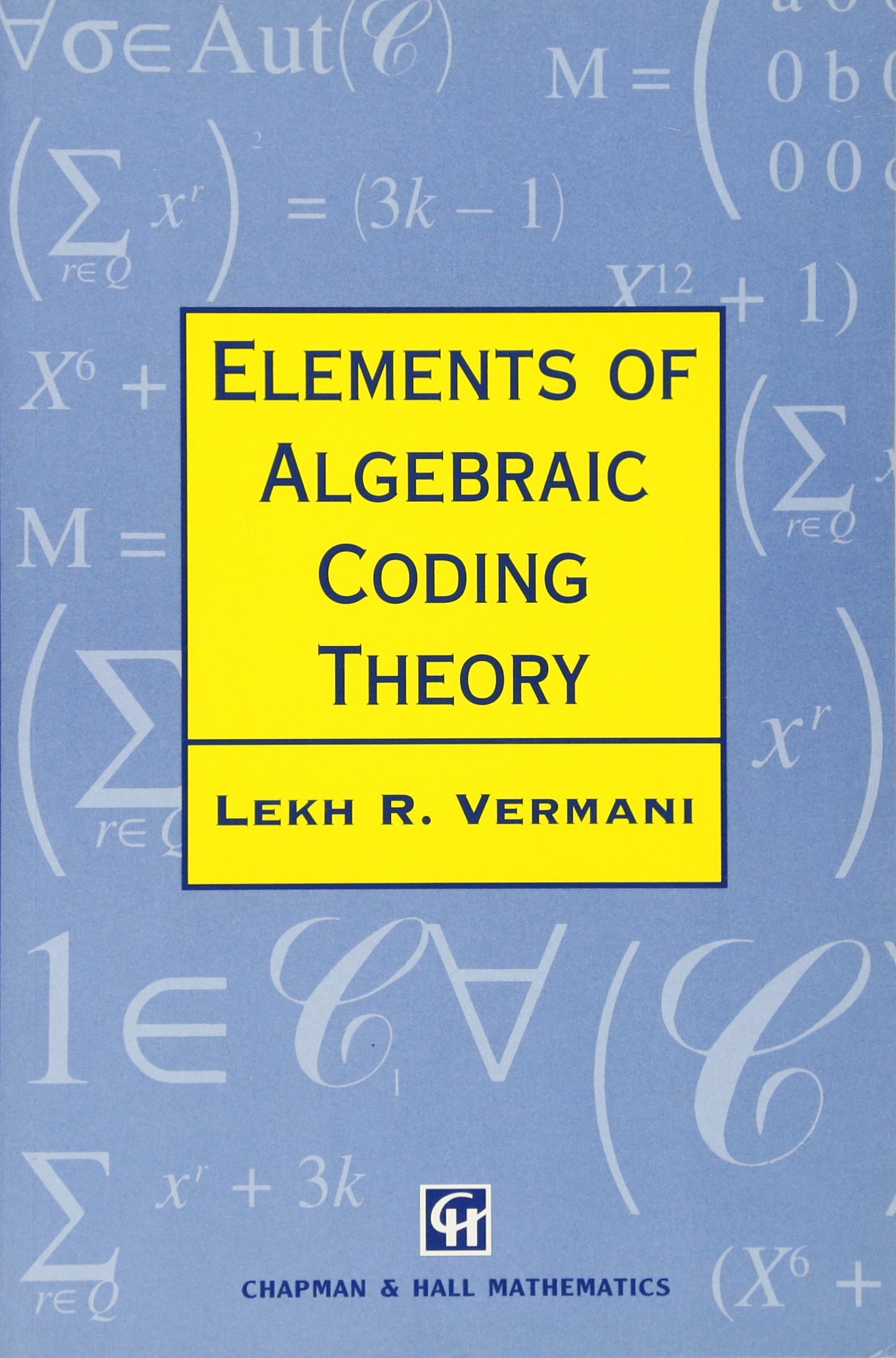
Elements of Algebraic Coding Theory by Vermani L.R. – A Complete Guide to Coding Theory for Indian Students
Inclusive of all applicable taxes. FREE shipping on all orders.
Available Offers
- 🚚Free Delivery — Free shipping on all orders
- 💵Cash on Delivery — Pay when your order arrives
- ↩️15-Day Easy Returns — Hassle-free return policy
- 🔒Cash on Delivery — Pay safely when your order arrives
Check Delivery
Product Description
Introduction
In the age of digital communication, ensuring that data is transmitted accurately and efficiently is a challenge that lies at the heart of modern technology. Elements of Algebraic Coding Theory, 1st Edition by L.R. Vermani offers a rigorous yet accessible introduction to the mathematical foundations that make error-free communication possible. Published by Taylor & Francis Ltd, this hardcover volume is an indispensable resource for Indian students and professionals delving into the world of coding theory. With a perfect blend of theory and practice, the book equips readers with the tools to understand and design codes that protect information from noise and corruption.
Book Overview
This textbook is designed as a principal text for first courses in coding and algebraic coding theory, aimed at advanced undergraduates and recent graduates. The author, L.R. Vermani, brings decades of teaching and research experience to the table, presenting complex concepts with clarity and precision. The book covers a wide spectrum of topics, from basic group codes to advanced BCH and cyclic codes, all while maintaining a logical flow that builds upon previous knowledge. It is equally suitable for self-study and classroom use, making it a versatile addition to any student's library.
Key Highlights
- Comprehensive Coverage: Introduces a wide range of codes including Hamming codes, polynomial codes, cyclic codes, BCH codes, and group codes, ensuring a solid foundation in both classical and modern coding techniques.
- Worked Examples: Numerous fully solved examples illustrate key concepts, helping readers bridge the gap between theory and application.
- Rigorous Proofs: Complete logical proofs accompany every major theorem, fostering a deep understanding rather than rote memorization.
- Self-Study Friendly: Structured with clear headings, summaries, and exercises, the book is ideal for independent learners who wish to master algebraic coding at their own pace.
- Indian Context: Written with an international perspective but relevant to Indian curricula, the book aligns well with university syllabi in mathematics, computer science, and electrical engineering.
Inside the Book
Readers will find a well-organized journey through the algebraic structures that underpin coding theory. The text begins with fundamental concepts from abstract algebra, such as groups, rings, and fields, before moving into the construction and analysis of error-correcting codes. Each chapter introduces new ideas with motivation, followed by detailed derivations and examples. The inclusion of polynomial codes and cyclic codes provides a bridge to more advanced topics like BCH codes, which are widely used in practical systems such as satellite communications and data storage. The book also covers decoding algorithms, giving readers hands-on insight into how codes are implemented.
Key Topics
- Linear codes and their properties
- Hamming codes and their decoding
- Cyclic codes and generator polynomials
- BCH codes and error correction
- Group codes and algebraic structures
- Polynomial codes and finite fields
- Encoding and decoding techniques
- Bounds on codes and perfect codes
Reader Benefits
By working through this book, students will gain a strong command of algebraic methods used in coding theory. They will be able to construct and analyze codes, understand the trade-offs between error correction capability and efficiency, and appreciate the elegance of algebraic reasoning. The numerous exercises and examples ensure that readers can test their understanding and apply concepts to real-world problems. For Indian students preparing for competitive exams or advanced research, this book serves as a solid stepping stone into the field of information theory and cryptography.
Learning Outcomes
- Master the algebraic foundations of coding theory, including finite fields and polynomial rings.
- Design and analyze linear codes, cyclic codes, and BCH codes.
- Understand the encoding and decoding processes for various code families.
- Evaluate code performance using parameters like minimum distance and error-correction capability.
- Apply coding theory concepts to practical scenarios in communication and data storage.
Who Should Read
This book is tailored for advanced undergraduate and postgraduate students in mathematics, computer science, electrical engineering, and information technology. It is also an excellent resource for researchers and professionals who wish to refresh or deepen their knowledge of algebraic coding. Anyone with a basic background in linear algebra and abstract algebra will find the material accessible and rewarding. Indian students pursuing B.Tech, M.Sc., or M.Tech degrees will particularly benefit from the systematic presentation and exam-oriented approach.
About the Author
L.R. Vermani is a distinguished academician and mathematician with extensive experience in teaching and research in algebra and coding theory. He has authored several textbooks and research papers, and his work has been widely appreciated for its clarity and depth. His expertise in abstract algebra and its applications makes him a trusted guide for students navigating the complexities of coding theory.
About the Publisher
Taylor & Francis Ltd is a globally renowned academic publisher known for producing high-quality textbooks and reference works in science, technology, engineering, and mathematics. With a legacy of excellence spanning centuries, the publisher ensures that every title meets rigorous academic standards. This hardcover edition reflects their commitment to durability and readability, making it a lasting addition to any library.
Conclusion
Elements of Algebraic Coding Theory, 1st Edition is more than just a textbook; it is a gateway to understanding the mathematical backbone of reliable communication. Whether you are a student preparing for a career in technology, a researcher exploring error-correcting codes, or a self-learner with a passion for mathematics, this book offers the knowledge and tools you need. Order your copy from Bookshops.in today and embark on a journey into the elegant world of algebraic coding.
Quick Summary
Elements of Algebraic Coding Theory by Vermani L.R. is a foundational textbook that introduces the mathematical principles behind error-correcting codes. Written for advanced undergraduates and recent graduates, it covers essential topics such as BCH codes, Hamming codes, cyclic codes, group codes, and polynomial codes. The book stands out for its clear logical proofs and numerous worked examples, making it ideal for both classroom use and independent study. Readers will gain a deep understanding of finite fields, encoding and decoding procedures, and the algebraic structures that underpin modern communication systems. Published by Taylor & Francis Ltd, this hardcover edition is a trusted resource for Indian students pursuing mathematics, computer science, or engineering. By purchasing from Bookshops.in, you get a genuine copy delivered across India, along with reliable customer service. Whether you are preparing for exams or building research skills, this book equips you with the theoretical and practical tools needed to master algebraic coding theory.
Book Highlights
Book Specifications
| ISBN-13 | 9780412573804 |
| ISBN-10 | 0412573806 |
| Publisher | Routledge |
| Language | English |
| Dimensions | 16.51 x 1.27 x 24.13 cm |
| Weight | 340 g |
| Country | India |
| Category | Mathematics › Algebra & Trigonometry |
| Genre | Non-fiction |
| Original Language | English |
Frequently Asked Questions
What is algebraic coding theory?
Who is the author of this book?
What topics are covered in this book?
Is this book suitable for beginners?
Does the book include worked examples?
What is the ISBN?
Is this book available in hardcover?
Can I use this book for self-study?
What is the price in INR?
Who is the publisher?
Does the book cover error detection?
What is the language of the book?
Is this book used in Indian universities?
Readers Also Search For
Customers Also Bought
Mathematics
Stereotype Spaces and Algebras: 73 (De Gruyter Expositions in Mathematics, 73)
Mathematics
Semigroups in Algebra, Geometry and Analysis: 20 (De Gruyter Expositions in Mathematics, 20)
Mathematics
Geometry from the Pacific Rim: Proceedings of the Pacific Rim Geometry Conference held at National University of Singapore, Republic of Singapore, ... 1994 (De Gruyter Proceedings in Mathematics)
Mathematics
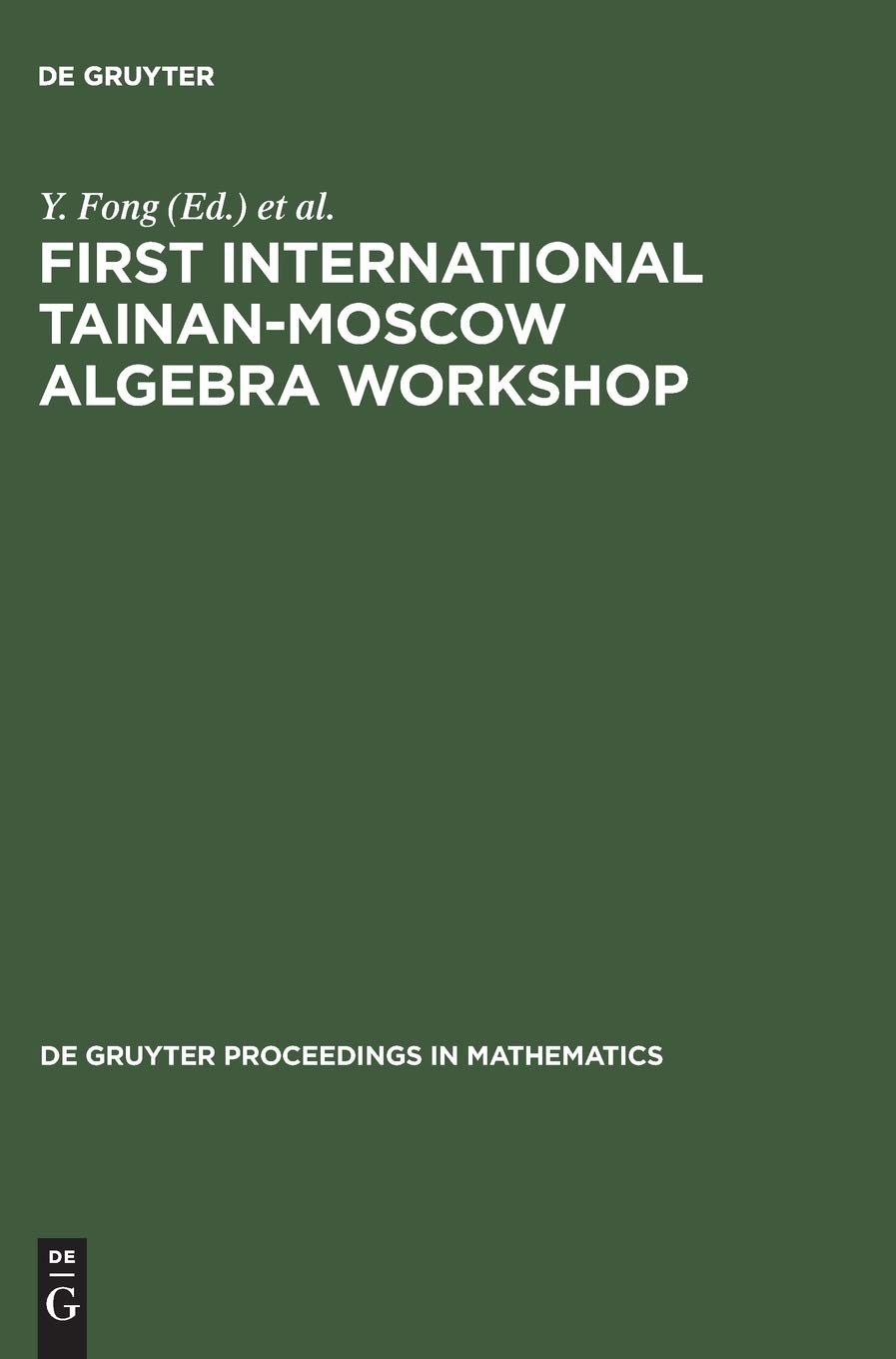
First International Tainan-Moscow Algebra Workshop: Proceedings of the International Conference held at National Cheng Kung University Tainan, Taiwan, ... 1994 (De Gruyter Proceedings in Mathematics)
Mathematics
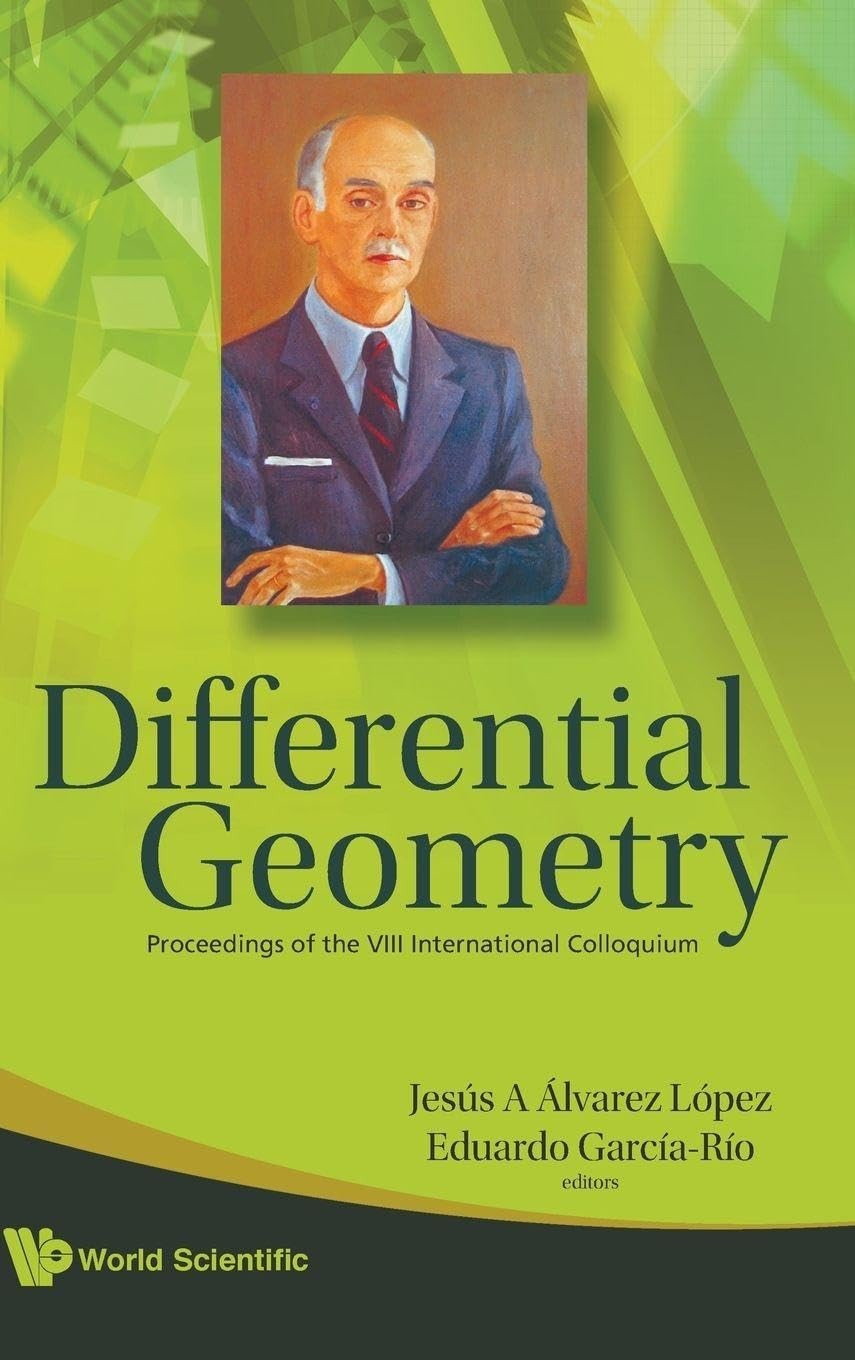
Differential Geometry - Proceedings of the VIII International Colloquium (English, Jesus A. Alvarez Lopez | Eduardo Garcia-Rio)
Mathematics
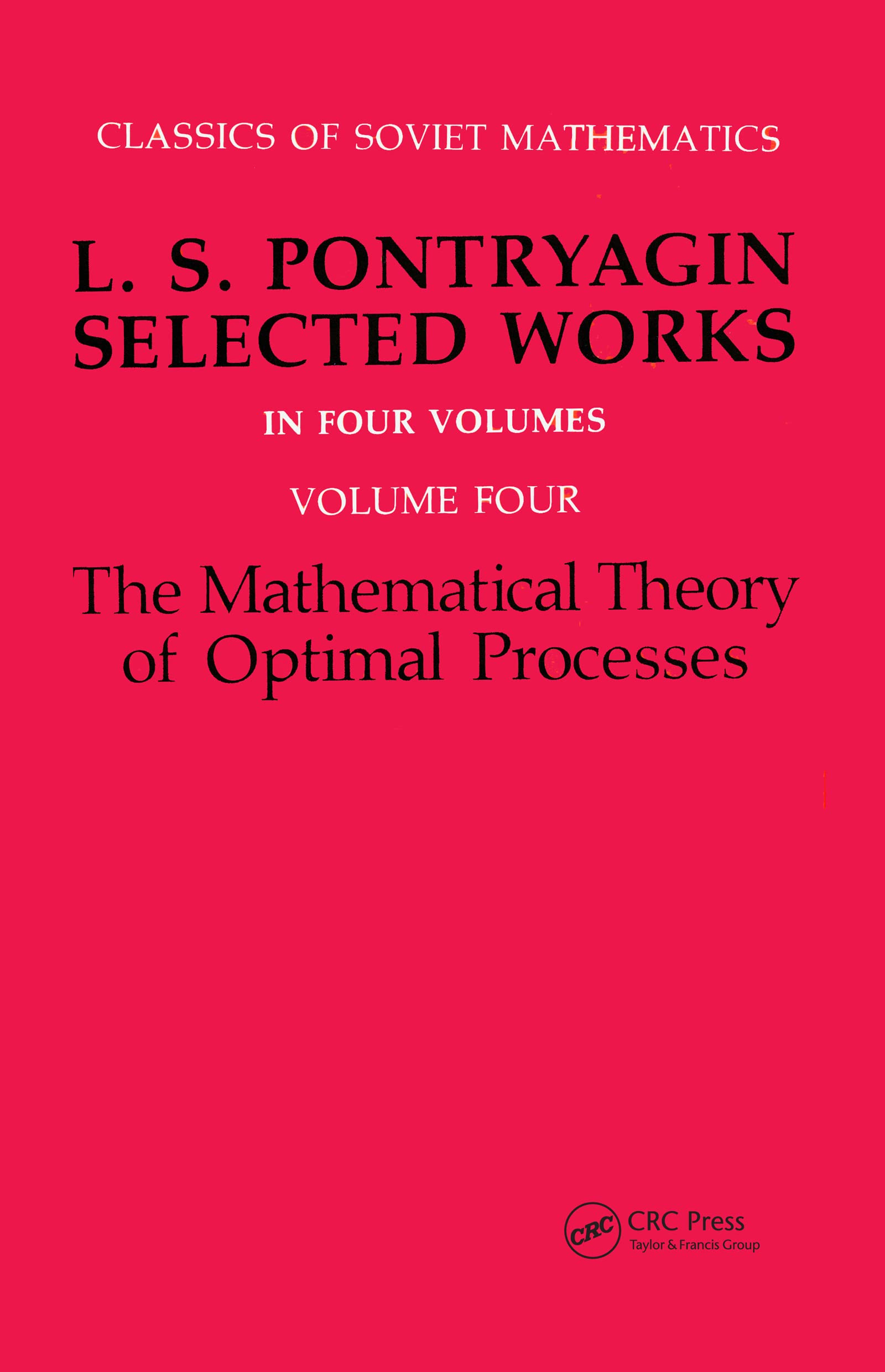
Mathematical Theory of Optimal Processes (Classics of Soviet Mathematics)
Related Products
View AllMathematics
Mathematical Theory of Optimal Processes (Classics of Soviet Mathematics)
Mathematics
Stereotype Spaces and Algebras: 73 (De Gruyter Expositions in Mathematics, 73)
Mathematics
Semigroups in Algebra, Geometry and Analysis: 20 (De Gruyter Expositions in Mathematics, 20)
Mathematics
Geometry from the Pacific Rim: Proceedings of the Pacific Rim Geometry Conference held at National University of Singapore, Republic of Singapore, ... 1994 (De Gruyter Proceedings in Mathematics)
Mathematics
First International Tainan-Moscow Algebra Workshop: Proceedings of the International Conference held at National Cheng Kung University Tainan, Taiwan, ... 1994 (De Gruyter Proceedings in Mathematics)
Mathematics