

Elements of the Representation Theory of Associative Algebras by Daniel Simson – A Graduate-Level Exploration of Quivers
Inclusive of all applicable taxes. FREE shipping on all orders.
Available Offers
- 🚚Free Delivery — Free shipping on all orders
- 💵Cash on Delivery — Pay when your order arrives
- ↩️15-Day Easy Returns — Hassle-free return policy
- 🔒Cash on Delivery — Pay safely when your order arrives
Check Delivery
Product Description
Introduction
For serious students and researchers in advanced algebra, the study of representation theory is a gateway to understanding the structural depth of associative algebras. Elements of the Representation Theory of Associative Algebras by Daniel Simson is the definitive third volume in a landmark series published by Cambridge University Press. This hardcover edition is an essential resource for Indian graduate students and mathematicians seeking a rigorous, modern treatment of representation-infinite algebras and the intricate time-wild dichotomy. Tailored for academic libraries, research labs, and self-study, this book offers a complete, self-contained journey into homological algebra and quiver representations.
Book Overview
This volume completes a three-volume set that presents a contemporary account of the representation theory of finite-dimensional associative algebras over an algebraically closed field. The narrative is built around linear representations of quivers and homological methods, culminating in a deep exploration of tilted algebras. The author masterfully guides readers through the representation theory of representation-infinite algebras, focusing on the critical distinction between tame and wild representation types. The book also includes a curated collection of selected results that tie together material from all three volumes, making it a cohesive capstone for the series.
Key Highlights
- Comprehensive and Self-Contained: Proofs are presented in complete detail, with no steps omitted, ensuring clarity for advanced learners.
- Modern Perspective: Focuses on the time-wild dichotomy, a cornerstone concept in contemporary algebra.
- Rich Pedagogical Features: Includes numerous illustrative examples and a large number of exercises at the end of each chapter.
- Authoritative Publisher: Published by Cambridge University Press, a hallmark of academic excellence.
- Durable Hardcover: Ideal for long-term reference in Indian university libraries and personal collections.
Inside the Book
The text is meticulously structured to build from foundational concepts to advanced topics. Early chapters revisit essential homological algebra and quiver representations, while later sections delve into the construction and classification of tilted algebras. The author provides a detailed analysis of representation-infinite algebras, explaining how the representation type (tame or wild) influences the structure of indecomposable modules. Special attention is given to the time-wild dichotomy, a key theorem that distinguishes between tame behaviour (where modules can be parametrized in a controlled way) and wild behaviour (which contains the representation theory of all finite-dimensional algebras). The final chapter gathers selected results from all three volumes, offering a panoramic view of the field.
Key Topics
- Linear representations of quivers and their homological algebra
- Finite-dimensional associative algebras over algebraically closed fields
- Representation-infinite tilted algebras
- The tame-wild dichotomy and its implications
- Indecomposable modules and Auslander-Reiten theory
- Homological dimensions and derived categories
- Selected advanced results bridging all three volumes
Reader Benefits
- Deep Theoretical Understanding: Gain a firm grasp of the most advanced concepts in representation theory.
- Research Readiness: The book is designed to prepare graduate students for independent research in algebra.
- Self-Study Friendly: Complete proofs and abundant exercises allow for solo exploration without external guidance.
- Comprehensive Reference: The collection of selected results serves as a valuable reference for mathematicians in other fields.
- Indian Context: Ideal for students pursuing MSc, PhD, or research positions in Indian institutes like IISc, TIFR, IITs, and central universities.
Learning Outcomes
By the end of this volume, readers will be able to: analyse the representation type of a given algebra using quiver methods; construct and classify tilted algebras; apply homological algebra techniques to study module categories; understand the tame-wild dichotomy and its proof; navigate advanced literature in representation theory; and connect ideas across all three volumes of the series. The exercises reinforce these outcomes by challenging the reader to apply concepts to new problems.
Who Should Read
This book is primarily addressed to graduate students starting research in the representation theory of algebras. It is also highly suitable for mathematicians in other branches of algebra who wish to expand their expertise. Researchers in homological algebra, quiver theory, and non-commutative geometry will find it indispensable. Advanced undergraduates with a strong background in abstract algebra may also benefit, though prior exposure to basic representation theory is assumed. Indian students preparing for NET, GATE, or doctoral entrance exams in mathematics will find this volume a powerful tool for advanced study.
About the Author
Daniel Simson is a distinguished mathematician known for his extensive contributions to representation theory and homological algebra. With decades of teaching and research experience, he has authored several influential texts and research papers. His clear, methodical writing style makes complex topics accessible without sacrificing rigour. This volume reflects his deep commitment to educating the next generation of algebraists.
About the Publisher
Cambridge University Press is one of the world's oldest and most respected academic publishers. Known for its stringent editorial standards and high-quality production, CUP has been a trusted source for scholarly books and journals for over four centuries. This hardcover edition exemplifies their dedication to producing durable, authoritative texts that serve the global academic community, including the growing research ecosystem in India.
Conclusion
Elements of the Representation Theory of Associative Algebras is an indispensable resource for anyone serious about mastering advanced algebra. Its thorough coverage, complete proofs, and pedagogical richness make it ideal for both classroom use and independent study. Whether you are a graduate student at an Indian university or a seasoned mathematician, this volume will deepen your understanding of one of mathematics' most elegant and powerful theories. Order your copy from Bookshops.in today and add a cornerstone work to your library.
Quick Summary
Elements of the Representation Theory of Associative Algebras by Daniel Simson is the final volume of a distinguished three-part series that presents a modern, rigorous account of the representation theory of finite dimensional associative algebras over an algebraically closed field. This volume zeroes in on representation-infinite tilted algebras, exploring the time-wild dichotomy that classifies their representation types. The book is built around linear representations of quivers and homological algebra, with every proof given in complete detail to aid graduate students entering the field. It also includes a collection of selected results that tie together material from all three volumes, making it a valuable reference for researchers as well. Readers will gain deep insight into module categories, indecomposable modules, almost split sequences, and Coxeter functors. Written by a leading authority and published by Cambridge University Press, this hardcover edition is an essential resource for any serious mathematics library. By choosing Bookshops.in, Indian students and academics benefit from reliable delivery, competitive pricing, and a curated selection of advanced academic texts.
Book Highlights
Book Specifications
| ISBN-13 | 9780521882187 |
| ISBN-10 | 0521882184 |
| Publisher | Cambridge University Press |
| Language | English |
| Dimensions | 15.24 x 2.54 x 22.23 cm |
| Weight | 800 g |
| Country | India |
| Category | Mathematics › Algebra & Trigonometry |
| Genre | Non-fiction |
| Original Language | English |
Frequently Asked Questions
What is the main focus of this book?
Is this book suitable for beginners?
Does this book cover quiver representations?
What is the 'time-wild dichotomy'?
Can this volume be used independently?
Who is the author?
Is this book available in paperback?
Which publisher released this book?
Does the book include exercises?
What are the prerequisites for reading this book?
Is this book useful for researchers in other fields?
What is the ISBN?
Where can I buy this book in India?
Readers Also Search For
Customers Also Bought
Mathematics
Stereotype Spaces and Algebras: 73 (De Gruyter Expositions in Mathematics, 73)
Chemistry
Concise Encyclopedia of Biochemistry

Chemistry
Proceedings of the Third USSR - FRG Symposium, Makhachkala (USSR), October 2–6, 1980: 001
Physics
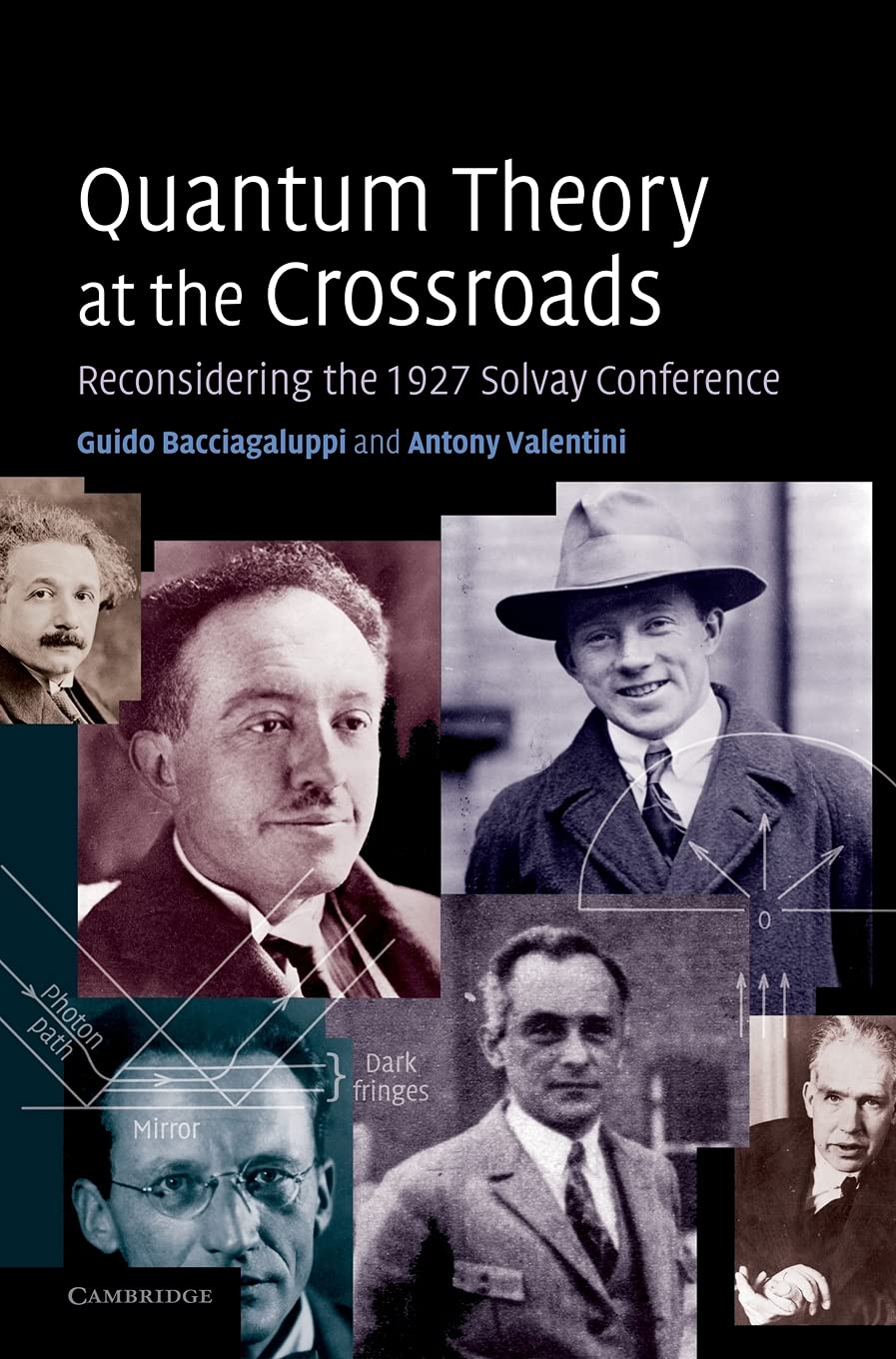
Quantum Theory at the Crossroads by Guido Bacciagaluppi – Quantum Mechanics History
Physics
The Quantum and Cosmic Codes of the Universe
Mathematics
Mathematical Theory of Optimal Processes (Classics of Soviet Mathematics)
Related Products
View AllMathematics
Stereotype Spaces and Algebras: 73 (De Gruyter Expositions in Mathematics, 73)
Mathematics
Semigroups in Algebra, Geometry and Analysis: 20 (De Gruyter Expositions in Mathematics, 20)
Mathematics
Geometry from the Pacific Rim: Proceedings of the Pacific Rim Geometry Conference held at National University of Singapore, Republic of Singapore, ... 1994 (De Gruyter Proceedings in Mathematics)
Mathematics
First International Tainan-Moscow Algebra Workshop: Proceedings of the International Conference held at National Cheng Kung University Tainan, Taiwan, ... 1994 (De Gruyter Proceedings in Mathematics)
Mathematics
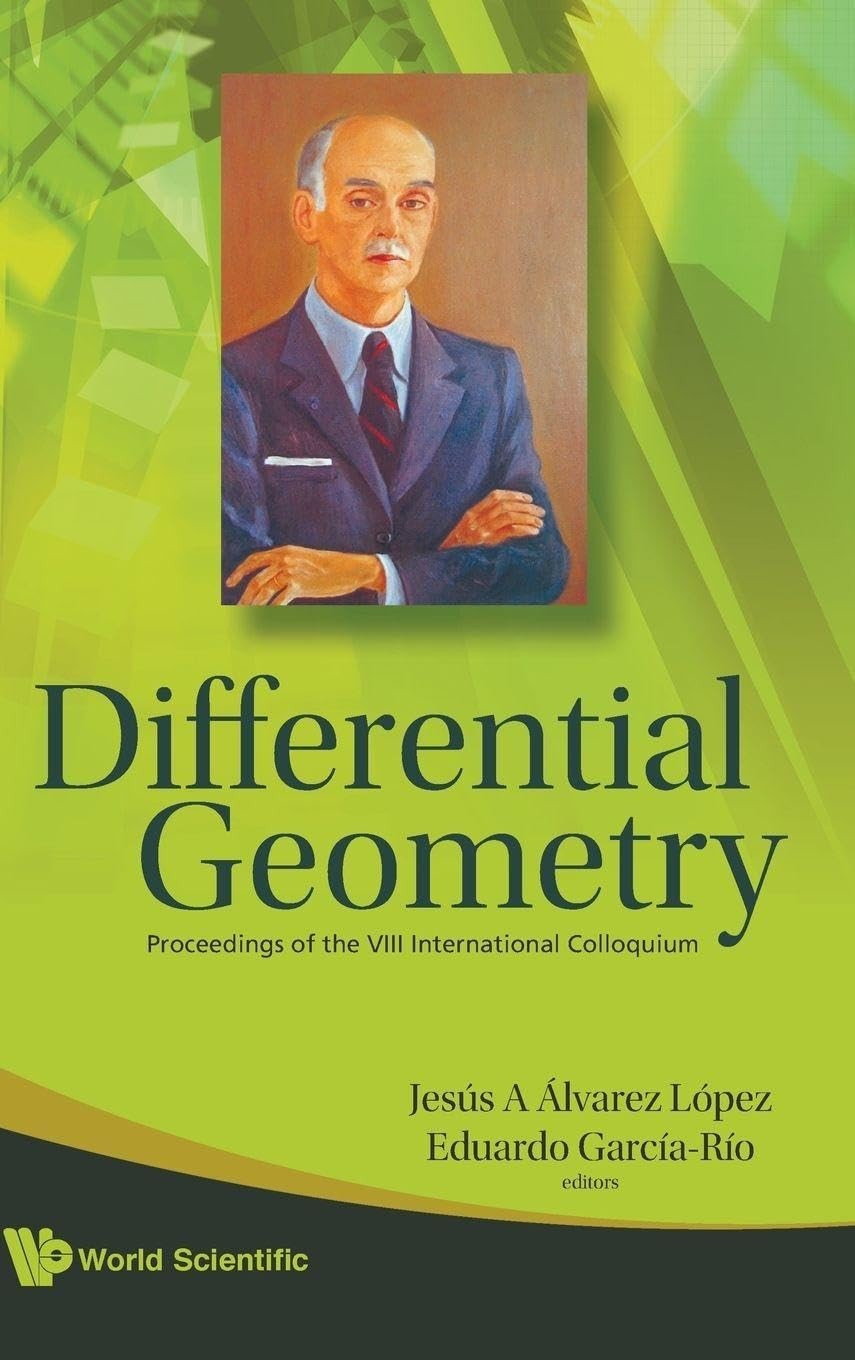
Differential Geometry - Proceedings of the VIII International Colloquium (English, Jesus A. Alvarez Lopez | Eduardo Garcia-Rio)
Mathematics