
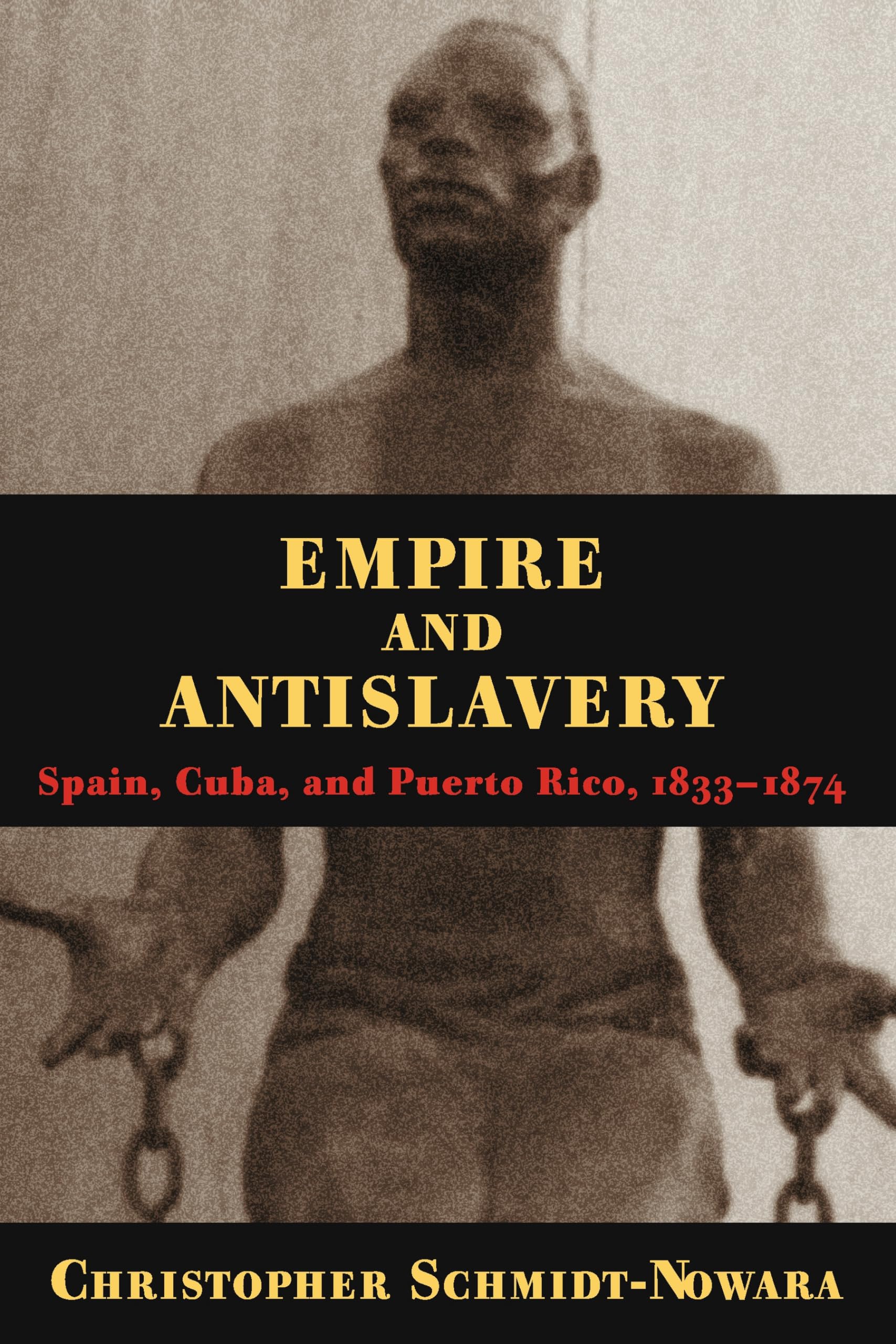
Empire and Antislavery: Spain, Cuba and Puerto Rico, 1833-1874 by Christopher Schmidt-Nowara – A Definitive Study of Abo
Inclusive of all applicable taxes. FREE shipping on all orders.
Available Offers
- 🚚Free Delivery — Free shipping on all orders
- 💵Cash on Delivery — Pay when your order arrives
- ↩️15-Day Easy Returns — Hassle-free return policy
- 🔒Cash on Delivery — Pay safely when your order arrives
Check Delivery
Product Description
Introduction
Empire and Antislavery: Spain, Cuba and Puerto Rico, 1833-1874 is a compelling historical study that delves into the complex dynamics of slavery, colonialism, and abolition in the Spanish Caribbean. Written by Christopher Schmidt-Nowara, this book offers a meticulous examination of how the Spanish empire grappled with the institution of slavery in its last remaining American colonies during the mid-nineteenth century. For Indian readers and students interested in comparative colonial histories, this work provides a fascinating parallel to the abolitionist movements in British India and the broader Atlantic world.
Book Overview
This hardcover volume from the University of Pittsburgh Press traces the origins and impact of the Spanish Abolitionist Society, founded in 1865, and its role in dismantling slavery in Cuba and Puerto Rico. The narrative spans from 1833, when the Spanish government began considering reform, to 1874, a period marked by intense political upheaval and colonial resistance. Schmidt-Nowara reveals how antislavery activism intersected with liberal politics, colonial governance, and economic interests, offering a nuanced perspective on the end of slavery in the Spanish empire.
Key Highlights
- Original Research: Based on extensive archival sources from Spain, Cuba, and Puerto Rico, providing fresh insights into the abolitionist movement.
- Comparative Framework: Examines the interplay between metropolitan Spanish politics and colonial realities, a model useful for understanding imperial systems globally.
- Critical Figures: Profiles key abolitionists, slaveowners, and colonial administrators who shaped the debate over slavery.
- Relevant to Indian Context: Offers parallels with the abolition of slavery under British rule in India (Indian Slavery Act, 1843) and the broader struggle for colonial reform.
Inside the Book
The book is structured to guide readers through the gradual evolution of antislavery thought in Spain and its colonies. Early chapters set the stage with the economic reliance on slave labor in Cuba’s sugar plantations and Puerto Rico’s coffee estates. Later sections explore the formation of the Spanish Abolitionist Society, its political strategies, and the backlash from pro-slavery factions. Schmidt-Nowara also analyzes the 1870 Moret Law, a partial abolition measure, and its limited implementation. The final chapters assess the long-term consequences of abolition for colonial governance and racial hierarchies.
Key Topics
- Colonial Economics: The centrality of slave labor to Cuban and Puerto Rican economies.
- Liberal Politics in Spain: How republican and liberal movements championed abolition.
- Transatlantic Activism: Connections between Spanish abolitionists and international antislavery networks.
- Resistance and Backlash: Slaveowner strategies to preserve slavery, including political lobbying and armed uprisings.
- Legacy of Abolition: The transition to free labor and its impact on post-slavery societies.
Reader Benefits
This book equips readers with a deep understanding of how empires negotiate moral and economic contradictions. For students of history, political science, and colonial studies, it provides a case study in policy reform under pressure. Researchers will appreciate the careful analysis of primary sources, while general readers gain insight into a lesser-known chapter of Atlantic history. The narrative is accessible yet scholarly, making it suitable for both academic and personal enrichment.
Learning Outcomes
- Understand the political and economic factors that sustained slavery in the Spanish Caribbean.
- Analyze the strategies used by abolitionists to influence colonial policy.
- Compare the Spanish abolition process with other colonial contexts, including British India.
- Evaluate the role of slave agency and resistance in shaping abolition outcomes.
- Identify the lasting effects of slavery on post-colonial societies in Latin America.
Who Should Read
This book is ideal for postgraduate and undergraduate students of history, especially those focusing on Atlantic history, colonial studies, or Latin American studies. Scholars of abolitionism and comparative slavery will find it an essential addition to their library. Indian readers interested in the global history of slavery and colonialism will appreciate its rigorous scholarship and clear narrative. It is also recommended for history enthusiasts seeking to expand their knowledge beyond the British and French colonial experiences.
About the Author
Christopher Schmidt-Nowara (1966–2015) was a distinguished historian of the Spanish empire and Atlantic world. He served as professor of history at Fordham University and later at Tufts University. His research focused on slavery, abolition, and colonialism in the nineteenth-century Spanish Caribbean. He authored several influential works, including The Conquest of History: Spanish Colonialism and National Histories in the Nineteenth Century. His scholarship is known for its depth, clarity, and commitment to uncovering marginalized voices in imperial history.
About the Publisher
The University of Pittsburgh Press is a renowned academic publisher based in Pennsylvania, USA. It is celebrated for its rigorous editorial standards and contributions to scholarship in history, political science, and Latin American studies. The press has published numerous award-winning works that advance understanding of global and regional histories. This volume is part of its prestigious series on Latin American and Caribbean history.
Conclusion
Empire and Antislavery is a vital contribution to the study of colonialism and abolition. It illuminates the fraught journey from slavery to freedom in the Spanish Caribbean, offering lessons that resonate with contemporary debates about justice and empire. For Indian readers, it provides a valuable comparative perspective on how colonial powers reformed their most oppressive institutions. This book is a must-have for anyone seeking a deeper, more global understanding of the antislavery struggle.
Quick Summary
Empire and Antislavery: Spain, Cuba and Puerto Rico, 1833-1874 by Christopher Schmidt-Nowara is a scholarly examination of the abolitionist movement in the Spanish Caribbean. The book focuses on the Spanish Abolitionist Society, founded in 1865, and its role in dismantling slavery in Cuba and Puerto Rico, where over 300,000 slaves remained in 1872. Schmidt-Nowara details how slaveowners, particularly in Cuba, resisted abolition because unfree labor was essential to colonial economies. The study also explores the broader colonial political reforms that accompanied the antislavery struggle. This book is ideal for Indian students and researchers in history, colonial studies, and Latin American studies. Readers will gain a nuanced understanding of how empire, economics, and activism intersected to end slavery. By purchasing from Bookshops.in, you receive a genuine hardcover edition from a trusted Indian bookstore.
Book Highlights
Book Specifications
| ISBN-13 | 9780822956907 |
| ISBN-10 | 082295690X |
| Publisher | Univ of Pittsburgh Pr |
| Language | English |
| Dimensions | 15.24 x 1.52 x 22.86 cm |
| Weight | 363 g |
| Category | Political Science › International Relations |
| Genre | Non-fiction |
| Original Language | English |
Frequently Asked Questions
What is Empire and Antislavery about?
Who is the author of this book?
Is this book suitable for Indian students?
What time period does the book cover?
Does the book discuss the 1870 gradual abolition law?
Is this a hardcover book?
What is the price of the book?
What language is the book in?
What is the ISBN of this book?
Is this book part of a series?
Can I use this book for academic research?
Does the book cover Puerto Rico specifically?
Why should I buy from Bookshops.in?
Readers Also Search For
Customers Also Bought
International Relations
Clients, Rivals, and Rogues: Why Great Powers Intervene in Revolutionary Civil Wars
International Relations
Foreign Ministries and the Information Revolution: Going Virtual?: 2 (Diplomatic Studies)
International Relations
From Pki to Comintern, 1924-1941: The Apprenticeship of the Malayan Communist Party: 8 (Southeast Asia Program Series, 8)
International Relations
The Evolving Terrorist Threat to Southeast Asia: A Net Assessment
International Relations
The Naval Policy of Austria-Hungary 1867-1918: Navalism, Industrial Development, and the Politics of Dualism (Central European Studies)

International Relations
New Technologies and Law of the Marine Environment: Nouvelles Technologies Et Droit De L'Environment Marin: 55 (International Enviornmental Law and Policy, 55)
Related Products
View AllInternational Relations
Clients, Rivals, and Rogues: Why Great Powers Intervene in Revolutionary Civil Wars
International Relations
Foreign Ministries and the Information Revolution: Going Virtual?: 2 (Diplomatic Studies)
International Relations
From Pki to Comintern, 1924-1941: The Apprenticeship of the Malayan Communist Party: 8 (Southeast Asia Program Series, 8)
International Relations
The Evolving Terrorist Threat to Southeast Asia: A Net Assessment
International Relations
The Naval Policy of Austria-Hungary 1867-1918: Navalism, Industrial Development, and the Politics of Dualism (Central European Studies)
International Relations