
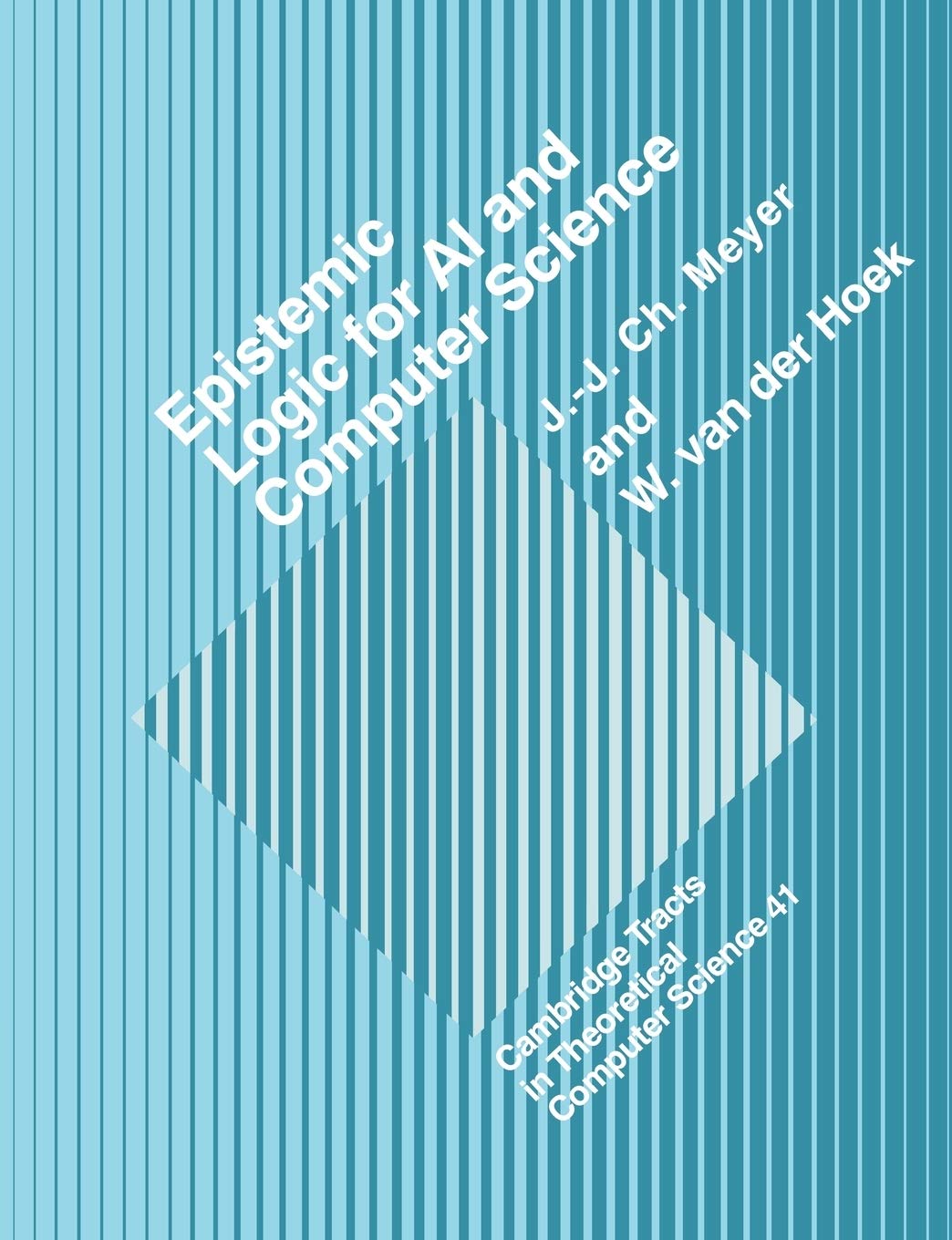
Epistemic Logic for AI and Computer Science by J. -J Ch Meyer – A Foundational Textbook on Knowledge and Belief in Multi
Inclusive of all applicable taxes. FREE shipping on all orders.
Available Offers
- 🚚Free Delivery — Free shipping on all orders
- 💵Cash on Delivery — Pay when your order arrives
- ↩️15-Day Easy Returns — Hassle-free return policy
- 🔒Cash on Delivery — Pay safely when your order arrives
Check Delivery
Product Description
Introduction
In an age where intelligent systems and autonomous agents are transforming industries, understanding how machines reason about knowledge and belief has become essential. Epistemic Logic for AI and Computer Science by J.-J. Ch. Meyer offers a rigorous yet accessible foundation for this fascinating field. Published by the prestigious Cambridge University Press, this hardbound edition is an indispensable resource for Indian students, researchers, and professionals diving into the logical underpinnings of artificial intelligence and distributed systems.
Book Overview
This carefully crafted volume bridges the gap between philosophical logic and practical computer science. It begins with essential mathematical and logical tools, including Kripke semantics and classic modal logics such as K, T, S4, and S5. From there, it explores how epistemic logic applies to distributed computing and AI, covering concepts like common knowledge, distributed knowledge, and the interplay between knowledge, time, and action. The book also tackles the notorious problem of logical omniscience, offering solutions that make reasoning agents more realistic. With numerous exercises and solutions, it is designed both as a textbook and a reference for self-study.
Key Highlights
- Comprehensive introduction to epistemic logic tailored for computer science and AI students.
- Rigorous coverage of Kripke semantics and modal logics K, T, S4, and S5.
- Real-world applications in distributed systems, multi-agent systems, and artificial intelligence.
- In-depth discussion of common knowledge, distributed knowledge, and graded epistemic operators.
- Extensive exercises with complete solutions to reinforce learning.
Inside the Book
The book is structured to guide readers from foundational concepts to advanced topics. Early chapters present the necessary mathematical apparatus, including propositional logic, modal logic, and possible-worlds semantics. Subsequent chapters delve into the epistemic logic of knowledge and belief, introducing notions like explicit versus implicit belief. The latter part of the book focuses on applications: the logic of knowledge in distributed systems, temporal epistemic logic, and the integration of knowledge with action. A special chapter is devoted to the theory of honest formulae by Halpern and Moses, providing a deeper understanding of how knowledge evolves in multi-agent environments.
Key Topics
- Modal logics: K, T, S4, S5 and their epistemic interpretations.
- Common knowledge and distributed knowledge: formal definitions and properties.
- Logical omniscience: challenges and approaches to mitigate it.
- Graded epistemic operators: reasoning about degrees of knowledge.
- Knowledge and time: temporal epistemic logic for dynamic systems.
- Knowledge and action: how agents reason about what they know and do.
- Honest formulae: Halpern and Moses' theory applied to distributed protocols.
Reader Benefits
- Build a strong foundation in epistemic logic without needing a philosophy background.
- Gain practical skills to model knowledge and belief in AI agents and distributed systems.
- Solve real-world problems like coordination, agreement, and information sharing in multi-agent networks.
- Prepare for advanced research in AI, multi-agent systems, and theoretical computer science.
- Learn at your own pace with a wealth of solved exercises and clear explanations.
Learning Outcomes
By the end of this book, readers will be able to: formally represent knowledge and belief using modal logic; analyze the properties of different epistemic systems; apply Kripke semantics to model multi-agent scenarios; understand the limitations of logical omniscience and how to overcome them; integrate temporal and epistemic reasoning; and evaluate the role of knowledge in distributed protocols. These outcomes equip students and professionals to contribute to cutting-edge AI and computing projects.
Who Should Read
- Computer science students at postgraduate or advanced undergraduate levels.
- AI and machine learning researchers seeking formal tools for reasoning about agents.
- Professionals in distributed systems interested in the logical foundations of consensus and coordination.
- Logicians and philosophers transitioning to computational applications.
- Self-learners passionate about the intersection of logic, AI, and computing.
About the Author
J.-J. Ch. Meyer is a distinguished computer scientist and logician known for his pioneering work in epistemic logic, multi-agent systems, and formal methods. With decades of teaching experience at leading universities, he has shaped the curriculum of logic for computer science across Europe and beyond. His clear, methodical writing style makes complex ideas accessible without sacrificing depth.
About the Publisher
Cambridge University Press is one of the world's oldest and most respected academic publishers. Renowned for its rigorous peer-review and high-quality scholarly books, Cambridge ensures that every title meets the highest standards of accuracy and relevance. This hardcover edition reflects that commitment, making it a durable addition to any library or bookshelf.
Conclusion
Epistemic Logic for AI and Computer Science is more than a textbook—it is a gateway to understanding how intelligent systems think about knowledge. Whether you are a student, researcher, or industry professional, this book will sharpen your logical toolkit and deepen your appreciation for the formal foundations of AI. Order your copy today from Bookshops.in and embark on a journey into the logic of knowledge.
Quick Summary
Epistemic Logic for AI and Computer Science by J. -J Ch Meyer is a comprehensive textbook that introduces the formal logic of knowledge and belief, tailored for students and researchers in artificial intelligence and computer science. Starting with essential mathematical and logical tools, the book covers Kripke semantics and the classic modal systems K, T, S4, and S5. It then explores advanced topics such as common knowledge, distributed knowledge, explicit and implicit belief, and the dynamic interactions of knowledge with time and action. Each concept is illustrated with practical examples and numerous exercises, all with provided solutions, making it ideal for self-study or classroom use. This book bridges philosophical foundations with computational applications, equipping readers to reason about multi-agent systems in AI and distributed computing. By purchasing from Bookshops.in, Indian readers get a reliable, high-quality physical copy from a trusted local bookstore.
Book Highlights
Book Specifications
| ISBN-13 | 9780521602808 |
| ISBN-10 | 0521602807 |
| Publisher | Cambridge University Press |
| Language | English |
| Dimensions | 18.9 x 2.13 x 24.61 cm |
| Weight | 660 g |
| Country | India |
| Category | Software Design, Testing & Engineering › Software Architecture |
| Genre | Non-fiction |
| Original Language | English |
Frequently Asked Questions
What is epistemic logic?
Who is the author of this book?
Is this book suitable for beginners?
What topics are covered?
Does the book include exercises?
Is this book used in Indian universities?
What is the ISBN?
How is this book different from other logic books?
Can I use this book for self-study?
What is the price of this book?
Is it available in hardcover?
Does the book cover temporal logic?
Where can I buy this book in India?
Readers Also Search For
Customers Also Bought

Programming
Algorithmische Sprache Und Programmentwicklung | by H. Partsch | F. L. Bauer | P. Pepper | Springer | by H. Partsch | F. L. Bauer | P. Pepper | Springer | by H. Partsch | F. L. Bauer | P. Pepper | Springer | by H. Partsch | F. L. Bauer | P. Pepper | Springer | by H. Partsch | F. L. Bauer | P. Pepper | Springer | by H. Partsch | F. L. Bauer | P. Pepper | Springer | by H. Partsch | F. L. Bauer | P. Pepper | Springer | by H. Partsch | F. L. Bauer | P. Pepper | Springer | by H. Partsch | F. L. Bauer
Programming
Distributed Algorithms | by Jean-Claude Bermond | Michel Raynal | Springer | by Jean-Claude Bermond | Michel Raynal | Springer | by Jean-Claude Bermond | Michel Raynal | Springer | by Jean-Claude Bermond | Michel Raynal | Springer | by Jean-Claude Bermond | Michel Raynal | Springer | by Jean-Claude Bermond | Michel Raynal | Springer | by Jean-Claude Bermond | Michel Raynal | Springer | by Jean-Claude Bermond | Michel Raynal | Springer | by Jean-Claude Bermond | Michel Raynal | Springer | by Jean

Programming
Meta-Level Control for Deductive Database Systems | by Helmut Schmidt | Springer | by Helmut Schmidt | Springer | by Helmut Schmidt | Springer | by Helmut Schmidt | Springer | by Helmut Schmidt | Springer | by Helmut Schmidt | Springer | by Helmut Schmidt | Springer | by Helmut Schmidt | Springer | by Helmut Schmidt | Springer | by Helmut Schmidt | Springer | by Helmut Schmidt | Springer | by Helmut Schmidt | Springer | by Helmut Schmidt | Springer | by Helmut Schmidt | Springer | by Helmut Schm
Programming
Java Web Services | by David A. Chappell | Tyler Jewell | O'Reilly Media | by David A. Chappell | Tyler Jewell | O'Reilly Media | by David A. Chappell | Tyler Jewell | O'Reilly Media | by David A. Chappell | Tyler Jewell | O'Reilly Media | by David A. Chappell | Tyler Jewell | O'Reilly Media | by David A. Chappell | Tyler Jewell | O'Reilly Media | by David A. Chappell | Tyler Jewell | O'Reilly Media | by David A. Chappell | Tyler Jewell | O'Reilly Media | by David A. Chappell | Tyler Jewell | O'

Programming
Database in Depth | by Chris J. Date | O'Reilly Media | by Chris J. Date | O'Reilly Media | by Chris J. Date | O'Reilly Media | by Chris J. Date | O'Reilly Media | by Chris J. Date | O'Reilly Media | by Chris J. Date | O'Reilly Media | by Chris J. Date | O'Reilly Media | by Chris J. Date | O'Reilly Media | by Chris J. Date | O'Reilly Media | by Chris J. Date | O'Reilly Media | by Chris J. Date | O'Reilly Media | by Chris J. Date | O'Reilly Media | by Chris J. Date | O'Reilly Media | by Chris J.

Programming
Integration of AI and OR Techniques in Constraint Programming for Combinatorial Optimization Problem | by Nicolas Beldiceanu | Narendra Jussien | Eric Pinson | Springer | by Nicolas Beldiceanu | Narendra Jussien | Eric Pinson | Springer | by Nicolas Beldiceanu | Narendra Jussien | Eric Pinson | Springer | by Nicolas Beldiceanu | Narendra Jussien | Eric Pinson | Springer | by Nicolas Beldiceanu | Narendra Jussien | Eric Pinson | Springer | by Nicolas Beldiceanu | Narendra Jussien | Eric Pinson |
Related Products
View All
Computers & Internet
Mootools 1.2 Beginner's Guide (English, Jacob Gube)
Computers & Internet
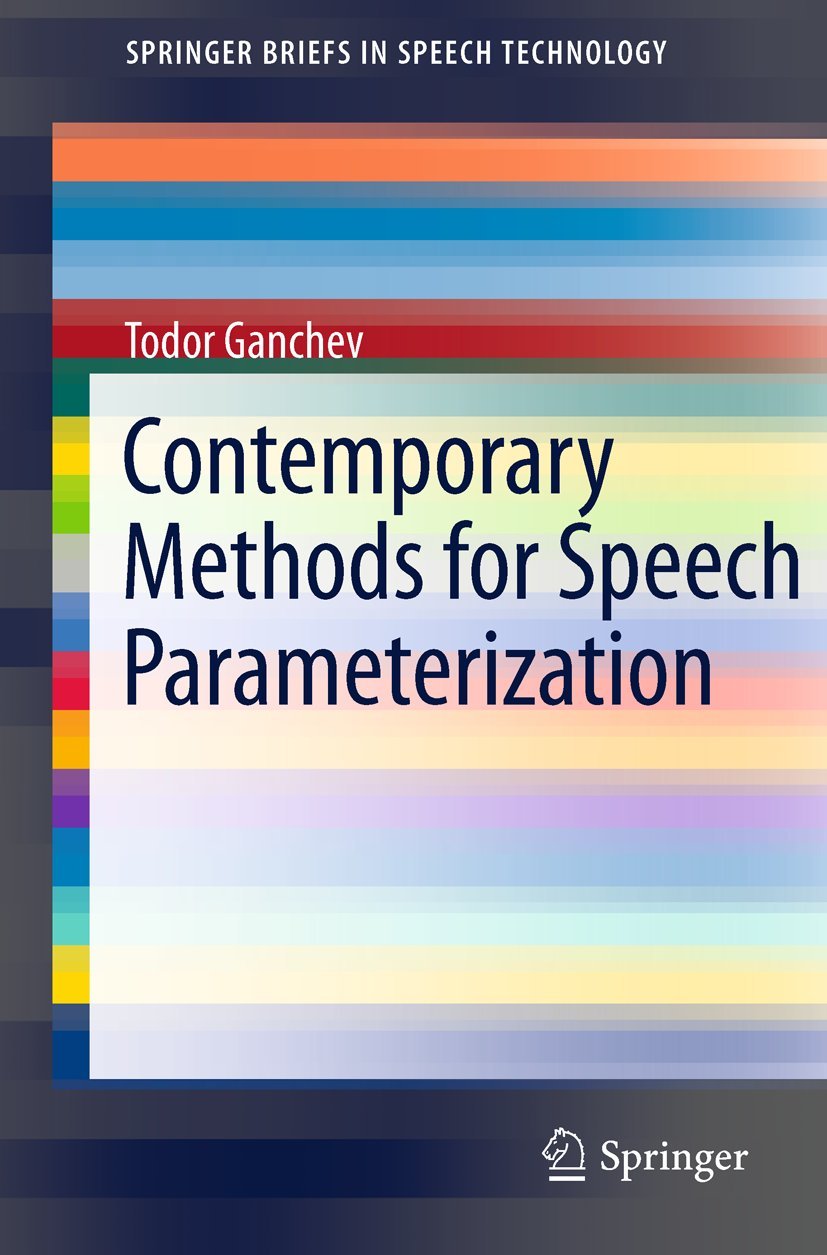
Contemporary Methods for Speech Parameterization (Springerbriefs in Electrical and Computer Engineering / Springerbriefs in Speech Technology)

Computers & Internet
Information Technology and Lawyers | by Arno R. Lodder | Anja Oskamp | Springer | by Arno R. Lodder | Anja Oskamp | Springer | by Arno R. Lodder | Anja Oskamp | Springer | by Arno R. Lodder | Anja Oskamp | Springer | by Arno R. Lodder | Anja Oskamp | Springer | by Arno R. Lodder | Anja Oskamp | Springer | by Arno R. Lodder | Anja Oskamp | Springer | by Arno R. Lodder | Anja Oskamp | Springer | by Arno R. Lodder | Anja Oskamp | Springer | by Arno R. Lodder | Anja Oskamp | Springer | by Arno R. Lo

Computers & Internet
Digital Analysis of Remotely Sensed Imagery | by Jay Gao | McGraw-Hill Companies | by Jay Gao | McGraw-Hill Companies | by Jay Gao | McGraw-Hill Companies | by Jay Gao | McGraw-Hill Companies | by Jay Gao | McGraw-Hill Companies | by Jay Gao | McGraw-Hill Companies | by Jay Gao | McGraw-Hill Companies | by Jay Gao | McGraw-Hill Companies | by Jay Gao | McGraw-Hill Companies | by Jay Gao | McGraw-Hill Companies | by Jay Gao | McGraw-Hill Companies | by Jay Gao | McGraw-Hill Companies | by Jay Gao

Computers & Internet
Computer-Aided Drug Design and Delivery Systems | by Ahindra Nag | Baishakhi Dey | McGraw-Hill Companies | by Ahindra Nag | Baishakhi Dey | McGraw-Hill Companies | by Ahindra Nag | Baishakhi Dey | McGraw-Hill Companies | by Ahindra Nag | Baishakhi Dey | McGraw-Hill Companies | by Ahindra Nag | Baishakhi Dey | McGraw-Hill Companies | by Ahindra Nag | Baishakhi Dey | McGraw-Hill Companies | by Ahindra Nag | Baishakhi Dey | McGraw-Hill Companies | by Ahindra Nag | Baishakhi Dey | McGraw-Hill Compan

Computers & Internet