
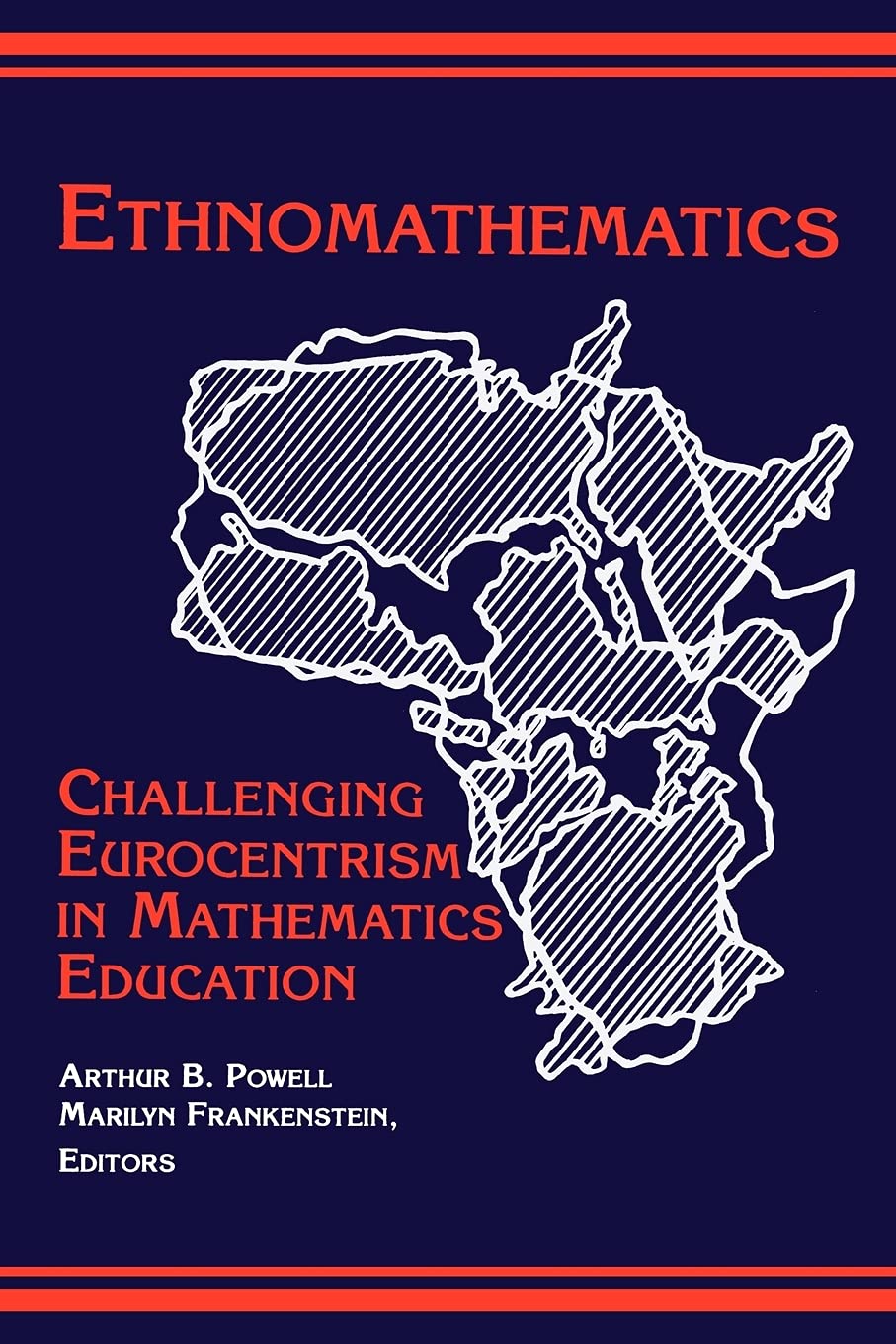
Ethnomathematics: Challenging Eurocentrism in Mathematics Education by Arthur B. Powell – A Critical Study of Culture, H
Inclusive of all applicable taxes. FREE shipping on all orders.
Available Offers
- 🚚Free Delivery — Free shipping on all orders
- 💵Cash on Delivery — Pay when your order arrives
- ↩️15-Day Easy Returns — Hassle-free return policy
- 🔒Cash on Delivery — Pay safely when your order arrives
Check Delivery
Product Description
Introduction
Mathematics is often perceived as a universal, culture-free discipline, but Ethnomathematics: Challenging Eurocentrism in Mathematics Education by Arthur B. Powell invites readers to rethink this assumption. This thought-provoking volume, published by State University of New York Press, brings together classic and contemporary research to explore how mathematical knowledge is shaped by cultural contexts. For Indian students and educators, this book offers a powerful lens to examine indigenous mathematical traditions and question dominant narratives in the classroom.
Book Overview
This hardcover edition presents a critical perspective on ethnomathematics, a field that studies the relationship between mathematics and culture. The book challenges the Eurocentric framework that has long dominated mathematics education, advocating for a more inclusive, diverse understanding of mathematical practices. Through a collection of essays by scholars from Brazil, England, Australia, Mozambique, Palestine, Belgium, and the United States, it bridges disciplines like history, anthropology, cognitive psychology, feminist studies, and African studies. The result is a rich, interdisciplinary work that redefines what counts as mathematical knowledge.
Key Highlights
- Critical Perspective: Directly confronts Eurocentrism in mathematics education, offering a decolonized view of the subject.
- Global Voices: Features contributions from international scholars, providing a multicultural dialogue on mathematical traditions.
- Interdisciplinary Approach: Draws from history, anthropology, psychology, and feminist studies to enrich the discussion.
- Hidden Histories: Uncovers suppressed and distorted histories of mathematical knowledge from non-Western cultures.
- Practical Relevance: Bridges theory and practice, making it valuable for educators and curriculum designers.
Inside the Book
The content is organized around three broad themes: reconsidering what constitutes mathematical knowledge, exploring the interaction between culture and mathematics, and uncovering hidden histories. Each chapter presents either a classic previously published article or new research, ensuring a blend of foundational ideas and cutting-edge insights. Readers will encounter case studies from indigenous communities, analyses of colonial influences on mathematics, and proposals for transformative teaching practices. The book does not shy away from controversy, engaging with debates on power, identity, and representation in education.
Key Topics
- Ethnomathematics as a Field: Definitions, origins, and evolving scope.
- Eurocentrism Critique: How Western perspectives have marginalized other mathematical systems.
- Cultural Knowledge: The role of culture in shaping mathematical concepts and practices.
- Historical Distortions: Uncovering the contributions of African, Asian, and Indigenous mathematicians.
- Pedagogical Implications: Strategies for inclusive mathematics teaching in diverse classrooms.
- Feminist Perspectives: Gender and equity issues in mathematical knowledge production.
Reader Benefits
This book empowers readers to challenge their own assumptions about mathematics. It provides tools to recognize and value diverse mathematical traditions, which is especially relevant in India's multicultural educational landscape. Educators will gain practical ideas for creating more inclusive lesson plans, while students will develop a deeper appreciation for the global roots of mathematics. Researchers will find a wealth of theoretical frameworks and bibliographic references to support further study.
Learning Outcomes
- Understand the core principles of ethnomathematics and its critical stance toward Eurocentrism.
- Identify hidden contributions of non-Western cultures to mathematical knowledge.
- Analyze the interplay between culture, power, and mathematical education.
- Apply ethnomathematical perspectives to design culturally responsive teaching materials.
- Critically evaluate traditional mathematics curricula for bias and inclusivity.
Who Should Read
This book is essential for mathematics educators, curriculum developers, and teacher trainers in India and abroad. It is equally valuable for students of mathematics, history, anthropology, and education who seek a broader understanding of their fields. Researchers interested in decolonizing knowledge and activists working for educational equity will find it a compelling resource. The accessible yet rigorous writing makes it suitable for advanced undergraduates, graduate students, and professionals alike.
About the Author
Arthur B. Powell is a distinguished scholar in mathematics education, known for his work on ethnomathematics and critical pedagogy. He has taught at Rutgers University and contributed extensively to research on how culture influences mathematical thinking. His editorial work brings together diverse voices, reflecting his commitment to inclusive and socially just education.
About the Publisher
State University of New York Press is a respected academic publisher known for its contributions to philosophy, education, and cultural studies. Their titles often push boundaries and challenge conventional wisdom, making them a fitting home for this groundbreaking collection.
Conclusion
Ethnomathematics: Challenging Eurocentrism in Mathematics Education is more than a book—it is an invitation to transform how we see mathematics. By embracing cultural diversity and questioning inherited narratives, readers can contribute to a more equitable and vibrant educational future. Whether you are a teacher in Mumbai, a student in Delhi, or a researcher in Chennai, this volume will expand your horizons and deepen your understanding of the world's mathematical heritage.
Quick Summary
Ethnomathematics: Challenging Eurocentrism in Mathematics Education, edited by Arthur B. Powell, is a groundbreaking collection that critically examines the Eurocentric foundations of mainstream mathematics education. The book brings together classic and new research to reveal how cultural contexts shape mathematical knowledge, and how non-Western traditions—from African to Indian mathematics—have been marginalised or erased. Interdisciplinary in scope, it draws on mathematics, history, anthropology, cognitive psychology, feminist studies, and African studies. Readers will learn to question what counts as mathematical knowledge, uncover hidden histories, and explore practical ways to create more inclusive curricula. This book is ideal for Indian educators, students, and researchers who want to understand the cultural dimensions of mathematics and promote equity in STEM education. By purchasing from Bookshops.in, you support a premium Indian bookstore that offers authentic imported editions with reliable delivery across India.
Book Highlights
Book Specifications
| ISBN-13 | 9780791433522 |
| ISBN-10 | 0791433528 |
| Publisher | State Univ of New York Pr |
| Language | English |
| Dimensions | 15.24 x 2.67 x 22.86 cm |
| Weight | 612 g |
| Country | India |
| Category | Science & Mathematics › Mathematics |
| Genre | Non-fiction |
| Original Language | English |
Frequently Asked Questions
What is ethnomathematics?
Who is the author of this book?
What is the main argument of the book?
Is this book suitable for Indian readers?
What disciplines are covered?
Does the book include practical teaching strategies?
Is this book only for academics?
What is the ISBN-13?
What is the price in India?
What is the rating of the book?
What category does the book belong to?
Is the book available in hardcover?
Readers Also Search For
Customers Also Bought
Mathematics
Stereotype Spaces and Algebras: 73 (De Gruyter Expositions in Mathematics, 73)

Chemistry
Concise Encyclopedia of Biochemistry

Chemistry
Proceedings of the Third USSR - FRG Symposium, Makhachkala (USSR), October 2–6, 1980: 001
Physics
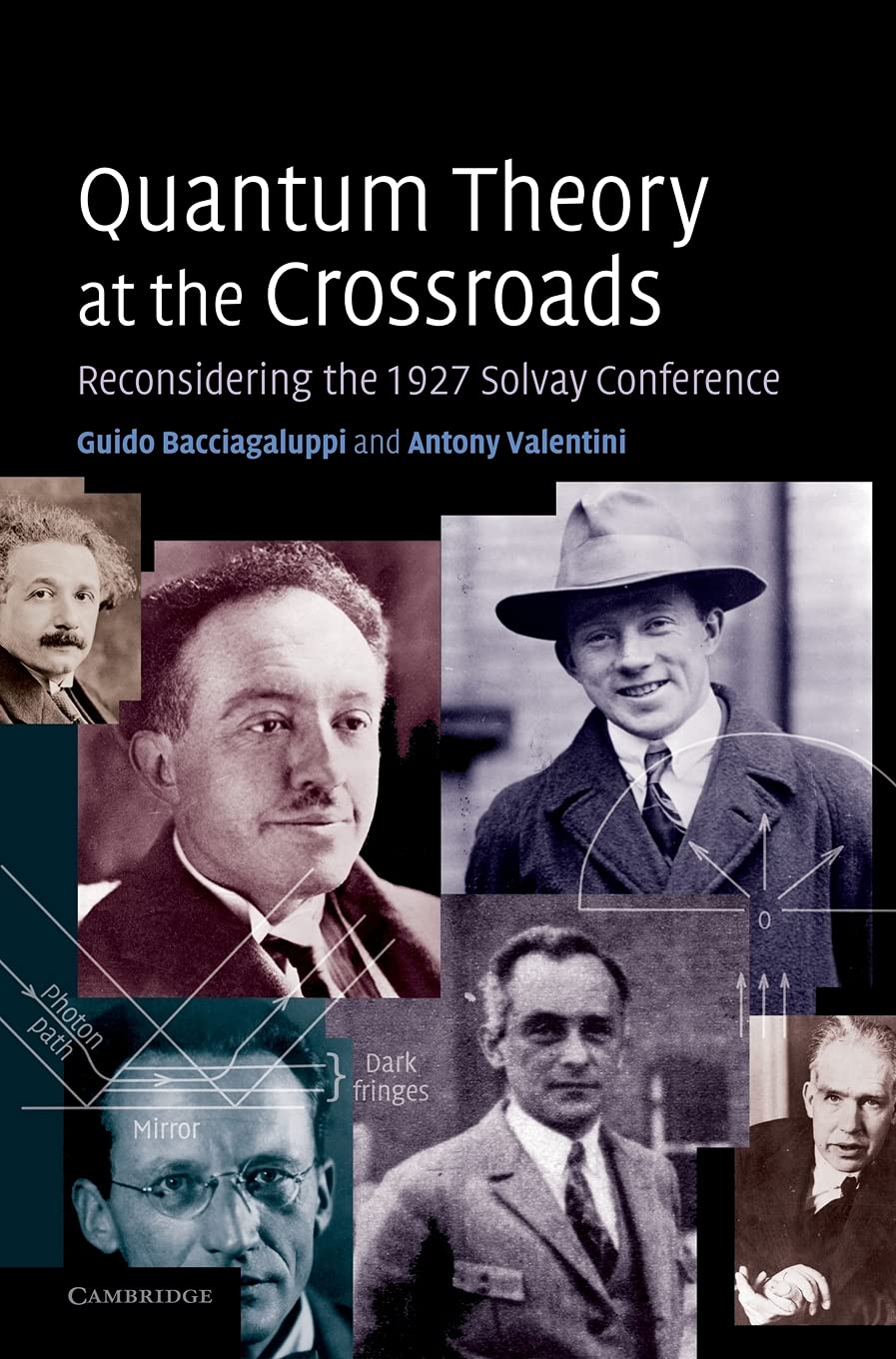
Quantum Theory at the Crossroads by Guido Bacciagaluppi – Quantum Mechanics History
Physics
The Quantum and Cosmic Codes of the Universe
Mathematics
Mathematical Theory of Optimal Processes (Classics of Soviet Mathematics)
Related Products
View AllMathematics
Stereotype Spaces and Algebras: 73 (De Gruyter Expositions in Mathematics, 73)
Mathematics
Semigroups in Algebra, Geometry and Analysis: 20 (De Gruyter Expositions in Mathematics, 20)
Mathematics
Geometry from the Pacific Rim: Proceedings of the Pacific Rim Geometry Conference held at National University of Singapore, Republic of Singapore, ... 1994 (De Gruyter Proceedings in Mathematics)
Mathematics
First International Tainan-Moscow Algebra Workshop: Proceedings of the International Conference held at National Cheng Kung University Tainan, Taiwan, ... 1994 (De Gruyter Proceedings in Mathematics)
Mathematics
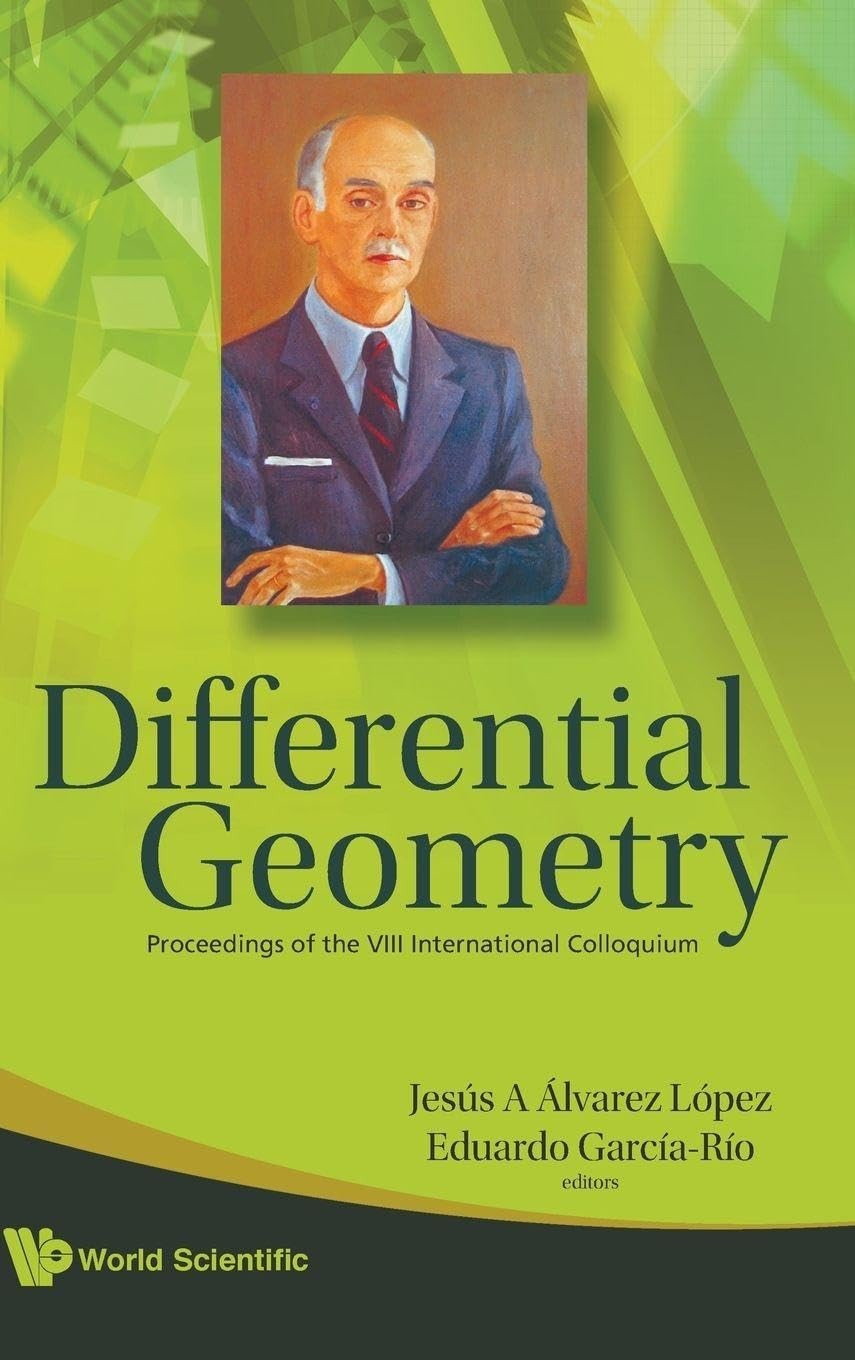
Differential Geometry - Proceedings of the VIII International Colloquium (English, Jesus A. Alvarez Lopez | Eduardo Garcia-Rio)
Mathematics