
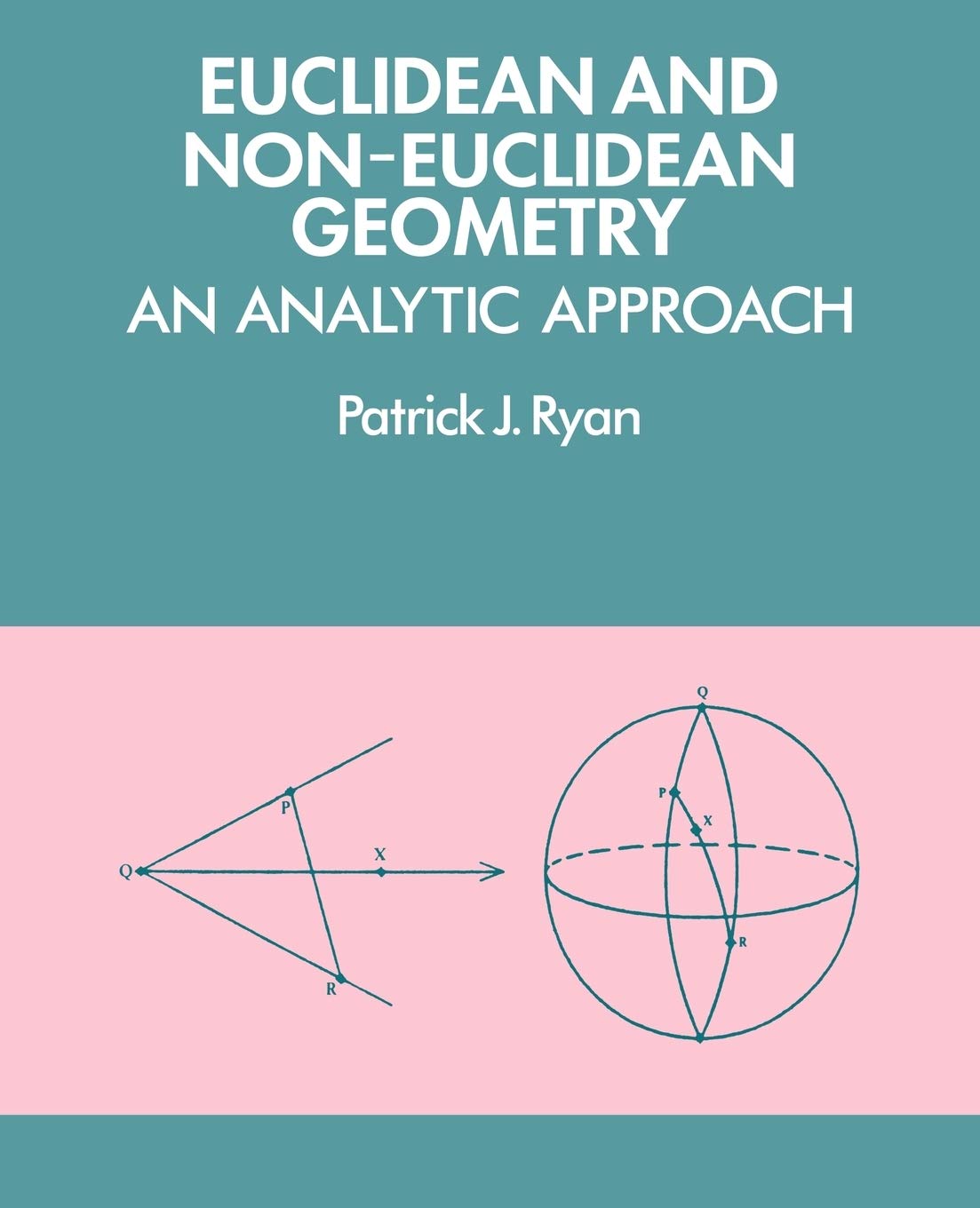
Euclidean and Non-Euclidean Geometry: An Analytic Approach by Patrick J. Ryan – A Comprehensive Textbook on Plane Geomet
Inclusive of all applicable taxes. FREE shipping on all orders.
Available Offers
- 🚚Free Delivery — Free shipping on all orders
- 💵Cash on Delivery — Pay when your order arrives
- ↩️15-Day Easy Returns — Hassle-free return policy
- 🔒Cash on Delivery — Pay safely when your order arrives
Check Delivery
Product Description
Introduction
Geometry, in its classical Euclidean form, has been a cornerstone of mathematical thought for millennia. Yet, the true depth and beauty of spatial reasoning unfold when we venture beyond the familiar flat plane. Euclidean and Non-Euclidean Geometry: An Analytic Approach by Patrick J. Ryan, published by Cambridge University Press, is a masterful guide that bridges the gap between classical Euclidean concepts and the revolutionary geometries of spherical, elliptical, and hyperbolic spaces. This hardbound edition is an indispensable resource for Indian undergraduate mathematics students and researchers who wish to cultivate a rigorous, computational, and conceptual understanding of geometry.
Book Overview
This book is not merely a collection of theorems; it is a carefully structured journey from the foundations of plane Euclidean geometry to the frontiers of non-Euclidean worlds. Patrick J. Ryan employs an analytic approach, leveraging algebraic and computational techniques to explore geometric structures. The text systematically covers congruence theorems, concurrence theorems, the classification of isometries, angle addition, and trigonometric formulae across all four classical geometries. The ultimate goal is to equip students with both factual knowledge and a versatile toolkit for geometrical investigation, preparing them for advanced study in group theory, Lie groups, differential geometry, topology, and mathematical physics.
Key Highlights
- Rigorous Analytic Treatment: The book uses coordinate geometry and algebraic methods to prove classical results, making abstract concepts tangible and computable.
- Four Geometries in One Volume: Offers a unified treatment of Euclidean, spherical, elliptical, and hyperbolic plane geometries, highlighting their differences and underlying unity.
- Computational Emphasis: Provides numerous techniques for solving geometrical problems, bridging theory and practical application.
- Research-Oriented Foundation: Prepares readers for advanced topics in modern mathematics and theoretical physics.
- Classical and Modern Synthesis: Connects ancient Euclidean insights with contemporary mathematical frameworks.
Inside the Book
Readers will find a wealth of structured content, including detailed proofs, worked examples, and exercises that reinforce understanding. The book begins with the axiomatic foundations of Euclidean geometry, then systematically introduces the postulates and models for spherical, elliptical, and hyperbolic geometries. Each chapter builds upon the last, ensuring a coherent progression from basic concepts to sophisticated theorems. The analytic approach means that students will frequently encounter matrices, vectors, and algebraic equations as tools for exploring geometric properties. The text is dense with mathematical precision but remains accessible to those who have mastered linear algebra and basic proof-writing.
Key Topics
- Foundations of Euclidean plane geometry and its axioms
- Congruence theorems and concurrence theorems (e.g., Ceva, Menelaus)
- Classification of isometries in the Euclidean plane
- Angle addition formulas and trigonometric laws in all four geometries
- Spherical geometry: great circles, spherical triangles, and navigation
- Elliptical geometry: elliptic space and its properties
- Hyperbolic geometry: models (Poincaré disc, upper half-plane) and geodesics
- Relation of geometry to group theory and Lie groups
- Connections to differential geometry and topology
- Applications in mathematical physics
Reader Benefits
- Deep Conceptual Clarity: Develop a solid, intuitive grasp of why non-Euclidean geometries exist and how they differ from Euclidean space.
- Enhanced Problem-Solving Skills: Gain computational fluency through analytic methods that can be applied to research problems.
- Strong Academic Foundation: Build the necessary background for postgraduate studies in pure mathematics, applied mathematics, or theoretical physics.
- Self-Study Friendly: The clear exposition and numerous exercises make it suitable for independent learners as well as classroom use.
- Confidence in Advanced Topics: Transition smoothly into courses on differential geometry, group theory, and topology.
Learning Outcomes
By the end of this book, readers will be able to: prove and apply classical theorems in Euclidean and non-Euclidean geometries; classify isometries and understand their algebraic representation; derive and use trigonometric formulae in spherical and hyperbolic contexts; analyze geometric structures using analytic tools; and appreciate the profound implications of non-Euclidean geometries for modern mathematics and physics. The book ensures that students not only know the facts but also understand the underlying logical and computational machinery.
Who Should Read
- Undergraduate Mathematics Students: Especially those in their second or third year who have completed courses in linear algebra and calculus.
- Postgraduate Students: Those beginning research in geometry, topology, or mathematical physics will find this an excellent refresher and reference.
- Mathematics Educators: Teachers looking for a rigorous yet accessible text to enrich their own understanding or to use as a course resource.
- Self-Learners: Dedicated enthusiasts with a strong background in basic mathematics who wish to explore advanced geometry independently.
- Physics Students: Those interested in the geometric foundations of relativity and cosmology will benefit from the clear exposition of non-Euclidean spaces.
About the Author
Patrick J. Ryan is a distinguished mathematician and educator with extensive experience in teaching geometry and topology at the undergraduate and graduate levels. His expertise in analytic methods and his commitment to clear, rigorous exposition shine through in this well-crafted text. Professor Ryan’s work reflects a deep understanding of how classical and modern geometry interconnect, making him an ideal guide for students embarking on this intellectual journey.
About the Publisher
Cambridge University Press is one of the world’s oldest and most respected academic publishers. With a legacy of excellence in mathematics and science publishing, Cambridge ensures that every title meets the highest standards of scholarship and editorial quality. This hardcover edition is produced with durable binding and clear typography, making it a lasting addition to any academic library.
Conclusion
Euclidean and Non-Euclidean Geometry: An Analytic Approach is more than a textbook—it is a gateway to a richer understanding of space, form, and mathematical reasoning. Whether you are a student striving to master geometry, a researcher seeking a solid reference, or a teacher looking for a definitive course text, this book delivers unmatched depth and clarity. Order your hardcover copy from Bookshops.in today and take a decisive step toward mastering the geometries that shape our mathematical universe.
Quick Summary
Euclidean and Non-Euclidean Geometry: An Analytic Approach by Patrick J. Ryan is a rigorous textbook that systematically explores the foundations of plane geometry across four classical systems: Euclidean, spherical, elliptical, and hyperbolic. The book is designed for mathematics students at the undergraduate and graduate levels who wish to gain a deep, computational understanding of geometric structures. Readers will learn about congruence theorems, concurrence theorems, the classification of isometries, angle addition, and trigonometric formulae, all presented through an analytic lens. The text bridges classical geometry with modern mathematics, preparing students for advanced study in group theory, Lie groups, differential geometry, topology, and mathematical physics. With clear proofs, practical computational techniques, and exercises, this book serves as both a reference and a learning tool. Published by Cambridge University Press, it is a trusted resource for Indian students and researchers. By purchasing from Bookshops.in, you get a genuine hardcover edition with reliable delivery across India, making it an excellent investment for academic excellence.
Book Highlights
Book Specifications
| ISBN-13 | 9780521276351 |
| ISBN-10 | 0521276357 |
| Publisher | Cambridge University Press |
| Language | English |
| Dimensions | 19.05 x 1.37 x 23.5 cm |
| Weight | 450 g |
| Country | India |
| Category | Mathematics › Geometry |
| Genre | Non-fiction |
| Reading Age | 18+ |
| Original Language | English |
Frequently Asked Questions
What is the main focus of this book?
Who is the author of this book?
Which publisher has released this book?
Is this book suitable for Indian university students?
What topics are covered in the book?
Does the book include computational techniques?
What is the ISBN of this book?
Is the book available in hardcover?
What language is the book in?
Can this book help with research in mathematical physics?
Are there exercises in the book?
How is this book different from other geometry textbooks?
Where can I buy this book in India?
Readers Also Search For
Customers Also Bought
Mathematics
Stereotype Spaces and Algebras: 73 (De Gruyter Expositions in Mathematics, 73)
Mathematics
Semigroups in Algebra, Geometry and Analysis: 20 (De Gruyter Expositions in Mathematics, 20)
Mathematics
Geometry from the Pacific Rim: Proceedings of the Pacific Rim Geometry Conference held at National University of Singapore, Republic of Singapore, ... 1994 (De Gruyter Proceedings in Mathematics)
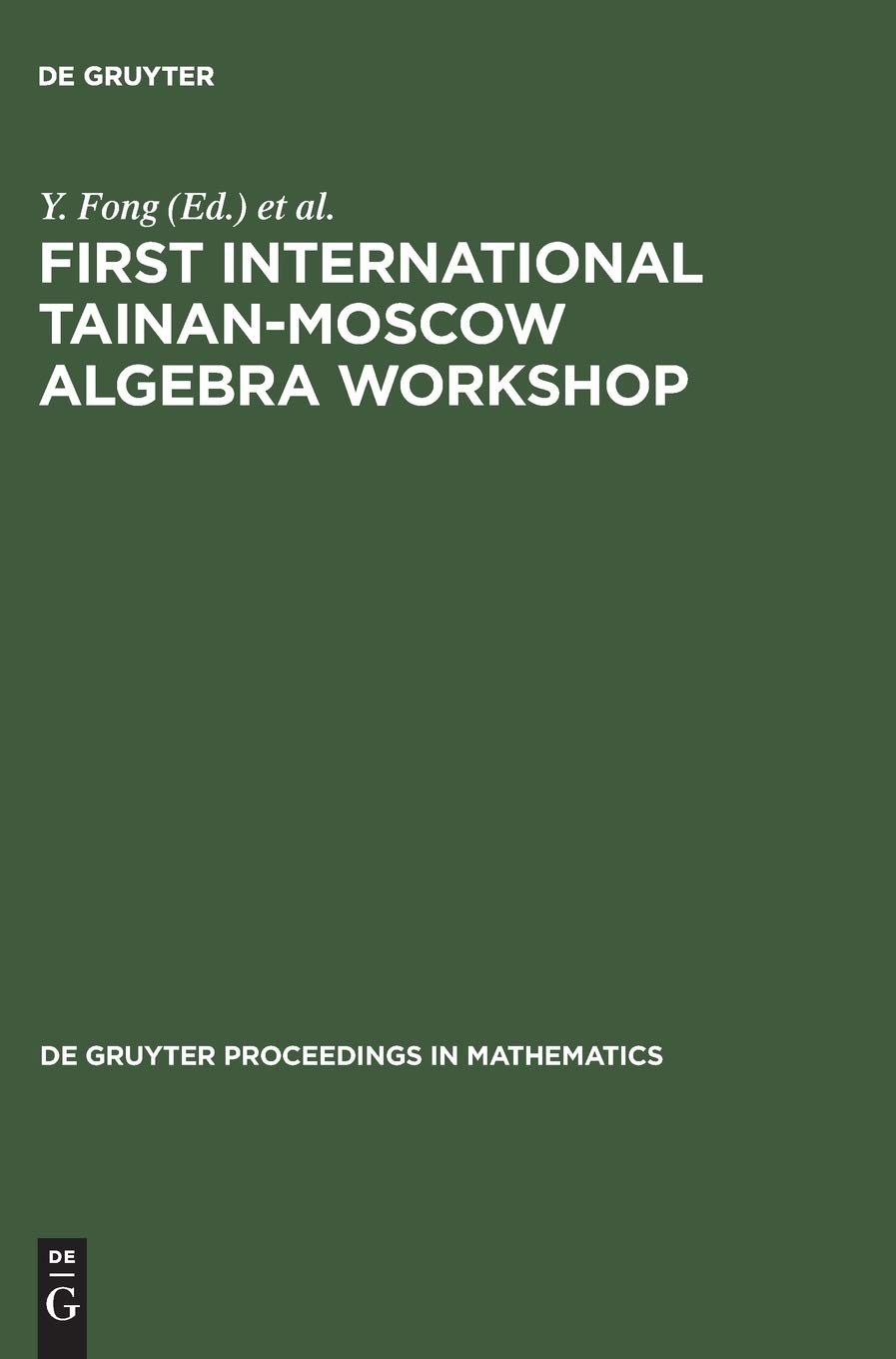
Mathematics
First International Tainan-Moscow Algebra Workshop: Proceedings of the International Conference held at National Cheng Kung University Tainan, Taiwan, ... 1994 (De Gruyter Proceedings in Mathematics)
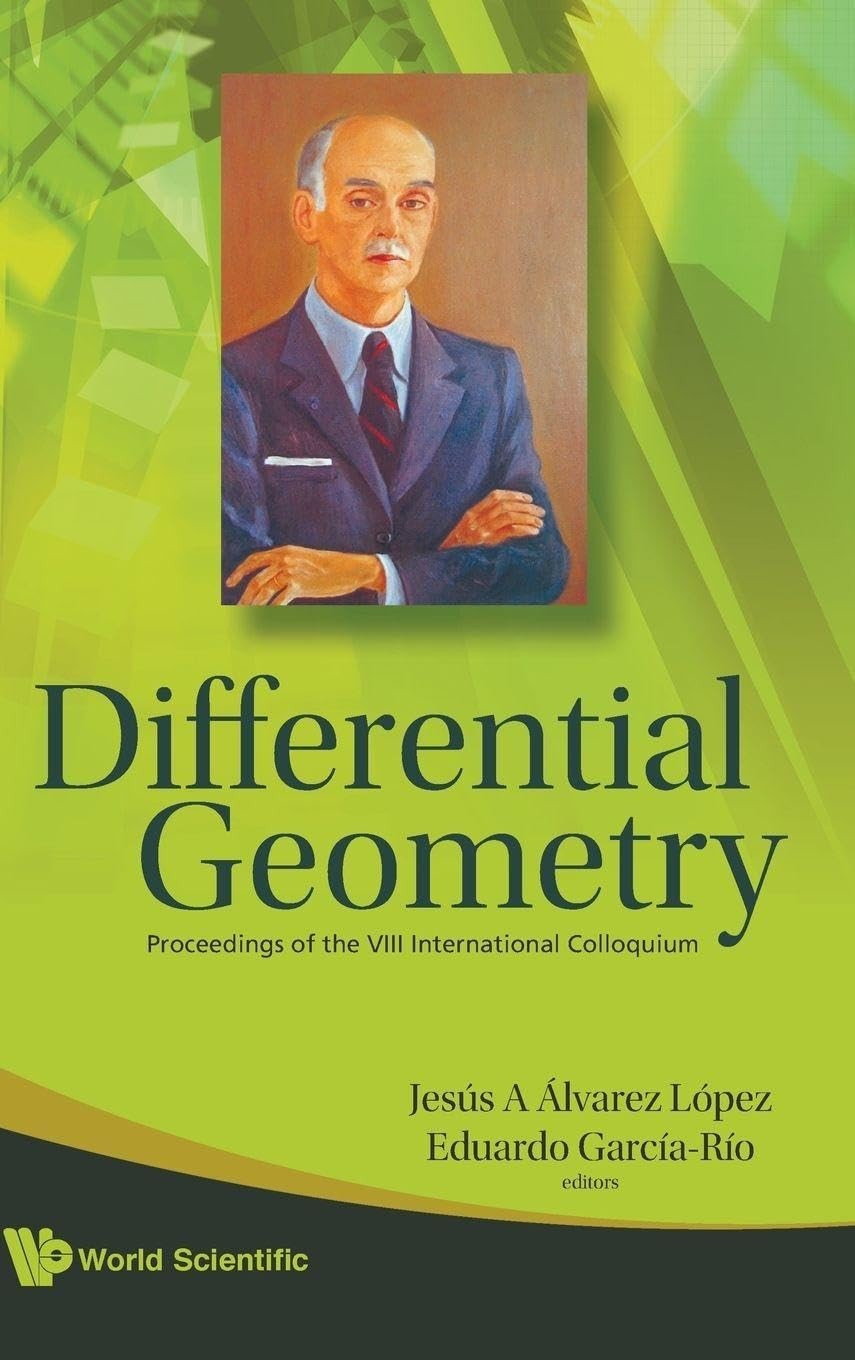
Mathematics
Differential Geometry - Proceedings of the VIII International Colloquium (English, Jesus A. Alvarez Lopez | Eduardo Garcia-Rio)
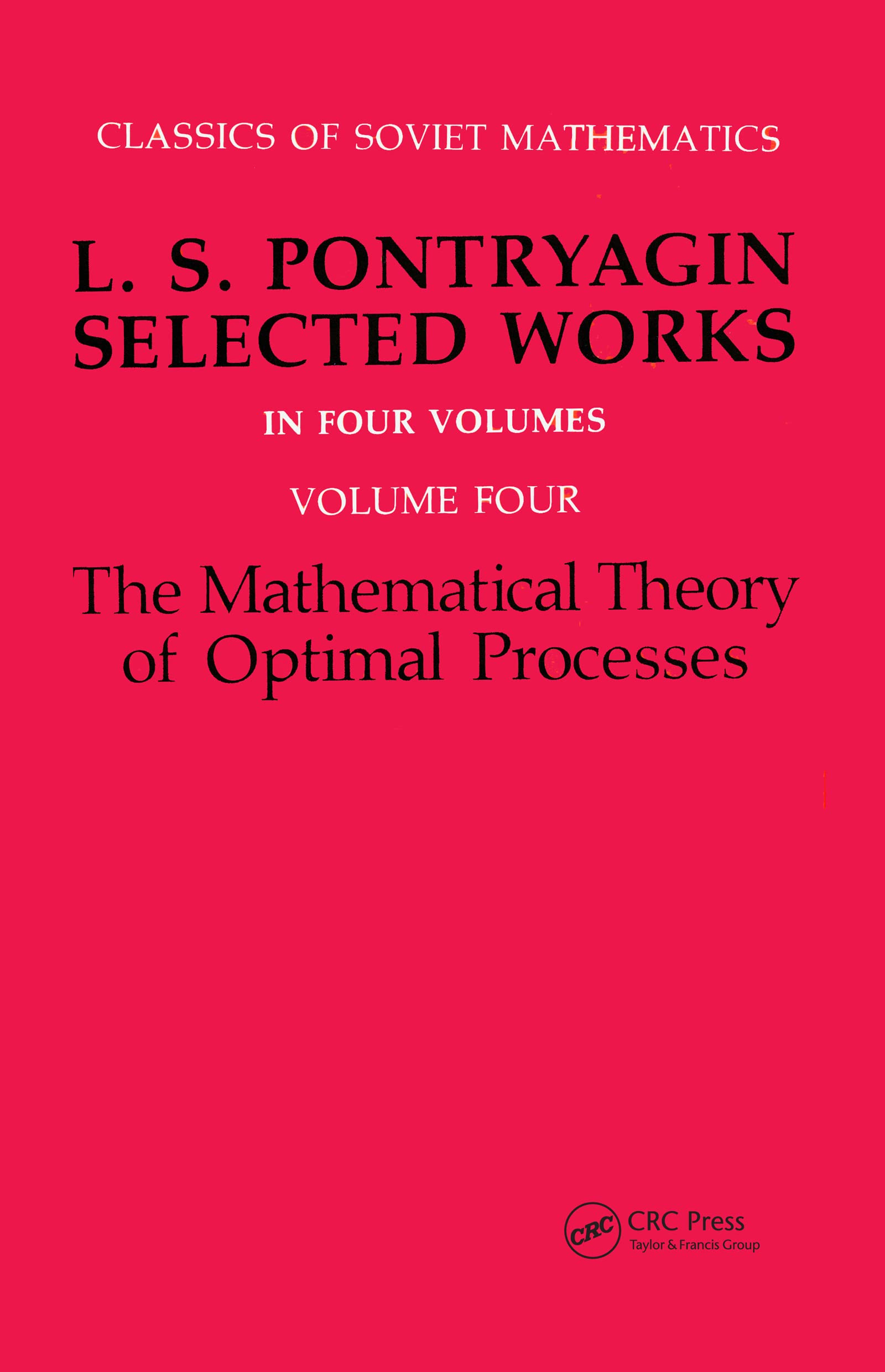
Mathematics
Mathematical Theory of Optimal Processes (Classics of Soviet Mathematics)
Related Products
View AllMathematics
Mathematical Theory of Optimal Processes (Classics of Soviet Mathematics)
Mathematics
Stereotype Spaces and Algebras: 73 (De Gruyter Expositions in Mathematics, 73)
Mathematics
Semigroups in Algebra, Geometry and Analysis: 20 (De Gruyter Expositions in Mathematics, 20)
Mathematics
Geometry from the Pacific Rim: Proceedings of the Pacific Rim Geometry Conference held at National University of Singapore, Republic of Singapore, ... 1994 (De Gruyter Proceedings in Mathematics)
Mathematics
First International Tainan-Moscow Algebra Workshop: Proceedings of the International Conference held at National Cheng Kung University Tainan, Taiwan, ... 1994 (De Gruyter Proceedings in Mathematics)
Mathematics