

Evolution and Emergence: Systems, Organisms, Persons by William R. Sj Stoeger – A Multidisciplinary Study of Emergence i
Inclusive of all applicable taxes. FREE shipping on all orders.
Available Offers
- 🚚Free Delivery — Free shipping on all orders
- 💵Cash on Delivery — Pay when your order arrives
- ↩️15-Day Easy Returns — Hassle-free return policy
- 🔒Cash on Delivery — Pay safely when your order arrives
Check Delivery
Product Description
Introduction
What does it mean for life, consciousness, and even human identity to arise from simpler physical processes? In Evolution and Emergence: Systems, Organisms, Persons, edited by William R. Stoeger, a distinguished team of scientists, philosophers, and theologians come together to explore one of the most profound questions in modern science: how complex systems—from atoms to ecosystems to human persons—emerge from simpler components. This hardcover volume from OUP Oxford invites Indian readers, students, and researchers into a rich interdisciplinary conversation that bridges physics, biology, neuroscience, philosophy, and theology. Whether you are a postgraduate student in the sciences or a curious reader seeking deeper meaning in the natural world, this book offers a compelling roadmap to understanding emergence as a universal phenomenon.
Book Overview
Evolution and Emergence is a carefully curated collection of essays that examines how nature at every level produces highly organized objects, systems, and living organisms from much simpler building blocks. The book moves beyond reductionist explanations—which try to understand wholes only by breaking them into parts—and instead embraces the concept of emergence, where new properties and behaviours arise that cannot be predicted from the components alone. It explores how emergence manifests in the formation of galaxies, the origin of life, the evolution of species, the workings of the human brain, and the development of self-aware persons. The volume also tackles the deeper implications of emergence for our understanding of human identity, meaning, and relationship with the divine. Written in an accessible yet rigorous style, this book is ideal for Indian university libraries, seminary courses, and anyone fascinated by the intersection of science and spirituality.
Key Highlights
- Interdisciplinary Approach: Brings together leading voices from physics, biology, neuroscience, philosophy, and theology to provide a holistic view of emergence.
- Original Essays: Each chapter is a standalone contribution from an expert, offering fresh perspectives on reductionism, complexity, and emergent phenomena.
- Philosophical Depth: Several chapters introduce and critique key philosophical ideas about reductionism and emergence, making complex concepts accessible to non-specialists.
- Scientific Rigour: Detailed explorations of emergent phenomena in quantum physics, evolutionary biology, and cognitive neuroscience are presented with clarity.
- Theological Engagement: The final sections probe the meaning of emergence for our self-understanding and relationship to God, making it a unique resource for Indian readers interested in science and religion dialogue.
Inside the Book
The book is structured in four parts. The first part lays the philosophical groundwork, explaining why reductionism is insufficient and what emergence means in different contexts. The second part dives into the natural sciences, with chapters on emergent phenomena in physics (such as superconductivity and phase transitions), biology (the origin of life, evolution of multicellular organisms), and the neurosciences (consciousness and self-awareness). The third part examines the implications of emergence for our understanding of human persons—how we are more than the sum of our biological parts. The fourth part brings in theological reflections, exploring how emergence can enrich our appreciation of creation, providence, and the human relationship with God. Each essay is self-contained, allowing readers to dip into topics of personal interest.
Key Topics
- Reductionism vs. emergence in scientific explanation
- Emergent phenomena in physics: from atoms to galaxies
- Biological emergence: origin of life, evolution, and ecosystems
- Neuroscience and the emergence of consciousness
- The nature of human persons: embodiment, mind, and identity
- Philosophical implications of emergence for free will and morality
- Theological perspectives on creation, evolution, and divine action
- Complexity theory and self-organization in nature
Reader Benefits
- Deepen Your Understanding: Gain a clear, nuanced grasp of how complexity arises in the universe without oversimplification.
- Bridge Disciplines: Perfect for students and professionals who want to connect insights from science with philosophy and theology.
- Enhance Critical Thinking: The essays challenge simplistic views and encourage a more integrated, holistic worldview.
- Rich Resource for Study: Each chapter includes references and discussion points, making it valuable for seminars and self-study.
- Cultural Relevance: Indian readers will appreciate the respectful engagement with spiritual questions, making this book suitable for both secular and faith-based contexts.
Learning Outcomes
After reading Evolution and Emergence, you will be able to: explain the concept of emergence and distinguish it from reductionism; identify examples of emergent phenomena across physics, biology, and neuroscience; articulate the philosophical challenges posed by emergence to traditional materialism; discuss how emergence informs our understanding of human personhood and consciousness; and evaluate different theological responses to evolutionary science. The book equips you with the vocabulary and conceptual tools to participate in contemporary debates about science, meaning, and human identity.
Who Should Read
- Undergraduate and postgraduate students in physics, biology, neuroscience, philosophy, and theology
- Researchers and academics interested in complexity theory, philosophy of science, or science and religion
- Seminary students and religious educators seeking a scientifically informed perspective on creation and human nature
- General readers with a keen interest in how science and spirituality can enrich each other
- Book clubs and study groups focused on interdisciplinary themes
About the Author
William R. Stoeger is a Jesuit priest, astrophysicist, and philosopher of science. He has been a staff scientist at the Vatican Observatory and has written extensively on the intersection of cosmology, emergence, and theology. His work bridges the gap between empirical science and metaphysical reflection, making him a uniquely qualified editor for this volume. Stoeger has also contributed to major dialogues between the Vatican and the scientific community, and his writings are respected globally for their clarity and depth.
About the Publisher
OUP Oxford is the academic publishing arm of Oxford University Press, one of the world's oldest and most prestigious university presses. Known for its rigorous peer-review process and high editorial standards, OUP Oxford publishes groundbreaking works in science, philosophy, and theology. This hardcover edition is produced with the quality Indian readers expect from a leading academic publisher, featuring durable binding, clear typography, and archival-quality paper.
Conclusion
Evolution and Emergence: Systems, Organisms, Persons is more than a book—it is an invitation to rethink how we see the world, ourselves, and the divine. By weaving together insights from multiple disciplines, it offers a vision of nature that is both scientifically accurate and spiritually profound. For Indian readers who value intellectual rigour and philosophical depth, this volume is an essential addition to any personal or institutional library. Order your hardcover copy from Bookshops.in today and embark on a journey that will transform your understanding of complexity, life, and meaning.
Quick Summary
Evolution and Emergence: Systems, Organisms, Persons is a landmark interdisciplinary collection edited by William R. Sj Stoeger, bringing together essays from physicists, biologists, neuroscientists, philosophers, and theologians. The book delves into the universal phenomenon of emergence—how nature at every level produces more complex and highly organized objects, systems, and organisms from much simpler components. It begins with foundational philosophical debates on reductionism and emergence, then explores emergent phenomena across physics, biology, and the neurosciences. The final sections probe the meaning and significance of these findings for our understanding of the world, human identity, and our relationship with God. This volume is ideal for Indian postgraduate students, researchers, and academics in science, philosophy, and theology who seek a rigorous yet accessible overview of emergence theory. By purchasing from Bookshops.in, readers get a guaranteed genuine hardcover edition with fast delivery across India, backed by excellent customer service. Whether you are studying complex systems, consciousness, or science-religion dialogue, this book offers rich insights that will deepen your appreciation of how order and novelty arise in the universe.
Book Highlights
Book Specifications
| ISBN-13 | 9780199204717 |
| ISBN-10 | 0199204713 |
| Publisher | Oxford Univ Pr on Demand |
| Language | English |
| Dimensions | 22.1 x 3.05 x 13.46 cm |
| Weight | 590 g |
| Category | Biology & Life Sciences › Biology |
| Genre | Non-fiction |
| Original Language | English |
Frequently Asked Questions
What is the main theme of Evolution and Emergence?
Who edited this book?
Is this book suitable for undergraduate students?
Does the book cover neuroscience?
What philosophical issues are discussed?
Are there theological chapters?
Is this book available in hardcover?
What is the ISBN?
Does the book include contributions from Indian scholars?
Can this book help in research on complexity?
Is the book only for scientists?
Where can I buy this book in India?
Readers Also Search For
Customers Also Bought
Mathematics
Stereotype Spaces and Algebras: 73 (De Gruyter Expositions in Mathematics, 73)

Mathematics
Semigroups in Algebra, Geometry and Analysis: 20 (De Gruyter Expositions in Mathematics, 20)
Mathematics
Geometry from the Pacific Rim: Proceedings of the Pacific Rim Geometry Conference held at National University of Singapore, Republic of Singapore, ... 1994 (De Gruyter Proceedings in Mathematics)

Mathematics
First International Tainan-Moscow Algebra Workshop: Proceedings of the International Conference held at National Cheng Kung University Tainan, Taiwan, ... 1994 (De Gruyter Proceedings in Mathematics)
Mathematics
Differential Geometry - Proceedings of the VIII International Colloquium (English, Jesus A. Alvarez Lopez | Eduardo Garcia-Rio)
Mathematics
Mathematical Theory of Optimal Processes (Classics of Soviet Mathematics)
Related Products
View All
Biology
Evolution: What the Fossils Say and Why It Matters by Donald R. Prothero
Biology
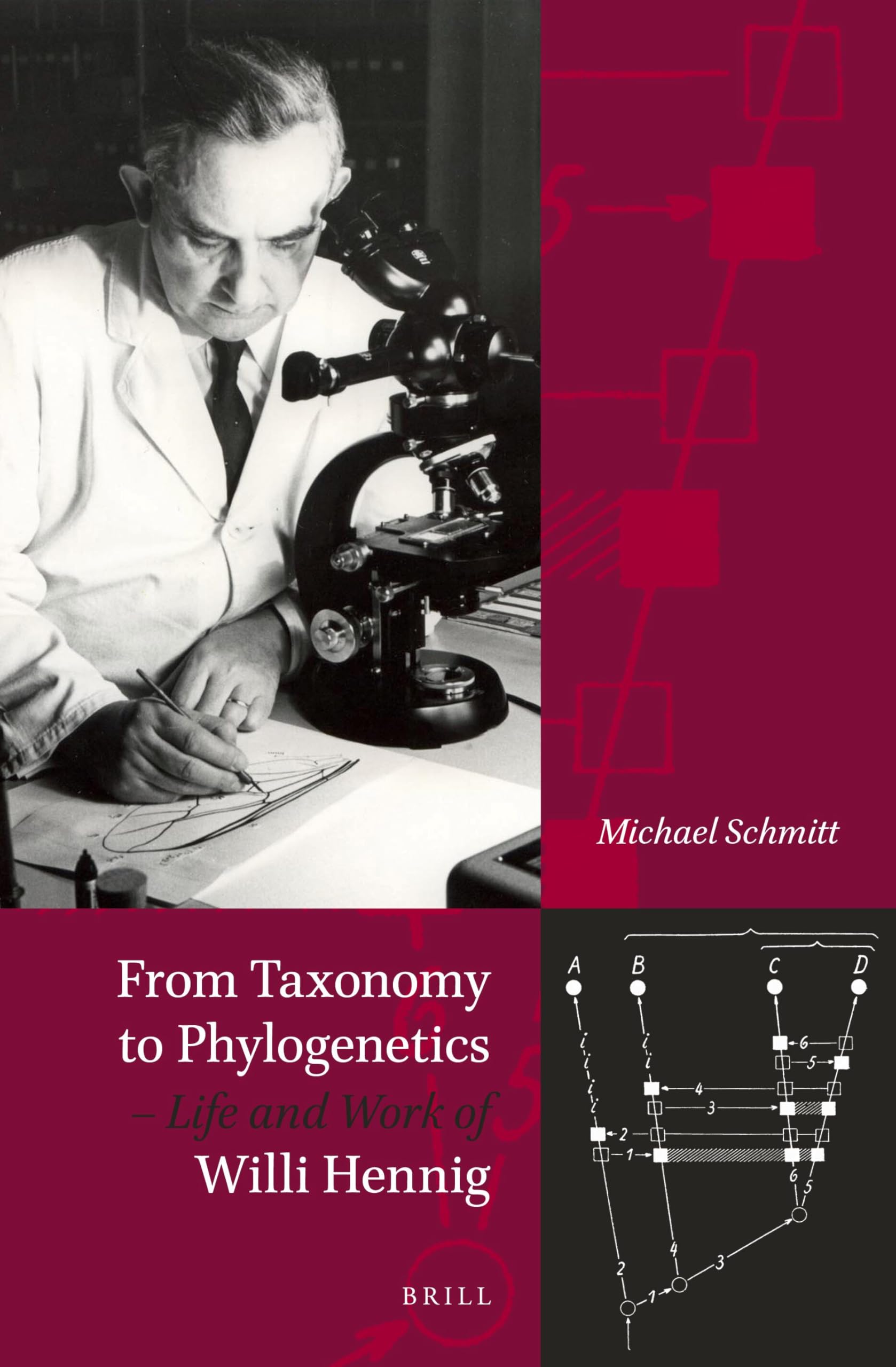
From Taxonomy to Phylogenetics – Life and Work of Willi Hennig

Biology
The Marine Biology of the South China Sea
Biology
Genetics Meets Metabolomics: from Experiment to Systems Biology
Biology
The Elements of Natural or Experimental Philosophy: 2

Biology