

Evolutionary Games and Equilibrium Selection by Larry Samuelson – A Comprehensive Economics Book on Game Theory and Stra
Inclusive of all applicable taxes. FREE shipping on all orders.
Available Offers
- 🚚Free Delivery — Free shipping on all orders
- 💵Cash on Delivery — Pay when your order arrives
- ↩️15-Day Easy Returns — Hassle-free return policy
- 🔒Cash on Delivery — Pay safely when your order arrives
Check Delivery
Product Description
Introduction
In the ever-evolving landscape of economic theory, few works have bridged the gap between biological evolution and strategic human behavior as seamlessly as Larry Samuelson's 'Evolutionary Games and Equilibrium Selection'. This seminal hardcover volume from MIT Press offers a rigorous yet accessible exploration of how players in repeated games learn, adapt, and converge toward equilibrium. For Indian students, researchers, and professionals in economics, mathematics, and game theory, this book serves as an indispensable guide to understanding the dynamics of strategic interaction beyond the confines of classical rationality.
Book Overview
Larry Samuelson's 'Evolutionary Games and Equilibrium Selection' delves into the heart of noncooperative game theory by addressing one of its most persistent puzzles: how do players select among multiple possible equilibria? Traditional game theory assumes perfect rationality and complete information, but real-world players—whether in markets, negotiations, or social interactions—often rely on trial-and-error learning. This book systematically examines how evolutionary processes, driven by repeated play and payoff-based adaptation, can lead to the emergence of specific equilibria. By weaving together mathematical rigor with intuitive examples, Samuelson provides a fresh lens for understanding strategic behavior in economics and beyond.
Key Highlights
- Pioneering Synthesis: Connects evolutionary biology with economic game theory, offering a unified framework for equilibrium selection.
- Rigorous yet Readable: Balances formal mathematical proofs with clear explanatory text, making complex ideas accessible to advanced students.
- Practical Relevance: Applies evolutionary models to real-world scenarios such as market competition, bargaining, and social conventions.
- Authoritative Source: Written by Larry Samuelson, a leading figure in evolutionary game theory, with insights from decades of research.
- Comprehensive Coverage: Addresses both deterministic and stochastic evolutionary dynamics, including mutation and drift.
Inside the Book
The book is structured to guide readers from foundational concepts to advanced topics. Early chapters establish the basics of game theory and evolutionary stability, while later sections tackle equilibrium selection in coordination games, bargaining games, and repeated interactions. Samuelson introduces key concepts such as evolutionarily stable strategies (ESS), replicator dynamics, and stochastic stability, illustrating them with detailed examples. Each chapter builds logically on the previous, ensuring a cohesive learning experience. The hardcover edition features clear typography and well-organized diagrams, making it a valuable reference for years to come.
Key Topics
- Evolutionary Stability: Defining and analyzing strategies that resist invasion by mutants.
- Replicator Dynamics: Modeling how strategy frequencies change over time based on relative payoffs.
- Equilibrium Selection in Coordination Games: Understanding how players coordinate on a single equilibrium in games like the stag hunt.
- Bargaining and Negotiation: Applying evolutionary models to divide-the-dollar and ultimatum games.
- Stochastic Stability and Mutation: Exploring how random perturbations can select among multiple equilibria.
- Applications to Economics: Linking evolutionary models to market competition, industrial organization, and institutional evolution.
Reader Benefits
This book empowers readers to move beyond static game theory and embrace dynamic, process-oriented thinking. By understanding how equilibria emerge through learning and adaptation, students and professionals can better predict outcomes in complex strategic environments. The evolutionary approach also offers insights into why certain social norms, market structures, or bargaining outcomes persist even when they appear suboptimal. For Indian readers interested in behavioral economics, public policy, or computational social science, this book provides a solid foundation for further exploration.
Learning Outcomes
- Analyze strategic interactions using evolutionary game theory models.
- Distinguish between multiple equilibrium concepts and their selection criteria.
- Apply replicator dynamics and stochastic stability to real-world economic scenarios.
- Critically evaluate the role of rationality assumptions in game theory.
- Develop a deeper understanding of how social conventions and norms evolve.
Who Should Read
This book is ideal for graduate students and advanced undergraduates in economics, mathematics, and computer science who have a basic grounding in game theory. It is also highly relevant for researchers in evolutionary biology, political science, and sociology who seek a rigorous economic perspective on strategic behavior. Professionals in market design, industrial organization, and behavioral finance will find the concepts directly applicable to their work. The book assumes familiarity with calculus and probability, but the clear exposition makes it accessible to motivated readers from diverse backgrounds.
About the Author
Larry Samuelson is a distinguished economist and professor at Yale University, widely recognized for his contributions to game theory, economic theory, and evolutionary dynamics. He has published extensively in top-tier journals and is known for his ability to bridge abstract theory with practical applications. His work has influenced fields ranging from industrial organization to political economy, and he continues to be a leading voice in the study of strategic behavior. Samuelson's writing is characterized by precision, clarity, and a deep respect for the intellectual history of his subject.
About the Publisher
MIT Press is one of the world's most prestigious academic publishers, known for its commitment to advancing knowledge in science, technology, and economics. Based in Cambridge, Massachusetts, it has a long tradition of publishing groundbreaking works that shape scholarly discourse. This hardcover edition reflects the press's dedication to quality production and editorial excellence, ensuring that readers receive a durable and beautifully crafted volume that will stand the test of time.
Conclusion
'Evolutionary Games and Equilibrium Selection' is more than a textbook—it is a gateway to a deeper understanding of how strategic behavior evolves in complex environments. Larry Samuelson's masterful synthesis of biology and economics offers a powerful toolkit for analyzing everything from market competition to social norms. For Indian students and researchers eager to explore the frontiers of game theory, this hardcover volume is an essential addition to any library. Order your copy from Bookshops.in today and embark on a journey into the dynamic world of evolutionary game theory.
Quick Summary
Evolutionary Games and Equilibrium Selection by Larry Samuelson is a seminal work in evolutionary game theory, published by MIT Press. The book challenges traditional game theory by replacing the assumption of full rationality with a trial-and-error learning process. In repeated games, players gradually discover which strategies yield higher payoffs, leading to the elimination of inferior strategies and the emergence of equilibrium. Samuelson, a leading economist at Yale University, provides rigorous mathematical analysis and connects evolutionary dynamics to equilibrium selection problems. This hardcover edition is ideal for Indian graduate students, researchers, and faculty in economics who want to understand how strategic behavior evolves in real-world settings. Readers will learn about replicator dynamics, evolutionary stability, and the foundations of adaptive learning. By purchasing from Bookshops.in, Indian customers receive a genuine MIT Press hardcover at a competitive price, with reliable delivery across the country.
Book Highlights
Book Specifications
| ISBN-13 | 9780262692199 |
| ISBN-10 | 0262692198 |
| Publisher | Mit Pr |
| Language | English |
| Dimensions | 22.78 x 15.19 x 1.63 cm |
| Weight | 454 g |
| Country | India |
| Category | Economics › Economic Theory |
| Genre | Nonfiction |
| Original Language | English |
Frequently Asked Questions
What is Evolutionary Games and Equilibrium Selection about?
Who is the author of this book?
Is this book suitable for Indian students?
What is the ISBN-13 of this book?
What is the price of this book in India?
What language is the book written in?
What is the rating of this book?
What category does this book belong to?
Does this book cover equilibrium selection?
What learning model does the book use?
Is this book a textbook or research monograph?
Can I buy this book from Bookshops.in?
Readers Also Search For
Customers Also Bought

Entrepreneurship
Chinese Economic Revolution (English, Linda Grove)

Entrepreneurship
Engines of Innovation: The Entrepreneurial University in the Twenty-First Century by Holden Thorp

Entrepreneurship
Invention to Innovation (English, PhD Marshall Larry | Jenna Daroczy)

Entrepreneurship
Database Management Systems by Raghu Ramakrishnan – DBMS Textbook

Entrepreneurship
Decision-making for Technology Executives by Harold A. Linstone

Entrepreneurship
The Business Innovation Audit (English, William Tate)
Related Products
View All
Economics
Political Economy from Pufendorf to Marx (English, István Hont | Lasse S. Andersen | Béla Kapossy)
Economics
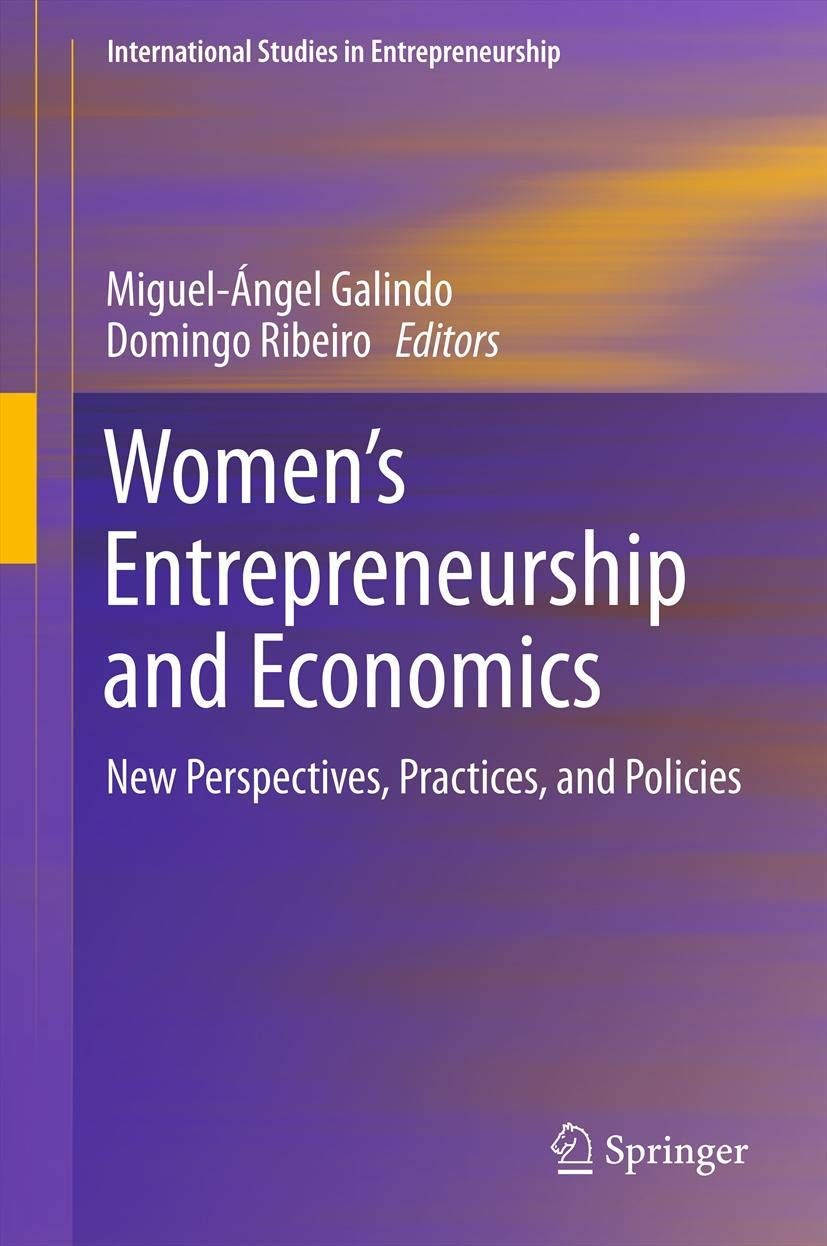
Women's Entrepreneurship and Economics (English, Miguel-Angel Galindo | Domingo Ribeiro)

Economics
Trade Policy and Industrialization in Turbulent Times | by Gerry Helleiner | Routledge | by Gerry Helleiner | Routledge | by Gerry Helleiner | Routledge | by Gerry Helleiner | Routledge | by Gerry Helleiner | Routledge | by Gerry Helleiner | Routledge | by Gerry Helleiner | Routledge | by Gerry Helleiner | Routledge | by Gerry Helleiner | Routledge | by Gerry Helleiner | Routledge | by Gerry Helleiner | Routledge | by Gerry Helleiner | Routledge | by Gerry Helleiner | Routledge | by Gerry Hellei

Economics
History of Economic Analysis | by Schumpeter Joseph A. | Taylor & Francis Ltd | by Schumpeter Joseph A. | Taylor & Francis Ltd | by Schumpeter Joseph A. | Taylor & Francis Ltd | by Schumpeter Joseph A. | Taylor & Francis Ltd | by Schumpeter Joseph A. | Taylor & Francis Ltd | by Schumpeter Joseph A. | Taylor & Francis Ltd | by Schumpeter Joseph A. | Taylor & Francis Ltd | by Schumpeter Joseph A. | Taylor & Francis Ltd | by Schumpeter Joseph A. | Taylor & Franci

Economics
OECD Compendium of Productivity Indicators 2015 | by Organization for Economic Cooperation an | Organization for Economic Co-Operation & Deve | by Organization for Economic Cooperation an | Organization for Economic Co-Operation & Deve | by Organization for Economic Cooperation an | Organization for Economic Co-Operation & Deve | by Organization for Economic Cooperation an | Organization for Economic Co-Operation & Deve | by Organization for Economic Cooperation an | Organization

Economics